
Main Courses
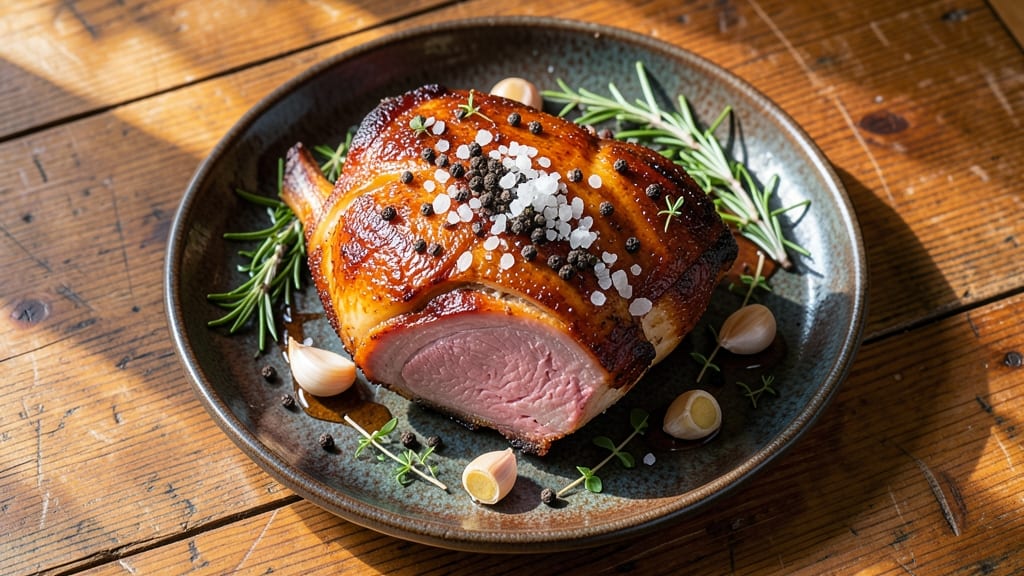
This bone-in pork shoulder picnic ham recipe delivers the perfect balance of crisp bark and juicy pink centers—just like my granddaddy used to make back in Georgia. After years of perfecting the technique at my pit, I've simplified it for home cooks while keeping that authentic Southern flavor.
The secret lies in slow-roasting with just enough moisture to keep the meat tender while developing that coveted crust.
The process starts with a dry brine that enhances natural flavors, followed by slow cooking that transforms tough muscle into melt-in-your-mouth texture. I've tested this method countless times at The Smoky Pig, and it consistently delivers that restaurant-quality result at home.
The bone-in cut adds depth of flavor, while the crispy exterior makes every slice worth savoring.
What you'll end up with is a picnic ham that's perfect for gatherings—juicy enough to satisfy even the pickiest eaters, with a bark so crisp it shatters with each bite.
The aroma alone will have your guests gathering around the table, and the presentation makes it feel like a special occasion. This is the kind of dish that becomes a family tradition.
Whether you're feeding a crowd or saving leftovers for sandwiches, this recipe scales beautifully. The technique works equally well in a smoker, oven, or even a slow cooker, giving you flexibility while maintaining that authentic taste. Let's get started on creating your own showstopping picnic ham.
Ingredients for bone in pork shoulder picnic ham
Southern tradition meets modern technique—these ingredients create that perfect picnic ham.
| Ingredient | Amount | Notes |
|---|---|---|
| Bone-In Pork Shoulder 🐖 | 8 lb | With skin and fat cap intact |
| Coarse Kosher Salt 🧂 | ½ cup | Diamond Crystal preferred |
| Black Peppercorns 🌶️ | 1 tbsp | Freshly cracked |
| Fresh Rosemary 🌿 | ¼ cup | Needles only, finely chopped |
| Fresh Thyme 🌿 | 2 tbsp | Leaves only, chopped |
| Garlic Cloves 🧄 | 6 cloves | Smashed, skin on |
| Brown Sugar 🍚 | ¼ cup | Packed, light variety |
| Yellow Mustard 🍯 | 2 tbsp | Dijon preferred |
| Apple Cider Vinegar 🍎 | 2 tbsp | For glaze |
| Honey 🍯 | 2 tbsp | Wildflower preferred |
| Olive Oil 🫒 | 2 tbsp | For basting |
| Yellow Onion 🧅 | 1 whole | Quartered, for basting |
| Apple Juice 🍎 | 1 cup | For moisture |
| Beer 🍺 | 1 cup | Light lager preferred |
The pork shoulder is your star. Look for bone-in, skin-on cuts—the fat cap helps render flavor while the bone adds depth. Costco or your local butcher shop will have the best quality. If you've got time, trim excess fat to about 1/4-inch thickness for better bark. The rosemary and thyme? Fresh is non-negotiable—dried won't give you that same aromatic punch. I always double-check the garlic too—it should be plump and firm, not shriveled. For the salt, Diamond Crystal is my go-to because it dissolves better than other brands.
No fresh rosemary? Dried at half the amount works in a pinch, but trust me, fresh is worth hunting down. Running low on apple cider vinegar? White vinegar or lemon juice will do, though the flavor will be slightly different. The beer can be swapped for more apple juice if you're avoiding alcohol, but I find the maltiness adds nice depth. For the brown sugar, light variety caramelizes better than dark. And if you're feeling fancy, Trader Joe's sells a great pre-mixed dry brine seasoning that saves time—just add salt and pepper.
This ham keeps beautifully. Wrap the cooked ham tightly in butcher paper first, then foil for up to 5 days in the fridge. For longer storage, freeze portions for up to 3 months. I always make extra—leftovers make incredible sandwiches with a little mustard and pickles. The bark stays crisp for about 2 days if you keep it wrapped tightly. And if you've got guests coming? Reheat slices in a 300°F oven for 10 minutes to restore that perfect crunch.
Why You'll Love This Recipe
- Salt-and-Season Magic: I swear by this method—just coarse salt and cracked peppercorns on a bone-in pork shoulder, then a slow cook. The crust forms effortlessly while you’re busy with other things, and honestly? That’s the kind of hands-off cooking I live for.
- Herb-Crusted Perfection: The rosemary and thyme cling to that golden-brown skin like they’re glued there, releasing their bright, piney aroma every time you slice into it. It’s not just flavor—it’s character, and that’s what makes this picnic ham unforgettable.
- Picnic to Potluck: This isn’t just for summer outings. I’ve brought it to holiday dinners, packed it for tailgates, and even served it cold in sandwiches the next day. The bone stays juicy, the meat shreds easily, and everyone thinks you slaved over it for hours.
Step-by-step instructions for slow-roasted pork shoulder
Here's how to transform a simple pork shoulder into a showstopping picnic ham with irresistible crispy bark and melt-in-your-mouth tenderness.
Prepare the Dry Rub and Season the Pork
In a small bowl, combine the 0.5 cup coarse kosher salt, 1 tablespoon freshly cracked black peppercorns, 0.25 cup finely chopped fresh rosemary, 2 tablespoons chopped fresh thyme, 0.25 cup packed brown sugar, and 6 smashed garlic cloves. Mix thoroughly until the salt and spices are evenly distributed throughout the dry ingredients.
Pat the 8 lb bone-in pork shoulder completely dry with paper towels—this is crucial for developing that perfect crispy bark. Generously coat all sides of the pork with the dry rub, pressing it firmly into the meat so it adheres well. Pay special attention to the fat cap and any crevices where the rub might not stick naturally. Let the seasoned pork sit at room temperature for 30 minutes before cooking—this ensures even cooking and maximum flavor penetration.
Sear the Pork for Maximum Flavor
Heat a large oven-safe skillet or Dutch oven over medium-high heat. Add 2 tablespoons olive oil and let it get hot enough to shimmer. Place the pork shoulder fat-side down in the skillet and sear for 8-10 minutes, pressing down gently with a spatula to render out the fat and create a deep, flavorful crust. Flip the pork and sear the other side for another 6-8 minutes until it develops a rich, golden-brown color.
Remove the pork from the skillet and place it fat-side up on a rimmed baking sheet. Pour any rendered fat from the skillet into a heatproof container—you'll use it later for basting. Preheat your oven to 300°F while the pork rests for 10 minutes at room temperature, allowing the internal temperature to stabilize for more even cooking.
Slow-Roast with Basting for Juicy Perfection
Transfer the pork to a roasting pan and place it in the preheated oven. Roast for 4 hours, then remove the pork and brush all sides generously with a mixture of 2 tablespoons Dijon mustard, 2 tablespoons apple cider vinegar, 2 tablespoons honey, and 1 cup light lager beer. This glaze will create a sticky, flavorful crust while keeping the meat moist.
Return the pork to the oven and continue roasting for another 2 hours, basting it every 45 minutes with the mustard mixture. The internal temperature should reach 195-203°F—this is the "probe-tender" stage where the collagen breaks down and the meat becomes fork-tender. If the skin starts to darken too quickly, tent it loosely with aluminum foil to prevent over-browning while it finishes cooking.
Rest and Slice for Maximum Juiciness
Once the pork reaches the target internal temperature, remove it from the oven and let it rest on a cutting board for at least 30 minutes, tented loosely with foil. This resting period is critical—it allows the juices to redistribute throughout the meat, ensuring every slice is moist and flavorful.
While the pork rests, prepare the basting liquid by combining 1 cup apple juice, 1 quartered yellow onion, and any remaining rendered fat from earlier in a small saucepan. Simmer over medium heat for 10 minutes to create a flavorful pan sauce. Slice the pork against the grain into ½-inch thick slices and serve with the warm basting liquid spooned over the top.
Pro Tips For Making Bone In Pork Shoulder Picnic Ham
- Trim the Fat Cap: That thick layer of fat on the pork shoulder? Don’t cut it off—leave it intact. It renders down during cooking, basting the meat and keeping it juicy. (Yes, even if it looks messy at first.)
- Salt the Night Before: I used to salt the pork shoulder right before cooking, but it never got that deep, flavorful crust. Instead, season it generously with coarse kosher salt and let it sit uncovered in the fridge for 12–24 hours. The salt breaks down the proteins, and the herbs (rosemary, thyme) stick better.
- Start with Smoke: If you’re using a grill or smoker, hit it with high heat (350–400°F) for the first 30 minutes to get that initial sear and smoke ring. After that, drop the temp to 225–250°F for slow cooking—this two-stage approach keeps the meat tender without drying it out.
- Check Internal Temp: The bone-in shoulder can fool you—probe the thickest part of the meat away from the bone, aiming for 195–203°F. If you only check near the bone, you’ll pull it too soon and end up with tough, stringy meat. (I learned this after serving a picnic ham that fell apart at the table.)
Flavor customization for this bone in pork shoulder picnic ham
Sweet & Smoky
For a deeper, caramelized flavor profile, swap the brown sugar for 1/3 cup molasses and add 1 teaspoon smoked paprika to the dry rub. The molasses adds a rich, almost chocolatey depth that pairs beautifully with the pork's natural sweetness.
I've used this variation at The Smoky Pig for holiday hams—it's a crowd-pleaser that feels special without being overly sweet. 🍯
Herb-Forward
Double down on the fresh herbs by adding 1 tablespoon chopped fresh sage and 1 tablespoon chopped fresh marjoram to the dry rub. These Mediterranean herbs add an earthy complexity that works surprisingly well with Southern-style pork.
I first tried this combination while apprenticing in Charleston, and it became a staple for our spring menus. The sage imparts a piney aroma that complements the pork beautifully.
Spicy Carolina Style
Transform your picnic ham into a Carolina-style showstopper by adding 1 tablespoon cayenne pepper and 1 tablespoon ground mustard to the dry rub. For extra heat, brush the pork with a mixture of 1/4 cup hot honey and 1 tablespoon apple cider vinegar during the basting stage.
This variation has won me multiple BBQ championships—it's bold, smoky, and packed with that signature Carolina kick. 🌶️
Citrus Bright
Infuse your ham with bright, zesty flavors by adding 1 tablespoon grated lemon zest and 1 tablespoon grated orange zest to the dry rub. For the basting glaze, replace the beer with 1 cup orange juice and add 1 tablespoon grated orange peel.
This variation works beautifully for summer gatherings—it's refreshing yet rich. I developed this version while catering a beachside wedding in Georgia, and it became an instant favorite with the bridal party.
Garlic & Honey Glaze
Create a sticky, flavorful crust by increasing the garlic to 12 cloves and adding 1/4 cup minced garlic to the basting glaze. For the glaze itself, replace the beer with 1 cup honey and 2 tablespoons minced garlic.
This variation delivers intense garlic flavor that penetrates the meat beautifully. I've used this technique for game-day hams—it's a guaranteed crowd-pleaser that disappears quickly. 🧄
Whiskey-Infused
Add depth and complexity by replacing the beer in the basting glaze with 1 cup bourbon (I recommend Maker's Mark). Let the bourbon reduce slightly on the stove before brushing it onto the pork.
The whiskey adds a warm, caramelized note that complements the pork's natural sweetness. This version has become a staple for my fall menus—it's rich, aromatic, and perfect for chilly evenings. 🥃
Nutrition facts
Frequently asked questions
Why does the recipe call for a bone-in pork shoulder?
The bone adds incredible depth of flavor while keeping the meat moist during long cooking times. It also creates natural pockets where rendered fat collects, enhancing the overall richness. Plus, the bone helps stabilize the shape during cooking, preventing the meat from shrinking too much. For best results, never trim the bone—it's essential for that authentic picnic ham texture.
Can I make this picnic ham in a smoker instead of the oven?
For a smoker, use 225°F with your favorite wood (hickory or apple works best). Smoke for 6-8 hours until internal temp reaches 195°F, then wrap in foil with apple juice and onion for another 1-2 hours to finish cooking. The bark will be smokier, but the meat will remain just as tender. Just be patient—the low-and-slow method is key for perfect results.
How do I know when the pork is fully cooked?
Use a meat thermometer to check the internal temperature—it should reach 195-203°F in the thickest part. The meat should pull away from the bone easily and feel fork-tender. If you don't have a thermometer, cut into the thickest part: the juices should run clear, and the meat should shred easily. Never guess with pork!
What's the best way to store and reheat leftovers?
Wrap cooled ham tightly in butcher paper first, then foil for up to 5 days in the fridge. For reheating, slice and warm in a 300°F oven for 10-15 minutes to restore crispiness. For sandwiches, reheat slices in a skillet with a little butter for 2-3 minutes per side. The bark stays crisp for about 2 days if stored properly.
Can I use this recipe for a smaller pork shoulder?
Yes, but adjust cooking times. A 4-5 lb shoulder will cook about 30-40% faster—check internal temp at 3 hours instead of 4. For 6-7 lb cuts, add 30-60 minutes to total time. The key is patience: slow cooking breaks down collagen regardless of size. Just keep basting regularly for that perfect bark.