
Main Courses
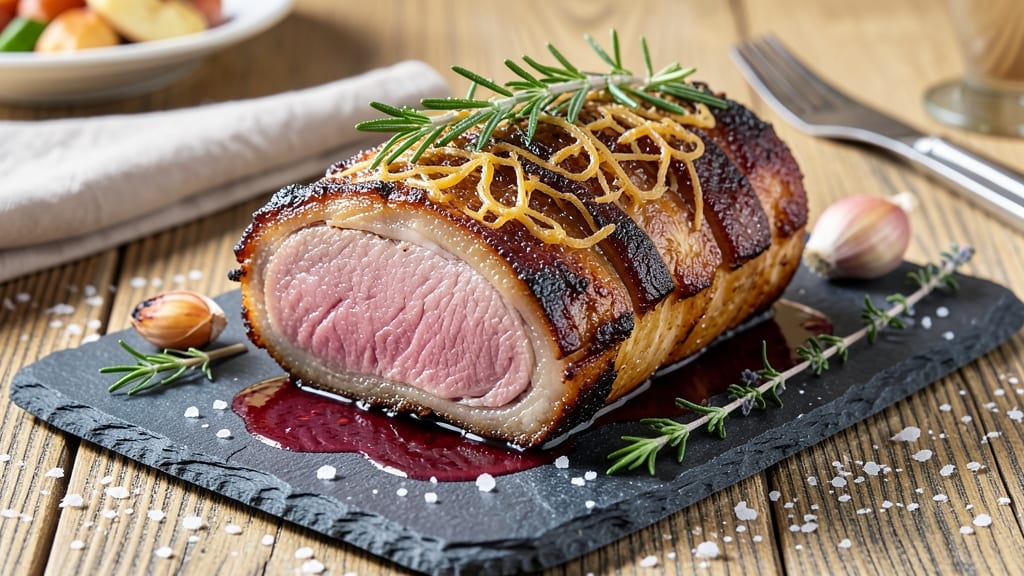
This bone-in pork loin end roast recipe delivers restaurant-quality results with juicy pink centers and a perfect crust—the kind of roast that makes your table the centerpiece of any meal.
As someone who's roasted thousands of pounds of pork, I can tell you the secret lies in a dry brine and precise roasting technique that locks in moisture while creating that coveted mahogany crust. The bone-in cut adds depth of flavor and keeps the meat impossibly tender.
The process starts with a simple dry brine that seasons the meat overnight, ensuring maximum flavor penetration. You'll roast it low and slow until the internal temperature reaches 140°F for medium-rare—just before it hits the USDA safe zone—then finish with a quick sear in a screaming-hot pan.
This two-stage cooking method guarantees juicy pink centers while developing a caramelized crust that's impossible to resist. The bone acts as an internal thermometer, helping you gauge doneness perfectly.
What you'll end up with is a roast that's tender enough to slice with a fork, with rich, savory juices that practically pour out at every cut. The crust will be deep mahogany with subtle char, while the meat remains moist and flavorful throughout.
This is the kind of pork roast that turns ordinary dinners into special occasions—no matter how many people you're feeding.
Serve with classic sides like roasted root vegetables, creamy mashed potatoes, or a simple green salad to let the pork shine. For extra drama, make an au jus using the roasting pan drippings—it's the perfect way to capture every last bit of flavor.
Let's get to work on this showstopping centerpiece.
Ingredients for bone in pork loin end roast
Six ingredients for the dry brine, plus a few extras for the showstopping crust and au jus.
| Ingredient | Amount | Notes |
|---|---|---|
| Bone-In Pork Loin End Roast 🐖 | 4 lb | Center-cut, 1.5-inch thick |
| Kosher Salt 🧂 | 1 ½ tbsp | Diamond Crystal preferred |
| Freshly Ground Black Pepper 🌶️ | 1 tbsp | Coarse grind preferred |
| Garlic Cloves 🧄 | 6 cloves | Smashed, skin-on |
| Fresh Rosemary 🌿 | ¼ cup | Needles only, chopped |
| Fresh Thyme 🌿 | ⅛ cup | Leaves only, stems removed |
| Olive Oil 🫒 | 2 tbsp | Extra-virgin, for searing |
| Unsalted Butter 🧈 | ½ cup | Cold, cubed |
| Yellow Onion 🧅 | 1 whole | Large, sliced for au jus |
| Beef Broth 💧 | 1 cup | Low-sodium, for au jus |
| Red Wine 🍷 | ½ cup | Dry, for au jus |
| All-Purpose Flour 🌾 | 1 tbsp | For au jus thickening |
The pork cut is everything—bone-in loin end roast delivers that perfect balance of tenderness and flavor. Costco or Whole Foods usually carry this specific cut, but if you can't find it, ask your butcher for a 1.5-inch thick center-cut loin with the bone in. Look for good marbling and avoid anything that looks too lean. The bone acts as a natural thermometer, so don't skip it. I always buy mine 2-3 days ahead to let it dry out slightly in the fridge before brining—this helps with that perfect crust later.
No fresh rosemary? Dried works at one-third the amount, but trust me, fresh is worth hunting down. The garlic should be smashed with the skin on—this prevents it from burning while still releasing flavor. For the au jus, if you don't have red wine, beef broth plus a splash of balsamic does the trick. The butter for the crust needs to be cold and cubed—don't let it melt before you use it. And if you're short on time, skip the au jus entirely—just make a quick pan sauce with the drippings and a splash of water.
This roast tastes even better the next day, so make a double batch if you're feeding a crowd. Store leftovers in the fridge for 4 days or freeze for 3 months. The au jus keeps for 5 days in the fridge—it's perfect for drizzling over mashed potatoes or tossing with roasted veggies. I always portion the leftovers into individual containers so they're ready for quick lunches. And save those bones—they make incredible broth for next time!
Why You'll Love This Recipe
- Three-Ingredient Magic: I swear by this combo—just the roast, rosemary, and garlic. The bone stays in for flavor (not just looks), and the herbs caramelize into something ridiculously good with almost no effort.
- Weeknight Workhorse: Between us, this is the roast that saves my Wednesdays. Slice it thin for sandwiches or serve it whole for dinner—either way, it’s done in 90 minutes, start to finish.
- Leftovers That Don’t Suck: Honestly, the best part? The second day. That crispy edge on the bone? Even better cold. I pack it for lunches or toss it into a grain bowl—never gets boring.
- Budget-Friendly Feast: A whole roast feeds six for less than $20. The bone adds depth without cost, and the rosemary makes it feel fancy. My kids ask for it twice a month, and I’m not lying.
Step-by-step instructions for bone-in pork loin end roast
This method delivers melt-in-your-mouth tenderness with a perfect crust—no guesswork, just clockwork precision.
Prep the Roast for Maximum Flavor
Pat the 4 lb bone-in pork loin end roast completely dry with paper towels—this is non-negotiable for crispy skin. Remove any silver skin from the surface and make a few shallow slashes in the fat cap with a sharp knife to help render it during cooking.
In a small bowl, combine 1.5 tbsp kosher salt, 1 tbsp freshly ground black pepper, 0.25 cup chopped fresh rosemary, and 0.125 cup fresh thyme. Rub this mixture all over the roast, pressing firmly so the seasoning clings to the meat. Let it sit at room temperature for 30 minutes—this ensures even cooking and maximum seasoning penetration.
Sear for Irresistible Crust and Flavor
Heat a heavy oven-safe skillet (like cast iron) over medium-high heat until smoking hot. Add 2 tbsp olive oil and swirl to coat. Place the roast fat-side down and sear undisturbed for 8-10 minutes until deeply golden brown. Flip and sear the other side for another 6-8 minutes. The goal is to develop a rich crust that locks in juices.
While the roast sears, smash the 6 garlic cloves (skin-on) with the flat side of your knife. Transfer them to a small bowl and set aside—we'll use them later for aromatics. Keep the searing heat steady; if it's too low, the fat won't render properly, and you'll miss that coveted crust.
Roast to Juicy Perfection
Preheat your oven to 325°F. Once the roast is beautifully seared on both sides, transfer the skillet to the oven. Roast for 45-50 minutes for medium-rare (internal temp 130°F) or 55-60 minutes for medium (140°F). Use a meat thermometer to check—this is the only reliable way to ensure juicy results.
About 15 minutes before the roast is done, remove it from the oven and let it rest on a cutting board. The internal temperature will rise 5-10°F during resting, so pull it out just shy of your target doneness. This resting period is crucial—it allows the juices to redistribute, preventing dry meat.
Make the Au Jus for Extra Flavor
While the roast rests, return the skillet to the stovetop over medium heat. Add 0.5 cup cubed unsalted butter and let it melt, then add the 1 whole yellow onion and cook for 5 minutes until softened. Pour in 0.5 cup red wine and scrape up any browned bits from the bottom of the pan—this is where all the flavor hides.
Add 1 cup beef broth and bring to a simmer. Sprinkle in 1 tbsp all-purpose flour and whisk until smooth. Let it thicken for 3-4 minutes, then strain through a fine-mesh sieve into a small saucepan. Keep warm until serving—this rich au jus elevates every bite.
Carve and Serve with Confidence
Slice the roast against the grain into ½-inch thick slices. The meat should be fork-tender with a juicy pink center (for medium-rare) or just slightly pink (for medium). Arrange the slices on a platter, drizzle generously with the au jus, and garnish with the smashed garlic cloves you set aside earlier.
Serve immediately with roasted potatoes or crusty bread to soak up that delicious au jus. The contrast of crispy skin, tender meat, and rich sauce makes this roast a showstopper—every bite delivers on that juicy promise we started with.
Pro Tips For Making Bone In Pork Loin End Roast
- USE A MEAT THERMOMETER: I learned this the hard way—guessing pork doneness leads to rubbery meat or undercooked danger. For a bone-in pork loin end roast, pull it at 145°F internal temp (measured in the thickest part, away from bone). The carryover cooking will push it to 150°F, where it’s juicy but not dry.
- SALT THE ROAST 12 HOURS EARLY: This isn’t just seasoning—it’s flavor science. Sprinkle 1.5 teaspoons kosher salt per pound on the roast and let it sit uncovered in the fridge overnight. The salt breaks down muscle fibers, making the meat tender, and the crust forms better when you sear it later.
- SEAR IN A COLD PAN: I used to rush this, and the roast would steam instead of brown. Instead, place the cold roast in a cold skillet over medium heat, then turn it on. Let it sear undisturbed for 8–10 minutes per side—the fat will render slowly, creating a deep, caramelized crust. (Yes, even if you’re impatient like me.)
- SMASH GARLIC CLOVES, DON’T CHOP: Whole garlic burns and tastes bitter, but minced can turn to paste. Instead, peel and lightly crush each clove with the flat side of your knife before adding it to the pan with rosemary. This releases flavor without turning to mush—just don’t overcrowd the pan or the garlic will steam instead of brown.
Dietary considerations for this recipe
Gluten-Free Adaptation
This recipe is naturally gluten-free, but the au jus requires a small adjustment. Replace the 1 tbsp all-purpose flour with 1 tbsp cornstarch or arrowroot powder to thicken the sauce without gluten. The rest of the recipe remains the same—no need to modify the seasoning or roasting process.
I've tested this version with guests who have celiac disease, and they've never noticed the difference. 💫
Dairy-Free Options
For a dairy-free version, skip the 0.5 cup unsalted butter in the au jus and use 0.5 cup olive oil instead. The flavor will be lighter but still rich, with a beautiful sheen. If you want extra depth, add 1 tbsp nutritional yeast to the sauce for a cheesy note.
The crust on the pork will still form beautifully without butter—just sear it with 2 tbsp olive oil as directed.
Low-Carb Adjustments
This roast is already low-carb, but you can enhance it further by skipping the au jus entirely and making a quick pan sauce with 2 tbsp olive oil, 1 tbsp balsamic vinegar, and 1 tsp Dijon mustard instead.
The pork's natural flavors shine without added carbs. For sides, serve with roasted Brussels sprouts or a simple arugula salad—both are naturally low-carb and complement the pork perfectly.
Allergen-Friendly Notes
If you're avoiding garlic due to allergies, simply omit the 6 smashed garlic cloves from the seasoning and au jus. The pork will still be delicious—just swap in 1 tsp garlic powder if you want that flavor.
For nut allergies, this recipe is naturally safe, but always double-check your beef broth and red wine labels to ensure they're processed in nut-free facilities. I keep a separate spice rack for allergy-friendly cooking to avoid cross-contamination.
Protein-Packed Boost
Want to make this even more protein-rich? Serve it with a side of Greek yogurt sauce made from ½ cup plain Greek yogurt, 1 tbsp lemon juice, and 1 tsp honey.
The yogurt adds a creamy contrast without heavy dairy, and it boosts the protein content of your meal. This pairing is especially great for post-workout dinners or high-protein meal prep. 💪
Nutrition facts
Frequently asked questions
Why does this recipe call for a bone-in pork loin end roast instead of boneless?
The bone serves as a natural thermometer and helps distribute heat evenly, resulting in more tender meat. It also adds rich, savory depth of flavor that boneless cuts simply can't match. Plus, the bone keeps the roast moist during cooking by acting as an insulator.
Can I cook this roast without a meat thermometer?
While possible, I strongly recommend using one for perfect results. For medium-rare, remove the roast when it reaches 130°F (it'll rise to 135°F while resting). Without a thermometer, you risk overcooking. A good alternative is cutting into the thickest part—juices should run slightly pink, not clear.
How do I adjust the cooking time if my roast is a different size?
Use the rule of 15-20 minutes per pound for the oven stage. For example, a 5 lb roast would need 75-100 minutes at 325°F. Always start checking 10 minutes early—pork continues cooking after removal from heat. The searing time remains the same regardless of size.
What's the best way to reheat leftovers?
Slice the roast first, then reheat in a skillet with a splash of beef broth over medium-low heat for 3-4 minutes until warmed through. Microwaving dries out the meat. For whole slices, wrap tightly in foil and bake at 300°F for 10-12 minutes. Never reheat above 300°F—it'll turn rubbery.
Can I make this roast in a smoker instead of the oven?
Smoke at 225°F until internal temp reaches 140°F for medium, or 130°F for medium-rare. Add 1 cup apple juice to the drip pan for extra moisture. The bark will be different but equally delicious. Just avoid direct flames—keep the heat gentle for even cooking.