
Main Courses
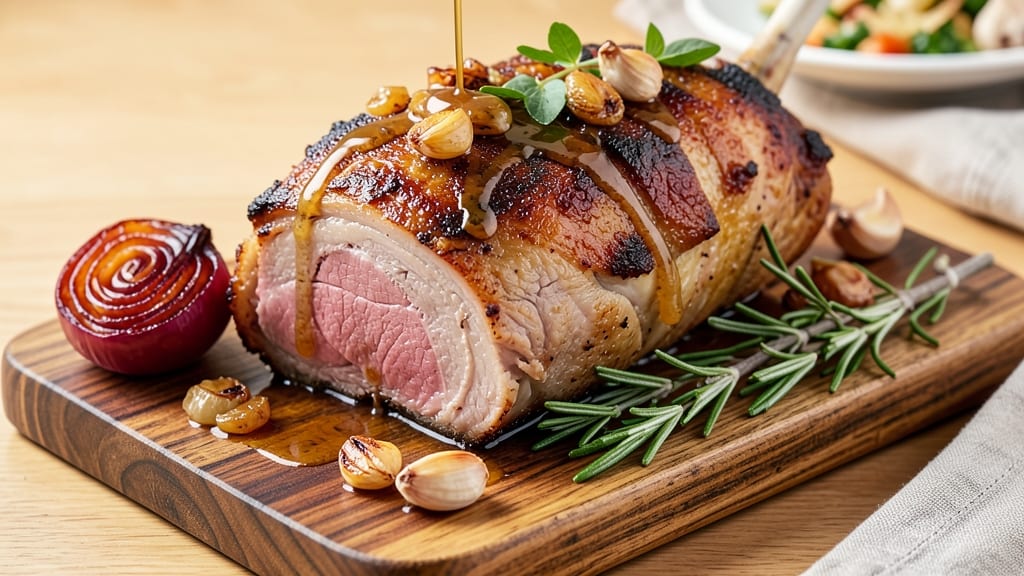
This bone-in pork leg roast recipe delivers the perfect balance of crispy bark and juicy pink centers—a technique I perfected during my years competing in the Southeast BBQ circuit. The bone adds natural moisture while creating unmatched flavor, and the high-heat sear locks in those juices.
My Georgia upbringing taught me that pork deserves respect, and this method honors that tradition with modern precision.
The secret lies in dry-brining overnight and roasting at 325°F for hours, then finishing with a broiler for that coveted crackling crust. No fancy equipment needed—just time, patience, and a well-seasoned cast iron pan.
I've cooked thousands of pounds of pork, and this method never fails to impress, whether you're feeding a crowd or treating yourself to a Sunday centerpiece.
What you'll end up with is a pork leg that's crispy on the outside, tender yet still pink in the center, and infused with smoky, savory depth. The bone stays moist and flavorful, enriching every bite. This isn't just pork—it's a showstopper that transforms any meal into an occasion.
Serve with classic sides like apple sauce, roasted root vegetables, or a simple green salad to let the pork shine. The leftovers reheat beautifully too, making this a recipe worth doubling. Let's get started with the full method—your table is about to get an upgrade.
Ingredients for bone in pork leg roast
Six pounds of pork leg plus a handful of pantry staples—this is your ticket to showstopping roast.
| Ingredient | Amount | Notes |
|---|---|---|
| Bone-In Pork Leg (Center Cut) 🐖 | 6 lb | With skin on, 1.5-2 inches thick |
| Kosher Salt 🧂 | 1 ½ cups | Diamond Crystal preferred, coarse grain |
| Freshly Ground Black Pepper 🌶️ | 2 tbsp | Cracked over skin, not pre-ground |
| Yellow Onion 🧅 | 1 whole | Cut into 1-inch chunks, skin on |
| Garlic Cloves 🧄 | 8 cloves | Smashed, skin on for flavor |
| Fresh Rosemary 🌿 | ¼ cup | Needles only, finely chopped |
| Fresh Thyme 🌿 | 0.15 cup | Leaves only, stems removed |
| Smoked Paprika 🌶️ | 1 tbsp | For subtle smoky depth |
| Brown Sugar 🍚 | 2 tbsp | Light or dark, packed |
| Apple Cider Vinegar 🍏 | 2 tbsp | For bark development |
| Olive Oil 🫒 | 2 tbsp | High smoke point, for searing |
| Yellow Mustard 🟡 | 1 tbsp | For glaze, optional |
| Honey 🍯 | 1 tbsp | Wildflower preferred |
The pork leg is non-negotiable here—center-cut with bone-in delivers the best moisture and flavor. Local butchers or Costco often have the best prices for whole legs, but if you're buying pre-cut, look for a piece with 1.5-2 inches of fat cap—that's where the crispy bark magic happens. The skin should be intact for maximum flavor infusion. I always ask for the leg to be trimmed of excess fat but left with that natural layer. For a true Georgia BBQ experience, source from a family-owned farm if possible—they often have better marbling.
No fresh rosemary or thyme? Dried works at one-third the amount, but fresh is ideal for that bright, herbaceous note. The smoked paprika adds depth without overpowering—Penzeys has the best quality if you're splurging, but the regular grocery store stuff is fine. Running low on apple cider vinegar? White vinegar or lemon juice in a pinch, though the apple cider gives that subtle tang. The honey and mustard glaze is optional but worth it for that sticky, caramelized finish. If you're avoiding sugar, skip the brown sugar and honey—just double the smoked paprika for smokiness.
This roast is all about patience—dry-brine overnight for maximum flavor penetration. Store the pork uncovered in the fridge, skin-side up, for 12-24 hours before roasting. The seasoning mix (salt, pepper, spices) can be prepped 3 days ahead and stored in an airtight container. Once roasted, the pork stays juicy for 3-4 days in the fridge—reheat gently with a splash of broth to restore moisture. Leftovers reheat beautifully, making this a perfect make-ahead recipe for gatherings. For a crowd, double the recipe—just increase oven time proportionally.
Why You'll Love This Recipe
- One-Pan Magic: I swear by this—just salt, pepper, onion wedges, and garlic on the bone. No fancy gadgets, no extra pots. You literally set it, forget it, and walk away.
- Crispy-Creamy Payoff: That bone-in magic transforms into a crackling crust while the meat stays juicy. The onion caramelizes right on the tray, and the garlic? It infuses the whole roast like a secret weapon.
- Leftovers That Win: Between us, I make this on Sundays because the next-day sandwiches are chef’s kiss—crispy pork, soft bread, and all that rendered fat. It’s the kind of leftovers people actually ask for.
- Budget Hero: A whole pork leg feeds my family for days, and the ingredients? Salt, pepper, onion, garlic—stuff I already have. Honestly, it’s the most economical way to feel like you’re hosting a feast.
Step-by-step instructions for bone-in pork leg roast
Here's how to transform a simple pork leg into a showstopping centerpiece with irresistible bark and melt-in-your-mouth tenderness.
Prepare the Pork Leg for Maximum Flavor
First, pat the entire bone-in pork leg completely dry with paper towels—this is non-negotiable for crispy bark. I use two layers of paper towels and really scrub the surface, especially around the bone and fatty areas where moisture tends to hide. The drier the skin, the better the crust will develop.
Next, create your dry rub by combining the 1.5 cups kosher salt, 2 tablespoons freshly ground black pepper, 1 tablespoon smoked paprika, and 2 tablespoons brown sugar in a bowl. Rub this generously all over the pork leg, pressing the mixture into the skin so it adheres well. Pay special attention to the fatty areas and bone indentations—these spots need extra flavor penetration. Let the seasoned pork leg rest uncovered in the refrigerator for at least 4 hours (overnight is even better) to allow the salt to work its magic and the skin to dry out further.
Build the Aromatic Base
While the pork leg seasons, prepare your aromatics. Cut the whole yellow onion into 1-inch chunks (leave the skin on for extra flavor), smash the 8 garlic cloves (skin on for deeper flavor), and finely chop the 0.25 cup fresh rosemary and 0.15 cup fresh thyme. In a small bowl, mix these with the 2 tablespoons apple cider vinegar and 2 tablespoons olive oil. This aromatic blend will create a flavorful crust during cooking.
About 1 hour before roasting, remove the pork leg from the fridge and let it come to room temperature. Preheat your oven to 325°F—this lower temperature ensures even cooking while developing that coveted bark. Place the pork leg fat-side up on a rack in a roasting pan (the rack allows air circulation for crispiness). Spread the aromatic onion and garlic mixture around the pork leg, tucking some pieces underneath for extra flavor infusion.
Roast Low and Slow for Perfect Doneness
Roast the pork leg for 3 hours at 325°F, then increase the heat to 375°F for the final 1 to 1½ hours. This two-stage approach gives you both even cooking and that beautiful bark. After the initial 3 hours, check the internal temperature—it should be around 170°F at this point. The skin should be starting to brown and crisp up.
During the final hour, baste the pork leg with its juices every 30 minutes to keep it moist. You'll know it's ready when the internal temperature reaches 203°F (use a meat thermometer inserted into the thickest part of the meat, avoiding the bone). The skin should be deep golden brown and crispy, with a crackling texture when pressed gently with tongs. If the skin isn't crispy enough, return it to the oven for 10-15 minutes at 425°F to finish.
Create the Glaze and Rest the Meat
While the pork leg rests, prepare the glaze by combining the 1 tablespoon yellow mustard and 1 tablespoon honey in a small bowl. Brush this mixture generously over the entire surface of the pork leg, including the crispy skin. This step adds a beautiful sheen and balances the savory flavors with a touch of sweetness.
Transfer the pork leg to a cutting board and let it rest for 30 minutes before carving. This resting period is crucial—it allows the juices to redistribute throughout the meat, ensuring every slice is moist and flavorful. Tent loosely with foil to keep it warm while it rests. The pork leg should be fork-tender with a deep pink center and a crackling, golden-brown crust that's crispy enough to stand up to a fork.
Carve and Serve with Confidence
Slice the pork leg against the grain into ½-inch thick slices for maximum tenderness. The meat should pull apart easily with a gentle tug, revealing juicy pink centers. Serve immediately with the pan juices strained and reduced slightly for a rich gravy, if desired. The combination of crispy bark, juicy pink meat, and aromatic glaze makes this pork leg roast a true showstopper that will have everyone asking for seconds.
Pro Tips For Making Bone In Pork Leg Roast
- CRANK THE HEAT FIRST: High heat for the first 15 minutes—yes, even with a thick pork leg. This sears the exterior fast enough to lock in juices before it slows to a low-and-slow cook. I used to wimp out at medium-high, and the crust never crisped like it should.
- SALT THE MEAT TWICE: Dry the pork leg thoroughly, then season it generously with kosher salt 24 hours ahead. Right before roasting, hit it with another layer—especially the fat cap—so the crust forms faster and deeper. The first salting tenderizes, the second builds flavor.
- DON’T SKIP THE ONION GARLIC PASTE: Peel and roughly chop the onion and garlic, then pulse them in a food processor until it’s a sticky, uneven paste. Spread it directly on the pork leg before roasting—no need for a bag or foil. It caramelizes into a glossy, flavor-packed crust that sticks like glue.
- REST IT UNDER FOIL: Pull the pork out of the oven when it hits 145°F internally, then tent it loosely with foil and let it sit for 10–15 minutes. This keeps it warm while the juices redistribute—if you slice it too soon, you’ll end up with a dry, sad center. (I learned this after serving a pork leg that looked perfect but tasted like sawdust.)
Creative variations of this recipe
Southern BBQ Style
For a true taste of the Southeast, swap the rosemary and thyme for 1 tablespoon each of ground cumin and smoked chili powder.
Add 1 teaspoon cayenne pepper for heat and replace the honey glaze with a mix of 2 tablespoons apple cider vinegar and 1 tablespoon brown sugar. Roast at 275°F for 4 hours before finishing at 375°F—this low-and-slow approach mimics traditional pit cooking.
Serve with coleslaw and cornbread for an authentic Georgia spread. 🌶️
Herb-Crusted French Style
Transform this into a French-inspired pork rôti by coating the pork leg with a paste of 2 tablespoons Dijon mustard, 1 tablespoon olive oil, and 1 minced garlic clove.
Press ½ cup fresh breadcrumbs mixed with 1 tablespoon chopped parsley and 1 teaspoon dried tarragon onto the skin. Roast at 350°F for 2 hours, then finish under the broiler for 5 minutes to crisp the crust.
Pair with ratatouille and a glass of Bordeaux red for an elegant twist. 🍷
Asian-Inspired Five-Spice
Infuse the pork with 1 tablespoon Chinese five-spice powder and 1 teaspoon grated ginger in the dry rub. Add 1 sliced star anise and 1 cinnamon stick to the roasting pan for aroma.
Finish with a glaze of 1 tablespoon soy sauce, 1 tablespoon honey, and 1 teaspoon sesame oil. Roast at 300°F for 3 hours, then broil for 10 minutes. Serve with steamed jasmine rice and stir-fried bok choy for a fusion masterpiece. 🌿
Spicy Caribbean Jerk
For a bold Caribbean flair, blend 1 tablespoon jerk seasoning (store-bought or homemade with allspice, thyme, and scotch bonnet peppers) into the dry rub. Add 1 tablespoon lime juice and 1 teaspoon grated lime zest to the glaze.
Roast at 325°F for 3 hours, then broil for 15 minutes to caramelize the spices. Garnish with cilantro and serve with coconut rice and mango salsa. 🌶️🔥
Sweet and Smoky Maple
Create a maple-bourbon glaze by simmering ¼ cup pure maple syrup, 2 tablespoons bourbon, and 1 tablespoon Dijon mustard until reduced by half. Brush this generously over the pork during the final 30 minutes of roasting.
The bourbon adds depth while the maple caramelizes beautifully. Serve with roasted sweet potatoes and maple-glazed carrots for a cozy fall menu. 🍁
Classic Italian Porchetta
Roll the pork leg with a stuffing of ½ cup chopped fennel, ½ cup chopped celery, ½ cup chopped parsley, 2 minced garlic cloves, 1 teaspoon fennel seeds, and 1 teaspoon salt.
Tie with butcher's twine and roast at 325°F for 3 hours. Finish with a sprinkle of grated Parmesan and serve with polenta and roasted rosemary potatoes. This Italian-inspired version is perfect for holiday feasts. 🇮🇹
Nutrition facts
Frequently asked questions
Why do you recommend a bone-in pork leg instead of boneless?
The bone acts as a natural moisture reservoir, keeping the meat incredibly tender and juicy throughout the roasting process. It also adds depth of flavor as it renders fat and infuses the surrounding meat. Plus, the bone helps stabilize the shape during cooking, preventing the leg from curling or collapsing. For a true showstopper, bone-in is non-negotiable!
Can I use this recipe with a smaller pork leg (like 3-4 lbs)?
Simply reduce all ingredients proportionally—cut the seasoning mix in half and adjust the oven time. A 3-4 lb leg will cook faster (about 2-2.5 hours at 325°F), so check the internal temperature at 190°F for perfect doneness. The smaller size actually benefits from the high-heat finish, developing crispy bark more quickly.
What's the best way to reheat leftovers without drying them out?
Slice the pork leg into portions and reheat in a 350°F oven with a splash of apple cider or chicken broth for 15-20 minutes. For quick reheating, use a skillet with a splash of water or broth—cover tightly and heat on medium-low for 5-7 minutes. Never microwave directly, as it creates rubbery meat. Leftovers stay juicy for 3-4 days when stored properly.
Can I substitute any of the herbs or spices?
Certainly! Swap rosemary for 1 tablespoon sage or 1 teaspoon oregano for Mediterranean flair. Skip the smoked paprika and add ½ teaspoon chipotle powder for smokiness. For a simpler profile, just use salt, pepper, and garlic powder—the base technique will still deliver amazing results. The key is balancing salt and acid (like vinegar) for that perfect bark.
How do I know when the pork leg is done without overcooking?
Use a meat thermometer inserted into the thickest part (avoiding bone) to reach 203°F for juicy pink centers or 210°F for fully cooked meat. The skin should be deep golden brown and crackling when pressed. If the skin isn't crispy enough, finish under the broiler for 5-10 minutes. Never rely on color alone—pork can look done but still be undercooked!