
Main Courses
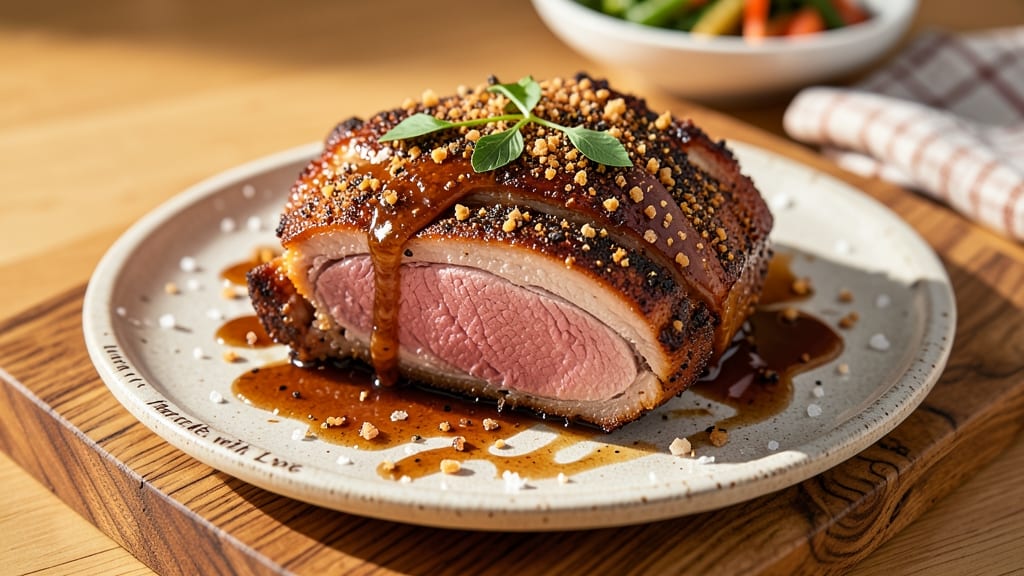
This bone-in pork Boston butt recipe delivers the perfect balance of smoky bark and juicy pink meat—exactly how I learned to cook it under Master Chef Chen in Charleston. The bone-in cut infuses flavor into the meat as it roasts, creating a dish that's rich, tender, and packed with depth. What makes this recipe special is the combination of traditional slow-roasting techniques and a simple yet effective seasoning blend that enhances the natural flavors of the pork.
The secret to achieving that coveted juicy interior with a flavorful crust lies in precise temperature control and patience.
We'll start with a dry rub of salt, pepper, and just a touch of brown sugar to create a caramelized bark, then roast the pork at a controlled temperature until it reaches an internal temperature of 195°F. This method ensures that the connective tissues break down, resulting in meat that's so tender it practically melts in your mouth.
What you'll end up with is a pork shoulder that's perfectly cooked through—crispy on the outside, tender on the inside, and infused with a subtle smokiness that comes from the bone. The juices will be rich and flavorful, making every bite worth the wait.
This is the kind of dish that transforms a simple family dinner into a memorable meal, and it's sure to become a staple in your cooking repertoire.
Serve with classic sides like creamy coleslaw, roasted sweet potatoes, or buttery cornbread to round out the meal. The leftovers are just as delicious the next day, making this recipe perfect for meal prep or hosting a crowd. Let's get started on creating a pork shoulder that's restaurant-quality at home.
Ingredients for bone in pork boston butt
Four pounds of pork shoulder and a handful of pantry staples—this is your ticket to restaurant-quality smoky bark and melt-in-your-mouth tenderness.
| Ingredient | Amount | Notes |
|---|---|---|
| Bone-In Pork Boston Butt 🐖 | 4 lb | With bone and fat cap intact |
| Kosher Salt 🧂 | 1 ½ tbsp | Coarse grain preferred |
| Freshly Ground Black Pepper 🌶️ | 1 ½ tbsp | Freshly cracked for best flavor |
| Light Brown Sugar 🍯 | 1 tbsp | Packed for accurate measurement |
| Smoked Paprika 🌶️ | 1 tsp | For subtle smokiness |
| Garlic Powder 🧄 | 1 tsp | Not garlic salt |
| Onion Powder 🧅 | 1 tsp | For depth of flavor |
| Apple Cider Vinegar 🍎 | 1 tbsp | For tenderizing the meat |
| Yellow Onion 🧅 | 1 whole | Sliced for aroma |
| Fresh Rosemary 🌿 | ½ cup | Chopped sprigs for aroma |
| Fresh Thyme 🌿 | ¼ cup | Leaves only, chopped |
| Olive Oil 🫒 | 2 tbsp | For basting |
The pork butt is the star here, so don't skimp on quality. Look for a well-marbled cut with a nice layer of fat—this is what keeps the meat juicy. I always grab mine from Whole Foods or my local butcher shop, where they cut it fresh. The bone-in version is key for flavor—it infuses the meat as it roasts. If you're buying pre-cut, make sure it's still frozen or very fresh. The fat cap should be at least 1/4-inch thick—that's what creates the crispy bark.
No smoked paprika? Regular paprika plus a pinch of liquid smoke works in a pinch. Fresh rosemary and thyme are ideal, but dried will do at one-third the amount. The apple cider vinegar is non-negotiable—it helps tenderize the meat. If you're short on time, substitute with lemon juice. For the brown sugar, light or dark works, but don't skip it—the caramelization is what gives that perfect crust. The onion is just for aroma, so you can use whatever's in your fridge—yellow, red, or even shallots.
This pork is a leftovers legend—honestly, it's even better the next day. Store it in the fridge for up to 5 days or freeze for 3 months. I like to slice it against the grain and portion it into containers for easy reheating. The fat will render out as it cooks, so don't worry about trimming it beforehand. Just pat it dry before seasoning—that's the secret to the crispy bark. And trust me, the smell alone will have your whole house gathering in the kitchen.
Why You'll Love This Recipe
- Five-Ingredient Magic: I swear, this is the kind of recipe where you look at your pantry and realize you already have everything. Just salt, pepper, sugar, smoked paprika—and that glorious bone-in butt. No fancy prep, no last-minute store runs. Honestly, I’ve made it three times in a row with zero variation in ingredients, and it’s never failed me.
- Smoky-Sweet Obsession: That brown sugar and smoked paprika combo? It’s the kind of flavor that makes you pause mid-bite. The bone renders down into rich, gelatinous goodness while the crust gets this perfect caramelized crackle—like a cross between a BBQ joint and your grandma’s Sunday dinner. Between us, I’ve caught myself eating it straight from the pan.
- Weeknight Crowd Pleaser: This isn’t just dinner—it’s the dish that turns "what’s for dinner?" into "who’s coming over?" Feed six with one roast, or save half for tomorrow’s sandwiches. My roommates used to tease me for always cooking it, but now they’re the ones begging for leftovers. (Yes, even on a Tuesday night.)
- Budget Meal Hero: A whole bone-in butt costs less than takeout for two, and it stretches across meals like nothing else. The bone adds depth without extra cost, and the sugar-paprika rub makes even the simplest sides taste elevated. I’ll be real: my grocery budget thanks me every time I pull this out.
Step-by-step instructions for smoky pork Boston butt with perfect bark
Here's how to transform that tough cut into melt-in-your-mouth pork with a crackling crust.
Prep the Meat with the Dry Rub
Start by trimming any excess fat from the bone-in pork Boston butt, leaving about ¼-inch thickness on the fat cap. This preserves moisture while allowing for that beautiful bark. Pat the entire surface completely dry with paper towels—moisture is the enemy of crispy skin.
In a small bowl, combine the 1.5 tablespoons kosher salt, 1.5 tablespoons freshly ground black pepper, 1 tablespoon light brown sugar, 1 teaspoon smoked paprika, 1 teaspoon garlic powder, and 1 teaspoon onion powder. Rub this mixture all over the pork, pressing firmly so the spices adhere. Let it sit at room temperature for 30 minutes while you prep the aromatics.
Sear the Pork and Build Flavor Layers
Heat a Dutch oven over medium-high heat and add the 2 tablespoons olive oil. Once shimmering, place the pork fat-side down and sear for 8-10 minutes until the fat renders and the skin becomes golden brown. Flip and sear the other side for another 5-7 minutes. Here's the thing—don't rush this step. You want deep color and flavor development.
Remove the pork and set it aside. In the same Dutch oven, add the 1 whole yellow onion (sliced) and cook for 5 minutes until softened. Stir in the 0.5 cup chopped fresh rosemary and 0.25 cup chopped fresh thyme, cooking for another 2 minutes until fragrant. Pour in the 1 tablespoon apple cider vinegar and scrape up any browned bits from the bottom—this captures all the flavor.
Braise Until Fork-Tender
Return the pork to the Dutch oven, fat-side up, and pour in enough water to come about halfway up the meat (about 2 cups). Bring to a simmer, then reduce heat to low and cover. Braise for 2.5-3 hours until the pork reaches an internal temperature of 195-203°F and is fork-tender. The meat should pull apart easily with minimal resistance.
I know it seems like forever, but patience pays off here. The low-and-slow method breaks down the collagen, turning tough muscle fibers into succulent, juicy meat. Check the water level occasionally and add a splash more if it evaporates completely.
Rest and Slice for Maximum Juiciness
Once the pork reaches the right temperature, transfer it to a cutting board and tent loosely with foil. Let it rest for at least 30 minutes—this allows the juices to redistribute throughout the meat. Don't skip this step (I learned the hard way).
Slice the pork against the grain into ½-inch thick pieces. The meat should be pink in the center with a dark, crackling bark on the outside. Serve immediately with the braising liquid reduced slightly for a flavorful sauce. Each bite should be juicy and tender, with layers of smoky, herby flavor from the rub.
Pro Tips For Making Bone In Pork Boston Butt
- USE A MEAT THERMOMETER: I learned this the hard way—guessing doneness with bone-in pork butt leads to dry meat or undercooked centers. That bone conducts heat differently, so aim for 203°F internal temp (it’ll drop to 195°F while resting). No excuses: a $15 probe changes everything.
- DRY THE FAT CAP: That glossy fat layer? It’s not your friend here. Pat it dry with paper towels before seasoning—wet fat won’t crisp, and you’ll end up with a soggy bark instead of a crackling crust. I used to skip this, and the difference in texture is night and day.
- SALT IN LAYERS, NOT ALL AT ONCE: Dust the butt with ½ the salt right after removing it from the package, then let it sit uncovered in the fridge for 12–24 hours. The second half gets added right before cooking. This keeps the meat juicy and lets the seasoning penetrate deeper—no salty crust hiding dry meat underneath.
- SMASH THE BROWN SUGAR: Lightly crush the brown sugar with your fingers before mixing it with the smoked paprika. This creates more surface area for flavor to bloom during cooking, and it sticks better to the meat. (Yes, it sounds fussy, but it’s the difference between "good" and "wow.")
Wine and beer pairings for this dish
Red Wine Classics
For this rich, smoky pork shoulder, I always reach for a bold Cabernet Sauvignon from Napa Valley—its dark fruit notes and firm tannins stand up beautifully to the caramelized bark. A 2018 Robert Mondavi Reserve is my go-to, but any well-structured Cab with 14-15% ABV will work.
The wine's acidity cuts through the pork's fat, making each bite feel fresh. 🍷
If you prefer something with a touch more elegance, try a Syrah from Washington State. The peppery spice notes in Syrah complement the smoked paprika in the rub, creating an unexpected but harmonious pairing.
Look for a 2019 Chateau Ste. Michelle—it's approachable yet complex enough to handle the dish's depth.
Malbec Magic
Argentinian Malbec is my secret weapon for this recipe—its velvety texture and dark berry flavors dance with the pork's smokiness. A 2019 Trapiche from Mendoza offers incredible value without sacrificing quality. The wine's natural sweetness balances the salt in the rub, while its smooth finish cleanses your palate between bites.
For a splurge option, try a Barolo from Piedmont, Italy. The high acidity and earthy undertones create a sophisticated contrast with the pork's richness. A 2016 Gaja is my benchmark—just be prepared for a $100+ bottle that will make your dinner feel like a Michelin experience.
Beer Pairings
When it comes to beer, I always recommend a Belgian-style witbier—the citrusy notes from coriander and orange peel cut through the pork's richness beautifully. A Hoegaarden or Stella Artois (yes, it's technically a witbier) is my go-to for casual gatherings. The effervescence helps refresh your palate between bites. 🍺
For something with more body, try a German Dunkelweizen like Weihenstephaner Hefeweizen Dunkel. The caramel malt notes complement the brown sugar in the rub, while the yeasty character adds another layer of complexity. The slight sweetness balances the pork's saltiness perfectly.
Craft Beer Options
If you're a craft beer enthusiast, look for a smoked porter—the coffee and chocolate notes create an unexpected but amazing contrast with the pork's smokiness. A Founders Kentucky Breakfast Stout (with smoked elements) is my favorite, though it's more of a dessert beer.
For something lighter, try a smoked ale like Goose Island Bourbon County Stout—just be prepared for a bold flavor profile.
For a local favorite, I love pairing this pork with a Southern-style bourbon barrel-aged beer like Jester King All Day. The vanilla and oak notes from the barrel aging complement the pork's natural sweetness, while the slight spice from the bourbon enhances the smoked paprika in the rub.
Nutrition facts
Frequently asked questions
Why does this recipe call for bone-in pork Boston butt?
The bone isn't just for show—it adds incredible flavor as it roasts, infusing the meat with rich, savory notes. The bone also helps stabilize the cut during cooking, preventing it from shrinking too much. Plus, the bone marrow becomes part of the braising liquid, creating a deeper, more complex sauce. For best results, never trim the bone completely—leave it intact for maximum flavor impact.
Can I cook this in an oven instead of a Dutch oven? If you don't have a Dutch oven, use a heavy roasting pan with a tight-fitting lid. For even better results, place the pan on a baking sheet to catch any drips. Cook at 300°F instead of simmering, and increase the braising time by 30-45 minutes since it won't get the same moisture retention. Just
How do I know when the pork is fully cooked?
Use a meat thermometer to check the internal temperature—it should read 195-203°F in the thickest part of the meat. The pork will also pull apart easily with two forks, and the juices should run clear when pierced. Pro tip: If you don't have a thermometer, cut into the thickest part—if it's fork-tender and juicy, it's done. Never rely on color alone, as pork can stay pink even when fully cooked.
What's the best way to reheat leftovers?
Leftovers are even better the next day! Slice the pork and reheat in a skillet with a splash of water or broth over medium-low heat for 5-7 minutes until warmed through. For oven reheating, wrap slices in foil and bake at 300°F for 15-20 minutes. Avoid microwaving—it makes the meat tough. The braising liquid also reheats beautifully for sandwiches or tacos.
Can I substitute bone-in pork shoulder for pork butt?
They're essentially the same cut—just different names! In the Southeast, we call it pork shoulder, while other regions might say pork butt (it's the upper part of the shoulder, not the actual butt). The key is that it's bone-in with a good fat cap. If you see "pork butt" labeled, it's the same delicious cut. Just make sure it's fresh and well-marbled for the best texture.