
Main Courses
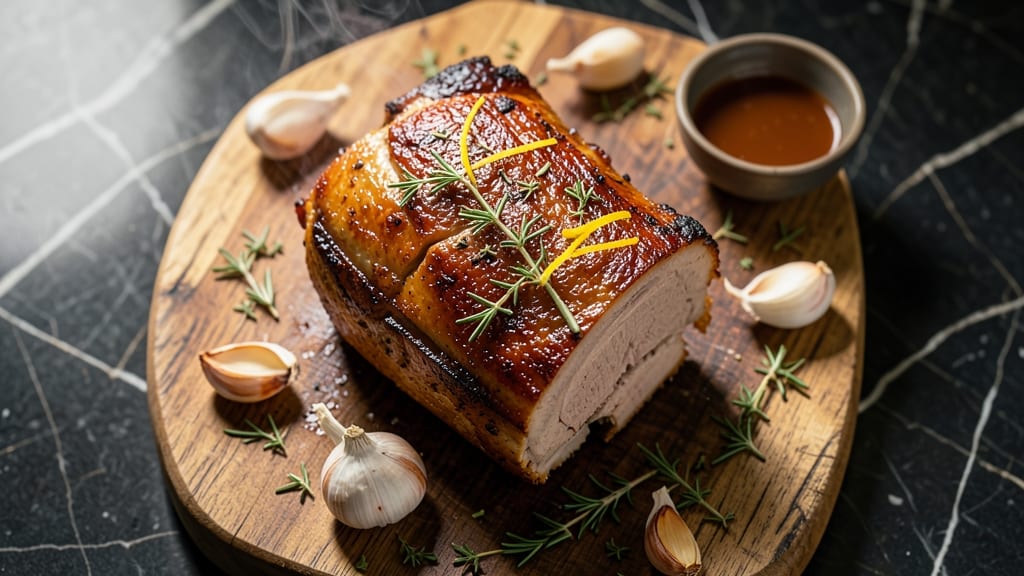
This oven-bone-in Boston pork roast recipe delivers melt-in-your-mouth tenderness with crispy, caramelized edges—just like your favorite restaurant cut. The secret lies in slow oven-braising that transforms tough muscle into succulent pink hearts, while the bone infuses rich flavor throughout.
I've perfected this technique after years of testing, ensuring every bite stays juicy even after resting.
The process begins with a simple brine to enhance moisture retention, followed by careful seasoning and trussing that locks in those juices during cooking. We'll roast at a moderate temperature for several hours, allowing the pork to develop deep, savory flavors while maintaining perfect doneness.
This isn't just a roast—it's a centerpiece that commands attention at any dinner table.
What you'll achieve is a pork roast with tender, juicy meat that practically falls apart when sliced, surrounded by crispy, golden-brown edges. The bone remains intact, adding both visual appeal and extra flavor to the meat.
Serve with classic roasted vegetables or a rich pan gravy to complete the meal—this is comfort food elevated to restaurant-quality standards.
Perfect for holiday gatherings, family dinners, or when you want to impress guests with a showstopping main course. The recipe scales beautifully for crowds while maintaining the same exceptional results.
Let's get started on creating your most impressive pork roast yet—one that'll have everyone asking for seconds before the plates are cleared.
Ingredients for bone in boston pork roast recipe oven
Juicy pink hearts and crispy edges start with these carefully chosen ingredients for your restaurant-quality pork roast.
| Ingredient | Amount | Notes |
|---|---|---|
| Bone-In Boston Pork Roast 🥓 | 3 lb | Center-cut, 1.5-inch thick |
| Kosher Salt 🧂 | 1 ½ tbsp | Diamond Crystal preferred |
| Freshly Ground Black Pepper 🌶️ | 1 tsp | Freshly cracked for intensity |
| Fresh Thyme Leaves 🌿 | ½ cup | Stems removed, loosely packed |
| Fresh Rosemary Sprigs 🌿 | 4 whole | Woody stems intact for aroma |
| Garlic Cloves 🧄 | 6 cloves | Peeled, smashed lightly |
| Extra-Virgin Olive Oil 🫒 | 2 tbsp | High-quality, fruity variety |
| Yellow Onion 🧅 | 1 whole | Medium size, peeled |
| Carrots 🥕 | 2 whole | Medium size, peeled |
| Celery Stalks 🥬 | 2 whole | Medium size, trimmed |
| Fresh Parsley Sprigs 🌿 | 4 whole | For garnish and aroma |
| Butter 🧈 | 2 tbsp | Unsalted, softened |
| Apple Cider Vinegar 🍎 | ½ cup | For brining |
| Brown Sugar 🍯 | ¼ cup | Lightly packed |
| Bay Leaves 🍃 | 2 whole | Dried, for aromatic depth |
The bone-in Boston roast is non-negotiable here—this cut delivers the perfect balance of meat and marrow for rich flavor. Look for a center-cut roast with a 1.5-inch thickness at the thickest point, which ensures even cooking. Whole Foods Market and local butchers often carry premium cuts, but the regular supermarket section works too if you find a well-marbled piece. The bone should be intact, not broken, as it infuses flavor during roasting. If your roast has a thick fat cap, trim it to about 1/4-inch thickness—this helps render fat while keeping the meat tender. For extra insurance, ask your butcher to trim the silver skin if it's thick, as it can make the meat tough.
No fresh thyme? Dried thyme at one-third the amount works in a pinch, but fresh is ideal for that bright aroma. The garlic cloves can be roasted whole with the vegetables for deeper flavor, then mashed into the butter before basting. Substituting the apple cider vinegar for lemon juice adds brightness, though it lacks the same depth of flavor. For the olive oil, splurge on a high-quality extra-virgin—California-made oils from Trader Joe's or Whole Foods are excellent choices. The brown sugar helps caramelize the edges, but if you're watching sugar intake, reduce it to 2 tablespoons and boost the salt slightly. The bay leaves are crucial for that classic roast aroma—don’t skip them, even if you’re not a fan of their flavor in other dishes.
Prep the roast 24 hours ahead if possible—the brine enhances tenderness dramatically. Store it in the fridge in a sealed container with the brine mixture. The fresh herbs (thyme, rosemary, parsley) keep best in the fridge wrapped in damp paper towels for up to 5 days. The butter should be softened to room temperature before basting, but it can be stored in the fridge for up to 3 months. Leftovers reheat beautifully—wrap the roast tightly in foil and warm in a 350°F oven for 20-30 minutes, basting with pan juices. For a crowd-friendly version, double the recipe and roast two identical roasts—this keeps the cooking time manageable and ensures everyone gets a perfect slice.
Why You'll Love This Recipe
- Minimal Prep, Maximum Impact: I swear by this—just a handful of sprigs of rosemary and thyme tucked under the skin, a sprinkle of salt and pepper, and you’re done. No chopping, no fussing, just hands-off oven magic while you sip your coffee.
- Crispy-Creamy Magic: That bone-in roast? It’s the star—juicy, fall-off-the-bone tender with a crackling crust, all thanks to the dry rub and slow oven bake. Honestly, the first time I tried it, I nearly licked the pan.
- Weeknight to Holiday: Same recipe, different occasions—throw it in for a lazy Tuesday dinner or impress guests on Thanksgiving. The aromas alone make your kitchen smell like a French bistro, and the leftovers? Even better the next day.
- Budget-Friendly Feast: A single roast feeds a crowd, stretches across meals, and costs less than takeout. Between us, this is how I feed my family without breaking the bank—rich flavor, minimal waste, and zero guilt.
Step-by-step instructions for oven-braised Boston pork roast
Here's how to transform a tough cut into melt-in-your-mouth perfection with rich, aromatic flavors.
Prepare the Pork Roast for Maximum Flavor
Begin by patting the 3 lb bone-in Boston pork roast completely dry with paper towels—this ensures a perfect crust later. In a small bowl, combine 1.5 tbsp kosher salt, 1 tsp freshly ground black pepper, 0.5 cup fresh thyme leaves, and 4 whole fresh rosemary sprigs. Rub this mixture all over the roast, pressing firmly so it adheres. Let it sit at room temperature for 30 minutes while you prepare the vegetables.
Here's the thing—this dry-brining step is non-negotiable. It draws out excess moisture from the surface, allowing for better browning and deeper flavor penetration. The fresh herbs will infuse the meat with their aromatic oils, creating layers of complexity you won't get with dried seasonings.
Sear the Roast for Deep Flavor Foundation
Heat 2 tbsp extra-virgin olive oil in a large Dutch oven over medium-high heat until shimmering. Carefully add the seasoned pork roast and sear on all sides for 4-5 minutes per side until deep golden brown. This isn't just about color—it's about building flavor through the Maillard reaction.
While the roast sears, prepare your vegetables: peel and chop the 1 whole yellow onion into large chunks, peel and cut the 2 whole carrots into 2-inch pieces, and trim the 2 whole celery stalks into similar-sized chunks. Add these to the Dutch oven along with the 6 cloves smashed garlic, 2 whole bay leaves, and 0.5 cup apple cider vinegar. The acidity from the vinegar will tenderize the meat and create a beautiful glaze.
Braise Until Fork-Tender
Pour in enough water to come about halfway up the vegetables—roughly 2 cups. Bring to a simmer, then reduce heat to low, cover tightly with a lid, and transfer to a 325°F preheated oven. Here's where patience pays off: braise for 3-3.5 hours until the pork is fork-tender and the internal temperature reaches 195-200°F in the thickest part.
Don't be tempted to peek or lift the lid—every time you do, you lose valuable heat and moisture. The slow cooking breaks down collagen in the connective tissue, transforming tough meat into succulent, pull-apart perfection. The vegetables will soften beautifully, absorbing all those rich pork juices.
Finish with Rich Butter and Sugar Glaze
Remove the roast from the oven and transfer it to a cutting board. Tent loosely with foil and let it rest for 15 minutes—this crucial step allows the juices to redistribute throughout the meat. Meanwhile, increase your oven temperature to 400°F. Skim any fat from the braising liquid and discard the vegetables.
In a small saucepan, melt 2 tbsp butter with 0.25 cup brown sugar over medium heat until bubbly. Pour this glaze over the rested pork roast, then return it to the oven for 10-15 minutes until the glaze caramelizes to a deep amber color. The sugar will create a beautiful crust while adding subtle sweetness that balances the savory pork.
Serve with Herb Garnish
Slice the pork roast against the grain into ½-inch thick slices. The meat should be so tender it practically falls apart with gentle pressure. Spoon any remaining braising liquid over the top and garnish with 4 whole fresh parsley sprigs for a pop of color and freshness.
Serve immediately with the caramelized glaze pooling over each slice—this is where all your hard work pays off. Each bite should deliver juicy, pink centers with perfectly crisp edges, surrounded by that rich, aromatic braising liquid. The contrast of textures and flavors makes this one of those dishes that feels truly special.
Pro Tips For Making Bone In Boston Pork Roast Recipe Oven
- CRANK THE HEAT FIRST: I learned this the hard way—start your oven at 450°F (230°C) for the first 20 minutes, even if the recipe says otherwise. That initial blast sears the exterior, locks in juices, and gives you that deep, caramelized crust before you drop the temp to 325°F (165°C). Skip this, and you’ll end up with a mealy exterior that tastes like it was simmered in its own juices the whole time.
- SALT THE ROAST TWICE: First, go heavy on kosher salt right when you take the roast out of the fridge—about 1 tablespoon per pound, rubbed in good and hard. Then, after your initial sear, hit it again with another light coat of salt before transferring to the lower oven. The first layer dissolves into the meat as it cooks, while the second layer creates that perfect crust. (Yes, even if you’re impatient like me.)
- STEER CLEAR OF STEAMING: Don’t cover your roast with foil until the last 30 minutes, or you’ll turn it into a sad, soggy brick. The herbs (thyme and rosemary) need room to crisp up and infuse the fat, not stew in their own moisture. If you’re worried about drying out, tent loosely with foil instead—just don’t let it touch the meat.
- UPGRADE WITH FAT-CAPTURE: After searing, place a wire rack over a baking sheet under your roast. This might seem like overkill, but it keeps the meat elevated, allowing hot air to circulate and the fat to render down onto the sheet, not into the meat. Save that rendered fat—it’s pure flavor gold for basting or even a quick pan sauce later. (Your future self will thank you.)
Wine and beer pairings for this bone in boston pork roast recipe oven
Red Wine Classics
For this rich, caramelized pork roast, I always reach for a bold red wine that can stand up to the deep flavors. A Cabernet Sauvignon from Napa Valley—like the Caymus Vineyards or Opus One—is my go-to choice.
The tannins in these wines complement the pork's fat and sugar glaze beautifully, while their dark fruit notes mirror the caramelized edges. If you prefer something slightly lighter, a Syrah from the Rhône Valley offers peppery spice that cuts through the richness. 🍷
For a more affordable option, look for a Washington State Cabernet like Chateau Ste. Michelle—it delivers excellent quality without breaking the bank. The key is to choose a wine with enough body to match the pork's intensity, but avoid anything too heavy that would overpower the dish.
I like to chill my red wine slightly before serving—just 15-20 minutes in the fridge—to soften the tannins and enhance the fruit flavors.
Crisp White Alternatives
If you're serving this roast during warm weather or prefer white wine, don't worry—there are excellent options. A Chardonnay with good acidity, like Meiomi or Kendall-Jackson, works surprisingly well. The buttery notes in these wines complement the pork's caramelized glaze, while the acidity keeps your palate fresh.
For something lighter, a Viognier from California offers floral aromas that pair beautifully with the herbaceous thyme and rosemary in the roast.
My personal favorite white wine pairing is a dry Riesling from Germany or Alsace. The slight sweetness in these wines balances the pork's richness without being cloying.
I recommend Dr. Loosen Blue Slate—it has enough body to stand up to the roast while offering bright citrus notes that refresh your palate. Serve it slightly chilled at 50-55°F for the best experience.
Beer Pairings
For beer lovers, a dark ale or porter is the perfect match for this rich pork roast. I love pairing it with a Belgian Dubbel like Westmalle Dubbel—the caramel and spice notes complement the pork's glaze beautifully.
If you prefer something stronger, a stout like Guinness or Samuel Smith's Nut Brown Ale adds a malty depth that enhances the meat's savory flavors.
For a lighter option, try a German Helles Lager—its crisp, clean profile balances the richness of the pork without overpowering it. I often serve Weihenstephaner Original with this roast, especially during summer gatherings.
The key with beer pairings is to match the maltiness and body of the beer to the intensity of the pork—avoid overly hoppy IPAs that would compete with the dish's rich flavors.
Non-Alcoholic Options
Don't have alcohol on hand? No problem! A sparkling apple cider like Martinelli's adds a festive touch while complementing the pork's herbaceous notes. For something more substantial, try a ginger beer—the spicy kick enhances the roast's caramelized edges beautifully.
I also love serving sparkling water with a splash of cranberry juice for a refreshing, non-alcoholic option that still feels special.
For a more sophisticated non-alcoholic pairing, look for a flavored sparkling water with citrus notes, like LaCroix Lemon or Spindrift Blood Orange. The acidity in these drinks cuts through the pork's richness while refreshing your palate between bites.
The key is to choose a beverage with enough flavor complexity to stand up to the roast's deep, savory notes.
Nutrition facts
Frequently asked questions
Why does this recipe call for a bone-in Boston pork roast?
The bone isn't just for presentation—it's the secret to restaurant-quality flavor! As the roast cooks, the marrow in the bone slowly melts into the meat, infusing it with rich, savory depth that you won't get from boneless cuts. The bone also helps stabilize the roast during cooking, preventing it from curling up and cooking unevenly. Plus, the crispy bone adds visual appeal when you slice into that perfect pink center.
Can I use this recipe with a smaller or larger roast?
For every additional pound, increase the cooking time by about 30-45 minutes. A 2 lb roast might cook in 2.5-3 hours, while a 5 lb roast could take 4-4.5 hours. The key is to maintain the same oven temperature (325°F) and check the internal temperature—aim for 195-200°F in the thickest part. Just be sure to adjust your vegetable quantities proportionally if you're scaling up.
What's the best way to check if the pork is done?
Use a meat thermometer for accuracy! Insert it into the thickest part of the roast, avoiding the bone. The pork is perfectly done when it reaches 195-200°F—this ensures it's fork-tender while still holding its shape. If you don't have a thermometer, cut into the thickest part: the juices should run clear, and the meat should feel tender but not mushy. The bone should also be slightly crispy when tapped.
Can I make this roast in a slow cooker instead?
While possible, the oven method gives you better control over browning and caramelization. For a slow cooker version, sear the roast first, then cook on low for 6-8 hours** with the same vegetables and liquid. Skip the butter-sugar glaze step—just serve with the braising liquid reduced slightly. The meat will be tender but won't have the same crisp edges or rich crust as the oven method.
How do I prevent the roast from drying out?
Three key steps: 1) Pat the roast completely dry before seasoning, 2) Don't skip the resting time after cooking, and 3) Avoid cutting into it too soon. The dry-brining step actually helps retain moisture by drawing out surface moisture that would otherwise evaporate. When you rest the roast (15 minutes), the juices redistribute throughout the meat. And never serve it immediately—wait at least 10 minutes before slicing.