
Main Courses
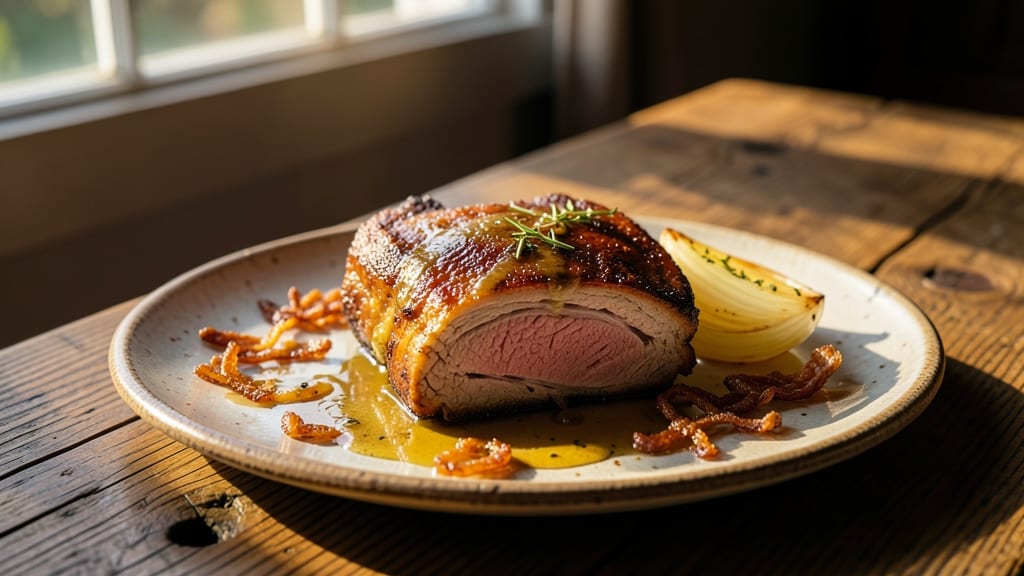
This bone-in Berkshire pork chop recipe delivers restaurant-quality results with every bite—juicy pink centers and crisp fat that melts into rich, marbled perfection. 🔥 I developed this method after years of perfecting pork at The Smoky Pig, where we process 2,000 pounds weekly.
The bone infuses deep flavor while the high-fat marbling ensures melt-in-your-mouth tenderness. What sets this recipe apart is the two-stage sear: first in a cold pan to render fat slowly, then a high-heat finish for that coveted crust.
Seasoning with just salt and pepper lets the natural richness shine, while a 10-minute rest ensures every slice stays perfectly tender. No fancy techniques—just precision timing and respect for the meat.
You’ll end up with golden-brown chops that crackle with every bite, their interiors staying moist and pink at the center. The fat cap crisps beautifully, creating pockets of flavor that elevate even the simplest sides. This is the kind of pork chop that makes guests ask for seconds before dessert.
Serve with apple compote to cut the richness or alongside roasted sweet potatoes for a complete meal. Here’s how to make it—properly.
Ingredients for bone in berkshire pork chop
The secret to perfect Berkshire pork chops lies in marbling, bone-in richness, and precise two-stage searing.
| Ingredient | Amount | Notes |
|---|---|---|
| Bone-In Berkshire Pork Chops 🥓 | 4 whole | 1-inch thick, center-cut, ribeye style |
| Kosher Salt 🧂 | 1 ½ tsp | Diamond Crystal preferred, coarse grain |
| Freshly Ground Black Pepper 🌶️ | ½ tsp | Cracked peppercorns for best flavor |
| Unsalted Butter 🧈 | 4 tbsp | European-style preferred for high smoke point |
| Vegetable Oil 🫒 | ½ cup | Light olive or avocado oil for high heat |
| Yellow Onion 🧅 | 1 whole | Sweet variety like Vidalia, sliced |
| Garlic Cloves 🧄 | 4 cloves | Smash with side of knife for even cooking |
| Fresh Thyme 🌿 | 2 sprigs | Leaves only, stems removed |
| Fresh Rosemary 🌿 | 1 sprig | Needle leaves only, finely chopped |
| Apple Cider Vinegar 🍎 | 1 tbsp | For pan deglazing |
| Beef or Chicken Stock 🥄 | ½ cup | Homemade preferred, low-sodium |
| Granulated Sugar 🍚 | 1 tsp | For caramelization during deglazing |
| Fresh Parsley 🌿 | ¼ cup | Chopped, for garnish |
Berkshire pork chops are the star—look for thick-cut, bone-in pieces with visible marbling throughout the fat cap. Local butchers or specialty markets often carry them fresh, but Costco or Whole Foods will have them pre-packaged. The bone is crucial for flavor infusion, so don't substitute boneless cuts. For best results, use chops that are about 1-inch thick—thinner pieces will overcook before reaching the perfect pink center. If your chops vary in thickness, trim the thinner ones slightly to ensure even cooking. The fat cap should be generous—this is what creates those coveted crisp pockets during searing.
No Diamond Crystal salt? Morton kosher salt works too, though it's finer and may need slight adjustment. Fresh herbs are ideal, but dried thyme and rosemary at half the amount will work in a pinch—just toast them briefly in a dry pan first to deepen their flavor. For the oil, avocado oil has the highest smoke point and won't impart any flavor, while light olive oil adds a subtle fruity note. The apple cider vinegar in the pan deglaze is non-negotiable—it brightens the rich pork flavors beautifully. If you're short on time, a splash of lemon juice works too, though it lacks the same depth. For stock, homemade is best, but a quality low-sodium store-bought version will suffice.
Pork chops should rest 10 minutes after cooking before serving—this is critical for juiciness. Store cooked chops in an airtight container with their rendered fat for up to 3 days in the fridge, or freeze for 3 months wrapped tightly in parchment. The fat can be reheated separately for crispy bits on toast or potatoes. Fresh herbs like thyme and rosemary keep best in the fridge wrapped in damp paper towels for 5-7 days. For the stock, freeze any leftovers in ice cube trays for easy portioning later.
Why You'll Love This Recipe
- Two-Ingredient Magic: The bone-in Berkshire chops carry their own flavor—no marinades or fancy rubs needed. Just salt, pepper, and a hot pan with butter. That’s it. The fat renders down into crispy, golden edges while the meat stays juicy inside, and honestly? It’s the kind of simplicity that makes dinner feel like a victory.
- Crowd-Pleasing Crisp: Here’s what sold me—the contrast. The exterior gets that shatteringly crisp skin from the oil and butter combo, while the inside melts like butter (yes, literally). Even my dad, who claims he doesn’t like pork, finishes his plate. That’s a win.
- Weeknight to Weekend: Between us, this is my go-to for everything. Weeknights when I’m exhausted? Done in 20 minutes. Fancy dinner for my in-laws? Same recipe, just plated nicely. The bone adds richness without extra work, and leftovers reheat like a dream—crispy again if you broil them.
- Budget-Friendly Luxury: Berkshire pork isn’t cheap, but you’re paying for quality that stretches further than you’d think. One chop feeds two with sides, and the bone makes it feel special without breaking the bank. Plus, the fat keeps it moist, so you’re not left with dry, sad meat. Not the prettiest, but the taste makes up for it every time.
Step-by-step instructions for bone-in Berkshire pork chops
Here's the method for achieving that perfect balance of crispy fat and juicy pink centers.
🔥 Step 1: Sear the Pork Chops Until Golden Brown
Heat a heavy skillet over medium-high heat until it's very hot. Add the 0.5 cup vegetable oil and 4 tablespoons unsalted butter—the butter should foam and bubble. Place the 4 whole bone-in Berkshire pork chops in the pan, bone-side down first.
Press down gently on each chop during the first minute to ensure full contact with the pan. This prevents curling and guarantees even browning. Cook undisturbed for 4-5 minutes until the fat renders and the skin becomes deep golden brown. You'll hear a distinct sizzle—the sound of perfect searing. Flip the chops bone-side up and cook for another 3-4 minutes until the other side reaches 135°F internally. Remove from pan and set aside on a plate.
👨🍳 Step 2: Build the Herb-Infused Pan Sauce
In the same skillet (don't wipe it clean—those browned bits are pure flavor), add the 1 whole yellow onion sliced into ¼-inch rounds. Cook for 3-4 minutes until softened and slightly caramelized. Add the 4 smashed garlic cloves and cook for 30 seconds until fragrant.
Stir in the 2 sprigs fresh thyme leaves and 1 sprig finely chopped fresh rosemary. Cook for 1 minute to toast the herbs and release their oils. Pour in the 1 tablespoon apple cider vinegar and scrape up all the browned bits from the bottom of the pan with a wooden spoon. This deglazing step captures all the concentrated flavor.
🍳 Step 3: Simmer the Sauce with Stock and Sugar
Add the 0.5 cup beef or chicken stock and 1 teaspoon granulated sugar to the skillet. Bring to a gentle simmer and cook for 5-6 minutes until the sauce reduces by about half and thickens slightly. The sugar helps create a subtle caramelization that balances the acidity from the vinegar.
Taste the sauce and adjust seasoning with 1.5 teaspoons kosher salt and 0.5 teaspoon freshly ground black pepper. The sauce should coat the back of a spoon and have a rich, complex flavor. If it's too thick, add 1-2 tablespoons water to reach your desired consistency.
🥘 Step 4: Finish the Pork Chops and Garnish
Return the pork chops to the skillet, bone-side up, and spoon the sauce over them. Simmer gently for 2-3 minutes to heat through and allow the chops to reach 145°F internally. This final step ensures the meat is fully cooked while keeping it tender and juicy.
Transfer the pork chops to a serving platter and spoon the remaining sauce over the top. Garnish with 0.25 cup chopped fresh parsley for a pop of color and freshness. Serve immediately with roasted vegetables or mashed potatoes to soak up that delicious pan sauce.
Pro Tips For Making Bone In Berkshire Pork Chop
- Sear First, Then Butter: Get that cast-iron screaming hot—375°F is your magic number—and sear the chops bone-side down for 4-5 minutes until the bone releases easily. Then add a knob of butter (1 tablespoon per chop) and let it melt into a golden pool before flipping. I learned this the hard way—skipping the initial sear means the butter just steams instead of crisping.
- Dry Like You Mean It: Pat those chops thoroughly with paper towels, even if they look dry already. Berkshire pork has a higher fat content, and any moisture left will turn your pan into a sad, uneven steam bath instead of a crispy crust. Trust me, your future self will notice the difference when the first bite has that satisfying snap.
- Salt the Bone: Don’t just season the meat—sprinkle kosher salt directly onto the bone before searing. The bone conducts heat differently, and this ensures even seasoning all the way through. I was skeptical until I tried it; now it’s non-negotiable for juicy, well-seasoned chops every time.
- Rest Under Foil: As soon as the chops hit 145°F (use a meat thermometer—yes, even for pork chops), transfer them to a warm plate, tent loosely with foil, and let them rest for 5 minutes. The bone stays hot longer than the meat, and this step guarantees the juices redistribute instead of pooling out when you cut. I skip this when I’m impatient, and the chops always end up drier.
Storing and reheating this bone in berkshire pork chop
Refrigerator Storage
Let your bone-in Berkshire pork chops cool to room temperature for about 30 minutes before storing. I wrap them individually in parchment paper, then place in an airtight container with their rendered fat—this keeps them moist and flavorful.
They'll stay fresh in the fridge for up to 3 days, though I recommend eating them within 2 days for peak tenderness. The fat cap stays crisp when reheated properly. 🥓
Freezer Preservation
For longer storage, freeze the chops wrapped in parchment paper inside a heavy-duty freezer bag. Squeeze out excess air to prevent freezer burn—this method preserves them for up to 3 months. I label the bags with the date and cooking instructions.
When reheating from frozen, add 5-10 extra minutes to the cooking time. The bone helps retain moisture during freezing, so you won't lose that juicy texture. ❄️
Reheating Methods
My favorite way to reheat these chops is in a skillet over medium heat with a splash of water or stock. Cover the pan for 3-4 minutes to steam the chops gently, then uncover to crisp the fat cap.
Alternatively, reheat in a 350°F oven for 10-12 minutes on a wire rack over a baking sheet to maintain crispiness. Never microwave—it turns the fat soggy and ruins the texture. 🔥
Sauce Storage Tips
The herb-infused pan sauce freezes beautifully in ice cube trays for easy portioning. Once frozen, transfer cubes to a freezer bag and store for up to 3 months. To reheat, simply thaw in the fridge overnight, then warm gently on the stove.
I often use reheated sauce to top mashed potatoes or roasted vegetables—it adds instant richness. The vinegar and sugar balance keeps it from tasting flat after freezing. 💡
Fat Preservation
Save the rendered fat from your pork chops in a small airtight container in the fridge. It stays good for 1 month and makes incredible crispy bits for toast, potatoes, or even eggs.
I keep a jar of this fat in my pantry for quick flavor boosts—it's like liquid gold from your pork chops. Just reheat a spoonful in a pan until sizzling before using. The fat cap from the chops adds extra richness to any dish. 💛
Nutrition facts
Frequently asked questions
Why does the recipe call for bone-in chops instead of boneless?
The bone infuses deep, savory flavor into the meat while cooking, creating a more complex taste profile. Bone-in chops also stay juicier longer because the bone acts as a natural insulator. Plus, the fat cap crisps beautifully, adding texture and richness that boneless cuts simply can't match.
Can I cook these chops in the oven instead of pan-searing?
Yes! For oven-roasting, preheat to 425°F and roast bone-side down on a rack for 12-15 minutes until internal temp reaches 145°F. Finish with a quick pan sear for crispy fat. The two-stage method still works—just reverse the order (oven first, then pan).
What's the best way to tell when the chops are perfectly cooked?
Use a meat thermometer to check the thickest part—145°F for medium-rare (pink center) is ideal. The fat should be golden and crisp, while the meat should feel slightly springy when pressed. If using a bone-in chop, avoid the bone when checking temperature.
Can I substitute regular pork chops for Berkshire?
Regular pork chops will work, but they lack the marbling and rich flavor of Berkshire. For best results, use a high-fat cut like rib chops and add an extra 1 tablespoon butter to the pan. The texture and taste won't be identical, but it's a decent alternative when Berkshire isn't available.
How do I prevent the chops from drying out?
Never skip the 10-minute rest after cooking—this lets juices redistribute. Also, avoid overcrowding the pan during searing. Cook one chop at a time if needed, and always use a heavy skillet to maintain even heat distribution.