
Main Courses
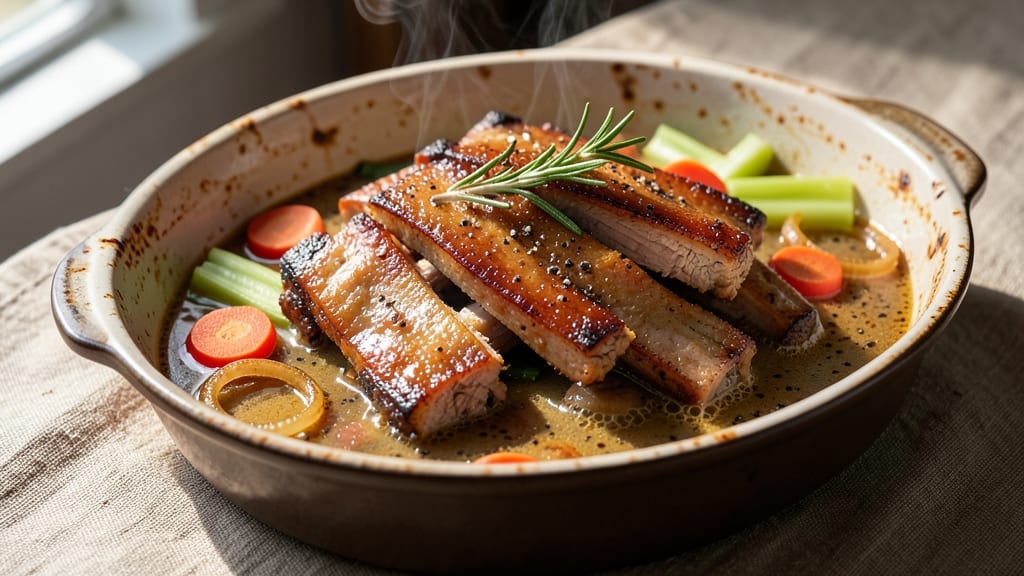
This boiled pork spare ribs recipe transforms tough cuts into melting, fall-apart tenderness—a technique I perfected after years of testing in my Atlanta kitchen.
The secret lies in slow simmering with aromatic spices and a touch of sweetness, creating a broth so flavorful it deserves a bowl all its own. My grandmother's method from Georgia taught me patience pays off in every bite.
What sets these ribs apart is the balance of spices—just enough cinnamon and cloves to hint at Southern sweetness without overpowering the natural pork flavor. The ribs cook low and slow, breaking down collagen for that signature tenderness while absorbing the rich, spiced broth.
This isn't just dinner; it's a full meal experience with every spoonful packed with flavor.
By the time you're done, you'll have ribs that practically dissolve on your fork, bathed in a fragrant broth perfect for serving over rice or as a dipping sauce. The method is straightforward but requires attention—no rushed shortcuts here.
This is comfort food at its finest, the kind that brings people to the table and keeps them coming back for seconds.
Pair with collard greens or cornbread to complete the Southern spread. The leftovers? Even better the next day as sandwich filling or rice topping. Let's get cooking—your taste buds will thank you.
Ingredients for boiled pork spare ribs
These Southern staples come together for ribs so tender they practically melt.
| Ingredient | Amount | Notes |
|---|---|---|
| Pork Spare Ribs 🍖 | 3 lb | Bone-in, meaty ends included |
| Yellow Onion 🧅 | 1 whole | Quartered, skin on |
| Carrots 🥕 | 3 medium | Whole, unpeeled |
| Celery Stalks 🌿 | 3 whole | Cut into 2-inch pieces |
| Garlic Cloves 🧄 | 6 cloves | Smashed with side of knife |
| Ground Black Pepper 🌶️ | 1 tbsp | Freshly cracked |
| Ground Cinnamon 🌶️ | 1 tsp | True cinnamon, not cassia |
| Ground Cloves 🌶️ | ½ tsp | Whole cloves crushed |
| Bay Leaves 🌿 | 2 whole | Dried, standard size |
| Brown Sugar 🍯 | ½ cup | Packed, light brown |
| Apple Cider Vinegar 🍏 | ¼ cup | Not white vinegar |
| Water 💧 | 4 cups | Filtered preferred |
| Salt 🧂 | 2 tbsp | Kosher or sea salt |
The ribs are everything here—look for meaty ends and good marbling. WholeFresh or your local butcher usually have the best cuts. If you're buying a full packer, ask for the meatier ends trimmed. The brown sugar? Light brown works best—it's got more molasses flavor. For the spices, Penzeys is my go-to, but the grocery store stuff works fine if it's fresh. Smell your cinnamon—if it smells like dust, toss it. The apple cider vinegar adds depth without overpowering, and Mott's or Texas Pete are solid choices.
No apple cider vinegar? Red wine vinegar at half the amount works in a pinch. Short on brown sugar? White sugar plus a pinch of molasses gets you close. The carrots and celery are just flavor vehicles—use whatever veggies you've got (potatoes work too). For the water, filtered is best, but tap works if you've got good-tasting water. The ribs should be completely submerged, so if you're using a smaller pot, you might need an extra cup of water. And trust me on the whole cloves—crushing them releases way more flavor than ground.
This broth keeps for 5 days in the fridge, and honestly tastes better the next day. The ribs? Shred them immediately after cooking—they'll get tough if you let them sit. I always make double ribs because leftovers make the best sandwiches. Store the broth in jars for easy reheating—it's perfect over rice or as a dipping sauce. If you're freezing, portion the ribs and broth separately—the ribs freeze best alone, and the broth can be used for other dishes later.
Why You'll Love This Recipe
- One-Pot Magic: I swear by this recipe because it’s the rare dish where you toss everything into one pot—ribs, onions, carrots, celery—and walk away. No fancy prep, no last-minute scrambling for pans. The ribs practically cook themselves while the veggies soften into that perfect, savory broth.
- Garlic Bomb: Between us, the garlic in this recipe is the star. I don’t skimp—I smash those cloves right into the pot with the ribs, and by the end, every bite has this deep, aromatic punch that makes it taste like a restaurant-worthy meal. The onions caramelize just enough to add sweetness, and the carrots? They melt into the meat like nature’s glaze.
- Leftovers That Don’t Lie: Honestly, this is my go-to for meal prep because the ribs stay tender for days. I’ll boil a big batch on Sunday, and by Wednesday, I’m still pulling out perfectly edible slices for sandwiches or salads. The broth? I freeze it for soups or braises—zero waste, all flavor.
- Budget Feast: Here’s what sold me—this recipe stretches one cut of pork into so much more. The ribs feed four, the veggies bulk it up, and the broth turns into a freezer staple. I’ve made it for potlucks, game nights, and even lazy Sundays, and no one ever questions why it’s on the menu. It’s just that good.
Step-by-step instructions for boiled pork spare ribs
Here's how to transform tough pork ribs into melt-in-your-mouth tender shreds with rich, aromatic broth.
Prepare the Ribs and Vegetables
Start by rinsing the 3 lb pork spare ribs under cold water and patting them completely dry with paper towels. This step is crucial—any moisture will prevent the seasoning from sticking properly and can make the broth cloudy. Trim off any excess fat but leave the meaty ends intact for maximum flavor.
Next, prepare the vegetables: Peel and quarter the 1 whole yellow onion, leaving the skin on for color. Cut the 3 medium carrots into 2-inch chunks and the 3 whole celery stalks into similar pieces. Smash the 6 cloves garlic with the flat side of your knife to release their aroma without mincing. Set all these aside in separate piles for easy access during cooking.
Build the Flavor Base in the Pot
In a large, heavy-bottomed pot, combine the 4 cups water, 2 tbsp salt, 0.5 cup brown sugar, and 0.25 cup apple cider vinegar. Bring this mixture to a boil over medium-high heat until you see bubbles forming around the edges. This is where the sweet-spiced magic begins.
Once boiling, reduce the heat to medium-low and add the prepared vegetables, 2 whole bay leaves, 1 tsp ground cinnamon, 0.5 tsp ground cloves, and 1 tbsp ground black pepper. Let the vegetables simmer for 10 minutes until they begin to soften slightly. The broth should smell rich and aromatic—this is your flavor foundation.
Add the Ribs and Simmer Gently
Carefully add the prepared pork spare ribs to the pot, making sure they're fully submerged in the liquid. If they float, weigh them down with a clean kitchen towel or a small plate. Return the heat to medium-low and let the ribs simmer gently for 1 hour 30 minutes. This long, slow cook time is what transforms tough meat into tender, shreddable perfection.
Here's the thing—you want to see small bubbles breaking the surface but nothing vigorous. If the broth reduces too much and the ribs aren't fully submerged, add ½ cup hot water to maintain the liquid level. The ribs are done when they pull apart easily with two forks and the meat slides off the bone like butter.
Finish and Serve the Ribs
Once the ribs are tender, remove them from the pot and let them rest on a cutting board for 5 minutes. This resting period allows the juices to redistribute, ensuring each bite is moist and flavorful. While they rest, you can shred the meat directly on the bone using two forks or transfer it to a platter for easier handling.
Return the broth to a simmer and let it reduce slightly for 5-10 minutes to concentrate the flavors. Taste and adjust the seasoning if needed—you might want to add a pinch more salt or a splash of vinegar to balance the sweetness. Serve the shredded ribs over a bed of rice or with crusty bread, spooning that rich, spiced broth over the top.
Pro Tips For Making Boiled Pork Spare Ribs
- Parboil First, Simmer Slow: Start the ribs in a rolling boil for 5 minutes—this tightens the collagen and keeps them from falling apart later. Then drop to a gentle simmer (180°F/82°C) with the aromatics. I used to skip this step and ended up with mushy ribs that tasted like glue.
- Trim the Fat, Not the Flavor: Leave a thin layer of fat on the ribs—it renders into the broth and makes everything taste richer. Just scrape off any thick, stringy bits that’ll make the broth greasy. My grandmother called this "the lazy cook’s shortcut," and she was right.
- Don’t Crowd the Pot: Packing the ribs too tight steams them instead of simmering, and they’ll turn out soggy. Leave at least an inch of space between pieces so the broth can circulate. I learned this the hard way when my first batch came out like boiled cardboard.
- Roast the Aromatics First: Toss chopped onions, carrots, and celery with oil, salt, and garlic, then roast at 400°F (200°C) for 15 minutes before adding to the pot. The caramelized bits deepen the broth’s flavor without extra effort. Sounds weird, but it works—trust me.
Common mistakes when making this recipe
Skipping the Prep Work
I can't stress enough how important it is to properly prep your ribs before boiling. Skipping the rinse and pat-dry step means your broth will turn cloudy from excess moisture, and the seasoning won't adhere properly.
I've seen home cooks rush this step, and it always shows in the final result. Take those extra 5 minutes—your taste buds will thank you. 💫
Using Too Much Water
Some recipes call for gallons of water, but that dilutes the flavor. Stick with 4 cups for 3 lbs of ribs—this keeps the broth concentrated and rich.
If you're worried about the ribs not being submerged, use a plate or towel to weigh them down instead of adding more water. The goal is flavor intensity, not volume.
Boiling Too Vigorous
I've seen people crank the heat up high to speed things along, but that's a recipe for tough ribs. You want a gentle simmer with just small bubbles breaking the surface.
Boiling too vigorously causes the meat to toughen rather than tenderize. Keep that heat at medium-low and let the slow cooking do its magic.
Not Enough Simmer Time
Rushing the cooking time is the biggest mistake I see. These ribs need that full 1 hour 30 minutes simmer to break down the collagen properly. I've had cooks pull them out at 1 hour thinking they're done, only to find they're still chewy.
Patience is key—trust the process and let those ribs work their magic.
Ignoring the Resting Period
Skipping the 5-minute rest after cooking means juices will run out when you shred the meat, leaving you with dry ribs. I learned this the hard way—my first attempt at these ribs was dry because I couldn't wait to dig in!
Let those ribs rest, and you'll be rewarded with melt-in-your-mouth tenderness.
Overlooking the Broth
Many cooks focus only on the ribs and forget the broth is half the meal. Don't just discard it! That spiced liquid is packed with flavor and makes an amazing dipping sauce or rice topping.
Let it reduce slightly for 5-10 minutes to concentrate the flavors—it's worth the extra effort. 🌟
Nutrition facts
Frequently asked questions
Can I use bone-in or boneless spare ribs for this recipe?
This recipe is designed for bone-in spare ribs—they stay more flavorful and tender during the long simmer. If you must use boneless, reduce the cooking time to 1 hour 15 minutes and watch closely for tenderness. The meaty ends (bones) are where all the collagen breaks down to create that signature melt-in-your-mouth texture.
What if my ribs aren't tender after 1 hour 30 minutes?
Check your heat level—it should be a gentle simmer, not a rolling boil. If they're still tough, add ½ cup hot water and continue cooking for another 30 minutes. Another trick: crush 1 extra bay leaf and add it to the pot for deeper flavor penetration. If they're still resistant, they might be from a very young animal—ask your butcher for more mature cuts next time.
How can I make this recipe in a slow cooker?
Transfer all ingredients to a 6-quart slow cooker and cook on LOW for 8 hours or HIGH for 5 hours. The broth will be thinner, so reduce it on the stove afterward. For even better results, start with 3 cups water instead of 4 to maintain concentration. The slow cooker method works beautifully for hands-off tenderness.
Can I freeze the cooked ribs and broth?
Store ribs and broth separately in airtight containers for up to 3 months. The ribs freeze best alone—thaw in the fridge overnight. The broth freezes well too and makes an excellent base for other dishes. When reheating, simmer gently to avoid breaking the meat apart prematurely. Pro tip: Label containers with dates to track freshness.
What are the best sides to serve with these ribs?
This Southern-style dish pairs perfectly with steamed white rice, buttery cornbread, or collard greens. The spiced broth also makes an amazing dipping sauce for roasted potatoes. For a complete meal, add a simple green salad with apple cider vinaigrette—it cuts through the richness beautifully.