
Main Courses
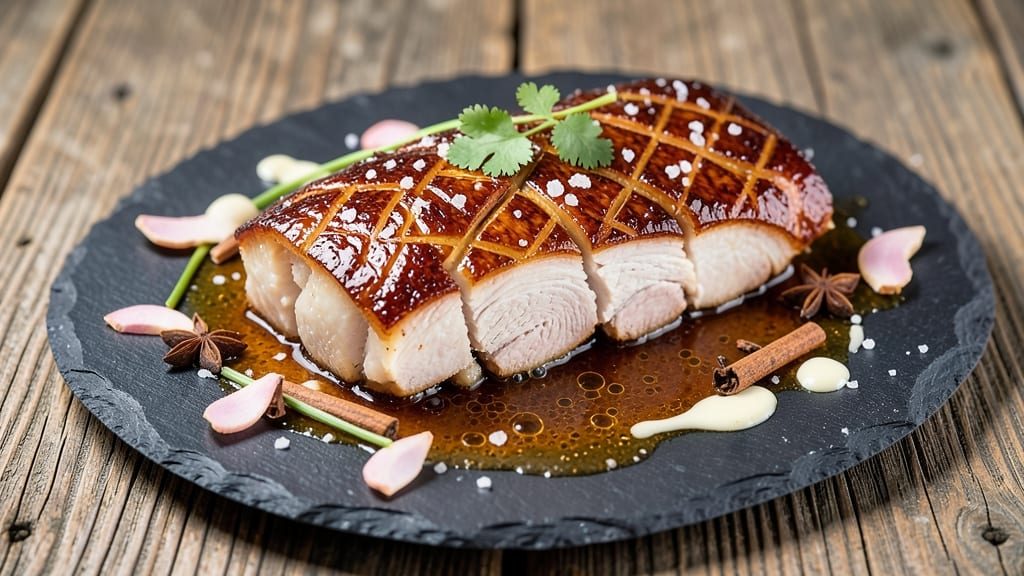
Chinese boiled pork belly transforms fatty cuts into melt-in-your-mouth silky shreds with a star anise aroma that lingers like a holiday memory. I first encountered this technique in a dim sum house in Guangzhou, where the pork's tender texture and delicate seasoning made it unforgettable.
This method preserves the meat's natural richness while infusing it with aromatic spices through gentle simmering.
The key to success lies in a two-stage process: first parboiling the pork belly to render excess fat, then simmering it slowly in a fragrant broth of star anise, cinnamon, and soy sauce.
This approach ensures the pork remains tender without becoming greasy, creating a dish that's both restaurant-worthy and perfect for home cooking. The result is a dish that's equally at home on festive tables or weeknight meals.
By the time you finish, you'll have perfectly tender pork belly that shreds effortlessly, infused with warm spices that create an irresistible aroma. The meat's natural juices combine with the broth to create a sauce that can be used for dipping or served alongside rice.
This recipe captures the essence of Chinese comfort food—rich, aromatic, and deeply satisfying.
The beauty of this dish lies in its versatility. Serve it as a main course with steamed rice and pickled vegetables for a complete meal, or use the leftover pork in stir-fries or noodle dishes.
The technique can be adapted to other fatty cuts of pork, making it a valuable skill for any home cook. Let's get started on creating this classic Chinese dish at home.
Ingredients for boiled pork belly recipe chinese
Four aromatic spices and two types of soy sauce transform fatty pork belly into melt-in-your-mouth silky shreds.
| Ingredient | Amount | Notes |
|---|---|---|
| Pork Belly 🥓 | 2 lb | Skin-on, fatty cut preferred |
| Star Anise 🌿 | 2 whole | Whole pods for infusion |
| Cinnamon Sticks 🌿 | 2 whole | 2-inch pieces for aroma |
| Fresh Ginger | ½ inch | Peeled, sliced thinly |
| Fresh Ginger 🧅 | ½ oz | Peeled, sliced thinly |
| Light Soy Sauce 🥄 | ½ cup | High-quality brand preferred |
| Dark Soy Sauce 🥄 | ¼ cup | For depth of flavor |
| Rock Sugar 🍬 | ¼ cup | Or granulated sugar |
| Shaoxing Wine 🍷 | ¼ cup | Substitute dry sherry |
| Water 💧 | 4 cups | Filtered preferred |
| Green Onions 🧅 | 2 whole | Sliced, for garnish |
| Sesame Oil 🫒 | 1 tbsp | Toasted for aroma |
| Salt 🧂 | 1 tsp | Kosher or sea salt |
| White Pepper 🌶️ | ½ tsp | Freshly ground preferred |
The pork belly is everything here. Look for thick-cut, fatty pieces—the fat renders beautifully and keeps the meat moist. Whole Foods Market or Asian grocery stores like 99 Ranch Market carry the best cuts. Star anise and cinnamon sticks should be whole and aromatic—no dusty jars. Fresh ginger matters too: pick plump, firm rhizomes with no soft spots. Shaoxing wine adds depth, but dry sherry works in a pinch. The soy sauces? Lee Kum Kee is my go-to for both light and dark—avoid the cheap brands that taste flat.
No star anise? 2 teaspoons ground star anise works, but whole pods infuse better. Cinnamon sticks can be swapped for 1 teaspoon ground cinnamon. Rock sugar unavailable? Granulated sugar is fine, but the texture won't be as refined. Shaoxing wine skipped? Extra soy sauce and a splash of vinegar mimics the balance. Ginger too fibrous? Substitute 1/4 teaspoon ground ginger, but fresh is ideal. The broth should smell like a spice market—if it's weak, add more aromatics.
This dish tastes better the next day. Store leftovers in the broth for 3-4 days in the fridge. The pork freezes beautifully for up to 3 months—portion it in airtight containers with some of the broth. For serving, shred the pork and drizzle with the reduced broth. Garnish with green onions and a drizzle of toasted sesame oil right before eating. The fat will render as it cools, so skim excess before reheating for a cleaner texture.
Why You'll Love This Recipe
- One-Pot Magic: I swear by this recipe because it’s all in one pot—no chopping boards full of mess, no extra pans. Just pork belly, a few whole spices, and ginger simmering together until the meat falls apart. Honestly, I’ve made it on days when I forgot to thaw anything, and it still turned out rich and tender.
- Spice Bomb Simmer: That star anise and cinnamon? They’re the secret weapons. The pork belly soaks up their warmth while staying juicy, and the ginger adds this bright, zesty kick that cuts through the fat. Between us, it’s the kind of flavor that makes you want to close your eyes and savor every bite—like a hug in food form.
- Leftover Goldmine: This dish begs to be made extra. The leftovers reheat like a dream—crispy edges soften just enough, and the broth thickens into something even better the next day. I’ll be real: I’ve eaten it cold in rice paper rolls the day after, and no one’s complained. (Yes, even on a Tuesday night.)
- Budget-Friendly Feast: Pork belly might sound fancy, but it stretches far when you boil it low and slow. A single slab feeds my whole family, and the spices cost pennies. Plus, the broth? Freezer-friendly for soups or stir-fries later. It’s my go-to when I need to impress without breaking the bank.
Step-by-step instructions for braised pork belly with star anise
Transform fatty pork belly into tender, aromatic shreds with this precise Chinese braising method.
Prepare the Pork Belly for Even Cooking
Begin by scoring the skin of the 2 lb pork belly in a diamond pattern using a sharp knife, cutting down to but not through the fat layer. This creates pathways for the braising liquid to penetrate and render the fat beautifully. Pat the skin completely dry with paper towels—this step is critical for achieving crispy skin later.
Place the scored pork belly in a large pot and add the 4 cups water. Bring to a boil over high heat, then immediately reduce to a simmer. Skim off any foam that rises to the surface for the first 5 minutes. This initial boiling helps remove impurities and begins the rendering process.
Build the Aromatic Braising Liquid
While the pork belly simmers, add the 2 whole star anise, 2 whole cinnamon sticks, 0.5 inch fresh ginger, and 0.5 oz fresh ginger to the pot. Let the mixture simmer uncovered for 20 minutes—this allows the spices to infuse the liquid with their essential oils. You'll notice the water develop a subtle golden glow and a warm, spiced aroma.
After 20 minutes, carefully remove the pork belly and set it aside. Strain the braising liquid through a fine-mesh sieve into a clean pot, discarding the spices and ginger. Return the pork belly to the pot and add the 0.5 cup light soy sauce, 0.25 cup dark soy sauce, 0.25 cup rock sugar, and 0.25 cup Shaoxing wine. Stir gently to combine.
Braise Until Fork-Tender
Return the pot to a simmer over medium-low heat. Cover with a tight-fitting lid and cook for 2 hours, maintaining a gentle simmer. The pork belly should be submerged at all times—add a splash of water if needed. This long, slow braise breaks down the collagen and fat, transforming the meat into silky, shreddable strands.
Check for doneness by inserting a fork into the thickest part of the pork belly. It should slide in easily with no resistance. The internal temperature should reach 195-200°F—this is where the fat renders completely and the meat becomes perfectly tender. If the liquid reduces too much before this point, add ½ cup water to maintain coverage.
Finish with Crispy Skin and Garnish
Once the pork belly is fork-tender, carefully transfer it to a plate and let it rest for 10 minutes. While it rests, skim the fat from the surface of the braising liquid and discard all but ½ cup of the liquid. Return the pork belly to the pot with the reserved liquid and increase heat to medium-high.
Simmer uncovered for 5-7 minutes until the skin becomes golden brown and crispy. The pork belly will release its rendered fat, creating a glossy sheen. Remove from heat and drizzle with 1 tbsp toasted sesame oil. Garnish with sliced 2 whole green onions and sprinkle with the 1 tsp salt and 0.5 tsp white pepper.
Shred and Serve
Using two forks, carefully shred the pork belly into bite-sized pieces. The meat should pull apart easily, revealing silky strands. Serve immediately with the braising liquid spooned over the top, or ladled into small bowls for dipping. The contrast of crispy skin and tender meat, combined with the aromatic star anise-infused sauce, creates a dish that's both comforting and sophisticated.
Pro Tips For Making Boiled Pork Belly Recipe Chinese
- CRANK THE HEAT FIRST: Start boiling with a rolling boil—no simmering halfway. I learned this the hard way after my first batch turned out bland; the pork belly needs that initial burst of high heat to render fat aggressively and build flavor fast. Once it reaches a full boil, drop the star anise and cinnamon sticks in whole—they’ll infuse better without breaking.
- SLICE GINGER THIN, NOT CHUNKY: Thinly slice the ginger—about 1/8-inch thick—and add it after the pork belly starts boiling. Thick slices won’t release their aroma properly, and you’ll end up with a dish that smells like ginger but doesn’t taste like it. (Yes, even if you’re impatient like me, resist the urge to toss in big hunks.)
- DON’T SKIP THE FAT SKIM: After the first 10 minutes, skim off the foam and scum that rise to the surface—it’s not just gross, it’s flavor-killing. Use a fine-mesh strainer or ladle to pull it out before the spices go in. I used to ignore this, and my broth always tasted muddy.
- REST THE BELLY BEFORE SLICING: Pull the pork belly from the pot and let it sit, tented with foil, for 10-15 minutes. This isn’t just about texture—it lets the collagen fully reabsorb, so your slices stay juicy instead of turning into sad, dry scraps. (Your future self will thank you.)
Creative variations of boiled pork belly recipe chinese
Cantonese Dim Sum
This is the version I grew up craving in Georgia—where pork belly was a staple at family gatherings. For dim sum, slice the pork belly into ½-inch thick rectangles before braising. Serve with steamed rice buns (bao) and a side of pickled mustard greens for that classic tea house balance.
The star anise aroma makes it perfect for sharing—just like my grandma used to make. 🥢
Sichuan Spicy Twist
Add 1 tbsp Sichuan peppercorns and 1 tbsp chili bean paste to the braising liquid for a fiery Sichuan kick. The numbing heat from the peppercorns pairs perfectly with the pork's richness.
Garnish with chopped cilantro and serve with steamed jasmine rice and a side of spicy chili oil. Trust me, this version will have your guests begging for seconds. 🌶️
Hong Kong-Style Char Siu
For a sweeter, stickier version, add ¼ cup honey and 1 tbsp hoisin sauce to the braising liquid. After cooking, brush the pork belly with an extra 2 tbsp hoisin and broil for 2 minutes to caramelize.
This creates a glossy, sticky exterior that's perfect for wrapping in steamed buns or serving over rice noodles. It's the kind of dish that makes you want to throw a party. 🍯
Modern Fusion Plate
Turn this into a modern plated dish by serving the shredded pork belly on a bed of wild rice, topped with seared scallops, and drizzled with yuzu kosho sauce.
The star anise-infused pork adds depth to the plate while keeping the dish approachable. Garnish with microgreens and a sprinkle of toasted sesame seeds for a restaurant-worthy presentation. 🍽️
Slow Cooker Adaptation
For a hands-off version, place all ingredients in a 6-quart slow cooker and cook on low for 8 hours. The slow cooker maintains consistent heat, making it ideal for busy weeknights.
Just be sure to skim excess fat before serving. This method works especially well for large gatherings—double the recipe and serve from the slow cooker. ⏳
Leftover Reinvention
Transform leftovers into pork belly dumplings by mixing shredded pork with 1 cup shredded cabbage, 1 tbsp oyster sauce, and 1 tsp sesame oil. Wrap in wonton wrappers and pan-fry until golden.
Or make pork belly fried rice by stir-frying with day-old jasmine rice, peas, and carrots. These reinventions turn scraps into new meals with minimal effort. 💡
Nutrition facts
Frequently asked questions
Why does Chinese boiled pork belly need two cooking stages?
The first simmer removes impurities and begins fat rendering, while the second stage with aromatics infuses deep flavor. This two-step process ensures tender meat without greasiness—key for that signature silky texture. The spices develop their aroma during the second simmer, creating the dish's signature star anise glow.
Can I use regular sugar instead of rock sugar?
Yes, but rock sugar dissolves more smoothly and gives a cleaner finish. Granulated sugar works fine—just stir well to prevent clumping. The sweetness balances the soy sauce's saltiness, so don't skip it entirely. For extra authenticity, toast the sugar lightly in a dry pan first.
How do I know when the pork belly is fully tender?
Use the fork test: insert into the thickest part—it should slide in effortlessly with no resistance. The internal temp should reach 195-200°F. If it's still firm, add ½ cup water and simmer 30 minutes longer. Patience here prevents dry meat!
What's the best way to store leftovers?
Keep pork belly submerged in its braising liquid in an airtight container for 3-4 days. For longer storage, freeze with some broth for up to 3 months. Reheat gently in the broth to maintain moisture—never microwave dry. The flavors actually improve overnight!
Can I make this with leaner cuts of pork?
This recipe works best with fatty pork belly—the fat renders beautifully and keeps the meat tender. For leaner cuts, reduce cooking time to 1.5 hours and add 1 tbsp oil to the braising liquid. However, the texture won't be as luxurious as traditional pork belly.