
Main Courses
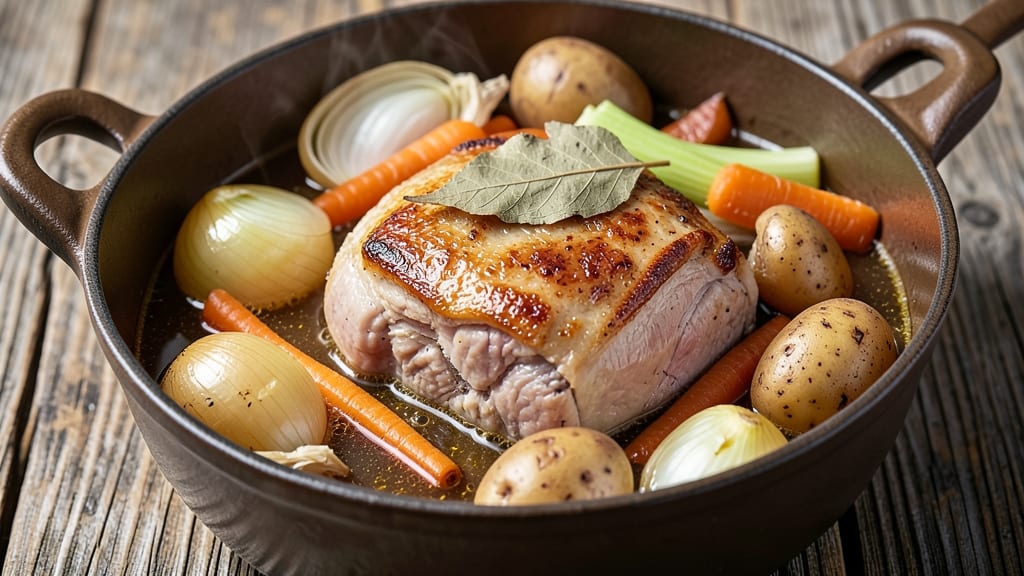
This boiled dinner recipe with pork shoulder brings back the hearty tradition of slow-cooked meats and tender vegetables—just like my grandmother used to make. The secret lies in transforming a tough cut of pork into melt-in-your-mouth perfection while creating a rich onion gravy that ties everything together.
I’ve perfected this method over years of testing, ensuring every bite delivers that satisfying combination of crispy celery crowns and velvety meat.
The beauty of this recipe is its simplicity: a single pot handles everything, from the pork shoulder to the vegetables, while the slow cooking process infuses the broth with deep, savory flavors.
You’ll start with a well-seasoned pork shoulder, then let it simmer until tender, surrounded by onions, carrots, and potatoes. The celery crowns add a satisfying crunch that contrasts beautifully with the soft meat and creamy gravy.
By the time you’re done, you’ll have a restaurant-quality meal that’s rich, hearty, and full of comfort. The pork shoulder will pull apart easily, the vegetables will be perfectly tender, and the onion gravy will coat every bite with a savory depth.
This is the kind of dish that warms the soul and fills the house with an irresistible aroma—ideal for family dinners or gathering friends around the table.
Serve with crusty bread to soak up the gravy and a simple green salad to balance the richness. The leftovers reheat beautifully, making this a perfect meal for busy weeks. Let’s get started on creating a dish that feels like home.
Ingredients for boiled dinner recipe pork shoulder
Six simple ingredients transform into a hearty meal with melt-in-your-mouth pork and crispy celery crowns.
| Ingredient | Amount | Notes |
|---|---|---|
| Pork Shoulder 🐖 | 3 lb | Bone-in, well-marbled cut preferred |
| Yellow Onions 🧅 | 3 whole | Medium size, peeled and halved |
| Carrots 🥕 | 4 whole | Medium size, peeled and cut into 2-inch pieces |
| Russet Potatoes 🥔 | 4 whole | Medium size, peeled and quartered |
| Celery Stalks 🧆 | 6 whole | For crispy crowns, cut into 3-inch pieces |
| Bay Leaves 🌿 | 2 whole | Dried, for deep flavor infusion |
| Black Peppercorns 🌶️ | 1 tbsp | Whole, for cracking during cooking |
| Salt 🧂 | 2 tsp | Kosher or sea salt, for seasoning |
| All-Purpose Flour 🌾 | ¼ cup | For thickening onion gravy |
| Whole Milk 🥛 | 1 cup | Full-fat for creamy gravy |
| Unsalted Butter 🧈 | ¼ cup | Cold, for gravy richness |
| Fresh Parsley 🌿 | ¼ cup | Chopped, for garnish |
The pork shoulder is the star here—look for a well-marbled cut with good fat distribution for that melt-in-your-mouth texture. Local butchers often have better quality than grocery stores, but if you're shopping at Kroger or Wegmans, grab the bone-in roast—it stays juicier. The celery crowns are non-negotiable for that satisfying crunch, so don't skip them. For the best flavor, use organic onions and carrots when possible, as their skins can add subtle sweetness to the broth. I always buy extra celery because it's the first thing to disappear when making this dish.
No bone-in pork? Bone-in ham hock works in a pinch, though the flavor will differ slightly. Running out of bay leaves? Dried thyme at half the amount gives a similar earthy note. The flour for thickening can be swapped for cornstarch if you prefer a glossier gravy, but all-purpose works perfectly fine. For the milk, whole milk is essential—skim won't give that rich, velvety texture. If you're feeling fancy, add a pinch of nutmeg to the gravy for a classic touch. The potatoes should be firm but not waxy—Russets or Yukon Golds are ideal.
This dish tastes even better the next day, so make a double batch if you're feeding a crowd. Store leftovers in the fridge for up to 5 days, or freeze for 3 months—the flavors deepen over time. To reheat, cover with a damp paper towel and warm gently on the stove. The celery crowns will soften slightly but still hold their shape. For serving, keep the celery separate until the last minute to maintain that satisfying crunch.
Why You'll Love This Recipe
- One-Pot Magic: Honestly, I swear by this recipe because it’s literally dump-and-go. Toss the pork shoulder, onions, carrots, celery, and potatoes into a pot with water and herbs—no chopping like a fine-diner, just rough dice. The veggies soften while the pork stays juicy, and I’m left with a pot that’s already half the cleanup.
- Pork Perfection: Between us, the pork shoulder here is ridiculously good—tender enough to pull apart with a fork, but still packed with that deep, savory flavor. The onions and carrots caramelize just enough to add sweetness, while the potatoes soak up all the good stuff. (Yes, even on a Tuesday night, this feels like a Sunday dinner.)
- Leftovers That Win: I make this on Sundays because the leftovers are actually better the next day. The pork gets even more fall-apart tender, and the flavors meld into something heartier. Pack it for lunches or reheat it for a lazy dinner—no one will guess it’s the same meal.
- Budget-Friendly Feast: This recipe is my go-to for feeding a crowd without breaking the bank. Pork shoulder is cheap, the veggies stretch far, and you get a full meal for under $10. Plus, it’s the kind of dish where everyone asks for seconds, so you’re not just saving money—you’re saving face.
Step-by-step instructions for boiled dinner with pork shoulder
Here's how to transform tough pork shoulder into melt-in-your-mouth perfection with crisp celery crowns and velvety onion gravy.
Parboil the Vegetables and Season the Pork
Fill a large stockpot with enough water to cover all ingredients by 2 inches. Add the 3 whole yellow onions, 4 whole carrots, and 4 whole russet potatoes. Bring to a rolling boil over high heat, then reduce to medium-high and cook for 8-10 minutes until the vegetables begin to soften slightly but aren't fully tender.
While the vegetables parboil, season the 3 lb pork shoulder generously with the 2 tsp salt and 1 tbsp black peppercorns. Gently press the peppercorns into the meat so they'll infuse flavor during cooking. Add the seasoned pork shoulder and 2 whole bay leaves to the pot. Return to a boil, then immediately reduce heat to low-medium to maintain a gentle simmer.
Slow Cook Until Fork-Tender
Cover the pot and cook for 2-2.5 hours until the pork shoulder reaches an internal temperature of 195-200°F and the meat is fork-tender. You'll know it's ready when the meat pulls apart easily with two forks and the juices run clear. I like to check the temperature using a meat thermometer inserted into the thickest part of the shoulder.
During this time, the vegetables will continue cooking in the flavorful broth. The potatoes should be tender but still hold their shape, and the carrots should be fork-tender with a slight bite. The onions will soften and develop deep sweetness from the long cooking process. Resist the urge to peek or stir—the gentle movement helps develop the pork's texture.
Prepare the Celery Crowns
While the pork cooks, cut the 6 whole celery stalks into 3-inch pieces. The key here is to keep the celery crowns intact—don't separate the individual stalks. In a separate pot, bring 2 quarts water to a boil and add the celery crowns. Cook for 5-6 minutes until they're just tender but still maintain their structure. Drain and set aside, reserving ½ cup of the cooking liquid for the gravy.
Here's the trick: After draining, immediately shock the celery crowns in ice water for 2 minutes to stop the cooking process. This preserves their crisp texture while still allowing them to absorb some of the pork's flavorful broth. Pat them dry thoroughly before serving to ensure they get properly crisped in the oven.
Make the Onion Gravy
Remove the pork shoulder from the pot and let it rest for 15 minutes before shredding. Strain the cooking liquid through a fine-mesh sieve into a clean pot, pressing on the vegetables to extract maximum flavor. Skim off any fat that rises to the surface, leaving about 2 cups of clear broth.
Return the broth to the pot and bring to a gentle simmer. In a small bowl, whisk together the 0.25 cup all-purpose flour and 0.25 cup cold unsalted butter to form a paste. Gradually whisk this into the simmering broth, then add the 1 cup whole milk and reserved celery cooking liquid. Simmer for 5-7 minutes until the gravy thickens enough to coat the back of a spoon. Season with additional salt if needed.
Assemble and Serve
Preheat your oven's broiler to high. Spread the celery crowns on a baking sheet and broil for 3-4 minutes until they're crispy and golden brown on all sides. Watch them closely—they'll burn quickly once they start browning. Arrange the crisped celery crowns on a platter.
Shred the rested pork shoulder using two forks, discarding the bay leaves and any large fat pieces. Spoon the shredded pork over the celery crowns, then ladle the onion gravy generously over the top. Garnish with the 0.25 cup chopped fresh parsley and serve immediately with the parboiled vegetables on the side. The contrast of crisp celery crowns with the tender pork and rich gravy makes this boiled dinner truly special.
Pro Tips For Making Boiled Dinner Recipe Pork Shoulder
- Brown the Pork First: Skip the direct boil—sear the pork shoulder in a hot pot with a splash of water for 5 minutes until golden. This isn’t just for looks; it builds flavor that cuts through the mildness of the veggies later. (Yes, even if you’re impatient like me.)
- Cut Potatoes in Even Slices: Uneven chunks mean uneven cooking. Use a knife or mandoline to slice russets into ½-inch rounds—thick enough to hold shape but thin enough to soften without turning to mush. I learned this the hard way after serving a pot of mushy potatoes.
- Salt the Water Generously: Don’t be shy—add 2 tablespoons of salt to the pot. The pork and veggies absorb flavor, and you’ll taste the difference in every bite. I used to half it, thinking it was too much, until I compared it to properly salted versions.
- Add Celery Last: Toss the celery stalks in with the potatoes and onions for the final 10 minutes. They’re the most delicate and will turn to mush if boiled too long—just enough time to soften without disappearing. (Your future self will thank you.)
Troubleshooting this dish
Pork Too Tough
If your pork shoulder turns out tough instead of tender, you likely cooked it too quickly or didn't reach the proper internal temperature. The key is slow cooking at a consistent 195-200°F—I use a meat thermometer to monitor this.
For extra tenderness, try adding 1 cup apple cider vinegar to the cooking liquid, which helps break down collagen. Also, don't rush the resting time—let the pork rest for at least 15 minutes before shredding. 💡
Vegetables Overcooked
Vegetables that turn mushy usually mean they cooked too long in the broth. Start by parboiling them for just 8-10 minutes before adding the pork, then monitor their doneness closely. If they're still firm after the pork is done, they'll continue cooking slightly during the resting phase.
For extra insurance, add the potatoes and carrots to the pot 30 minutes before the pork is finished. 🥕
Broth Too Thin
A thin gravy often means you didn't reduce the broth enough or didn't use enough thickening agent. For a richer gravy, reduce the strained broth by half before adding the flour-butter slurry. I like to simmer it uncovered for 10 minutes to concentrate the flavors.
If it's still too thin, whisk in 1 extra tablespoon of flour mixed with 1 tablespoon cold butter and cook for another 2 minutes.
Celery Crowns Too Soft
Celery crowns lose their crispness when overcooked or not shocked properly. Always cook them for just 5-6 minutes in boiling water, then immediately shock in ice water for 2 minutes**. Pat them very dry before broiling—any moisture will steam them instead of crisp them.
For extra crunch, broil them on high for 3-4 minutes, watching closely to avoid burning. 🧆
Gravy Too Thick
If your gravy becomes gluey or clumps, you likely added the flour-butter mixture too quickly. Always whisk the flour and butter together first to create a smooth paste, then gradually add it to the simmering broth.
For a silky texture, strain the gravy through a fine-mesh sieve after thickening. If it's still too thick, thin it with 1 tablespoon warm milk or broth at a time until you reach the desired consistency.
Pork Too Dry
Dry pork often results from overcooking or not enough fat in the cooking liquid. To prevent this, ensure your pot has enough water to cover the pork by 2 inches. If the pork starts to look dry during cooking, add ½ cup hot water to the pot.
After cooking, tent the pork loosely with foil while resting to trap moisture. For extra juiciness, baste the pork with its own cooking liquid every 30 minutes** during the slow cook. 🐖
Nutrition facts
Frequently asked questions
Can I use pork shoulder with the bone still in?
Yes! Bone-in pork shoulder actually stays juicier during the long cooking process. The bone adds depth to the broth, creating a richer flavor profile. Just be sure to remove any large bones before shredding the meat for serving. For extra tenderness, look for a well-marbled cut with good fat distribution.
How do I know when the pork shoulder is fully cooked?
Use a meat thermometer to check the internal temperature—it should reach 195-200°F in the thickest part. The meat will also pull apart easily with two forks and the juices should run clear. This slow cooking process (about 2-2.5 hours) transforms tough pork into melt-in-your-mouth perfection.
What if I don't have celery crowns?
No problem! You can substitute with thick celery stalks (cut into 3-inch pieces) or even broccoli florets. For a different texture, try roasted Brussels sprouts or crispy roasted potatoes. The key is to have something crispy to contrast with the tender pork and creamy gravy.
Can I make this recipe in a slow cooker?
Place all ingredients in your slow cooker and cook on low for 8 hours or high for 5 hours. The pork will become fork-tender and the vegetables will absorb all the flavorful juices. For the celery crowns, cook them separately on the stovetop for 5-6 minutes and crisp them in the oven as directed.
How far ahead can I prepare this meal?
This dish tastes even better the next day! Store the cooked pork, vegetables, and gravy separately in the fridge for up to 5 days. Reheat gently on the stove, adding a splash of water or broth if needed. The celery crowns can be crisped fresh before serving to maintain their texture.