
Main Courses
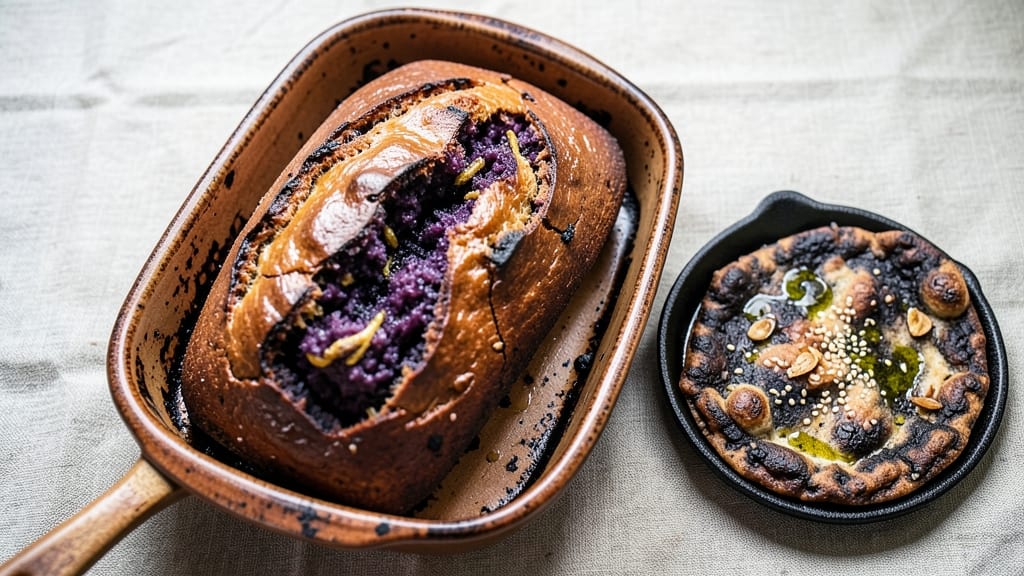
This black rice bread recipe transforms simple ingredients into a stunning deep purple loaf with irresistible toasted sesame crunch. The key lies in balancing black rice flour's unique texture with proper hydration and fermentation—no special equipment required.
I developed this recipe after years of perfecting the art of artisan bread, ensuring every slice delivers both visual drama and satisfying chew.
The result is a bread with a rich, earthy flavor and striking purple hue that disappears as it toasts, revealing a tender crumb and crispy sesame-studded crust. Perfect for sandwiches, toast, or as an elegant centerpiece, this recipe includes vegan-friendly options while maintaining professional-quality results.
Let's get started with the step-by-step process that ensures success every time.
Ingredients for black rice bread
Artisan-quality ingredients meet ancient grains for this visually stunning, deeply flavorful loaf.
| Ingredient | Amount | Notes |
|---|---|---|
| Black Rice Flour 🌾 | 2 ½ cups | High-quality, finely milled preferred |
| All-Purpose Flour 🌾 | 1 ½ cups | King Arthur or similar |
| Instant Yeast 🍞 | 2 ¼ tsp | Freshly opened for best results |
| Granulated Sugar 🍚 | ¼ cup | Organic preferred for purity |
| Salt 🧂 | 1 ½ tsp | Diamond Crystal kosher preferred |
| Extra-Virgin Olive Oil 🫒 | ½ cup | High-quality, fruity variety |
| Warm Water 💧 | 1 ½ cups | 105-110°F for yeast activation |
| Toasted Sesame Seeds 🥜 | ½ cup | Freshly toasted for maximum crunch |
| White Sesame Seeds 🥜 | ¼ cup | For visual contrast |
| Honey 🍯 | 1 tbsp | Raw, unprocessed preferred |
| Whole Milk 🥛 | ¼ cup | Full-fat for optimal texture |
| Vegan Butter 🧈 | ¼ cup | Miyoko's or Earth Balance |
| Active Dry Yeast 🍞 | ½ tsp | For second rise |
The black rice flour is the heart of this recipe—seek out Bob's Red Mill or Anthony's Goods for the finest quality. Freshly milled flour delivers superior texture and color intensity, though pre-milled options work well. For sesame seeds, Whole Foods or Trader Joe's carry freshly toasted varieties that elevate the crust's crunch. The yeast should be freshly opened—old yeast compromises rise. Diamond Crystal kosher salt is preferred for its clean flavor profile, though any fine sea salt will suffice. Extra-virgin olive oil should have a fruity aroma and peppery finish—avoid heavily processed brands.
No black rice flour? Substitute with 1 cup whole wheat flour plus 1.5 cups all-purpose—color will be muted but texture remains intact. Sesame seed allergies? Swap for toasted pumpkin seeds or sunflower seeds at equal volume. Vegan option? Replace the whole milk with unsweetened almond milk and vegan butter for all fat components. Honey can be omitted entirely for a strictly plant-based version, though flavor complexity will diminish slightly. Olive oil shortages? Avocado oil or vegetable oil work in a pinch, though flavor differs subtly.
Store unbaked dough in the fridge for up to 24 hours wrapped tightly in plastic. Freshly baked loaves keep well at room temperature for 2 days, wrapped in a clean kitchen towel. For longer storage, freeze fully cooled loaves in airtight bags for up to 3 months—thaw at room temperature before serving. Toasted sesame seeds lose crunch quickly; store them in the freezer to preserve freshness. Reheat slices in a toaster or oven at 350°F for 3-5 minutes to restore crispiness.
Why You'll Love This Recipe
- No-Knead Magic: I swear by this dough—just mix, let it rise, and you’re done. The black rice flour gives it that deep, nutty richness without the fuss of shaping or waiting forever.
- Earthy Crunch: That first bite? The toasted black rice flour adds a subtle crunch and a hint of caramelized sweetness—like a cross between sourdough and a dark chocolate croissant.
- Breakfast to Brunch: Freeze half the loaf for quick toast or French toast later. Honestly, it’s my go-to for lazy mornings or when I need to impress guests without stressing.
- Budget-Friendly Staple: A single batch costs pennies and keeps for days. Between us, this is the kind of bread that makes grocery shopping feel like a win.
Step-by-step instructions for black rice bread
Mastering this vibrant loaf requires precision with the black rice flour and careful yeast handling.
Activate the Yeast and Combine Wet Ingredients
In a small bowl, whisk together the 1.5 cups warm water (between 105-110°F), 2.25 tsp instant yeast, 1 tbsp honey, and 0.25 cup whole milk. Let this mixture sit for 5-7 minutes until it develops a frothy head with bubbles along the edges. This confirms the yeast is active and ready to work. If no activity occurs, your yeast may be expired or the water too hot—start fresh with new yeast.
In a separate large bowl, combine the 0.5 cup extra-virgin olive oil, 0.25 cup granulated sugar, and 0.25 cup vegan butter softened to room temperature. Whisk until fully emulsified and smooth. The olive oil adds richness while the sugar helps develop the bread's subtle sweetness and promotes browning during baking. This mixture should be homogeneous with no visible oil separation.
Mix Dry Ingredients and Form the Dough
In the same large bowl, sift together the 2.5 cups black rice flour and 1.5 cups all-purpose flour to aerate the mixture. Add the 1.5 tsp salt and whisk to distribute evenly. The black rice flour will give your bread its distinctive deep purple hue and nutty flavor profile, while the all-purpose flour provides structure. Create a well in the center and pour in the yeast mixture and oil emulsion.
Using a wooden spoon or dough whisk, gradually incorporate the dry ingredients into the wet mixture until a shaggy dough forms. The black rice flour has a higher protein content than white flour, so you'll need to work the dough slightly longer than with traditional bread recipes. Once combined, sprinkle 0.5 cup toasted sesame seeds and 0.25 cup white sesame seeds over the dough and gently fold them in by hand to distribute evenly throughout.
Knead Until Elastic and Smooth
Transfer the dough to a lightly floured surface and knead for 8-10 minutes by hand or 5-6 minutes using a stand mixer with a dough hook attachment. The dough should become smooth, elastic, and slightly tacky to the touch. The black rice flour requires more kneading time than all-purpose flour alone—press your finger into the dough; it should spring back slowly rather than immediately. If the dough feels too sticky, add 1 tablespoon of flour at a time until it reaches the proper consistency.
Shape the dough into a round loaf and place it in a lightly greased 9x5-inch loaf pan. Cover with a clean kitchen towel and allow it to rise in a warm place for 1-1.5 hours, or until it has nearly doubled in size. The dough should feel light and springy when pressed gently. This first rise develops the gluten structure and allows the yeast to ferment properly, creating that airy texture essential for black rice bread.
Second Rise and Final Preparation
Punch down the risen dough to release any large air bubbles, then shape it back into the loaf pan. Sprinkle the top with an additional 1 tablespoon of toasted sesame seeds for extra crunch. Cover again and let it rise for another 30-45 minutes until it has risen about 50% from the previous height. This second rise ensures proper oven spring and a light crumb structure.
Preheat your oven to 350°F and place a baking sheet on the lower rack. This creates steam during baking, which helps develop the bread's crust and prevents it from drying out. Once the oven reaches temperature, bake the bread for 45-50 minutes, until the top is deep golden brown and an instant-read thermometer inserted into the center reads 190-195°F. The bread should sound hollow when tapped on the bottom.
Cool and Slice for Maximum Flavor
Remove the bread from the pan and transfer it to a wire rack to cool completely for at least 1 hour. The black rice flour continues to develop its flavor as it cools, so patience here is crucial. The bread's interior should be moist but not gummy, with a tender crumb and those beautiful purple streaks from the black rice flour.
Slice the bread with a serrated knife for clean cuts that showcase the sesame seed topping and the distinctive purple hue throughout. The contrast between the toasted sesame seeds and the deep purple crumb makes this bread as visually stunning as it is delicious. Store any leftovers wrapped in a bread bag at room temperature for up to 3 days, or freeze for longer storage.
Pro Tips For Making Black Rice Bread
- Sift the Flours Together: Black rice flour is dense—don’t just dump it in. Mix it with all-purpose flour in a fine-mesh sieve first. This prevents lumps in your dough and makes the texture lighter, especially when shaping the bread. I learned this after dealing with two batches of gummy, uneven loaves.
- Bloom Yeast in Warm Water: Skip the dry yeast shortcut—activate it in warm (not hot) water with a pinch of sugar for 5 minutes before mixing. This guarantees your dough rises faster and more evenly, especially with black rice flour’s heavier weight. I used to skip this, and my bread always took twice as long to proof.
- Don’t Overmix the Dough: Black rice flour absorbs liquid differently—mix just until combined, then stop. Overworking it turns the dough tough and dense. Use a dough scraper to fold gently if needed. I’ve ruined a loaf by kneading too long, and it tasted like a brick.
- Proof at Room Temp, Not Cold: Cold proofing slows yeast activity, but black rice dough needs warmth to rise properly. Let it sit in a draft-free spot (75°F/24°C) until doubled—about 1–1.5 hours. I once left mine in the fridge overnight, and it never came back. Lesson learned.
Regional styles of this recipe
Japanese Black Rice Bread
In Japan, this bread is known as kurogoma pan (黒ごまパン), where it's often served with matcha green tea for breakfast. The Japanese version replaces sesame seeds with toasted black sesame seeds (kurogoma) and sometimes incorporates red bean paste (anko) into the dough for a sweet variation.
Look for Japanese black rice flour (available at specialty Asian markets) for a more authentic flavor profile and deeper purple color. 🌸
Thai Purple Rice Bread
Thailand's version, called khao tom khao (ข้าวต้มข้าว), transforms black rice into a sweet, sticky bread. The Thai adaptation uses black glutinous rice flour instead of regular black rice flour, creating a denser, moister texture.
Add coconut milk (replacing some water) and palm sugar (instead of granulated sugar) for authentic sweetness. Garnish with toasted coconut flakes and crushed peanuts for a tropical twist.
American Artisan Adaptation
Many American bakers create a sourdough black rice bread by replacing half the yeast with a sourdough starter. This version develops a tangy depth over 24-48 hours of fermentation. Use apple cider vinegar (1 tsp) to enhance the sourdough flavor.
The crust becomes extra crispy, while the crumb remains tender. Perfect for farmers' market toast with local honey and butter.
Vegan Black Rice Banh Mi
For a Vietnamese-inspired twist, shape the bread into mini loaves and stuff with vegan pâté, pickled daikon, and toasted baguette slices. The black rice flour adds a striking purple contrast to the sandwich fillings.
Use hoisin sauce (ensure vegan) and sriracha for dipping. This version is a crowd-pleaser at vegan potlucks or as a gourmet lunchbox option. 🥖
Mexican Cinnamon-Spiced Version
Mexican bakers often infuse the dough with cinnamon and orange zest for a festive holiday bread. Replace the sesame seeds with toasted pumpkin seeds (pepitas) and add chopped dried apricots for sweetness.
Brush the baked loaf with honey butter (mix honey and vegan butter) for a caramelized finish. This version pairs beautifully with Mexican hot chocolate or coffee.
Korean Sweet Rice Bread
In Korea, this bread is called kkulttae ppang (꿀떡빵), where it's traditionally made with sweet rice flour (but black rice flour works beautifully). Korean bakers often add sesame oil (instead of olive oil) and a pinch of black pepper for warmth.
Garnish with crushed pine nuts and dried persimmons for a luxurious texture. Serve warm with black sesame syrup for dipping. 🌿
Nutrition facts
Frequently asked questions
Why does my black rice bread turn out dense instead of light?
The black rice flour absorbs more moisture than regular flour, so over-kneading or under-hydrating the dough is the most common cause. Use the full 1.5 cups warm water and knead for only 8-10 minutes by hand. If the dough feels too sticky, add flour 1 tablespoon at a time—never rush the kneading process.
Can I make this bread without a loaf pan?
Shape the dough into a free-form round loaf on a parchment-lined baking sheet. For extra crustiness, brush with olive oil before baking. The baking time will be slightly longer (50-55 minutes) at 350°F—check internal temperature with a thermometer (190-195°F).
How do I store leftover black rice bread?
Wrap cooled slices in a bread bag or airtight container and store at room temperature for 2-3 days. For longer storage, freeze slices on a tray first to prevent sticking, then transfer to a freezer bag for up to 3 months. To revive, toast in a toaster or warm in the oven at 300°F for 5-7 minutes.
What's the best way to substitute black rice flour?
For the deepest purple color, use 1 cup whole wheat flour + 1.5 cups all-purpose flour—though the hue will be lighter. For a gluten-free option, replace with 1:1 black rice flour blend (like Bob's Red Mill GF mix) and add 1 tsp xanthan gum to maintain structure.
Can I make this bread without dairy?
Yes! Simply replace the whole milk with unsweetened almond milk and the vegan butter for all fat components. The texture remains tender, though the crust may be slightly less golden. For extra richness, add 1 tbsp coconut oil to the wet ingredients.