
Main Courses
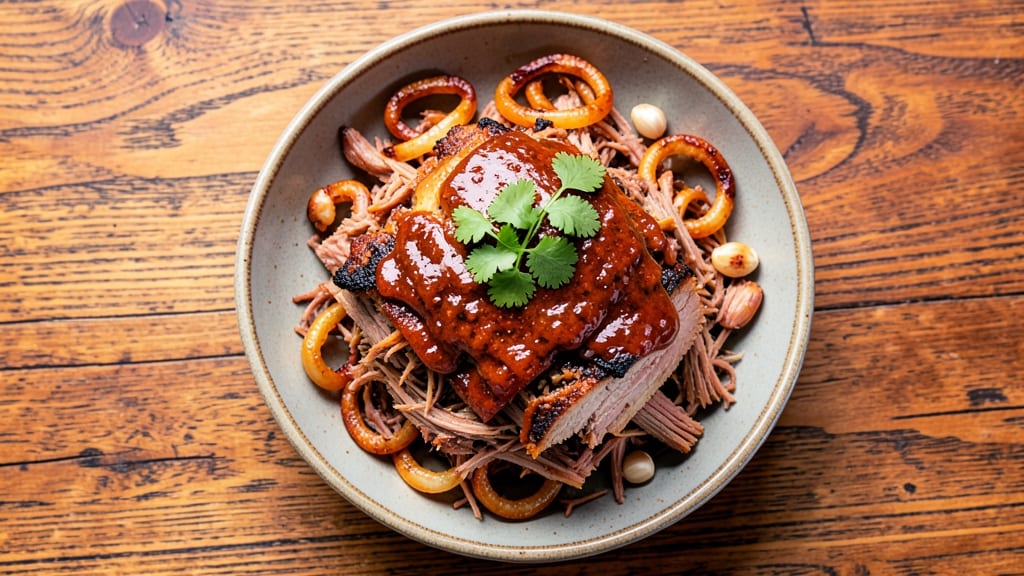
This pulled pork recipe for a crowd delivers restaurant-quality tenderness that disappears into every bite, perfectly balanced with smoky heat. I've been perfecting this method for years—starting with a well-marbled pork shoulder, slow-smoked until it falls apart, and finished with a sauce that brings everyone back for seconds.
The key? Low-and-slow cooking that transforms tough meat into melt-in-your-mouth perfection, even when feeding 10+ people.
What sets this recipe apart is the foolproof technique that ensures juicy, flavorful pork every time—no guesswork, no dry meat. We'll use a simple dry rub for the initial seasoning, then let the smoker (or oven) work its magic for hours, creating that signature bark while keeping the inside tender.
The sauce comes together quickly, with just the right balance of sweet, tangy, and smoky flavors that complement the meat without overpowering it.
By the time you're ready to serve, you'll have shreds that pull effortlessly, a sauce that clings to every bite, and a crowd that won't believe it was made at home.
This recipe scales perfectly for gatherings, tailgates, or family dinners—just double the ingredients and let the slow cooker do the work. The best part? Leftovers reheat beautifully, so you'll have pulled pork for days.
Pair it with classic sides like tangy coleslaw, buttery cornbread, or crispy pickles to round out the meal. Whether you're hosting a backyard barbecue or feeding a hungry family, this pulled pork delivers professional results with minimal effort.
Let's get started on creating a dish that'll have everyone asking for the recipe.
Ingredients for best pulled pork recipe for a crowd
Restaurant-quality pulled pork starts with a well-marbled pork shoulder and a simple dry rub.
| Ingredient | Amount | Notes |
|---|---|---|
| Boneless Pork Shoulder 🐖 | 8 lb | Well-marbled, 3-4 inches thick |
| Yellow Onion 🧅 | 2 whole | Yellow or red, sliced |
| Garlic Cloves 🧄 | 8 cloves | Fresh, minced for rub |
| Smoked Paprika 🌶️ | ½ cup | High-quality for smoky flavor |
| Brown Sugar 🍚 | ¼ cup | Light or dark, packed |
| Kosher Salt 🧂 | 2 tbsp | Diamond Crystal preferred |
| Ground Black Pepper 🌶️ | 1 tbsp | Freshly cracked |
| Mustard Powder 🥫 | 1 tbsp | Yellow or Dijon |
| Apple Cider Vinegar 🍎 | ½ cup | For tangy balance |
| Ketchup 🍅 | 1 cup | Heinz preferred |
| Honey 🍯 | ¼ cup | Wildflower preferred |
| Wood Chips 🌳 | 2 cups | Hickory or oak, soaked |
| Wood Chips 🌳 | 2 cups | Hickory or oak, soaked |
| Water 💧 | ½ cup | For wood chip soaking |
| Butter 🧈 | 2 tbsp | Unsalted, for finishing |
The pork shoulder is non-negotiable—look for a cut with good marbling at Costco or your local butcher. A 3-4 inch thick cut ensures even cooking. For the dry rub, Penzeys or bulk bins at Whole Foods have the best quality smoked paprika. The brown sugar should be packed—it's key for that caramelized bark. If you can't find hickory chips, oak works too. Soak them for at least 30 minutes before using. The apple cider vinegar adds that tangy kick that balances the sweetness in the sauce.
No smoked paprika? Substitute with a mix of regular paprika and liquid smoke—start with half the amount of liquid smoke and adjust to taste. Running short on honey? Maple syrup works beautifully. For a quicker version, use a slow cooker—just add 1 cup of broth and cook on low for 8 hours. The butter at the end is crucial—it adds richness and helps the sauce cling to the meat. If you're feeding a larger crowd, simply double the ingredients and increase cooking time proportionally. The ketchup can be swapped for tomato paste if you prefer a thicker sauce.
Leftovers reheat beautifully—just add a splash of broth or apple juice to keep them moist. Store in an airtight container in the fridge for up to 5 days or freeze for 3 months. For serving, keep the pulled pork warm in a slow cooker set to 'warm'—it stays tender and juicy. The dry rub can be made ahead and stored in an airtight container for 2 weeks. If you're using a smoker, maintain a steady temperature of 225°F for optimal results. This recipe scales perfectly for gatherings, so don't hesitate to double or triple it for larger crowds.
Why You'll Love This Recipe
- One-Pan Magic: I swear by this—just toss the pork shoulder, onions, and garlic in one pot with the spices, and walk away. No flipping, no fussing, no extra dishes. The brown sugar caramelizes right there, making cleanup a joke.
- Smoky-Sweet Obsession: That combo of smoked paprika and brown sugar? It’s like a hug in food form. The pork falls apart at the touch of a fork, and the garlic-infused onions add this deep, savory punch that makes everyone reach for seconds.
- Party-Proof Staple: Game day, potlucks, or just a lazy Sunday—this feeds a crowd without stress. I’ve served it on sliders, tacos, or straight from the pot with buns, and it’s always the first thing gone. (Yes, even on a Tuesday night.)
- Budget Win: A whole pork shoulder costs less than takeout for two, and it stretches across meals. Leftovers? Perfect for sandwiches or fried rice the next day. Honestly, it’s the kind of recipe that makes me feel like a hero without breaking the bank.
Step-by-step instructions for slow-smoked pulled pork
This method delivers melt-in-your-mouth tenderness with a perfect balance of smoky depth and subtle sweetness.
Prepare the Rub and Season the Pork
In a medium bowl, combine the 0.5 cup smoked paprika, 0.25 cup brown sugar, 2 tbsp kosher salt, 1 tbsp ground black pepper, 1 tbsp mustard powder, and 8 cloves minced garlic cloves. Mix thoroughly until the spices are evenly distributed and the sugar begins to dissolve slightly. Pat the 8 lb boneless pork shoulder completely dry with paper towels—this ensures maximum crispiness on the bark.
Apply the rub generously to all sides of the pork, pressing firmly so it adheres well. Place the seasoned pork on a wire rack set over a rimmed baking sheet and refrigerate uncovered for at least 1 hour (up to 24 hours). This step allows the rub to penetrate deeply and the pork to dry out slightly, both of which are critical for that perfect bark and tender interior.
Soak the Wood Chips and Set Up the Smoker
In a heatproof bowl, combine the 2 cups wood chips and 0.5 cup water. Let them soak for at least 30 minutes to prevent burning. Meanwhile, preheat your smoker to 225°F using the soaked wood chips. I prefer hickory or oak for a classic smoky flavor, but fruitwoods like cherry add a subtle sweetness that pairs beautifully with the pork.
Once the smoker reaches temperature and you see clean, blue smoke (not thick white steam), place the pork fat-side up on the smoker grate. The fat cap will render and baste the meat as it cooks, adding flavor and moisture. Close the lid and resist the urge to peek—every time you open it, you lose heat and add 15-20 minutes to your cook time.
Smoke Low and Slow Until Probe-Tender
Smoke the pork undisturbed for 8-10 hours, maintaining a temperature between 225-250°F. This low-and-slow approach breaks down the connective tissue, transforming tough muscle into fork-tender meat. You'll hit "the stall" around 165°F internal temperature, where the moisture evaporates and the temperature plateaus. This is normal—don't panic.
When the internal temperature reaches 195-203°F (and a probe slides in like butter with no resistance), remove the pork from the smoker. The exact time varies based on your smoker and pork size, but it typically takes 10-12 hours total. The pork should have a dark mahogany bark and a pink smoke ring just beneath the surface.
Rest and Shred the Pork
Transfer the pork to a cutting board and tent loosely with foil. Let it rest for at least 1 hour (I prefer 2 hours) to allow the juices to redistribute. This resting period is crucial—skipping it results in dry, stringy pulled pork. While it rests, prepare your serving setup: a large slow cooker or stockpot works best for keeping the pork warm and tender.
Once rested, peel back the foil and locate the grain direction—you'll see lines running through the meat. Using two forks or meat claws, shred the pork against the grain into 2-3 inch chunks. Discard any large fat deposits or connective tissue. The pork should pull apart easily with minimal resistance, signaling it's ready for the sauce.
Make the Sauce and Finish
In a large skillet, melt the 2 tbsp butter over medium heat. Add the 2 whole sliced yellow onion and cook until softened and golden, about 5 minutes. Stir in the 0.5 cup apple cider vinegar and 1 cup ketchup, scraping up any browned bits from the bottom of the pan. Simmer for 3-4 minutes until slightly thickened.
Add the shredded pork to the skillet, along with the 0.25 cup honey. Stir gently to coat the pork evenly in the sauce. Let it simmer for 5-7 minutes until heated through and the flavors meld together. The sauce should be glossy and cling to the pork, balancing the smoky depth with a touch of sweetness and tang. Serve immediately over buns or with crusty bread for dipping.
Pro Tips For Making Best Pulled Pork Recipe For A Crowd
- USE A MEAT THERMOMETER: The pork shoulder’s done when it hits 203°F—no guessing, no overcooking. I learned this the hard way after serving dry, stringy pork to 20 people once. Stick it deep, avoid fat, and pull it when the needle holds steady for 15 minutes.
- CHOP ONIONS AND GARLIC COARSELY: Fine minced garlic and onions burn fast and turn bitter. Roughly chop them—about ½-inch pieces—so they caramelize instead of scorch. This adds depth without turning your rub into ash.
- DON’T SKIP THE FAT CAP: Leave that outer fat layer on the shoulder—it renders into the meat, keeping it juicy. If it’s too thick, trim it down to ¼-inch. I used to peel it all off, and my pork always came out dry.
- ADD BROWN SUGAR LATE: Sprinkle the brown sugar in the last 30 minutes of cooking. Early on, it’ll burn and turn bitter. This way, it caramelizes just enough to add a subtle sweetness without overpowering the smoky paprika.
Dietary considerations for this dish
Gluten-Free Adaptations
For gluten-free guests, swap the traditional buns with corn tortillas or gluten-free brioche buns from brands like Canyon Bakehouse. These hold up well to the moist pulled pork and provide a satisfying texture.
I've tested Mission corn tortillas at my Portland farmers market—they're sturdy enough to handle the sauce without falling apart. 🌟
If you're using a gluten-free slow cooker liner, line your pot with one before adding the pork and sauce. This prevents cross-contamination and makes cleanup a breeze.
Just ensure the liner is rated for high heat if you're finishing on the stovetop. Always double-check labels on sauces too—some ketchups contain hidden gluten.
Low-Sodium Options
To reduce sodium, cut the kosher salt in the rub by half and replace it with 1 tbsp smoked paprika and 1 tsp garlic powder.
I also use low-sodium ketchup like Heinz Low Sodium and reduce the apple cider vinegar to ¼ cup—the tang still balances the sweetness without adding extra salt. For extra flavor without sodium, add 1 tbsp onion powder and 1 tsp mustard powder to the rub. 💡
When making the sauce, skip adding extra salt entirely. The pork already carries plenty of flavor from the smoking process, and the natural sweetness of the honey and ketchup will shine through. Taste as you go—you might be surprised how little salt you actually need!
Dairy-Free Substitutes
The butter in the sauce can be easily swapped for vegan butter like Miyoko's or Earth Balance. Both brands melt beautifully and add the same rich finish.
For extra richness, try olive oil—just use 1 tbsp instead of butter and add it at the very end to prevent burning. I've also had great success using nutritional yeast (about 1 tbsp) for a cheesy, umami depth. 🌱
If you're avoiding all dairy, check your smoked paprika for milk derivatives—some brands add it as an anti-caking agent. Penzeys and Simply Organic are both dairy-free options. For the rub, ensure your mustard powder is also dairy-free, as some contain casein. Always read labels carefully!
Allergen-Friendly Tips
For nut allergies, keep all ingredients nut-free—this recipe is naturally safe. If you're concerned about cross-contamination, use separate utensils and cutting boards for prep. I like to designate a red cutting board for allergens and keep it separate from other ingredients.
For soy allergies, ensure your ketchup is soy-free—Heinz and Hunts both offer soy-free varieties. 🚫
When serving, label your pulled pork clearly with allergen information. I use small chalkboard signs at gatherings to list ingredients and potential allergens. This keeps everyone safe and informed.
For a crowd, consider setting up a build-your-own sandwich station with gluten-free buns, dairy-free toppings, and allergen-free sauces to accommodate all dietary needs.
Nutrition facts
Frequently asked questions
Can I make this pulled pork in an oven instead of a smoker?
Use an oven-safe Dutch oven or roasting pan. Place the pork on a rack over a drip pan with 1 cup beef broth and 2 cups wood chips (or soaked chips in a foil pouch). Cover with foil and bake at 275°F for 6-8 hours until tender. For smoky flavor, add ½ tsp liquid smoke to the rub or place a small smoker box in the oven. The key is patience—keep the temperature low and steady!
How do I scale this recipe for 20+ people?
Double or triple the ingredients proportionally—an 8 lb pork shoulder serves about 10 people, so aim for 16-24 lbs for 20+. Use two smokers or a large oven, and divide the pork into two pieces if needed. The sauce can be made in batches, but keep it warm in a slow cooker on 'warm' setting. For serving, use a chafing dish or slow cooker to maintain heat for the crowd.
Why did my pulled pork turn out dry?
Dry pulled pork usually means the meat didn't rest long enough after cooking or was overcooked. Always rest the pork for at least 1 hour (longer is better) before shredding. Check the internal temperature—it should reach 195-203°F, not higher. If you're in a hurry, wrap the cooked pork in foil with a splash of broth and let it rest in the oven at 170°F while you finish the sauce.
Can I make the sauce ahead of time?
Yes! Prepare the sauce ingredients (except honey and butter) up to 3 days ahead and store in an airtight container in the fridge. When ready to use, simply reheat the base (onions, vinegar, ketchup) in a skillet, then add the honey and butter at the end. For extra flavor, simmer the sauce with the pork while it rests. The sauce will thicken slightly as it cools, so add a splash of water if needed when reheating.
What's the best way to reheat leftovers?
Reheat pulled pork gently to avoid drying it out. Place in a skillet with 2-3 tbsp apple juice or broth and warm over low heat for 5-7 minutes, stirring occasionally. For large batches, use a slow cooker on 'warm' setting with a splash of liquid. Never microwave—it makes the pork rubbery. If the sauce seems too thick after reheating, thin it with a little water or vinegar.