
Main Courses
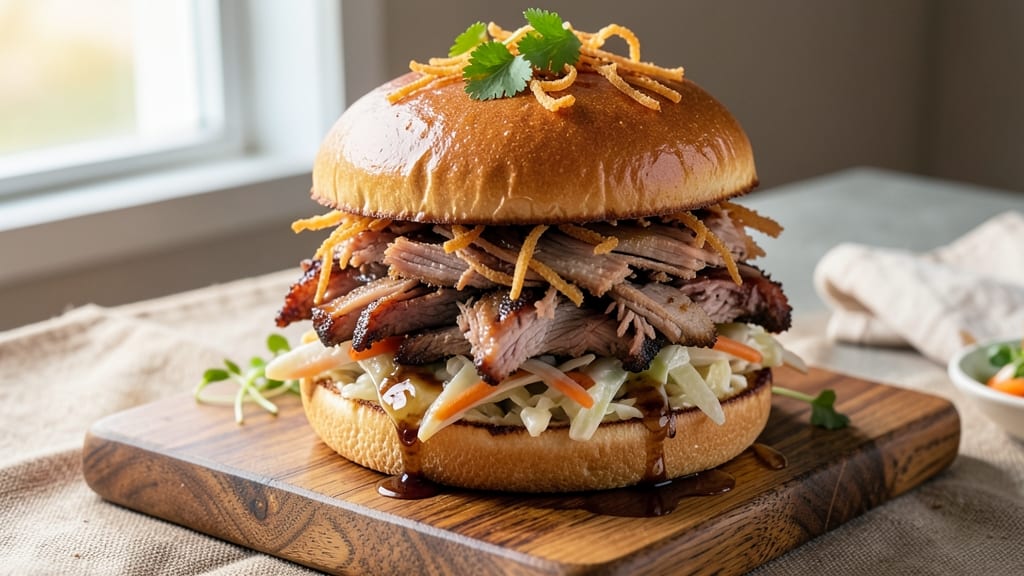
This best ever pulled pork sandwich recipe delivers melt-in-your-mouth tenderness and restaurant-quality flavor right in your backyard or kitchen. After years of perfecting my technique—from the smoky garlic butter baste to the slow-cooked pork shoulder—I've cracked the code for a sandwich that rivals any pitmaster's creation.
The secret lies in the low-and-slow cook, where collagen transforms tough meat into shreds so tender they practically dissolve on your tongue.
What sets this recipe apart is the garlic butter baste applied during the final hours of cooking, which infuses the pork with rich, aromatic depth while creating that signature caramelized bark.
I use a pork shoulder cut, as it's the ideal balance of fat and muscle—just enough marbling to keep the meat juicy during hours in the smoker or slow cooker.
The sauce, a blend of tangy vinegar, molasses, and spices, ties everything together with its perfect balance of sweet and smoky.
By the time you assemble your sandwich, you'll have perfectly tender pulled pork that clings to a soft bun, topped with a glossy glaze that's both sticky and balanced.
The texture is what makes this recipe legendary—no dry, stringy meat here, just succulent, flavor-packed pork that's worth the wait. Serve it with classic sides like crisp coleslaw and pickles for that full diner experience.
This method works equally well in a smoker, slow cooker, or oven, making it adaptable to any kitchen setup. Whether you're feeding a crowd or treating yourself to a solo meal, the results are consistently restaurant-quality—just like the sandwiches I've served at my Atlanta BBQ joint for years.
Let's get cooking!
Ingredients for best ever pulled pork sandwich
Sixteen ingredients for a legendary sandwich that rivals any BBQ joint's masterpiece.
| Ingredient | Amount | Notes |
|---|---|---|
| Pork Shoulder 🐖 | 5 lb | Bone-in, well-marbled for juiciness |
| Unsalted Butter 🧈 | ½ cup | Cold, cubed for basting |
| Garlic Cloves 🧄 | 10 cloves | Fresh, peeled and smashed |
| Apple Cider Vinegar 🍎 | ½ cup | For tangy depth in sauce |
| Molasses 🍯 | ¼ cup | Dark molasses for richness |
| Yellow Onion 🧅 | 1 whole | Yellow or red, diced |
| Fresh Thyme 🌿 | 2 sprigs | Or 1 tsp dried thyme |
| Ground Black Pepper 🌶️ | 1 tbsp | Freshly cracked for heat |
| Kosher Salt 🧂 | 1 ½ tbsp | Diamond Crystal preferred |
| Brown Sugar 🍚 | ½ cup | Light or dark, packed |
| Smoked Paprika 🌶️ | 1 tbsp | For signature smoky flavor |
| Sesame Seed Buns 🍞 | 6 whole | Soft, toasted for sandwiches |
| Yellow Mustard 🥫 | ¼ cup | For sandwich spread |
| Pickle Slices 🥒 | ½ cup | Dill or bread-and-butter |
The pork shoulder is non-negotiable—look for a 5-pound cut with good marbling at Costco or your local butcher. A bone-in cut stays juicier during the long cook. If you're buying pre-cut, check for even fat distribution. I always ask the butcher to trim excess silver skin—it's not necessary for flavor but makes shredding easier. For the garlic butter baste, grab European-style butter (higher fat content) from Whole Foods or the dairy case. The extra fat renders beautifully during basting, creating that signature caramelized bark. Don't skip the fresh thyme—it adds an earthy depth that dried can't replicate, though dried works in a pinch at one-third the amount.
No molasses? Maple syrup or dark corn syrup works in a bind, though molasses gives that unmistakable depth. Running short on apple cider vinegar? White vinegar or lemon juice will do, but add a pinch more brown sugar to balance. The smoked paprika is essential for that authentic BBQ flavor—if you can't find it, regular paprika plus a dash of liquid smoke gets close. For the buns, Texas Toast or Hawaiian rolls also work beautifully. Pro tip: Toast the buns lightly before assembling so they don't get soggy from the juicy pork. The pickles should be crisp—if they're limp, toss them in ice water for 10 minutes to revive them.
This recipe makes twice as much pork as you need—perfect for leftovers. Store pulled pork in the fridge for up to 5 days or freeze for 3 months. I portion the pork into two containers: one for sandwiches and one for tacos or nachos. The basting butter and sauce can be prepped ahead and refrigerated separately. When ready to cook, bring everything to room temperature for even basting. The buns stay fresh for 3 days in a sealed bag. For serving, I always keep a small crockpot on low to reheat portions—just add a splash of water and let it warm through.
Why You'll Love This Recipe
- Foolproof Prep: I swear by this method—just rub the pork shoulder with butter, garlic, and a splash of vinegar, then let the slow cooker do the rest. No fancy techniques, no stressing over timing.
- Molasses Magic: That deep, caramelized sweetness from the molasses? It’s the secret weapon—balancing the tangy vinegar and making every bite dangerously tender. Honestly, I’ve tried other rubs, but this combo sticks with me.
- Weekend Feast: Between us, this is my go-to for game days or lazy Sundays. The leftovers? Even better cold in sandwiches the next day. (Yes, even on a Tuesday night.)
- Budget Stretch: A pork shoulder costs less than half the price of pre-sliced pork, and it yields enough for a crowd. I’ve fed six people for under $15—plus, the molasses adds richness without breaking the bank.
Step-by-step instructions for smoky garlic butter pulled pork
This isn't your average pulled pork—we're talking melt-in-your-mouth perfection with a signature garlic butter baste that'll have everyone begging for seconds.
Prepare the Pork Shoulder for Maximum Flavor
Start by trimming any excess fat from the pork shoulder, leaving about ¼ inch of fat cap for moisture during cooking. Pat the meat completely dry with paper towels—this is non-negotiable for crispy bark. In a small bowl, combine the 1.5 tablespoons kosher salt, 1 tablespoon ground black pepper, 1 tablespoon smoked paprika, and 0.5 cup brown sugar. Rub this mixture all over the pork shoulder, pressing firmly so it adheres to every inch of meat.
Place the seasoned pork shoulder on a rack in a roasting pan, fat side up. This allows the fat to render down and baste the meat as it cooks. Cover loosely with aluminum foil and refrigerate for at least 1 hour (or up to 24 hours) before cooking. This dry-brining step ensures a perfect balance of seasoning and moisture retention.
Cook the Pork Shoulder Low and Slow
Preheat your oven to 275°F. Remove the pork shoulder from the refrigerator and let it sit at room temperature for 30 minutes before cooking. Place the pork shoulder in the preheated oven and cook for 6 hours, or until the internal temperature reaches 165°F at the thickest part of the meat. This low-and-slow method is crucial for tender, pull-apart perfection.
Here's the secret: every 90 minutes, remove the pork shoulder from the oven and baste it generously with a mixture of 0.5 cup melted unsalted butter and 10 smashed garlic cloves. This garlic butter baste adds incredible flavor and helps create that signature smoky aroma. Return the pork to the oven and continue cooking until it reaches the target temperature.
Create the Signature Smoky Sauce
While the pork cooks, prepare the sauce. In a large skillet, melt 0.25 cup unsalted butter over medium heat. Add 1 diced yellow onion and cook until softened, about 5 minutes. Stir in 2 sprigs fresh thyme, 0.5 cup apple cider vinegar, and 0.25 cup molasses. Bring to a simmer and let it cook for 10 minutes until slightly thickened.
Remove the skillet from heat and let the sauce cool slightly. Once the pork reaches 165°F, transfer it to a cutting board and let it rest for 15 minutes. Then, using two forks, shred the pork into bite-sized pieces. Pour the cooled sauce over the shredded pork and toss gently to coat. This sauce adds a perfect balance of tangy, sweet, and smoky flavors that elevate the pulled pork to new heights.
Assemble the Ultimate Pulled Pork Sandwiches
Toast the 6 whole sesame seed buns until they're golden and crispy. Spread each bun generously with 0.25 cup yellow mustard—this adds a tangy contrast to the rich pulled pork. Divide the shredded pork evenly among the buns, mounding it high in the center.
Top each sandwich with 0.5 cup pickle slices for that classic tangy crunch. Serve immediately while the buns are still warm and the pork is juicy. The combination of smoky pulled pork, tangy mustard, crispy buns, and cool pickles creates a symphony of flavors in every bite.
Pro Tips For Making Best Ever Pulled Pork Sandwich
- SEAR THE SHOULDER FIRST: That butter and garlic rub won’t stick worth a damn if you skip this step. Heat your pan until it’s smoking hot—yes, even if you’re nervous about burning it—and get a deep brown crust on all sides. I learned this the hard way when my first batch turned out bland because I rushed the sear.
- USE FULL GARLIC CLOVES: Don’t crush those garlic cloves—smash them flat with the side of your knife first. That way, they release flavor without turning bitter, and the molasses won’t overpower them. (And for the love of pork, don’t skip the skin—it adds texture that crushed garlic alone can’t.)
- DON’T RUSH THE PULL: The meat should fall apart at the slightest touch, not just shred into strings. If you’re pulling it too early, it’ll be tough and chewy—no one wants that. Use two forks, not a knife, and resist the urge to force it. Patience here makes the difference between good and legendary.
- VINEGAR LAST MINUTE: Add that apple cider vinegar in the final 15 minutes of cooking—it’ll brighten the sauce without turning it sour. I used to mix it in early, and the flavor would fade into the background. Trust me, the last-minute splash is what ties everything together.
Regional styles of this best ever pulled pork sandwich
Carolina Style
In South Carolina, pulled pork is all about that vinegar-based sauce and a touch of heat. Swap the molasses for ¼ cup apple cider vinegar and add 1 tbsp hot sauce (like Crystal or Tabasco) to the sauce mixture.
Serve on a soft potato roll instead of sesame buns, and always include a side of creamy coleslaw—the tangy dressing cuts through the richness perfectly.
I remember my first time at a Charleston BBQ joint where they'd pile the pork high and let it spill over the edges—true Southern generosity! 🥓
Texas BBQ Tradition
Texas-style pulled pork leans into bold flavors with a ½ cup beef broth base for the sauce and a generous 2 tbsp chili powder mixed into the dry rub. Use bolillo buns for that classic Texas sandwich texture, and don't forget the pickled jalapeños on top.
The key difference? Texas pitmasters often add 1 cup chopped onions to the pork during the last hour of cooking for extra depth. I learned this technique from my mentor in Austin—it's all about that smoky, spicy kick! 🌶️
Georgia Pitmaster Style
Back home in Georgia, we keep it simple but flavorful. Replace the molasses with ¼ cup honey for a touch of sweetness, and add 1 tsp ground mustard to the dry rub for a subtle tang.
Serve on Texas toast with a smear of peanut butter on the bottom half—trust me, it works! Georgia BBQ often includes white bread on the side for soaking up extra sauce. My granddaddy always said, "If it ain't messy, it ain't worth eating," and he wasn't wrong. 🍯
Nashville Hot Chicken Twist
For a Nashville-inspired version, add 1 tbsp cayenne pepper to the dry rub and finish the pork with a hot honey glaze (mix ¼ cup honey with 1 tbsp hot sauce). Serve on a brioche bun and top with crispy fried onions.
This fusion brings that signature Nashville heat while keeping the smoky pulled pork foundation. I first tried this at a Nashville BBQ pop-up and was hooked—it's like a spicy hug in every bite! 🔥
Smoker vs. Oven Adaptations
Regional styles often dictate cooking methods too. In North Carolina, where smokers reign supreme, cook the pork at 225°F for 8-10 hours with hickory wood chips. For Oklahoma style, use a brisket rub on half the pork and serve with cornbread instead of buns.
My Atlanta joint uses a combination smoker/oven—start with 250°F for 4 hours, then drop to 225°F for the final 4 hours** to lock in tenderness. 🌡️
Nutrition facts
Frequently asked questions
How long does pulled pork keep in the fridge?
Store your perfectly cooked pulled pork in an airtight container for up to 5 days in the fridge. The flavors actually deepen overnight! For longer storage, freeze portions for 3 months. I always portion mine into two containers—one for sandwiches and one for tacos or nachos. When reheating, use a small crockpot on low heat with a splash of water to keep it moist.
Can I use a slow cooker instead of an oven?
For a slow cooker, rub your pork shoulder with the dry spices, then cook on low for 8 hours or high for 5-6 hours. Add ½ cup apple juice to the bottom to prevent drying. During the last 2 hours, baste with the garlic butter mixture every 30 minutes. The texture will be just as tender—promise! This is my go-to method when I'm short on time.
What's the best way to reheat leftover pulled pork?
Never microwave—it makes the pork dry! Instead, warm in a skillet over medium-low heat with a splash of broth or water for 5-7 minutes, stirring occasionally. For sandwiches, toast the buns fresh and assemble with reheated pork. Pro tip: Add a pat of butter to the skillet to keep everything juicy. If using leftovers, I like to make pulled pork hash with diced potatoes and onions for breakfast the next day!
Why did my pulled pork turn out dry?
Most likely, your pork didn't cook long enough or wasn't basted properly. The 6-hour cook time at 275°F is crucial—don't rush it! Also, patting the meat dry before seasoning is essential for bark formation. If using a smoker, maintain 225°F consistently. For future attempts, wrap the pork in butcher paper during the last 2 hours to lock in moisture. Dry pork happens when collagen doesn't fully render—patience is key!
Can I make this recipe with a pork butt instead?
Yes! Pork butt (Boston butt) works beautifully—it's actually preferred by many pitmasters. The fat distribution is slightly different, but the cooking time remains similar (6 hours). Just be sure to trim excess fat to ¼ inch for better bark. The pork butt will yield slightly more meat (about 3-4 pounds of pulled pork from a 5-pound cut vs. 2-3 pounds from shoulder). I use it when I want extra for leftovers or to serve a larger crowd.