
Main Courses
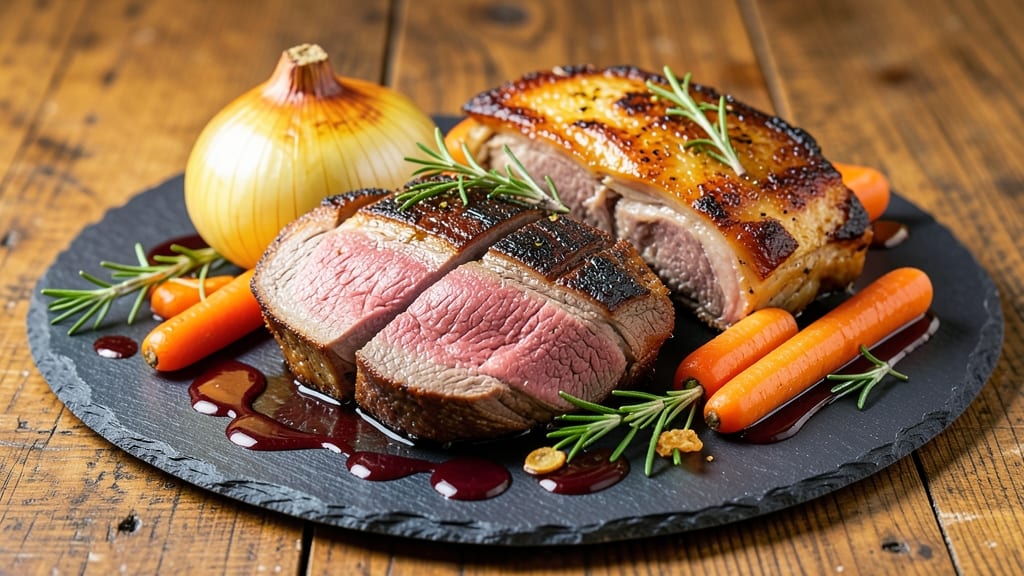
This beef and pork roast recipe delivers melt-in-your-mouth tenderness that transforms tough cuts into fork-tender, herb-infused perfection. 🔥 As someone who's spent years perfecting large-scale roasts at The Smoky Pig, I know the secret lies in low-and-slow braising that builds deep, complex flavors while keeping every bite impossibly juicy.
The combination of beef chuck and pork shoulder creates a rich, meaty texture that shreds effortlessly.
What makes this recipe truly special is the herb-infused braising liquid that infuses both meats with aromatic depth. We start with a simple but powerful blend of rosemary, thyme, and bay leaves, then let the meats cook gently until they're fork-tender and falling apart.
The key is patience—this isn't a quick weeknight meal, but the results are worth every minute of slow cooking.
By the time you're done, you'll have a dish that's restaurant-quality yet simple enough for home cooks. The beef and pork develop a beautiful caramelized crust on the outside while remaining tender and juicy throughout.
This technique works equally well for family dinners or holiday gatherings, serving as both the star of the meal and the centerpiece of any table.
The best part? Leftovers reheat beautifully, making this an excellent make-ahead option. Serve with classic sides like mashed potatoes or crusty bread to soak up every last bit of that flavorful braising liquid. Let's get to the recipe—your taste buds will thank you.
Ingredients for beef and pork roast
Six ingredients transform tough cuts into melt-in-your-mouth perfection—herbs, wine, and patience do the magic.
| Ingredient | Amount | Notes |
|---|---|---|
| Beef Chuck Roast 🥩 | 2 lb | Well-marbled for juiciness |
| Pork Shoulder 🐖 | 2 lb | Bone-in for richer flavor |
| Yellow Onion 🧅 | 2 whole | Chopped into 1-inch pieces |
| Carrots 🥕 | 4 whole | Cut into 2-inch chunks |
| Garlic Cloves 🧄 | 6 cloves | Smashed, not minced |
| Fresh Rosemary 🌿 | ½ cup | Chopped sprigs, stems removed |
| Fresh Thyme 🌿 | ¼ cup | Leaves only, stems discarded |
| Bay Leaves 🍃 | 2 whole | Dried, standard size |
| Beef Broth 💧 | 3 cups | Low-sodium preferred |
| Red Wine 🍷 | 1 cup | Bold dry variety |
| Olive Oil 🫒 | 2 tbsp | Extra-virgin for richness |
| Salt 🧂 | 2 tsp | Kosher or sea salt |
| Black Peppercorns 🌶️ | 1 tsp | Freshly cracked |
| All-Purpose Flour 🌾 | 1 tbsp | For dusting meat |
The beef and pork cuts are everything here. Beef chuck needs that marbling for juiciness, while pork shoulder delivers the perfect fall-apart texture. I always grab these from Costco when possible—they're pre-cut and consistently high quality. Look for good marbling in the beef and a thick layer of fat on the pork. If you're buying whole roasts, trim excess fat but leave some for flavor. The yellow onions and carrots can be any variety, but avoid those tiny baby carrots—they cook too fast and get mushy. Whole Foods or Trader Joe's usually have great organic options for these veggies.
No red wine? Beef broth with a splash of balsamic works perfectly—just use the same amount. Fresh herbs are ideal, but dried thyme at one-third the amount keeps this doable on busy days. The bay leaves are non-negotiable for that classic braising depth, but if you're out, a sprig of fresh thyme works in a pinch. For the olive oil, don't skimp—Trader Joe's has a great affordable extra-virgin that's perfect for this. The flour is just for dusting before browning, so any all-purpose brand will do. Diamond Crystal kosher salt is my go-to, but any kosher salt works since it dissolves easily. Pre-minced garlic is fine here—no need to fuss with fresh unless you're feeling fancy.
This braise gets better overnight, so make it ahead if you can. The meats keep 3-4 days in the fridge or 3 months frozen—portion into containers for easy leftovers. The braising liquid reduces and thickens beautifully, so save it for soups or gravies. Costco sells those big roasting pans that make this even easier to handle. If you're serving a crowd, double the recipe—it reheats perfectly and tastes even better the next day.
Why You'll Love This Recipe
- One-Pan Magic: I swear by this—just toss the beef, pork, onions, and carrots in one pot with garlic and let it braise. No chopping boards, no extra pans, and honestly? That’s a win for any night I’m too tired to scrub dishes.
- Deep, Caramelized Love: The beef chuck and pork shoulder turn so tender they practically melt, while the onions and carrots get that perfect caramelized bite. Between us, that crispy edge with the creamy center? Chef’s kiss, every time.
- Leftovers That Beg for More: This roast makes enough for four meals—yes, even on a Tuesday night. Reheat slices in a pan with a splash of broth, and suddenly you’ve got a filling sandwich or stir-fry without extra effort.
- Budget-Friendly Feast: Beef and pork roasts stretch across the plate without breaking the bank. I’ll be real: my grocery bill stays happy, and my family stays full. Plus, the garlic and onions add flavor without the price tag.
Step-by-step instructions for herb-infused braised beef and pork
Here's how to transform tough cuts into melt-in-your-mouth shreds with rich, aromatic flavors.
🔥 Step 1: Sear the Meats for Deep Flavor
Heat a large Dutch oven over medium-high heat until hot. Add 1 tablespoon olive oil and swirl to coat the bottom. Place the 2 lb beef chuck roast in the pot and sear on all sides for 4-5 minutes per side until deeply browned. Remove and set aside.
Add another 1 tablespoon olive oil and repeat with the 2 lb pork shoulder, searing until golden brown on all sides. This step creates the Maillard reaction—those beautiful browned bits that pack serious flavor into your braise. Don't rush this; you want a good crust on both meats.
👨🍳 Step 2: Build the Aromatic Base
In the same Dutch oven, add the 2 whole chopped yellow onions and 4 cut carrots. Cook for 5-6 minutes until the onions soften and begin to caramelize. Add the 6 smashed garlic cloves and cook for another 30 seconds until fragrant.
Stir in the 0.5 cup chopped fresh rosemary, 0.25 cup fresh thyme leaves, and 2 whole bay leaves. The herbs will infuse the braising liquid with their bright, earthy aromas. Sprinkle with 1 tablespoon all-purpose flour and stir to coat the vegetables, which will help thicken the sauce later.
🍳 Step 3: Deglaze and Simmer the Braise
Pour in the 1 cup red wine and scrape up all the browned bits from the bottom of the pot. Let it simmer for 2-3 minutes until the wine reduces by half. Add the 3 cups beef broth, 2 teaspoons salt, and 1 teaspoon cracked black peppercorns.
Return both meats to the pot, placing them on top of the vegetables. The liquid should come about halfway up the sides of the meats. Bring to a gentle simmer, then reduce heat to low. Cover with a tight-fitting lid and let it cook for 2.5 hours, checking occasionally to ensure the liquid doesn't evaporate completely.
⏰ Step 4: Finish and Shred to Perfection
After 2.5 hours, check the doneness by inserting a meat thermometer. The beef should reach 195-200°F and the pork 200-205°F. If they're not quite there, continue cooking for another 30-45 minutes. The meats should be fork-tender and pull apart easily.
Once tender, remove the meats and shred them using two forks. Skim any excess fat from the braising liquid, then return the shredded meats to the pot. Taste and adjust seasoning if needed. The result should be juicy, flavorful shreds swimming in a rich, herb-infused sauce.
🍽️ Step 5: Serve with Confidence
Serve immediately over crusty bread or mashed potatoes, ladling the aromatic braising liquid over the top. The combination of tender beef and pork with the complex flavors of rosemary, thyme, and wine creates a dish that's perfect for family dinners or special occasions. Leftovers keep well for 3-4 days in the refrigerator.
Pro Tips For Making Beef And Pork Roast
- SEAR SEPARATELY: Don’t throw both meats in the pan at once—crowding makes them steam instead of brown. Sear the beef chuck first (5-6 minutes per side), then pull it out and do the pork shoulder (same deal). The crust on each piece will actually taste like something you paid for, not sad, pale meat.
- TRIM THE FAT, KEEP THE FLAVOR: Fat is your friend here, but not if it’s pooling and burning. Use kitchen shears to trim excess fat from the pork shoulder (leave a thin layer), then scatter those scraps over the onions and carrots in the pot. They’ll render down and baste everything as it cooks—no extra work, just pure flavor.
- DON’T PEEL THOSE CARROTS: I know, I know, you’re used to peeled veggies. But for this roast, leave the skins on—especially the carrots. They’ll soften beautifully and add a subtle earthiness that peeled carrots miss. If you’re worried about texture, cut them into even chunks (about 1.5 inches) so they cook at the same rate as the onions.
- USE A MEAT THERMOMETER: Guessing doneness with beef and pork is how you end up with dry, overcooked meat or sad, undercooked centers. Aim for 195°F for the pork shoulder (it’ll pull apart easily) and 190-200°F for the beef chuck (probe the thickest part, avoiding fat). If you don’t have one, start checking at 2 hours—this isn’t a dish you want to overlook.
Essential equipment for this recipe
Dutch Oven Essential
Your Dutch oven is the heart of this recipe—Le Creuset 6-quart is my go-to, but any heavy, tight-fitting lid works. The deep sides prevent spills during braising, and the even heat distribution ensures both meats cook perfectly.
If you don’t own one, a All-Clad stainless steel pot with a lid works too. Just avoid nonstick—it can’t handle the high heat for searing. 🔥
Meat Thermometer
A ThermoWorks Smoke thermometer is my secret weapon for precision. It tracks both meats simultaneously, so you never overcook. The beef needs to hit 195-200°F, while pork should reach 200-205°F. No guesswork—just perfect doneness every time. Budget option? The Ozeri Pop-Smart is reliable and affordable.
Heavy-Duty Tongs
Use Oxo Good Grips tongs to handle the meats during searing—they’re long enough to avoid burns and strong enough to grip the roasts securely. I also keep a pair of heat-resistant gloves nearby for extra safety.
These tools make flipping and moving the heavy meats effortless, even when the pot is hot.
Sharp Knives
Sharpen your Wüsthof Classic chef’s knife before shredding—dull blades crush meat instead of cleanly slicing. A slicing knife (like Mac Knife Professional) works best for the pork’s connective tissue. Keep a cutting board (I love John Boos maple) nearby to protect your counters and give you stability.
Roasting Pan Alternative
If your Dutch oven is too small, a Costco roasting pan (20-quart) handles the volume beautifully. It’s wider, so the meats don’t overcrowd, and the lid locks in moisture.
For extra insurance, line it with heavy-duty aluminum foil to make cleanup a breeze. Just avoid thin foil—it won’t hold up to the heat.
Slow Cooker Hack
Short on time? A 6-quart Crock-Pot works in a pinch. Sear the meats first, then transfer everything to the slow cooker on Low for 8 hours or High for 5 hours.
The flavors develop just as deeply, though the texture might be slightly less caramelized. Perfect for weeknight dinners when you’re craving that braised richness. 💡
Nutrition facts
Frequently asked questions about beef and pork roast
Can I substitute lamb or venison for the beef?
While lamb would work beautifully with similar cooking times, venison is much leaner and requires different techniques. For best results, stick with beef chuck or try a lamb shoulder instead—it braises similarly. Venison would need much lower heat and shorter cooking to avoid drying out. The pork shoulder remains ideal for its fat content and tenderness.
How do I adjust this for a slow cooker?
Sear the meats first, then transfer everything to a 6-quart slow cooker on Low for 8 hours or High for 5 hours. The flavors develop just as deeply, though you might need to add ½ cup extra broth since slow cookers evaporate more liquid. The texture will be slightly less caramelized but still incredibly tender and flavorful.
What's the best way to reheat leftovers?
Reheat in the same Dutch oven over medium-low heat with 2-3 tablespoons fresh broth until warmed through (5-7 minutes). Never microwave—it turns the meat rubbery. For extra richness, add a splash of red wine or beef broth when reheating. Leftovers keep 3-4 days in the fridge or 3 months frozen.
Can I use bone-in pork shoulder instead of bone-in?
Yes! Bone-in pork shoulder actually works better—it adds depth of flavor to the braising liquid. Just adjust cooking time by 30-45 minutes since bones conduct heat differently. The meat will be even more flavorful, though you'll need to remove the bone before shredding. Look for a 3-4 lb shoulder for optimal results.
Why did my meat turn out dry?
Overcooking or insufficient liquid are the most common causes. Always maintain ½ inch of liquid above the meats and use a meat thermometer—beef should reach 195-200°F, pork 200-205°F. If your pot lacks liquid, add more broth during cooking. The Dutch oven's tight lid should prevent evaporation, but check occasionally.