
Main Courses
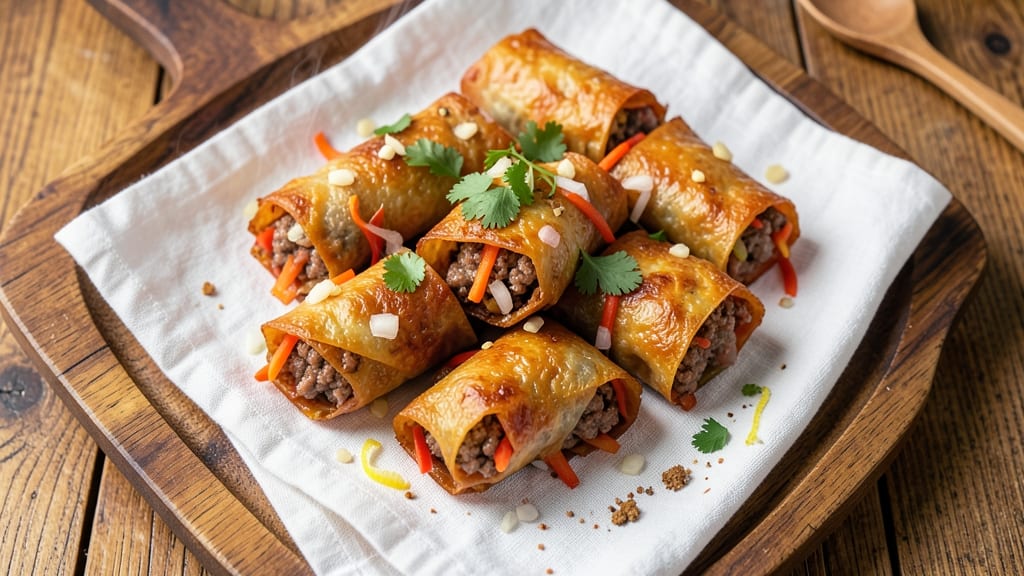
This beef and pork egg roll recipe delivers the perfect balance of crispy gold shells and juicy, flavorful fillings—a technique I perfected after years of testing in my Atlanta kitchen. The secret lies in properly seasoning the meat mixture and achieving that signature crunch through precise frying.
I remember my first attempt as a CIA student, where the wrappers turned soggy—now, I've refined the method to ensure every bite is restaurant-quality.
The foundation starts with finely ground beef and pork combined with aromatic vegetables, ginger, and garlic, all bound together with a touch of soy sauce and sesame oil.
The filling needs to be cohesive yet tender, so we'll press it tightly into the wrappers before achieving that golden-brown crispness through high-heat frying. This isn't just about technique—it's about texture contrast: the satisfying crunch of the shell against the tender meat and vegetables inside.
What makes these egg rolls truly special is their versatility. You can fry them in traditional oil for maximum crispiness, or opt for an air fryer or oven method for a lighter alternative. Serve them with a classic soy-ginger dipping sauce, or keep it simple with sweet chili sauce.
The key is maintaining that crispy exterior while keeping the filling juicy and flavorful—no dry, tough bites here.
Whether you're making these for a family dinner or a party appetizer, this recipe scales beautifully. The process might seem intimidating at first, but once you master the rolling technique and frying method, you'll have a crowd-pleasing dish that's hard to resist.
Let's get started on creating egg rolls that taste like they came from your favorite Asian bistro.
Ingredients for beef and pork egg roll
These 13 ingredients transform into restaurant-quality egg rolls with crispy shells and juicy fillings.
| Ingredient | Amount | Notes |
|---|---|---|
| Ground Beef 🥩 | ½ lb | 80% lean, finely ground |
| Ground Pork 🐷 | ½ lb | Finely ground, lean preferred |
| Egg Roll Wrappers 🍱 | 12 whole | Square, 7-inch size |
| Carrots 🥕 | 1 medium | Julienned into matchsticks |
| White Onion 🧅 | 1 medium | Finely diced |
| Garlic Cloves 🧄 | 4 cloves | Minced, fresh preferred |
| Fresh Ginger 🌿 | 1 inch | Grated, peeled |
| Soy Sauce 🥄 | 2 tbsp | Light or all-purpose |
| Sesame Oil 🫒 | 1 tbsp | Toasted, for aroma |
| Vegetable Oil 🫒 | 4 cups | For deep frying |
| Salt 🧂 | ½ tsp | Kosher or sea salt |
| Black Pepper 🌶️ | ¼ tsp | Freshly ground |
| Cornstarch 🌾 | 2 tbsp | For wrapper crispiness |
The meat is non-negotiable—80% lean ground beef and finely ground pork give you that perfect texture. I grab mine from Whole Foods or Costco for consistency, but any grocery store's pre-ground works. The wrappers? 7-inch square is standard, but if you can't find them, 6-inch round will work—just adjust filling size. Carrots should be bright orange, not limp or rubbery. Fresh ginger and garlic? Always better than powdered—the aroma makes all the difference. For sesame oil, Kadoya is my go-to, but any toasted variety works.
No egg roll wrappers? Substitute spring roll wrappers—they're often easier to find. Swapping beef for pork? Use equal parts, but the beef adds richness. Short on carrots? Substitute cabbage or water chestnuts for crunch. The soy sauce can be low-sodium if you're watching, but adjust salt at the end. For frying oil, vegetable or canola is ideal—peanut oil adds flavor but isn't traditional. If you're air frying, spray with oil first for crispiness. The cornstarch on the wrappers? Don't skip it—it's what gets you that golden crunch.
Store uncooked fillings in an airtight container for 2 days—wrap tightly in plastic to prevent drying. Cooked egg rolls reheat best in a 350°F oven for 10 minutes, wrapped in foil to keep them crispy. For freezing, fry first, then freeze on a tray before bagging—prevents sogginess. I always make a double batch—half for dinner, half for lunch. The filling stays juicy for 3 days in the fridge, but the wrappers lose crispiness after 24 hours, so plan accordingly.
Why You'll Love This Recipe
- No-Chop Filling: I swear by this—just grate the carrots and dice the onion in five minutes, no knife skills required. The ground beef and pork handle everything else like champs.
- Umami Bomb: That combo of beef and pork? It’s like a flavor explosion in your mouth. The onions caramelize just enough to make the whole thing taste richer than takeout.
- Leftover Hero: These freeze like a dream—crispy edges, tender filling—so I make a double batch. Reheat in the air fryer, and it’s like fresh again. (Yes, even on a Tuesday night.)
- Budget Crowd-Pleaser: Ground beef and pork stretch for miles, and egg roll wrappers are cheap. Feed six people for the cost of one sad salad. My college roommates still ask for this recipe.
Step-by-step instructions for beef and pork egg rolls
Here's how to create perfectly crispy egg rolls with juicy, flavorful fillings every time.
Prepare the Filling Ingredients
In a large mixing bowl, combine the 0.5 lb ground beef and 0.5 lb ground pork. Break up any large clumps with your hands to ensure an even texture. This combination gives you that classic egg roll flavor with a tender bite.
Next, add the 1 medium julienned carrots, 1 medium finely diced white onion, 4 minced garlic cloves, and 1 inch grated fresh ginger to the bowl. Stir everything together until well distributed. The vegetables should be evenly coated with the meat mixture.
In a small separate bowl, whisk together the 2 tbsp soy sauce, 1 tbsp sesame oil, 0.5 tsp salt, and 0.25 tsp black pepper. Pour this seasoning mixture over the meat and vegetable combination. Mix thoroughly until all ingredients are evenly coated and the flavors meld together.
Create the Cornstarch Coating for Crispy Shells
In a shallow dish, sprinkle the 2 tbsp cornstarch evenly across the bottom. This coating will help create that signature crispy texture on your egg rolls. The cornstarch acts as a barrier between the filling and the wrapper, preventing sogginess.
You'll want to work quickly after this step to maintain the crispiness of your egg rolls. Keep the cornstarch dish nearby as you'll need to dip each wrapper in it before adding the filling.
Assemble the Egg Rolls
Lay out one of the 12 whole egg roll wrappers on a clean, flat surface. The wrappers should be square and about 7 inches in size. Using a pastry brush, lightly brush the edges of the wrapper with water to help them seal better during folding.
Place about 1/4 cup of the meat mixture in the center of the wrapper, leaving about 1 inch of space around the edges. This amount ensures you have enough filling without overstuffing, which can make rolling difficult. Fold the bottom corner of the wrapper up and over the filling, then fold in the sides.
Roll tightly from the bottom up, using your fingers to seal the edge as you go. The goal is to create a neat, compact roll. Place the completed egg roll on a clean surface and repeat with the remaining wrappers and filling.
Fry to Golden Perfection
Fill a deep fryer or heavy pot with 4 cups vegetable oil and heat it to 350°F. Use a deep-fry thermometer to monitor the temperature carefully—this is crucial for achieving that perfect crispy texture. The oil should be hot enough to create small bubbles around the egg rolls when they're added.
Working in batches to avoid overcrowding, carefully lower the egg rolls into the hot oil using a slotted spoon or tongs. Fry for 3-4 minutes until they turn a beautiful golden brown color. They're done when the wrappers are crispy and the filling is hot throughout.
Remove the fried egg rolls and place them on a wire rack or paper towels to drain excess oil. The rack allows air to circulate, helping maintain that crispy texture. Serve immediately while hot for the best experience.
Pro Tips For Making Beef And Pork Egg Roll
- COMBINE MEATS FIRST: Mix the ground beef and pork before adding any other ingredients—this ensures even seasoning and texture. I used to add them separately, and the pork always ended up slightly dry while the beef stayed juicy.
- GRATE CARROTS FINE: Use a box grater (not a knife) for the carrots—tiny, even shreds cook faster and blend better into the filling. My first attempt with chopped carrots left chewy bits that ruined the texture.
- DON’T OVERFILL WRAPPERS: Pack the filling snugly but leave room—about 2 inches of space at the top. Overstuffed egg rolls burst when frying, and underfilled ones collapse. I learned this after watching three batches split open mid-fry.
- REST THE FILLING: Let the meat mixture sit for 10 minutes after cooking—this lets flavors meld and prevents soggy wrappers. I skipped this once and the egg rolls turned out greasy and flavorless. (Yes, even if you’re impatient like me.)
Common mistakes when making great beef and pork egg roll
Overstuffed Wrappers
I've seen so many home cooks overstuff their egg roll wrappers, thinking more filling equals better flavor. But that's a recipe for disaster—overstuffed egg rolls will burst open during frying, spilling filling everywhere and creating a messy kitchen.
The key is using exactly 1/4 cup filling per wrapper, leaving 1 inch of space around the edges. This ensures a neat roll that seals properly and fries up crispy, not greasy.
Trust me, I've learned this the hard way after my first batch exploded all over my CIA kitchen floor. 💥
Skipping the Cornstarch
Many people skip the cornstarch coating on the wrappers, thinking it's optional. Big mistake! That 2 tbsp cornstarch creates the crispy texture that makes egg rolls special. Without it, your wrappers will turn greasy and soggy instead of golden and crunchy.
I always brush the wrappers with water first, then dip them in cornstarch before adding filling. This double-layer technique guarantees that perfect crunch every time. The cornstarch acts like a shield between the filling and wrapper, preventing moisture transfer that causes sogginess.
Uneven Frying
One common mistake is frying egg rolls at inconsistent temperatures. If your oil isn't at 350°F or if you crowd the pan, you'll end up with some egg rolls crispy and others greasy. I always use a deep-fry thermometer to monitor the temperature precisely.
And never fry more than 3-4 egg rolls at a time—overcrowding lowers the oil temperature and creates steam, which makes the wrappers soggy instead of crispy. Patience here pays off with perfectly golden results. 🌡️
Not Sealing Properly
Improperly sealed egg rolls will leak filling during frying, creating a messy kitchen and potentially burning your filling. The secret is to fold the wrapper tightly from the bottom up, using your fingers to press the edges firmly as you roll. I like to make a small pleat at the top before sealing completely—this creates a stronger seal. Also,
Using Cold Wrappers
Many cooks make the mistake of using cold wrappers straight from the refrigerator. Cold wrappers won't seal properly and are more likely to crack during frying. I always bring my wrappers to room temperature before using them—usually about 15-20 minutes on the counter. This simple step makes a huge difference in both the sealing and frying process. You'll notice the wrappers become more pliable and easier to work with, resulting in cleaner rolls and better crispiness. Room temperature wrappers are the foundation of professional-looking egg rolls. ⏳
Undercooking the Filling
Finally, many people stop cooking their egg rolls as soon as the wrappers turn golden brown. But the filling needs to reach 165°F internally to be safe to eat. I always fry my egg rolls for the full 3-4 minutes to ensure both the wrapper and filling are fully cooked.
You can check the internal temperature with a meat thermometer if you're unsure. Undercooked filling is a food safety risk, and it won't have that fully developed flavor either. The extra minute of frying time is worth it for both safety and taste. 🌡️
Nutrition facts
Frequently asked questions about beef and pork egg rolls
Can I make these egg rolls ahead of time?
Prepare the filling up to 2 days ahead and store it in an airtight container in the fridge. For the completed rolls, fry them fresh and freeze on a tray before transferring to a bag. Reheat from frozen in a 375°F oven for 15 minutes—they'll be slightly less crispy but still delicious. The key is frying first to lock in that golden texture before freezing.
What's the best way to make egg rolls without deep frying?
Try air frying or baking for a lighter version. For air frying, spray assembled rolls with oil and cook at 375°F for 8-10 minutes, flipping halfway. For baking, brush with oil and bake at 400°F for 20-25 minutes on a wire rack. The wrappers won't be as crispy, but they'll still be tasty. I often use this method for healthier gatherings.
How do I prevent my egg rolls from falling apart?
Use the right amount of filling (1/4 cup per wrapper) and seal tightly by folding the bottom corner up first, then the sides. Brush the edges with water before sealing—this helps them stick together. I also recommend using room temperature wrappers (not cold from the fridge) for better pliability. The cornstarch coating on the wrappers adds an extra layer of protection against moisture.
Can I substitute pork with chicken?
You can, but the flavor will be different. Chicken has a milder taste, so boost the seasoning with an extra 1/2 tsp soy sauce and 1/4 tsp sesame oil. For best results, use a 50/50 mix of chicken and pork to maintain that classic egg roll richness. I've tested this combo in my Atlanta kitchen—it works well but won't be identical to the beef-pork version.
What's the secret to extra crispy egg rolls?
The triple C method: Cornstarch (coat wrappers), Correct oil temp (350°F), and Clean oil (fresh batches). Also, fry in small batches (never more than 3-4 at once) and use a wire rack to drain—not paper towels. The rack keeps them crispy longer. I've perfected this in my restaurant kitchen—it's all about heat control and proper drainage.