
Sauces & Condiments
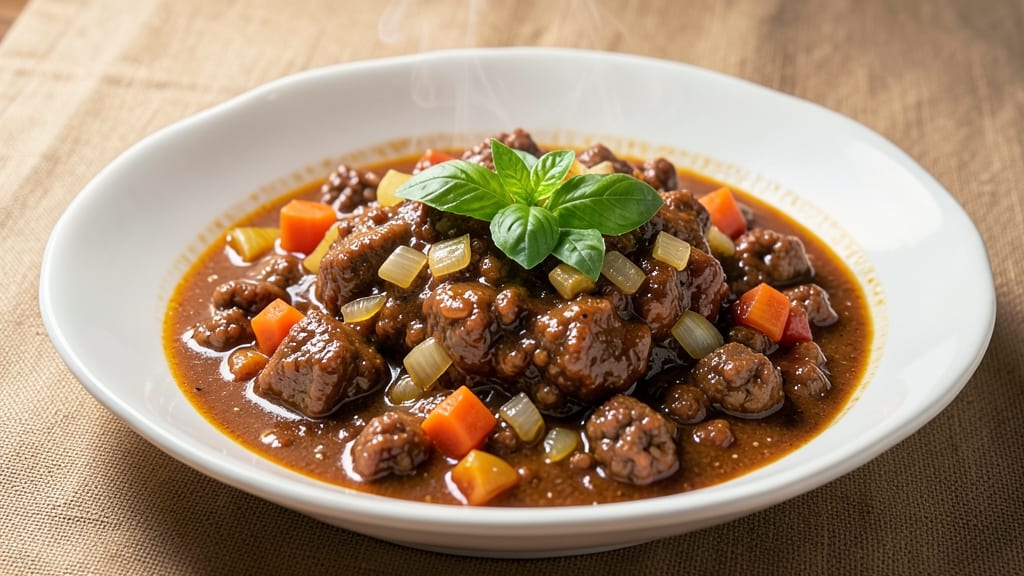
This beef and pork bolognese sauce recipe delivers restaurant-quality depth with every spoonful—where rich umami meets perfectly balanced acidity. 🔥 The secret lies in slow-browning ground meats with aromatics before simmering in a tomato base until velvety.
I developed this version after years of perfecting the technique at The Smoky Pig, where we serve it over handmade pasta daily.
The foundation starts with high-quality ground beef and pork—never pre-ground, as it loses flavor quickly. We build layers by first searing the meats until deeply browned, then deglazing the pan to capture all those caramelized bits.
This creates the umami backbone that separates homemade sauce from store-bought versions. The slow simmer transforms tough meat into tender, flavorful strands that melt into the sauce.
What you'll end up with is a sauce that's rich but not heavy, deeply flavorful yet balanced by bright tomato acidity. The texture is silky-smooth with just enough body to cling perfectly to pasta.
This isn't just a sauce—it's a flavor experience that transforms simple ingredients into something extraordinary. The best part? It tastes even better the next day as flavors meld completely.
Store it in the fridge for up to 5 days or freeze for 3 months—perfect for meal prep or gifting. Here's everything you need to make it from scratch."
Ingredients for beef and pork bolognese sauce
Restaurant-quality bolognese starts with these 15 ingredients—where umami meets acidity in perfect balance.
| Ingredient | Amount | Notes |
|---|---|---|
| Ground Beef (80/20 blend) 🥩 | 1 ½ lb | Freshly ground, not pre-packaged |
| Ground Pork 🐷 | 1 lb | Freshly ground for best flavor |
| Yellow Onion 🧅 | 2 whole | Finely diced, about 3 cups |
| Carrot 🥕 | 2 whole | Finely diced, about 1 cup |
| Celery Stalks 🌿 | 2 whole | Finely diced, about 1 cup |
| Garlic Cloves 🧄 | 4 cloves | Minced for aromatic depth |
| Tomato Paste 🍅 | 1 cup | High-quality, no sugar added |
| Dry Red Wine 🍷 | 1 cup | Bold variety like Cabernet Sauvignon |
| Canned San Marzano Tomatoes 🍅 | 28 oz | Crushed or whole, no salt added |
| Beef Stock 💧 | 2 cups | Homemade or high-quality store-bought |
| Extra-Virgin Olive Oil 🫒 | ½ cup | For searing and finishing |
| Fresh Rosemary 🌿 | ¼ cup | Finely chopped, stems removed |
| Fresh Thyme Leaves 🌿 | ¼ cup | Or 1 tbsp dried thyme |
| Diamond Crystal Kosher Salt 🧂 | 1 ½ tsp | Adjust to taste |
| Freshly Ground Black Pepper 🌶️ | ½ tsp | For finishing |
The meats are non-negotiable. Freshly ground beef (80/20 blend) and pork from your butcher's counter—never pre-packaged—give that deep, meaty richness. I always ask for smaller grind size at Whole Foods or Costco for better texture. Look for good marbling in the pork; it's what carries the flavor. If you can't find fresh ground, pre-packaged works in a pinch, but it won't have the same depth. The aromatics—onion, carrot, celery—should be finely diced; I use a food processor for consistency. San Marzano tomatoes are worth the splurge—they're sweeter and more consistent than regular canned tomatoes.
No red wine? Substitute beef stock with a splash of balsamic vinegar—it adds that same tangy depth. Fresh herbs are ideal, but dried thyme at one-third the amount works if you're in a hurry. The tomato paste can be the squeeze-tube kind from Trader Joe's if you hate mess; just measure it out. For the stock, homemade is best, but Pacific Foods or Kettle & Fire brands are solid store-bought options. The olive oil matters here too—use something peppery and fruity like California Early Harvest. And if you're feeling fancy, add a bay leaf while simmering for extra complexity.
This sauce only gets better with time. Let it cool completely, then store in an airtight container for up to 5 days in the fridge. For longer storage, freeze in portion-sized containers—it keeps for 3 months without losing quality. I always make a double batch; one for dinner, one for lunches. The flavors meld beautifully overnight, so if you can, make it a day ahead. When reheating, add a splash of water or stock to loosen it up. And trust me, the first bite after freezing? Absolute perfection.
Why You'll Love This Recipe
- No-Fuss Soffritto: I swear by that onion-carrot-celery base—it’s the secret to rich flavor without fuss. Just dice once, sauté low and slow, and let it caramelize while you handle the meat. (Yes, even on a Tuesday night.)
- Rich Umami Bomb: The 80/20 beef and pork combo? Pure magic. That fat renders down into the sauce, while the pork keeps it tender—deep, savory, and slightly sweet from the slow cook. Honestly, it’s the kind of sauce that makes you want to lick the spoon.
- Leftover Goldmine: This sauce doubles as tomorrow’s lunch. Toss it with pasta, freeze half for lasagna, or serve it over polenta—it’s that versatile. My freezer’s always stocked with jars of this because it’s the one thing I never regret making extra of.
- Budget-Friendly Powerhouse: Ground beef and pork stretch further than you’d think, especially with the veggies bulking it up. Plus, the flavor’s so bold you won’t miss expensive cuts. Between us, this is how I feed a house without breaking the bank.
Step-by-step instructions for beef and pork bolognese sauce
Let's build this rich, meaty sauce from scratch—where every step unlocks deeper umami flavor.
🍳 Step 1: Sear the Meat for Maximum Flavor
Heat a large Dutch oven over medium-high heat and add 0.25 cups of the extra-virgin olive oil. Once shimmering, add the 1.5 lb ground beef (80/20 blend) and 1 lb ground pork in batches. Don't overcrowd the pan—this ensures proper browning.
Sear for 5-6 minutes, breaking up the meat with a wooden spoon until it loses its raw color and develops a deep brown crust. This isn't just cooking—it's building flavor through the Maillard reaction. Once fully browned, transfer the meat to a plate and set aside.
👨🍳 Step 2: Sauté the Aromatic Vegetables
In the same Dutch oven, add the remaining 0.25 cups of extra-virgin olive oil. Toss in the finely diced 2 whole yellow onions, 2 whole carrots, and 2 whole celery stalks. Cook for 8-10 minutes until softened and beginning to caramelize.
Add the minced 4 cloves garlic and cook for another 30 seconds until fragrant. Here's where the magic happens—the vegetables release their natural sugars, deepening the sauce's complexity. If they start to stick, add a splash of the 2 cups beef stock to deglaze.
🍳 Step 3: Build the Sauce Foundation
Stir in the 1 cup tomato paste and cook for 2 minutes to remove its raw taste. Pour in the 1 cup dry red wine and scrape up all those browned bits from the bottom of the pot—this is called fond, and it's packed with flavor. Let the wine reduce by half, about 3-4 minutes.
Add the 28 oz canned San Marzano tomatoes (crushed or whole), 2 cups beef stock, and bring to a gentle simmer. Sprinkle in the 1.5 tsp kosher salt and 0.5 tsp freshly ground black pepper. Now return the browned meat to the pot and stir to combine.
⏰ Step 4: Simmer for Deep Flavor Development
Partially cover the Dutch oven and let the bolognese simmer gently over low heat for 2-2.5 hours. This long cooking time breaks down the meat fibers and melds all the flavors into one cohesive sauce. Stir occasionally to prevent sticking, adding a splash of water if needed to keep it moist.
About 30 minutes before the end, stir in the 0.25 cup fresh rosemary and 0.25 cup fresh thyme leaves. These herbs add bright, aromatic notes that cut through the richness. The sauce should thicken naturally as it simmers, coating the back of a spoon.
🍽️ Step 5: Finish and Serve
Taste and adjust seasoning with more salt or pepper if needed. The sauce should be rich, velvety, and deeply flavorful. For an extra layer of complexity, stir in a tablespoon of the extra-virgin olive oil just before serving—this adds a luxurious finish.
This bolognese makes enough to generously coat 1 lb of pasta per serving, so pair it with hearty shapes like tagliatelle or pappardelle. The long simmer means it tastes even better the next day—just reheat gently with a splash of stock to restore moisture.
Pro Tips For Making Beef And Pork Bolognese Sauce
- CRACK THE MEAT FIRST: I learned this the hard way—don’t just toss the raw beef and pork into the pan. Break it into small pieces with your hands first (about the size of a pea), then brown it in batches. This ensures even cooking and prevents a greasy, undercooked mess in the middle of your sauce.
- SWAP THE SOFT STALK: Celery stalks are tough—skip the stringy ends and use only the tender inner white and light green parts. For the carrot, grate it fine (or dice ultra-small) so it melts into the sauce instead of turning to mush. Your future self will thank you when the texture stays smooth.
- DON’T RUSH THE SWEAT: Low and slow is your friend here. Sauté the onions, carrots, and celery for 10–12 minutes until the onions are translucent and the veggies release their moisture. Skipping this step means your sauce will taste raw and unbalanced—no shortcuts here.
- SAVE THE FAT, USE IT: After browning the meat, don’t drain the rendered fat—it’s liquid gold for flavor. Deglaze the pan with a splash of red wine (or broth) to scrape up those browned bits. That’s where the depth of flavor hides, and it’s the thing that matters most in a good bolognese.
Storing and reheating this recipe
Fridge Storage
Let your bolognese cool completely before transferring to an airtight glass container—I swear by Pyrex with snap-on lids for easy stacking. Store in the fridge at 40°F or below for up to 5 days.
The flavors actually deepen overnight as the meat fibers soften further. Honestly, this is my go-to method for meal prep—I make a double batch every Sunday for the week. 💫
Freezer Storage
For longer storage, freeze in portion-sized glass jars or quart freezer bags—leave 1 inch headspace for expansion. Label with the date and freeze for up to 3 months.
I like using mason jars because they're easy to reheat directly in the saucepan. Thaw overnight in the fridge before reheating for best texture.
Stovetop Reheating
This is my preferred method because it maintains that velvety texture. Pour the bolognese into a heavy-bottomed pot and add ¼ cup beef stock or water to prevent sticking. Heat over medium-low for 10-15 minutes, stirring occasionally.
If it thickens too much, add more liquid. Taste and adjust seasoning—it often needs a pinch of salt after reheating. 🔥
Microwave Reheating
For quick lunches, transfer a portion to a microwave-safe bowl and cover with a damp paper towel. Heat on 50% power in 1-minute intervals, stirring between each, until reaching 165°F.
Add a splash of stock if it looks dry. I avoid full power to prevent splitting the sauce or overcooking the meat.
Sauce Texture Tips
If your reheated sauce is too thick, thin it with warm stock or water—about 1 tablespoon at a time. For extra richness, stir in 1 teaspoon olive oil before serving.
The sauce should coat the back of a spoon but still be smooth. Never boil it—just warm through gently to preserve that restaurant-quality texture. 💡
Portioning for Pasta
This recipe yields about 4 cups of sauce, perfect for 1 lb of pasta per serving. To portion ahead, freeze in 1-cup servings in small containers. When ready to use, thaw in the fridge overnight, then reheat gently.
I always keep a backup portion in the freezer—you never know when pasta cravings will strike! 🍝
Nutrition facts
Frequently asked questions
Can I substitute ground turkey or chicken for the beef and pork?
I don't recommend it for this recipe—the pork and beef create a unique umami depth that turkey or chicken can't match. If you're avoiding red meat, try a vegetarian version with mushrooms, lentils, and walnuts for texture. The fat content in pork and beef is what carries those rich flavors during the long simmer.
Why does my bolognese taste too acidic or tomato-forward?
This usually happens when the sauce hasn't simmered long enough to balance the acidity. The 2-2.5 hour simmer is crucial—it lets the meat fibers break down and the flavors meld. If it's still too acidic, add a pinch of sugar or a splash of red wine to round out the flavors. Fresh herbs at the end also help brighten the sauce naturally.
What's the best pasta shape for this sauce?
Wide, flat noodles work best—think tagliatelle, pappardelle, or fettuccine. Their broad surfaces catch the sauce beautifully. For extra indulgence, try gnocchi or casarecce, which soak up the rich flavors. Avoid thin strands like spaghetti—they can get lost in the sauce's thickness.
Can I make this in an Instant Pot or slow cooker?
Yes, but with adjustments! For an Instant Pot, brown the meat first, then sauté the veggies. Add everything except herbs, seal, and cook on high pressure for 20 minutes. Release pressure naturally, then add herbs and simmer on low for 15 minutes. In a slow cooker, combine all ingredients (including herbs) and cook on low for 6-8 hours—the texture will be slightly softer but still delicious.
How do I fix a bolognese that's too thin or watery?
Simmer uncovered for 10-15 minutes to reduce naturally. If it's still too thin, mash 1-2 tablespoons tomato paste into the sauce or stir in 1 tablespoon cornstarch mixed with 2 tablespoons water. For a richer fix, whisk in 1 tablespoon cold butter at the end—it adds body without altering flavor.