
Soups & Stews
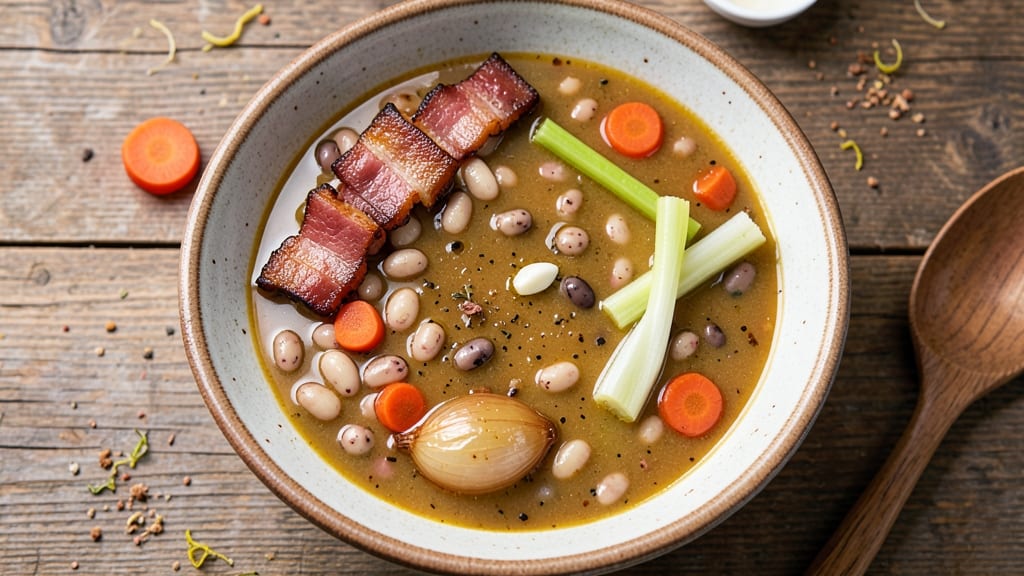
This bean soup with salt pork recipe delivers the soul-warming comfort of a Southern kitchen, where smoky pork meets tender beans in a rich, slow-simmered broth.
The key lies in properly rendering the salt pork for crispy bites while infusing the broth with deep, savory notes—something I perfected during my apprenticeship in Charleston. Every spoonful carries that perfect balance of texture and flavor that makes this dish a staple at family tables and pitmaster gatherings alike.
The magic happens through a slow simmer that transforms tough pork into melt-in-your-mouth pieces while developing the beans into a creamy, flavorful base. Traditional techniques like browning the pork first and adding aromatic vegetables create layers of depth that elevate this beyond basic bean soup.
This method ensures the salt pork stays crispy while the broth reduces to a velvety consistency that clings to every bite.
What you'll achieve is a restaurant-quality soup with tender beans, crispy salt pork bites, and a rich broth that's perfect for hearty meals. The pork adds a satisfying crunch and smoky flavor that cuts through the beans, while the slow cooking process allows all the flavors to meld beautifully.
This is the kind of dish that warms the soul and brings people together around the table.
Serve with crusty bread to soak up every last drop of that flavorful broth, or pair it with cornbread for a true Southern experience. The leftovers taste even better the next day, making this an ideal meal for busy weeks or special gatherings.
Let's get cooking—this is one recipe that delivers on tradition and comfort.
Ingredients for bean soup with salt pork
Soul-warming ingredients that transform simple pantry staples into restaurant-quality bean soup.
| Ingredient | Amount | Notes |
|---|---|---|
| Salt Pork 🥓 | 8 oz | Thinly sliced, skin on |
| Dried Navy Beans 🌾 | 2 cups | Rinsed and picked over |
| Yellow Onion 🧅 | 1 whole | Medium, chopped |
| Carrots 🥕 | 3 medium | Peeled, chopped into chunks |
| Celery Stalks 🧄 | 3 whole | Chopped, leaves included |
| Garlic Cloves 🧄 | 4 cloves | Minced for depth |
| Bay Leaves 🌿 | 2 whole | Fresh preferred |
| Smoked Paprika 🌶️ | 1 tbsp | For smoky flavor |
| Ground Black Pepper 🌶️ | ½ tsp | Freshly cracked |
| Salt 🧂 | 1 ½ tsp | Kosher or sea salt |
| Water 💧 | 8 cups | Filtered preferred |
| Apple Cider Vinegar 🍎 | 1 tbsp | Brightens flavors |
| Fresh Thyme 🌿 | 1 tbsp | Chopped, stems removed |
The salt pork is non-negotiable for that signature smoky crunch. Look for thinly sliced cuts at your local butcher—they'll have the best quality. If you can't find it pre-sliced, ask for it to be cut for you. Charleston's local butcher shops are my go-to, but any reputable meat counter will do. The beans should be dried navy beans—they hold up best during the long simmer. Soak them overnight if you're short on time, but traditionalists insist on the overnight soak for maximum tenderness. The carrots and celery form the aromatic base, so don't skimp on freshness—bright orange carrots and crisp stalks make all the difference.
No salt pork? Smoked bacon or ham hocks can stand in, though the flavor will differ slightly. Running low on bay leaves? Dried thyme at double the amount works in a pinch. The smoked paprika is crucial for that authentic Southern flavor—Penzeys brand is my top pick, but any quality smoked paprika will do. For the vinegar, apple cider adds complexity, but white vinegar works fine if that's what you have. Fresh thyme is ideal, but dried works at one-third the amount. The key is balancing the smokiness with acidity—don't skip the vinegar entirely, even if you're tempted.
This soup tastes even better the next day as flavors meld. Store in the fridge for up to 5 days, or freeze portions for 3 months. I always make a double batch—one for dinner, one for lunches. The salt pork stays crispy when reheated gently, so avoid microwaving. For serving, keep those crispy pork bits intact by spooning them over the top at the end. Pair with cornbread to soak up every last drop of that rich, smoky broth.
Why You'll Love This Recipe
- One-Pot Magic: I swear by this recipe when I’m too tired to scrub pots—just toss everything in one pot, simmer, and walk away. The salt pork renders its own fat, so you don’t even need oil, and the beans soften while you’re doing laundry.
- Salty-Sweet Crunch: That crispy salt pork skin? Pure magic. It crumbles into the broth like little flavor bombs, while the carrots and celery add a satisfying bite. Honestly, the first spoonful makes me forget it’s a weekday.
- Meal Prep MVP: Make a double batch on Sunday, and you’ve got lunch covered for the week. The flavors deepen overnight, and reheating it is just as good as day one—my kids fight over the leftovers, and I don’t even have to cook again.
- Pantry Staple Power: Dried beans, salt pork, and veggies? You’re basically using what’s already in your cupboard. It’s my go-to when the grocery budget’s tight, but somehow still feels like a treat—especially with a slice of crusty bread.
Step-by-step instructions for bean soup with salt pork
Transform simple ingredients into a rich, smoky bean soup with tender pork bites and hearty vegetables.
Prepare the Salt Pork and Beans
Begin by thinly slicing the 8 oz salt pork into bite-sized pieces, leaving the skin on for added flavor. Arrange the slices on a wire rack set over a plate and refrigerate for 30 minutes—this helps render excess fat while keeping the pork crispy. Meanwhile, rinse the 2 cups dried navy beans under cold water in a colander, then pick over to remove any debris or small stones. This ensures a clean, flavorful base for your soup.
While the pork chills, combine the beans with the 8 cups water in a large pot. Bring to a boil over high heat, then immediately reduce to medium-high and simmer uncovered for 2 minutes. This quick blanch removes any residual dirt and helps soften the beans slightly. Drain the beans and set aside for now—they'll cook fully during the soup's simmering time.
Sear the Salt Pork for Depth
In a large Dutch oven, heat the chilled salt pork slices over medium heat until the fat begins to render and the edges turn golden brown, about 5-7 minutes. Use a slotted spoon to transfer the pork to a paper towel-lined plate, leaving the rendered fat in the pot. This fat will form the flavorful base for your soup. If the pot isn't hot enough to brown the pork, increase the heat slightly—you want those crispy edges and smoky aroma.
Once the pork is removed, reduce the heat to medium-low and add the 1 whole yellow onion, 3 medium carrots, and 3 whole celery stalks, all chopped into ½-inch pieces. Sauté for 5 minutes, stirring occasionally, until the vegetables soften slightly and begin to release their juices. This step builds the soup's aromatic foundation while preventing the vegetables from overcooking later in the process.
Build the Smoky Base
Add the 4 minced garlic cloves, 1 tbsp smoked paprika, 0.5 tsp ground black pepper, and 1.5 tsp salt to the pot. Stir for 1 minute until the garlic becomes fragrant and the spices are evenly distributed. The smoked paprika will infuse the soup with a deep, woodsy flavor that pairs perfectly with the salt pork. If you notice the garlic burning, reduce the heat slightly—it should sizzle but not darken.
Return the salt pork slices to the pot, along with the drained navy beans, 2 whole bay leaves, and 1 tbsp chopped fresh thyme. Pour in the 1 tbsp apple cider vinegar, which brightens the flavors and balances the richness of the pork. Stir gently to combine, then add 6 cups of fresh water (reserving the remaining 2 cups for later adjustments). Bring the mixture to a gentle boil, then reduce the heat to low to maintain a barely simmering state.
Simmer Until Tender
Cover the pot and let the soup simmer for 1 hour and 15 minutes, stirring occasionally to prevent the beans and vegetables from sticking to the bottom. The navy beans should soften completely, and the salt pork should become fork-tender with slightly crisp edges. If the soup reduces too quickly and the beans aren't fully tender, add the reserved 2 cups water in ½-cup increments to maintain the liquid level without over-diluting the flavor.
After 1 hour and 15 minutes, taste the soup and adjust the seasoning if needed. The salt pork should be tender but still hold its shape, and the beans should be creamy and fully cooked. If the soup is too thick, thin it with a splash of the reserved water or a bit of the cooking liquid. Remove and discard the bay leaves before serving, as they can become bitter when overcooked.
Finish and Serve
Ladle the soup into bowls, ensuring each serving includes at least 2-3 pieces of salt pork for that satisfying crunch and smoky flavor. Garnish with an additional sprinkle of fresh thyme and a pinch of ground black pepper to enhance the presentation and add a final layer of aroma. Serve immediately with crusty bread to soak up the rich, flavorful broth.
This soup improves over time, so if you have leftovers, refrigerate them in an airtight container for up to 3 days. The flavors deepen as the salt pork continues to infuse the broth, making each bowl even more delicious. For a heartier meal, pair it with a simple green salad or cornbread to balance the richness.
Pro Tips For Making Bean Soup With Salt Pork
- CRISP THE PORK FIRST: Salt pork’s fat renders best when seared hard—no need for fancy cuts. Slice it into ½-inch cubes, then fry in a cold pot over medium heat until the fat stops sizzling (about 8-10 minutes). The slow melt keeps the meat tender while building flavor—skipping this step leaves it greasy and underseasoned.
- SOAK BEANS IN VINEGAR: Dried navy beans absorb water better with a splash of vinegar (1 tablespoon per pound of beans). Soak them overnight, then drain—but don’t rinse. The acid breaks down tough skins faster, and the beans hold their shape better during the long simmer. (Yes, even if you’re impatient like me, the extra 30 minutes pays off.)
- CHOP VEGETABLES UNIFORM: Onion, carrots, and celery should be cut to the same size (about ¼-inch dice). Smaller pieces cook faster and soften evenly, but don’t go too fine—you’ll end up with mush. A sharp knife and a steady hand make this less tedious (and more consistent) than rushing with a dull one.
- SIMMER LOW AND COVERED: After adding broth and beans, bring to a boil once, then reduce to the lowest heat that keeps tiny bubbles breaking the surface. Uncovered simmering evaporates liquid; covered too tight traps steam and turns the soup gluey. A lid propped slightly (or a splash of water if it gets too dry) keeps it creamy without losing flavor.
Regional styles of bean soup with salt pork
Southern Soul Style
This is the classic version you'll find in Georgia and the Carolinas, where salt pork and navy beans have been cooking together since colonial times. The key difference here is the longer simmer time—I often go up to 2 hours for extra tenderness.
I remember my grandmother adding a splash of hot sauce at the end for heat, but I've since learned that apple cider vinegar brightens the flavors without overpowering. The secret? Low and slow—never rush this soup. 🌶️
Charleston Lowcountry Twist
In Charleston, we take it up a notch with shrimp or crab added during the last 15 minutes of cooking. The briny seafood cuts through the richness of the pork, creating a beautiful contrast.
I like using peeled, deveined shrimp (about ½ lb) or chopped blue crab meat for that true Lowcountry touch. The locals also swear by a pinch of cayenne pepper—just ¼ tsp—to add a subtle kick. This version is lighter but still packed with flavor.
Cajun Bayou Variation
Down in Louisiana, they add andouille sausage and okra for a completely different texture profile. I've adapted this by replacing half the salt pork with diced andouille, then adding 1 cup chopped okra during the final 30 minutes of cooking.
The okra thickens the soup slightly while adding a nice chew. Don't forget the file powder—just ½ tsp—for that signature Cajun depth. It's a heartier version that still keeps the bean-pork relationship at its core.
Appalachian Mountain Style
Up in the Appalachians, they keep it simple but smoky. The difference? More salt pork—I'll double it to 16 oz—and less water to create a thicker, more concentrated broth.
They also add sliced potatoes (about 2 medium) during the final hour to soak up some of that rich liquid. The result is a thicker, heartier soup that's perfect for cold mountain nights.
I've found that adding a splash of buttermilk at the end (just 2 tbsp) adds a lovely tang that balances the saltiness.
Modern Fusion Approach
For a contemporary twist, I've experimented with adding roasted butternut squash (about 2 cups diced) during the final 45 minutes of cooking. The sweetness of the squash pairs beautifully with the smoky pork, creating a fall-winter favorite. I also like adding toasted pumpkin seeds on top for crunch.
This version works well with maple syrup (just 1 tsp) instead of vinegar for a sweeter, more autumnal profile. It's a great way to modernize a classic while keeping the soul of the dish intact. 🍂
Nutrition facts
Frequently asked questions
Why does the recipe call for refrigerating the salt pork before cooking?
Chilling the salt pork for 30 minutes before cooking helps render excess fat while keeping the slices crispy. The cold temperature firms up the fat, preventing it from cooking too quickly and turning greasy. This technique ensures those perfect crunchy edges that make this soup so satisfying.
Can I use canned beans instead of dried for this recipe?
While you can substitute 2 (15 oz) cans of navy beans, dried beans develop a richer flavor through the long simmer. Canned beans will work in a pinch, but they'll require only 30-45 minutes of simmering after adding to the soup. Drain and rinse them well to remove excess sodium. The texture will be slightly softer than dried beans.
How do I prevent the salt pork from becoming greasy?
First, chill the pork before cooking to firm up the fat. Then, remove the pork from the pot after browning and set it aside while you sauté the vegetables. This prevents the pork from soaking up too much of its own rendered fat. When you return the pork to the pot, it'll stay crispy instead of turning soggy.
What's the best way to reheat leftovers without losing the crispiness?
Reheat only the broth and beans separately to 165°F, then stir in the pork just before serving. For extra crunch, toast the pork in a dry skillet over medium heat for 1-2 minutes before adding it back to the soup. Microwaving kills the crispiness, so always use stovetop methods for best results.
Can I make this soup in a slow cooker?
Brown the pork and sauté the vegetables first, then transfer everything to a 6-quart slow cooker. Add the remaining ingredients and cook on low for 6-7 hours or high for 3-4 hours. The slow cooker method actually enhances the tenderness of both the pork and beans while keeping the flavors rich and concentrated.