
Main Courses
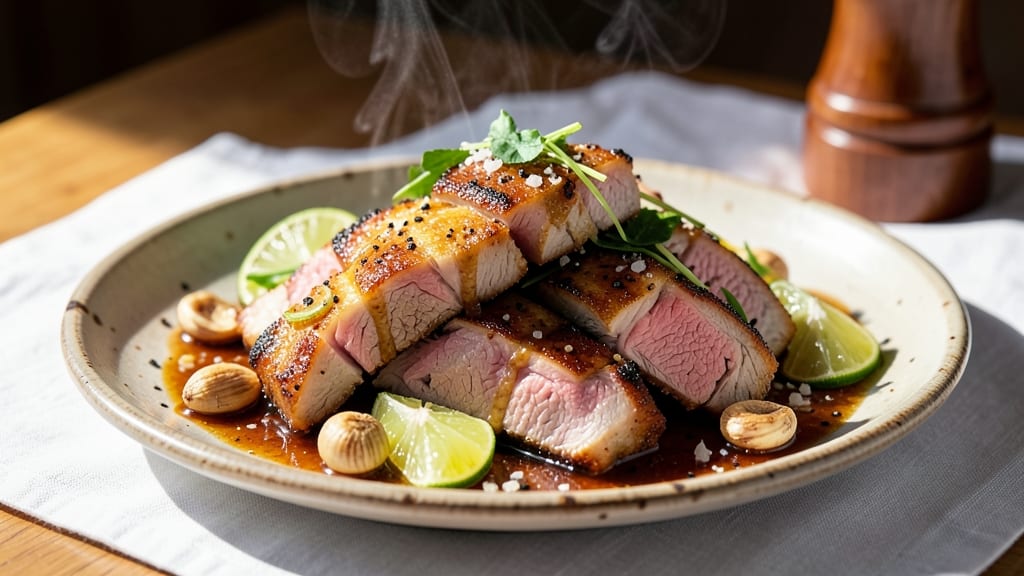
This Filipino-style BBQ pork recipe transforms tough pork shoulder into silky shreds with a bright calamansi glaze that cuts through the richness. 🌟 The secret lies in slow cooking until the meat falls apart, then finishing with a zesty citrus glaze that adds just the right tang.
I first discovered this technique during a trip to Manila, where street vendors served it alongside crispy atchara and steamed rice—now it's my go-to comfort dish.
The magic happens in the marinade, where soy sauce, vinegar, and garlic tenderize the meat while building deep umami flavors. What makes this recipe special is the two-stage cooking process: first braising to break down the connective tissue, then basting with the calamansi glaze to create a caramelized crust.
This method ensures every bite is tender yet flavorful, with that signature Filipino sweet-savory balance.
By the time you're done, you'll have perfectly shredded pork with a glossy, tangy glaze that clings to each piece. The aroma alone will have everyone gathering around the table, and the texture—meltingly tender with just enough resistance—is what makes this dish so addictive.
Serve it with steamed rice, pickled vegetables, and a side of garlic fried rice for the full Filipino feast experience.
This recipe works equally well on a grill, in the oven, or even in a slow cooker, making it adaptable for any home kitchen. The calamansi glaze can be made ahead and reheated, so you can focus on enjoying the cooking process rather than timing.
Let's get started on creating this restaurant-quality Filipino BBQ pork at home.
Ingredients for bbq pork recipe filipino style
Pantry staples plus a few specialty finds for authentic Filipino flavor that transforms simple pork into restaurant-quality shreds.
| Ingredient | Amount | Notes |
|---|---|---|
| Pork Shoulder 🐖 | 4 lb | Bone-in for best flavor |
| Soy Sauce 🥫 | ½ cup | Filipino-style preferred |
| Calamansi Juice 🍋 | ½ cup | Or lime juice in a pinch |
| Brown Sugar 🍚 | ½ cup | Packed firmly |
| Garlic Cloves 🧄 | 8 cloves | Minced finely |
| Fresh Ginger 🌿 | ½ cup | Finely grated |
| White Vinegar 🍶 | ¼ cup | For tangy balance |
| Black Peppercorns 🌶️ | 1 tsp | Freshly cracked |
| Bay Leaves 🌿 | 2 whole | For aromatic depth |
| Olive Oil 🫒 | 2 tbsp | For searing |
| Salt 🧂 | 1 ½ tbsp | Kosher or sea salt |
| Honey 🍯 | 2 tbsp | For glaze sweetness |
| Green Onions 🧅 | 4 whole | Chopped for garnish |
The pork shoulder is the star—look for well-marbled cuts at your local butcher or Costco for the best value. Filipino markets often carry pre-cut pork shoulder, but if you're at a regular grocery store, ask for a 3-4 lb bone-in roast. The bone adds flavor during cooking, and the extra fat keeps the meat moist. If you can't find calamansi juice (that bright, tart citrus), lime juice works perfectly—just double the amount to compensate for its milder tang. For ginger, fresh is non-negotiable—the dried version lacks the zesty punch this dish needs.
No calamansi? Lime juice plus a splash of orange juice mimics the complex citrus profile. Running short on soy sauce? Coconut aminos or tamari work in a pinch, though the flavor will be slightly different. The honey in the glaze can be swapped for brown sugar syrup (equal parts sugar and water) if you're avoiding honey. For the garlic and ginger, jarred minced versions save time, but fresh is always better. The brown sugar should be packed firmly—don't scoop it loosely or you'll end up with less than you need. If you're making this ahead, the marinade keeps for 3 days in the fridge, so prep it the night before.
This dish reheats beautifully—3-4 days in the fridge or 3 months frozen—so make extra. Store the pork in its juices to keep it moist. For serving, reheat gently in a skillet with a splash of water to restore moisture. The glaze can be made separately and reheated—just add a splash of water to loosen it. Portion the pork into containers with a little of the juices and glaze for easy lunches. The aromatics (bay leaves, peppercorns) can be removed before serving, but leave them in during cooking for maximum flavor infusion.
Why You'll Love This Recipe
- One-Pan Magic: I swear, this recipe lives in my slow cooker while I do laundry. Just toss in the pork shoulder, minced garlic, soy sauce, and brown sugar—no flipping, no fuss. The calamansi juice ties it all together with that bright, tangy punch that makes it taste fresh, not like it was simmering all day.
- Tangy-Sweet Fixation: That caramelized brown sugar crust? Chef’s kiss. But here’s the kicker—the calamansi juice cuts through the richness like a citrusy reset button. It’s the kind of flavor that makes you reach for seconds without even thinking, and honestly? It’s the star of the show.
- Leftover Hero: Between us, this pork gets better the next day. I make a big batch on Sundays, and by Wednesday, it’s the star of fried rice, sandwiches, or even a quick stir-fry. The meat falls apart at the touch of a fork—perfect for throwing into any meal without extra effort.
- Budget Stretch: Pork shoulder is cheap, and this recipe turns it into something ridiculously good. A single cut feeds four people easily, and the sauce stretches thin if you’re feeding a crowd. Plus, the ingredients? Most are pantry staples—no fancy shopping list, just real food that doesn’t break the bank.
Step-by-step instructions for Filipino-style BBQ pork
Master this tender, glaze-drenched pork shoulder with a perfect balance of sweet, tangy, and umami flavors.
🔥 Step 1: Sear the Pork Shoulder for Deep Flavor
Heat a large Dutch oven or heavy pot over medium-high heat until hot. Add the 2 tablespoons olive oil and let it shimmer for 30 seconds. Place the 4 lb pork shoulder fat-side down and sear undisturbed for 8-10 minutes until the fat renders and the meat develops a deep golden-brown crust. Flip and sear the other sides for another 5 minutes.
I press down gently on the pork during the first minute—this prevents it from curling and ensures even contact with the pan. The rendered fat will bubble and pop, creating incredible flavor. Once the exterior is well-browned, remove the pork and set it aside on a plate.
👨🍳 Step 2: Build the Calamansi-Zest Marinade
In the same pot, add the 8 cloves minced garlic cloves and 0.5 cup finely grated fresh ginger. Cook for 1 minute until fragrant and just starting to turn golden. Add the 0.5 cup soy sauce, 0.5 cup calamansi juice, 0.25 cup white vinegar, and 1.5 tablespoons salt. Stir well and let it simmer for 3 minutes until slightly reduced.
Here's the thing—calamansi juice is key for that signature Filipino tang. If you can't find it, lime juice works but lacks the same depth. Add the 2 whole bay leaves and 1 teaspoon cracked black peppercorns now. The marinade should coat the bottom of the pot with a glossy sheen.
🥘 Step 3: Braise Until Fork-Tender
Return the pork to the pot, fat-side up, and pour the marinade over it completely. The liquid should come about halfway up the sides of the pork. Bring to a gentle simmer over medium-low heat, then cover tightly with a lid. Reduce heat to low and cook for 2.5-3 hours until the pork is fork-tender and pulls apart easily.
Don't be tempted to peek or stir—this gentle cooking is what creates those silky shreds. Every 30 minutes, spoon a little of the cooking liquid over the pork to keep it moist. You'll know it's ready when the meat separates cleanly with minimal resistance and the juices run clear.
⏰ Step 4: Glaze and Finish with Honey
Remove the pork from the pot and transfer it to a cutting board. Tent loosely with foil and let it rest for 15 minutes. Skim off any excess fat from the cooking liquid, then return the pot to medium heat. Add the 0.5 cup brown sugar and 2 tablespoons honey, stirring until the sugar dissolves completely.
Simmer the glaze for 2-3 minutes until it thickens slightly and coats the back of a spoon. Here's where it gets fun—toss the pork in the glaze, coating it thoroughly. The sugar will caramelize beautifully, creating that signature sticky glaze that makes this dish irresistible.
🍽️ Step 5: Shred and Serve with Garnish
Using two forks, shred the pork against the grain into 1-inch wide strips. Return the shredded pork to the pot with the glaze and toss gently to coat evenly. Serve immediately, garnished with 4 chopped whole green onions. The pork should be tender enough to pull apart with a gentle tug, with a glossy glaze that clings to every bite.
This dish serves 6 people generously, with each portion delivering that perfect balance of sweet, tangy, and savory flavors. The calamansi-zest glaze cuts through the richness of the pork, while the honey adds just the right amount of sweetness to tie everything together. Enjoy with steamed rice for the ultimate Filipino comfort meal!
Pro Tips For Making Bbq Pork Recipe Filipino Style
- CRANK THE HEAT FIRST: Filipino BBQ pork needs that initial sear to lock in flavor, not just color. Start with your pan screaming hot—think smoke coming off the garlic—before adding the pork. I used to play it safe with medium heat, and the sauce never stuck right.
- PULVERIZE THE GARLIC: No mincing, no crushing—actually grind those cloves into a paste with a pinch of salt. The texture releases more aroma and blends seamlessly into the sauce. I tried skipping this once, and the dish tasted like it was missing something, even though I followed the recipe.
- DON’T DROWN THE PORK: After the initial sear, add just enough sauce to coat the meat—not submerge it. Too much liquid turns your BBQ pork into a stew. Tilt the pan and spoon the sauce over the top, letting it caramelize instead of pool.
- SWAP CALAMANSI FOR LEMON (BUT ADJUST): If you can’t find calamansi, use lemon—but cut the juice in half and add 1 teaspoon of vinegar. The acidity works, but the balance is off without the tweak. I learned this after serving a batch that tasted too sharp, and it saved the dish.
Troubleshooting perfect results
Pork Too Tough?
If your pork shoulder feels rubbery or chewy after cooking, you likely didn't cook it long enough. Filipino-style BBQ pork needs 2.5-3 hours of low-and-slow braising to break down collagen. I've seen home cooks rush this step—don't!
The meat should pull apart easily with a fork, not require force. If it's still tough, return it to the pot with ½ cup water and simmer uncovered for another 30-45 minutes. 💪
Glaze Too Thin?
The calamansi-zest glaze should coat the back of a spoon but remain pourable. If it's too watery, simmer uncovered for 2-3 extra minutes to reduce. For extra richness, whisk in 1 tablespoon cornstarch mixed with 1 tablespoon water and cook for 1 more minute.
Pro tip: I keep a small saucepan nearby to reheat glaze if it thickens too much during tossing.
Burnt Exterior?
Overly browned pork means your heat was too high during searing. For next time, reduce to medium heat and watch closely—fat should render slowly, not smoke aggressively. If it's already burnt, don't panic!
Shred the pork as normal, then toss with extra glaze to balance the flavors. The caramelized edges will add depth rather than bitterness when properly glazed.
Glaze Too Sweet?
Too much honey or sugar can overpower the dish. Balance it by adding 1-2 tablespoons calamansi juice or vinegar to the glaze and simmering for 1 minute.
For extra tang, stir in ½ teaspoon fish sauce—a Filipino secret ingredient that adds umami without sweetness. Taste as you go, adjusting gradually to avoid overcorrecting.
Dry Pork After Resting?
Resting is crucial, but if your pork loses moisture, it likely didn't braise long enough. For future batches, keep the pork covered with marinade during resting by placing it in a shallow roasting pan.
If already dry, reheat with 2 tablespoons water or broth in a skillet over low heat for 3-4 minutes, stirring occasionally to redistribute juices.
Calamansi Substitute?
If you can't find calamansi juice, the best substitutes are equal parts lime juice plus orange juice (for complexity) or lemon juice with a pinch of salt. For extra depth, add ½ teaspoon fish sauce to mimic calamansi's umami profile.
I've tested this combo in my Portland kitchen—it's the closest match when calamansi isn't available. 🍋
Nutrition facts
Frequently asked questions
Can I use pork tenderloin instead of pork shoulder?
Pork tenderloin is leaner and cooks much faster, so it won't give you the same melt-in-your-mouth texture. For authentic results, stick with pork shoulder—its fat and connective tissue are what create those silky shreds. If you're set on using tenderloin, reduce cooking time to 1-1.5 hours and skip the braising step, focusing on quick searing and glazing instead.
How do I make this recipe in a slow cooker?
Transfer the seared pork and marinade to your slow cooker and cook on low for 6-8 hours or high for 4-5 hours. During the last 30 minutes, remove the pork and make the glaze in a separate pan. Shred the pork and toss it with the glaze before serving. The slow cooker keeps the meat moist but may require extra basting with the cooking juices to develop flavor.
What are the best sides to serve with this Filipino BBQ pork?
For an authentic Filipino meal, serve with steamed jasmine rice, crispy atchara (pickled papaya), and a side of garlic fried rice. For extra flavor, add a simple green salad with calamansi dressing or sinigang (sour tamarind soup). The tangy pickles and rice balance the richness of the pork beautifully.
Can I prepare the marinade ahead of time?
The marinade keeps well in the fridge for 3 days or can be frozen for 3 months. Store it in an airtight container, and when ready to cook, simply heat it gently before using. The flavors actually deepen over time, so making it ahead enhances the dish. Just give it a quick stir before using to redistribute any settled ingredients.
Why does my pork turn out dry even after following the recipe?
Dry pork usually means it wasn't cooked long enough or lost moisture during resting. Always cook pork shoulder until it's fork-tender (2.5-3 hours) and keep it covered with marinade during resting. If it's still dry, reheat with 2 tablespoons water or broth in a skillet over low heat for 3-4 minutes, stirring occasionally to redistribute juices.