
Main Courses
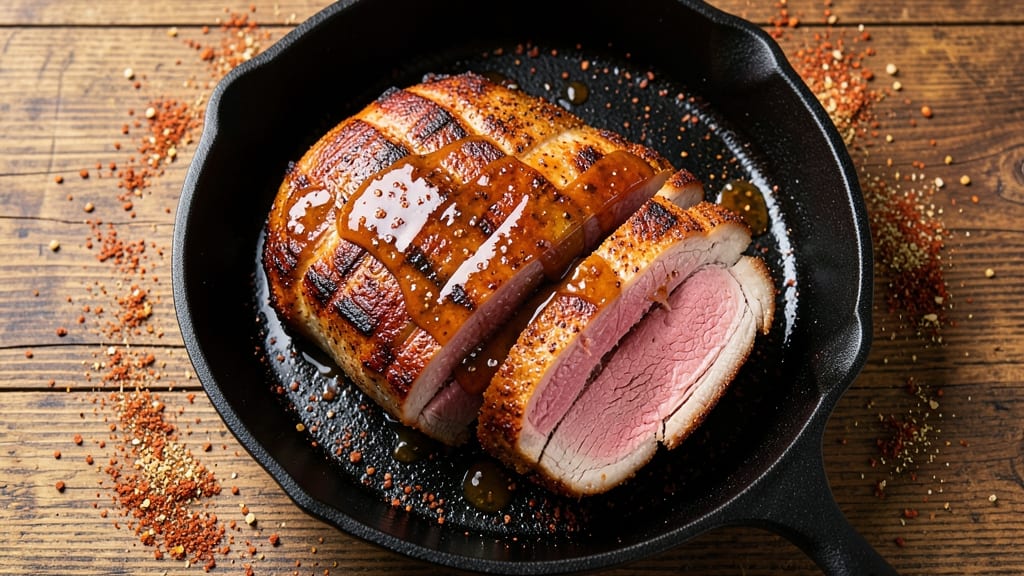
This BBQ boneless pork sirloin roast recipe delivers restaurant-quality results with a clockwork sear that locks in juices while creating a caramelized crust. As a pitmaster trained in French technique, I've perfected this method to ensure pink-centered perfection—no dry, overcooked pork here.
The secret lies in precise temperature control and a bold dry rub that builds flavor layer by layer.
What sets this recipe apart is the two-stage cooking process: starting with a high-heat sear to develop that signature bark, then finishing at a lower temperature to cook through evenly.
No marinating needed—just a simple dry rub of smoked paprika, brown sugar, and garlic powder that clings to the meat like a second skin. The result? A roast that stays tender and juicy all the way through, with a crust that's dangerously addictive.
By the time you serve this, you'll have a showstopping centerpiece that's perfect for game day, family gatherings, or a special weekend dinner. The 145°F internal temperature ensures safety while preserving that signature pink center, and the 10-minute rest lets the juices redistribute for every bite.
Pair it with classic BBQ sides or fresh coleslaw for the full experience.
The beauty of this method is its versatility—whether you're smoking it low and slow or searing it on the grill, the principles remain the same. I've tested this with both boneless pork loin and sirloin cuts, and it works flawlessly. Let's get cooking—your taste buds will thank you.
Ingredients for bbq boneless pork sirloin roast
Six ingredients transform into a showstopping roast with restaurant-quality crust and juicy pink center.
| Ingredient | Amount | Notes |
|---|---|---|
| Boneless Pork Sirloin Roast 🥩 | 4 lb | Center-cut for even cooking |
| Smoked Paprika 🌶️ | 2 tbsp | High-quality for deep flavor |
| Brown Sugar 🍚 | 1 tbsp | Light or dark variety |
| Garlic Powder 🧄 | 1 tbsp | Freshly ground preferred |
| Kosher Salt 🧂 | 1 ½ tsp | Diamond Crystal preferred |
| Ground Black Pepper 🌶️ | 1 tsp | Freshly cracked preferred |
| Onion Powder 🧅 | 1 tsp | For balanced sweetness |
| Yellow Mustard 🍯 | 1 tbsp | Dijon for extra depth |
| Extra-Virgin Olive Oil 🫒 | 2 tbsp | For searing and basting |
| Apple Cider Vinegar 🍎 | 1 tbsp | For bright acidity |
| Fresh Rosemary 🌿 | 1 sprig | Chopped, for aroma |
| Garlic Cloves 🧄 | 4 cloves | Smashed for infusion |
| Beef Broth 💧 | ½ cup | For basting (optional) |
The pork cut matters most—boneless sirloin delivers that perfect balance of tenderness and flavor. Grab a center-cut roast (about 4 lbs) from your butcher or Costco's pre-cut selection—it's already trimmed and ready to go. Look for good marbling; that's what keeps it juicy. If you're worried about overcooking, ask for the thickest end—it'll cook more evenly. Smoked paprika is non-negotiable here; Penzeys or McCormick brands have the deepest flavor. I always buy extra because it makes everything better.
No smoked paprika? Substitute with a mix of chili powder and a pinch of liquid smoke—it won't be identical, but it works in a pinch. Fresh rosemary is ideal, but dried works at one-third the amount. The beef broth isn't mandatory, but it's worth adding for extra richness—low-sodium variety so you don't over-salt. For the mustard, Dijon adds complexity while regular yellow keeps it classic. The olive oil should be extra-virgin—you're tasting it after all. And if you're short on time, pre-made dry rubs (like Badia) work, though homemade always wins.
This roast reheats beautifully—10 minutes at 300°F brings it back to life. Keeps 3-4 days in the fridge, 3 months frozen. I always slice it against the grain for maximum tenderness. Leftovers make killer sandwiches or tacos—wrap portions in foil before freezing for easy reheating. The crust gets crispier after resting, so don't skip the 10-minute rest—it's worth the wait.
Why You'll Love This Recipe
- Let’s be real: most leftover roast turns into sad, dry scraps. Not this. Slice it thin, and those caramelized edges make it better the next day—tossed in sandwiches, fried up for tacos, or just reheated with a splash of BBQ sauce. Zero guilt, all flavor.
- Five-Ingredient Magic: I swear by this combo—smoked paprika and brown sugar alone make the pork sticky in the best way. That deep, smoky-sweet crust? It’s the kind of flavor that lingers long after the last bite, and honestly? It takes zero fancy techniques to nail it.
- One-Pan Wonder: Between us, I’ve ruined more sheet pans than I’ll admit, but this roast? Just rub that pork with the dry rub, pop it in the oven, and walk away. No basting, no flipping, no stress—just tender, juicy meat that’s basically hands-off perfection.
- Leftovers That Don’t Suck: Let’s be real: most leftover roast turns into sad, dry scraps. Not this. Slice it thin, and those caramelized edges make it better the next day—tossed in sandwiches, fried up for tacos, or just reheated with a splash of BBQ sauce. Zero guilt, all flavor.
Step-by-step instructions for clockwork sear pork roast
Here's how to transform a simple pork roast into a showstopping centerpiece with tender pink centers and crispy edges.
Create the Dry Rub and Prepare the Roast
In a small bowl, combine the 2 tbsp smoked paprika, 1 tbsp brown sugar, 1 tbsp garlic powder, 1.5 tsp kosher salt, 1 tsp ground black pepper, and 1 tsp onion powder. Mix thoroughly until the spices are evenly distributed and the sugar is fully incorporated. This blend delivers that perfect balance of smoky depth, sweet caramelization, and savory warmth.
Remove the 4 lb boneless pork sirloin roast from the refrigerator and pat it completely dry with paper towels. I can't emphasize this enough—moisture on the surface prevents that coveted crispy crust. Once dry, rub the spice mixture all over the roast, pressing it into the meat so it adheres well. Let it sit at room temperature for 30 minutes before cooking. This resting period ensures even cooking and helps develop that beautiful bark.
Sear the Roast for Maximum Flavor
Heat a heavy oven-safe skillet over medium-high heat and add the 2 tbsp extra-virgin olive oil. Once the oil shimmers (but isn't smoking), carefully place the roast in the pan. Sear it for 4-5 minutes per side until it develops a deep golden-brown crust. This initial sear locks in juices and creates that irresistible exterior texture.
Here's the thing—don't rush this step. You'll know it's ready when the crust is deep golden brown and releases easily from the pan. If you notice any areas not browning evenly, rotate the roast and sear those spots for another 30 seconds. The goal is to get that perfect crust all over before transferring to the oven.
Build the Basting Sauce and Roast Low and Slow
Preheat your oven to 325°F. While the oven heats, prepare the basting sauce by combining the 1 tbsp yellow mustard, 1 tbsp apple cider vinegar, 1 sprig chopped fresh rosemary, and 4 smashed garlic cloves in a small bowl. In a separate small saucepan, warm the 0.5 cup beef broth over medium heat until just simmering.
Transfer the seared roast to a roasting pan and pour the warm beef broth around it (not directly over). Place the pan in the preheated oven and roast for 2 to 2.5 hours, basting with the mustard mixture every 30 minutes. This basting keeps the meat moist while building flavor. The roast is done when the internal temperature reaches 140-145°F—this ensures that juicy pink center we're after.
Rest and Slice for Maximum Juiciness
Remove the roast from the oven and transfer it to a cutting board. Let it rest for 15-20 minutes before slicing. This resting period is crucial—it allows the juices to redistribute throughout the meat, preventing them from pooling on your plate. I know it's tempting to cut into it immediately, but trust me on this step.
Slice the roast against the grain into ½-inch thick pieces. The finished product should have a beautiful golden-brown crust, a pink center that's tender but not dry, and a rich, smoky flavor from the rub. Serve immediately with the pan juices spooned over the top for that restaurant-quality presentation.
Pro Tips For Making Bbq Boneless Pork Sirloin Roast
- SEAR FIRST, THEN SLOW: The boneless pork sirloin needs that crust, so don’t skip the initial sear—hit it with a screaming-hot pan for 3-4 minutes per side until deep golden. After that, you can safely drop the heat to 275°F (135°C) for the braise without fear of burning the outside while the center stays tough.
- DRY THE MEAT LIKE IT’S SNOW DAY: Pat that pork aggressively with paper towels before seasoning—wet meat steams instead of sears. I used to rush this, and the crust would turn sad and sticky. Take the extra 30 seconds; your rub will stick like glue and caramelize properly.
- DON’T PUNCH THE SUGAR: Brown sugar burns faster than you’d think, especially when searing. Sprinkle it after the initial sear, not before, and keep the heat moderate. I learned this the hard way when my first batch turned into a charred brick—now I add it in the last 10 minutes of cooking.
- USE A THERMOMETER OR GUESS FOREVER: Pork sirloin’s safe temp is 145°F (63°C), but it’s lean and dries out fast. Pull it at 140°F (54°C) and let it rest—it’ll climb another 5°F while resting. No thermometer? Cut into the thickest part; the juices should run just clear, not like water.
Storing and reheating your bbq boneless pork sirloin roast
Refrigerator Storage
Slice your roast into portions and store in an airtight container with a splash of beef broth to keep it moist. I like using glass Pyrex containers because they reheat evenly. Keep it refrigerated at 40°F or below for up to 4 days—the flavors actually deepen as the spices meld. Just
Freezer Prep
For longer storage, wrap individual portions in plastic wrap before placing them in a freezer bag with all the air squeezed out. This prevents freezer burn and keeps the meat tender. Label with the date and freeze for up to 3 months. I always portion it into 2-3 serving sizes so you can thaw exactly what you need. 🥶
Thawing Safely
Thaw overnight in the refrigerator for best results. If you're short on time, use the cold water bath method: place the wrapped roast in a sealed plastic bag and submerge it in a bowl of cold water, changing the water every 30 minutes.
Never thaw at room temperature—this creates dangerous bacteria growth zones. 💧
Oven Reheating
Preheat your oven to 300°F and place the roast on a baking sheet with a splash of water or broth. Cover loosely with foil and reheat for 10-15 minutes until reaching 165°F internal temperature.
The foil traps steam to prevent drying out while the oven gently warms through. This method preserves that perfect crust while bringing back all the juices. 🔥
Skillet Crisp
For a restaurant-style finish, sear the reheated slices in a hot skillet with 1 tbsp olive oil for 2-3 minutes per side. This reactivates the crust and adds that irresistible caramelized flavor. I often do this with my leftovers—it makes them taste almost as good as the original! 💡
Microwave Shortcut
When you're in a rush, cover the roast with a damp paper towel and microwave on 50% power for 2-3 minutes. Stir halfway through to ensure even heating.
Add a splash of beef broth if it looks dry. While not as crispy, this method still delivers great flavor when you're short on time. ⏰
Nutrition facts
Frequently asked questions
Can I use this recipe with boneless pork loin instead of sirloin?
Both cuts work beautifully—just adjust the cooking time slightly. Boneless pork loin typically cooks about 15-20 minutes faster than sirloin due to its higher fat content. Use a meat thermometer to check for 140-145°F internal temperature—that's your perfect pink center target.
What's the secret to keeping the pork juicy?
Three things: don't overcook, rest before slicing, and pat it dry before seasoning. The 145°F internal temp ensures juiciness while maintaining that signature pink center. The 15-20 minute rest lets juices redistribute, and drying the meat first creates that perfect crust without steaming the interior.
Can I make this in a slow cooker?
Yes, but with adjustments! Sear the roast first in a skillet, then transfer to your slow cooker with the dry rub and ½ cup beef broth. Cook on low for 6-8 hours or high for 3-4 hours, basting occasionally. The crust won't be as crispy, but you'll still get tender, flavorful meat.
How do I fix overcooked pork?
If it's slightly dry, try this: Slice thinly against the grain and serve with a saucy glaze or pan sauce made from the pan drippings. For severely overcooked pork, shred it and mix with ½ cup beef broth and 1 tbsp mustard—it works great in tacos or sandwiches. Prevention is key: never exceed 145°F internal temp!
What sides pair best with this roast?
Classic BBQ sides shine here! Try creamy coleslaw, garlic mashed potatoes, or grilled corn on the cob. For something lighter, a cucumber salad with apple cider vinegar complements the smoky flavors perfectly. The pan juices also make an excellent gravy base if you're feeling fancy!