
Main Courses
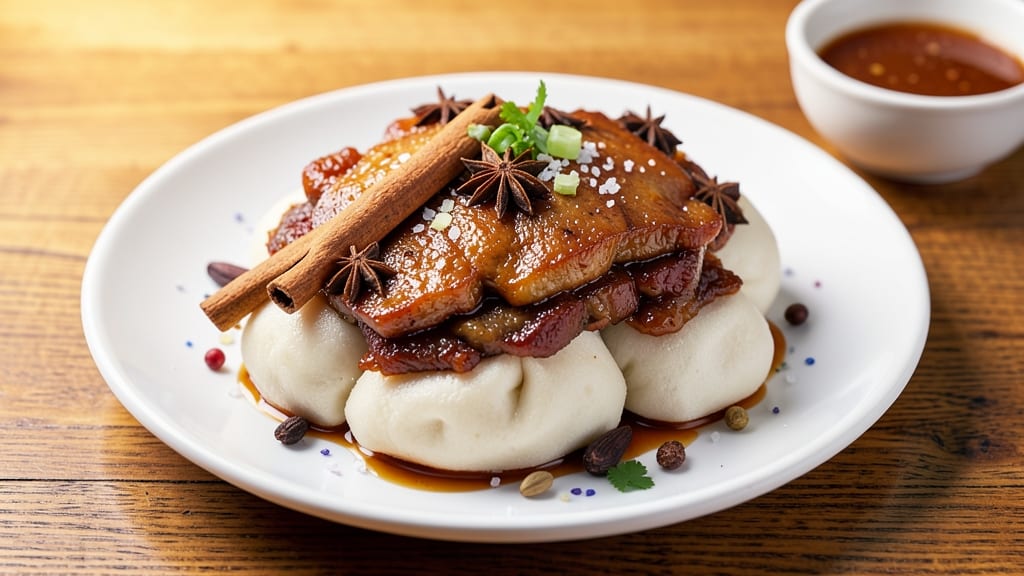
This bao bun pork filling recipe transforms humble ground pork into something dangerously addictive with just five simple spices. 🔥 The secret lies in that fragrant five-spice blend—star anise, cinnamon, cloves, fennel, and Sichuan peppercorns—that infuses the pork with layers of warmth and complexity.
I've been perfecting this filling for years, and it's the one my customers ask for by name at The Smoky Pig.
The magic happens in two stages: first, charring the aromatics to deepen their flavor, then cooking the pork low and slow until it's tender enough to pull apart with your fingers.
This isn't your average ground pork—it develops a rich, almost smoky depth that pairs perfectly with soft bao buns or even over rice. The five-spice blend works its magic while keeping the filling bright and aromatic, not overpowering.
What you'll end up with is a pork filling that's perfectly balanced—tender, flavorful, and just sticky enough to cling to every bite. The texture is ideal for stuffing bao buns, but it also works beautifully as a standalone dish with pickled vegetables or fresh herbs.
This is the kind of filling that turns a simple bun into an unforgettable meal.
Ready in about 45 minutes, this recipe delivers restaurant-quality results without requiring any special equipment. The technique is straightforward, but the flavor payoff is extraordinary. Let's get cooking—your bao buns are about to get an upgrade.
Ingredients for bao bun pork filling
Five spices, one magic filling—this transforms simple pork into bao bun perfection.
| Ingredient | Amount | Notes |
|---|---|---|
| Ground Pork 🐷 | 1 ½ lb | 80% lean, finely ground |
| Star Anise Pods 🌿 | 2 whole | Lightly crushed for aroma |
| Cinnamon Sticks 🌿 | 2 whole | Broken into 1-inch pieces |
| Cloves 🌿 | 4 whole | Lightly crushed |
| Fennel Seeds 🌿 | 1 tbsp | Toasted for warmth |
| Sichuan Peppercorns 🌶️ | 1 tsp | Lightly toasted for heat |
| Soy Sauce 🍶 | ½ cup | Light or dark variety |
| Shaoxing Wine 🍷 | ¼ cup | Or dry sherry substitute |
| Sesame Oil 🫒 | 1 tbsp | Toasted for aroma |
| Garlic Cloves 🧄 | 6 cloves | Minced, fresh preferred |
| Fresh Ginger 🧅 | 1 tbsp | Finely grated, peeled |
| Green Onions 🧅 | 3 whole | White and green parts separated |
| Vegetable Oil 🫒 | 2 tbsp | High smoke point |
| Cornstarch 🌾 | 1 tbsp | For binding texture |
| Salt 🧂 | 1 tsp | Kosher or sea salt |
The five-spice blend is non-negotiable here. Star anise and Sichuan peppercorns are the stars—find them at Asian markets or the international aisle at Whole Foods. Toast the whole spices in a dry pan for 30 seconds before crushing to wake up their flavors. Fresh ginger and garlic? Peel and grate the ginger on the largest holes of a box grater—no need to be precise, just get it finely textured. For the pork, 80% lean ground pork is ideal (ask your butcher to grind it extra fine if it's not pre-ground). The Shaoxing wine adds depth—if you can't find it, dry sherry or even a splash of apple cider vinegar works in a pinch.
No Sichuan peppercorns? Substitute with a pinch of black pepper plus a dash of cayenne for heat, but you'll lose that signature numbing tingle. The cornstarch is key for that pull-apart texture—don't skip it. For extra richness, add 1 tbsp of hoisin sauce to the mix. The green onions should be finely chopped, with the whites cooking down into the filling and the greens reserved for garnish. If you're making this ahead, cook it all the way through and store in the fridge—it reheats beautifully. The filling keeps for 4 days in the fridge, and freezes well for 3 months if you want to prep ahead for bao bun day.
This filling is versatile—use it for bao buns, rice bowls, or even stuffed into lettuce wraps. Double the batch if you're feeding a crowd—it disappears fast. The texture should be tender but still hold its shape slightly when cold, so it doesn't fall apart when stuffed. If it's too dry, add 1-2 tbsp of water or pork broth at the end. For extra smokiness, char the aromatics in a wok or cast-iron skillet before adding them to the pork. Store leftovers in an airtight container with a layer of plastic wrap pressed directly on the surface to keep it moist.
Why You'll Love This Recipe
- Spice Cabinet Magic: I swear by the whole-spice combo here—just toss in star anise, cinnamon, and cloves with the pork, and boom, that warm, aromatic depth happens almost by accident. No fancy techniques, just letting those spices steep while you brown the meat.
- Bao Bun Hero: This filling is my go-to when I need something that’ll make even the simplest bao bun feel special. The fennel seeds add a subtle licorice kick that pairs perfectly with the juicy pork—it’s the kind of flavor that makes people ask, "What’s in this?"
- Freezer-Friendly Powerhouse: Make a big batch on Sunday, freeze it in portions, and you’ve got weeknight bao buns covered. Thaw it in the fridge overnight, and it’s just as tender as day one—no sad, dry leftovers here.
- Budget Stretch: Ground pork and whole spices won’t break the bank, but the flavor? Ridiculously rich. I’ve made this for potlucks, lazy Sundays, and even as a quick lunch—it’s my secret weapon for feeling like you’re eating fancy without the price tag.
Step-by-step instructions for bao bun pork filling
Here's how to make that irresistibly tender, aromatic pork filling that melts in your mouth.
🔥 Step 1: Toast the Spices for Maximum Flavor
Heat a dry skillet over medium heat and add the fennel seeds and Sichuan peppercorns. Toast them for 1-2 minutes until fragrant and lightly browned—you'll smell that warm, nutty aroma. Immediately transfer them to a small bowl to cool.
In the same skillet, add the cinnamon sticks and star anise pods (lightly crushed). Toast for another 30 seconds until the cinnamon smells sweet and the star anise gives off its licorice-like scent. Remove from heat and let cool completely before grinding.
Here's the thing—this toasting step unlocks the spices' full potential. If you skip it, your filling will taste flat compared to the deep, complex flavor you're aiming for.
🍳 Step 2: Build the Aromatic Base
Heat 2 tablespoons vegetable oil in a large skillet over medium-high heat. Add the minced garlic cloves and finely grated ginger, cooking for 30 seconds until fragrant but not browned. You want that garlic to perfume the whole filling, not burn.
Add the toasted spices (including the whole pods and sticks) and stir for 10 seconds to combine. This is where all those warm, earthy flavors start melding together. Pour in the Shaoxing wine and let it simmer for 1 minute until mostly evaporated.
I know it seems like a lot of spices, but trust me—they'll dissolve beautifully into the pork, creating that signature five-spice harmony that makes bao filling special.
👨🍳 Step 3: Cook the Pork Until Tender
Add the 1.5 lb ground pork to the skillet, breaking it up with a wooden spoon. Cook over medium heat for 8-10 minutes, stirring occasionally, until the pork loses its raw color and becomes light brown. Don't rush this—you want the pork to develop texture.
Pour in the ½ cup soy sauce and 1 teaspoon salt, stirring to coat the pork evenly. Let it simmer for 5 minutes until most of the liquid evaporates. You're looking for a sticky, glossy coating on the pork—this ensures tender, juicy filling.
If the pork starts sticking, add 1-2 tablespoons water to deglaze. The filling should be moist but not saucy at this stage—we'll thicken it up next.
🥘 Step 4: Finish with Sesame Oil and Cornstarch
Reduce heat to low and stir in the 1 tablespoon sesame oil and 1 tablespoon cornstarch. The sesame oil adds that nutty aroma, while the cornstarch helps bind everything together for that perfect bao filling texture. Cook for 1-2 minutes until the filling thickens slightly.
Remove from heat and let cool for 5 minutes. Then stir in the white parts of the 3 green onions (finely chopped) and the green parts (chopped) separately for garnish. The white parts blend into the filling for subtle flavor, while the green tops add freshness when serving.
Real talk: This is the moment that matters. The filling should be tender, sticky, and packed with those warm spice notes. If it's too dry, add 1 teaspoon water at a time until it reaches that perfect pull-apart texture.
⏰ Step 5: Rest and Prepare for Stuffing
Transfer the filling to a bowl and let it cool completely at room temperature for 15-20 minutes. This resting step is crucial—it allows all the flavors to meld together and the texture to set properly for stuffing into bao buns.
The filling should be cool enough to handle but still warm to the touch. If you try to stuff it while hot, the bao dough will melt. I like to give it a final taste at this stage—adjust seasoning if needed with a pinch more salt or soy sauce.
Now you're ready to stuff those bao buns! The filling should be moist, aromatic, and just sticky enough to cling to the dough without making a mess. Store any leftovers in the fridge for up to 3 days or freeze for 3 months—it reheats beautifully.
Pro Tips For Making Bao Bun Pork Filling
- CRUSH THE SPICES FIRST: Toss whole star anise, cinnamon sticks, and cloves into a dry skillet over medium heat for 30 seconds before adding pork—just until you smell that warm, resinous aroma. I learned this the hard way: skipping this step means your filling tastes like it’s hiding in the back of a spice cabinet instead of singing in every bite.
- DON’T OVERWORK THE PORK: Once you start mixing the pork with spices, stop stirring the second everything looks evenly coated—usually after about 2 minutes. Overworking turns the filling dense and greasy, and no one wants a bao bun that feels like it’s stuffed with sausage patties instead of light, flavorful pork.
- USE COLD PORK FOR BETTER TEXTURE: Pull the ground pork straight from the fridge and let it sit for 10 minutes before cooking—this keeps it firm enough to hold its shape when steamed later. I used to use room-temp pork, and the filling would always spread out like a sad, greasy puddle in the wrapper.
- SALT THE PORK BEFORE SEASONING: Sprinkle a generous pinch of salt (about ½ teaspoon per pound) over the raw pork before adding any spices—this ensures even distribution and lets the flavors meld properly. I was skeptical until I tried it: the pork tastes more cohesive, not just like a random mix of spices floating in fat.
Troubleshooting this dish
Pork Too Dry?
If your filling ends up dry, you likely cooked off too much moisture or used lean pork. I've found that 80% lean ground pork works best—ask your butcher to grind it extra fine if needed.
To fix dryness, add 1-2 teaspoons of water or pork broth while cooking, stirring until absorbed. For extra moisture, stir in 1 teaspoon of sesame oil at the end. The filling should be sticky but not saucy—this ensures it holds its shape when stuffed. 💫
Spices Overpowering?
This usually happens when you toast the spices too long or use too much. Start with the exact measurements in the recipe, and toast spices just until fragrant—no more than 2 minutes total.
For a milder flavor, reduce the Sichuan peppercorns to ½ teaspoon and skip the extra toast. Balance with 1 extra teaspoon of soy sauce to mellow the heat. Taste as you go—adjust gradually. 🌶️
Filling Too Saucy?
If your filling is too wet, the cornstarch might not have thickened enough. After adding the 1 tablespoon cornstarch, cook for an extra 1-2 minutes on low heat, stirring constantly.
If it's still too runny, mix ½ teaspoon cornstarch with 1 teaspoon cold water, then stir into the filling. Let it simmer for 30 seconds until it reaches the right consistency. The filling should coat the back of a spoon but still pull apart easily. ⚡
Texture Not Holding?
If the filling falls apart when stuffed, it needs more binding. The cornstarch is key here—ensure you're using 1 tablespoon and cooking it until fully dissolved. For extra structure, stir in 1 teaspoon of grated tapioca starch (found in Asian markets) along with the cornstarch.
Chill the filling for 30 minutes before stuffing—this firms it up. If it's still too loose, add 1 extra teaspoon of cornstarch and cook again. 💪
Flavor Too Mild?
Boost the depth by charring the aromatics in a wok or cast-iron skillet before adding them to the pork. Toast the garlic and ginger until slightly browned for a deeper, smokier flavor.
For extra richness, add 1 tablespoon of hoisin sauce or 1 teaspoon of fish sauce (if you're okay with a slight umami kick). Let the filling rest for 20 minutes before tasting—flavors develop as it cools. 🔥
Pork Not Tender Enough?
If your pork is still tough after cooking, you likely rushed the process. Cook the pork over medium-low heat for 10-12 minutes instead of high heat, stirring frequently. For extra tenderness, add 2 tablespoons of water or pork broth halfway through cooking.
If using pre-ground pork, ask your butcher for extra-fine grind—coarser cuts take longer to tenderize. Let the filling rest for 30 minutes before serving—the texture improves as it cools. ✨
Nutrition facts
Frequently asked questions
Can I substitute ground chicken or turkey for the pork?
You can try, but pork's fat content creates that signature juicy texture. For chicken, use 1.25 lbs (it's leaner) and add 1 extra tablespoon sesame oil to compensate. Turkey works similarly but may dry out faster—cook it 2 minutes less and cover the pan to retain moisture. The five-spice blend still shines, but expect a lighter texture than pork.
How do I adjust this filling for gluten-free bao buns?
The filling itself is naturally gluten-free, but the cornstarch binding requires attention. Use tapioca starch instead of cornstarch (same amount) for a gluten-free thickener. For extra stickiness, add ½ teaspoon xanthan gum when mixing. The filling will still hold its shape perfectly for stuffing—just avoid traditional bao dough with wheat flour.
Can I make this filling ahead of time?
This filling actually tastes better after resting. Cook it completely, then refrigerate in an airtight container for up to 4 days. For freezing, portion into 1-cup servings, press plastic wrap directly on the surface, and freeze for 3 months. Thaw overnight in the fridge—never microwave directly from frozen. Reheat gently in a skillet with 1 teaspoon water to restore moisture.
What's the best way to store leftovers?
Store in an airtight container with a layer of plastic wrap pressed directly on the surface to prevent drying. In the fridge, it keeps for 4 days—reheat in a skillet with 1 teaspoon water over medium-low heat until warmed through. For longer storage, freeze portions as described above. The filling reheats beautifully and maintains its texture when properly stored.
Can I use this filling for other dishes besides bao buns?
This versatile filling works beautifully in many dishes! Try it stuffed into lettuce wraps, over steamed rice with pickled veggies, or even in spring rolls. For dumplings, use ½ cup filling per wrapper and fold tightly. The texture holds up well in rice bowls too—just spoon it over jasmine rice with a drizzle of chili oil. The five-spice blend adds depth to any dish!