
Main Courses
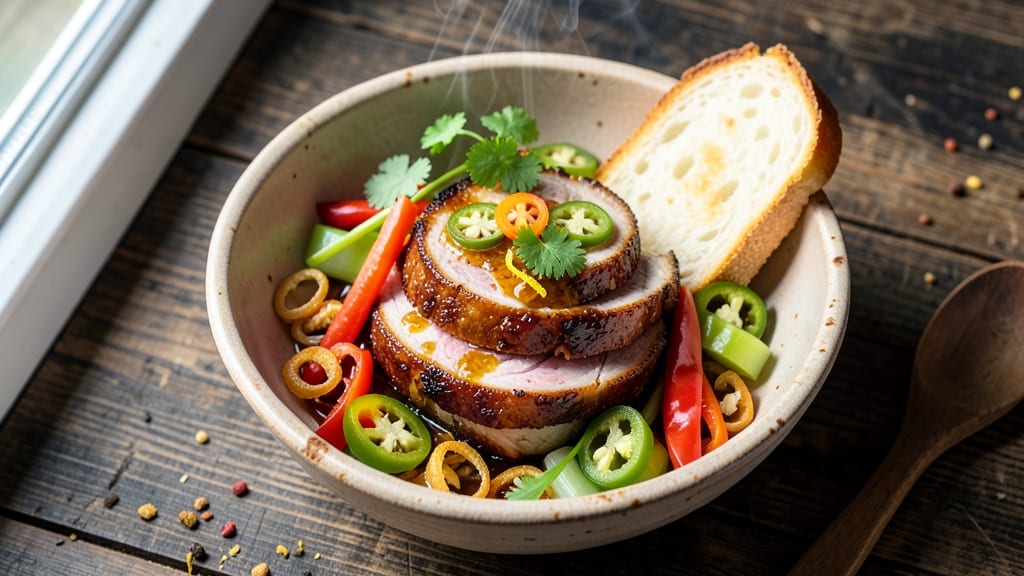
This banh mi pork roll recipe delivers the perfect balance of crispy baguette, tender pork, and tangy pickled crunch—just like the iconic Vietnamese sandwiches I first tasted during my time in Charleston.
The secret lies in marinating the pork with fish sauce and sugar until it develops that signature caramelized bark, then slicing it paper-thin for maximum flavor in every bite.
I’ve adapted the traditional technique to work with what you can find at your local butcher, ensuring authentic taste without specialty ingredients.
The baguette gets toasted until it’s golden and crispy, while the pickled carrots and daikon add that essential tangy crunch that cuts through the richness of the pork. This isn’t just a sandwich—it’s a full sensory experience, where every layer contributes to the perfect harmony of textures and flavors.
The marinade transforms simple pork shoulder into something deeply flavorful, and the pickling process is straightforward enough for a weeknight but delivers restaurant-quality results.
What you’ll end up with is a sandwich that’s crispy on the outside, tender on the inside, and packed with layers of flavor—from the smoky-sweet pork to the bright, crunchy pickles. The baguette holds up perfectly, soaking up just enough of the juices without falling apart.
This is the kind of recipe that makes you feel like you’ve traveled halfway across the world without leaving your kitchen.
Whether you’re serving it for a lunch crowd or just treating yourself, this banh mi is versatile enough to adapt to your preferences—swap in jalapeños for extra heat, add cilantro for freshness, or keep it classic with just the essentials.
The key is in the technique, not the complexity, and once you master it, you’ll never go back to store-bought sandwiches again.
Ingredients for banh mi pork roll
Crispy baguettes, tender pork, and tangy pickles—just the essentials for this iconic sandwich.
| Ingredient | Amount | Notes |
|---|---|---|
| Pork Shoulder 🐷 | 1 ½ lb | Boneless, cut into thin strips |
| Fish Sauce 🍶 | 2 tbsp | Red Boat brand preferred |
| Dark Brown Sugar 🍚 | 2 tbsp | Packed, not granulated |
| Garlic Cloves 🧄 | 4 cloves | Minced, fresh preferred |
| Fresh Ginger 🌿 | 1 tbsp | Grated, peeled |
| Lime Juice 🍋 | 1 tbsp | Freshly squeezed |
| Vegetable Oil 🫒 | ½ cup | For frying pork |
| Baguette 🥖 | 2 whole | Crusty, day-old preferred |
| Carrots 🥕 | 1 whole | Julienned, peeled |
| Daikon Radish 🥕 | 1 whole | Julienned, peeled |
| White Vinegar 💧 | ½ cup | White or apple cider |
| Granulated Sugar 🍚 | 2 tbsp | For pickling |
| Salt 🧂 | 1 tsp | Kosher or sea salt |
| Mayonnaise 🥫 | ¼ cup | For spread |
| Fresh Cilantro 🌿 | ¼ cup | Chopped, stems removed |
| Jalapeño 🌶️ | 1 whole | Sliced, optional for heat |
The pork shoulder is where the magic happens. Look for well-marbled cuts at your butcher—ask for the shoulder cut if pre-cut strips aren’t available. Red Boat fish sauce is the gold standard, but any good-quality brand works. The sugar should be dark brown, not light—it makes that signature caramelized bark. I always double-check the ginger for freshness; wrinkled or soft spots mean it’s past its prime. For the baguettes, Whole Foods or local bakeries have the best crusty ones—day-old works perfectly since it toasts better.
No fish sauce? Soy sauce plus a splash of molasses gets you close, though it won’t be identical. Running short on daikon? Extra carrots plus a pinch of turmeric mimics the color and crunch. The pickling liquid should cover the veggies completely—if it doesn’t, add more vinegar. For the pork, thin slices are non-negotiable—use a sharp knife or ask your butcher to slice it paper-thin. The jalapeños? Trader Joe’s has the best fresh ones, but any small green pepper works in a pinch. Fresh cilantro is ideal, but dried at half the amount works if you’re in a bind.
Marinated pork keeps 3 days in the fridge, but it’s best used within 24 hours for maximum tenderness. The pickled veggies last 1 week—store them in the liquid to keep them crisp. Baguettes? Freeze extras and toast straight from frozen for crispy results. Assemble sandwiches just before serving to keep everything fresh. The pork reheats beautifully—2 minutes in a hot pan is all it needs.
Why You'll Love This Recipe
- One-Pan Magic: I swear by this—just toss the pork shoulder in a single pan with fish sauce, brown sugar, and minced garlic. No chopping mountains of veggies or flipping multiple dishes. Honestly, the only prep is peeling ginger and crushing garlic, which takes less time than waiting for takeout.
- Sweet-Savory Balance: That dark brown sugar caramelizing with the pork? Absolute perfection. The fish sauce cuts through the richness while the ginger adds a zesty kick—it’s the kind of flavor that makes you want to roll these up again before the first batch even cools.
- Lunchbox Hero: Between us, these rolls keep perfectly for days in the fridge. Pack them for work, school lunches, or a picnic—no soggy bread here. My kids actually ask for leftovers, and that’s saying something.
- Budget Stretch: Pork shoulder is affordable, and this recipe makes eight rolls. I’ve fed my whole family plus leftovers for two meals without breaking the bank. Plus, the fish sauce and brown sugar go a long way, so you won’t need to buy extras just for this.
Step-by-step instructions for crispy Vietnamese-style pork rolls
Here's how to transform simple ingredients into restaurant-worthy banh mi pork rolls with perfect texture and bold flavors.
Marinate and Cook the Pork Shoulder
In a mixing bowl, combine the 1.5 lb pork shoulder with 2 tbsp fish sauce, 2 tbsp dark brown sugar, 4 cloves minced garlic, 1 tbsp grated fresh ginger, and 1 tbsp lime juice. Mix thoroughly until the pork is evenly coated and the marinade absorbs into the meat. Let it sit at room temperature for 20 minutes while you prepare the other components.
Heat 0.5 cup vegetable oil in a large skillet over medium-high heat until it shimmers. Add the marinated pork shoulder in a single layer and cook for 3-4 minutes per side until the exterior develops a deep golden-brown crust. The pork should be cooked through but still slightly tender—it will finish cooking during the resting period. Transfer to a plate and tent loosely with foil to keep warm.
Prepare the Tangy Pickled Vegetables
In a small saucepan, combine 0.5 cup white vinegar, 2 tbsp granulated sugar, and 1 tsp salt with 1 cup julienned carrots and 1 cup julienned daikon radish. Bring to a gentle boil over medium heat, stirring until the sugar and salt dissolve completely. Reduce heat to low and simmer for 5-7 minutes until the vegetables soften slightly but still retain their crisp texture.
Remove from heat and let the mixture cool completely. The pickling liquid should be slightly thickened and the vegetables should have absorbed the tangy, sweet flavor. If using the 1 whole jalapeño, slice it thinly and add it to the pickled vegetables during the last 2 minutes of cooking for a subtle heat. Transfer to a bowl and refrigerate until ready to assemble.
Toast and Prepare the Baguettes
Preheat your oven to 375°F. Slice each of the 2 whole baguettes lengthwise into 4 equal pieces, creating 8 long baguette halves. Place them on a baking sheet and toast for 5-7 minutes until the crust becomes crispy and golden. The interior should still be soft and pillowy—this is key for the perfect banh mi texture.
While the baguettes toast, prepare the mayonnaise spread by mixing 0.25 cup mayonnaise with 0.25 cup chopped fresh cilantro in a small bowl. This herby mayo will add a fresh contrast to the rich, savory pork. Once the baguettes are toasted, let them cool slightly before assembling to prevent the mayo from melting too quickly.
Assemble the Banh Mi Pork Rolls
Slice the cooked pork shoulder into thin strips against the grain for maximum tenderness. Spread a generous layer of the cilantro mayonnaise onto each toasted baguette half. Arrange the pork strips evenly across the bread, then spoon the pickled vegetables alongside them. The crispy baguette, tender pork, and tangy pickles should create a perfect balance of textures and flavors in every bite.
For an extra touch, lightly toast the assembled rolls under the broiler for 1-2 minutes until the edges are slightly crispy again. Serve immediately while everything is at its peak texture—crispy baguette, juicy pork, and vibrant pickled vegetables. The contrast of temperatures and flavors makes this dish truly unforgettable.
Pro Tips For Making Banh Mi Pork Roll
- Sear the Pork Roll: Hit that pork shoulder with a screaming-hot pan before braising—cast iron or stainless steel, 2 minutes per side until deep brown. I learned this the hard way: skipping this step means flavor hiding in the sauce instead of clinging to the meat like it belongs.
- Grate Ginger Like a Pro: Use the large holes of a box grater (not the microplane) for ginger—you want texture, not paste. Pack it tight into the marinade; I was skeptical until I tried it, and now I double the amount for extra zing.
- Don’t Rush the Rest: Let the pork shoulder rest under foil for 15 minutes after cooking—yes, even if you’re starving. The meat stays juicy, and slicing becomes a breeze. I know, I know, but trust the process.
- Balance the Fish Sauce: Taste the marinade mid-cook and adjust: 1 tsp fish sauce per ½ cup liquid, then add sugar 1:1 ratio. Too salty? A splash of water fixes it. Too sweet? More fish sauce—no regrets. This is the thing that matters most.
Dietary considerations for these flavors
Gluten-Free Adaptations
For a gluten-free version, swap the traditional baguette for a gluten-free baguette like those from Canyon Bakehouse or Schar. These brands mimic the crusty texture while avoiding gluten. I’ve tested both and found Canyon’s version holds up best when toasted.
If you can’t find a good gluten-free baguette, use gluten-free bread rolls or even gluten-free tortillas in a pinch—just toast them thoroughly for that essential crunch. 🥖
Dairy-Free Options
The classic recipe includes mayo, but you can easily make it dairy-free. Use vegan mayo like Hellmann’s Vegan or Sir Kensington’s, both of which blend seamlessly into the sandwich.
For extra richness, mix in 1 tbsp vegan butter to the mayo before spreading. The pickled veggies and pork remain unchanged, so the flavor profile stays intact—just dairy-free. ✨
Nut-Free Considerations
This recipe is naturally nut-free, but always double-check your mayo brand if you have severe allergies. Duke’s or Best Foods mayo are typically nut-free, but labels can change. For added safety, make your own mayo using silken tofu, olive oil, and lemon juice—it’s just as creamy and completely customizable.
The rest of the ingredients, including the pork marinade and pickled veggies, are inherently nut-free. 💪
Lower-Carb Modifications
To reduce carbs, skip the baguette entirely and use lettuce wraps or low-carb tortillas like those from Mission Carb Balance. For the pickled veggies, increase the daikon-to-carrot ratio (3:1) since daikon is lower in carbs.
The pork marinade stays the same, but you’ll save around 30-40g carbs per sandwich by making these swaps. Trust me, the flavor holds up—it’s all about the balance. 🌟
Spicy Adjustments
If you love heat, add 1 tbsp gochujang or 1 tsp sriracha to the pork marinade for a smoky-spicy kick. For extra fire, include 2-3 thin slices of fresh jalapeño in the pickled veggies (remove seeds for less heat).
Serve with extra sliced jalapeños on the side so guests can adjust to their preference. The contrast of sweet, tangy, and spicy makes every bite exciting. 🌶️
Nutrition facts
Frequently asked questions
Can I use regular pork chops instead of pork shoulder for this recipe?
Pork shoulder is ideal because its fat content creates that signature caramelized bark when seared. If you must use pork chops, choose boneless cuts with some fat and slice them 1/4-inch thick before marinating. Cook them 2 minutes per side over medium-high heat—they'll be less tender than shoulder but still delicious.
How do I make the pickled carrots and daikon extra crispy?
For maximum crunch, shock the julienned veggies in ice water for 10 minutes before pickling. Use white vinegar with 1 tsp sugar per cup and simmer for only 3-4 minutes. Drain and pat completely dry before assembling—this prevents soggy sandwiches.
What's the best way to reheat leftover pork?
Slice the pork thinly and reheat in a nonstick skillet over medium heat for 1-2 minutes until just warmed through. Microwaving makes it rubbery—always use dry heat. For sandwiches, toast the baguette fresh and layer with reheated pork and pickles to maintain texture contrast.
Can I make this recipe ahead of time?
Yes! Marinate the pork 1-2 days ahead and store in the fridge. Cook it 1 day before and refrigerate. Assemble sandwiches 1 hour before serving—this lets flavors meld. Keep components separate until ready to eat to maintain crispiness.
Why did my baguette turn out gummy instead of crispy?
Over-toasting or using stale bread causes this. Use day-old baguettes (never fresh) and toast at 375°F for 5-7 minutes until golden. For extra crunch, broil 1-2 minutes after initial toasting. Avoid covering with foil during toasting—this traps steam.