
Main Courses
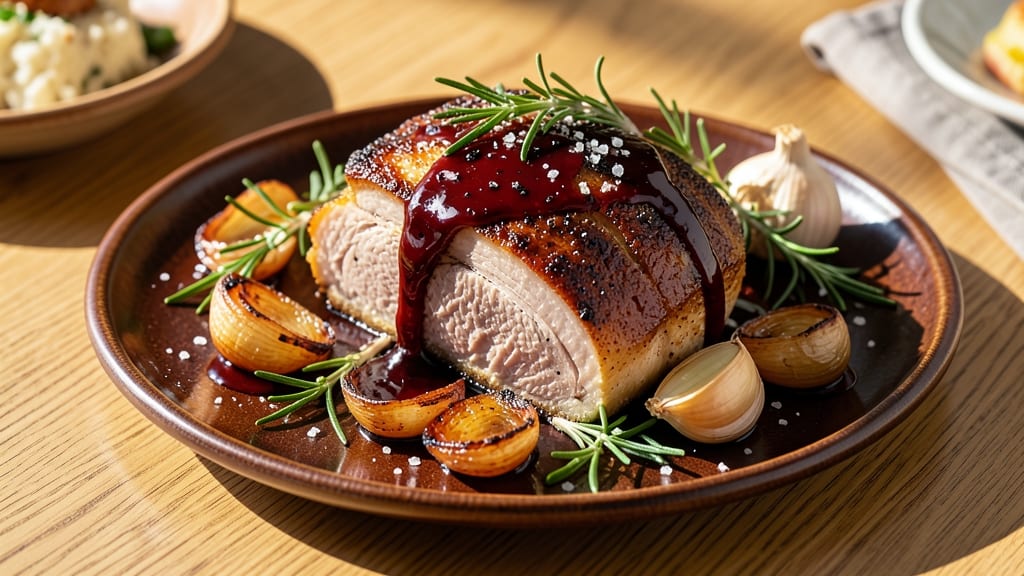
This balsamic pork recipe delivers a perfect balance of caramelized crust and juicy centers that’ll make your taste buds sing. 🔥 I perfected this technique after years of working with heritage pork cuts, where the right balance of acidity and richness transforms simple pork into something extraordinary.
The secret lies in a slow-cooked balsamic reduction that locks in moisture while creating that signature glossy glaze.
What sets this recipe apart is the combination of traditional braising methods with a modern twist—using balsamic vinegar not just as a finishing touch, but as the star of the show. The pork shoulder breaks down into tender, melt-in-your-mouth perfection, while the balsamic glaze adds depth with its sweet-tangy complexity.
This dish is foolproof for weeknight dinners or special occasions, requiring just a few simple ingredients and about 3 hours of hands-off cooking time.
The result is a dish that’s rich yet balanced, with a caramelized exterior that’s irresistibly crisp and a center that’s so tender it falls apart at the touch of a fork. The balsamic glaze adds a glossy finish that’s both elegant and deeply flavorful.
Serve it with roasted root vegetables or a simple arugula salad to cut through the richness, and you’ve got a meal that’s sure to impress.
Whether you're cooking for a family gathering or treating yourself to a special dinner, this balsamic pork recipe delivers restaurant-quality results with minimal effort. The beauty of this dish is its versatility—it works equally well for a Sunday roast or a weeknight supper. Let’s get started on creating this showstopper!
Ingredients for balsamic pork
Six ingredients transform simple pork into restaurant-quality perfection with caramelized crust and juicy centers.
| Ingredient | Amount | Notes |
|---|---|---|
| Bone-In Pork Shoulder 🐖 | 4 lb | Heritage pork cut preferred |
| Balsamic Vinegar 🍷 | 1 ½ cups | Aged 25+ years for depth |
| Brown Sugar 🍚 | ½ cup | Light or dark variety |
| Olive Oil 🫒 | ¼ cup | Extra-virgin for richness |
| Garlic Cloves 🧄 | 8 cloves | Minced for marinade |
| Fresh Rosemary 🌿 | ¼ cup | Chopped, stems removed |
| Fresh Thyme 🌿 | ¼ cup | Leaves only, chopped |
| Diamond Crystal Kosher Salt 🧂 | 1 ½ tbsp | For seasoning and glaze |
| Ground Black Pepper 🌶️ | 1 tbsp | Freshly cracked preferred |
| Yellow Onion 🧅 | 1 whole | Diced for braising liquid |
| Carrots 🥕 | 4 whole | Peeled, chopped for braise |
| Celery Stalks 🥬 | 4 whole | Chopped for aromatic base |
| Low-Sodium Chicken Broth 💧 | 2 cups | For braising liquid |
| Fresh Thyme Sprigs 🌿 | 4 whole | For braising bundle |
| Fresh Rosemary Sprigs 🌿 | 4 whole | For braising bundle |
The pork shoulder is non-negotiable—heritage cuts like heritage pork or Duroc deliver unmatched marbling and tenderness. Costco or local butchers often carry these premium cuts, but standard pork shoulder works in a pinch. Look for thick slices (1.5-2 inches) to ensure even cooking. The balsamic vinegar should be aged 25+ years—Baldor Special Reserve or Di Martino are excellent choices. Fresh herbs matter too: Whole Foods or Trader Joe's have the best quality, but any bright green sprigs will do. The brown sugar adds depth without overpowering, so don't skimp on quality here.
No aged balsamic? Balsamic glaze with a splash of red wine vinegar works, though it’ll lack complexity. Short on fresh herbs? Dried thyme and rosemary at half the amount suffice, but fresh is ideal. The chicken broth can be swapped for vegetable broth or even white wine for a richer flavor. For the aromatic vegetables—onion, carrots, celery—any fresh produce will do, but organic cuts reduce bitterness. If you're prepping ahead, marinate the pork overnight in the balsamic, olive oil, and herbs for maximum flavor infusion.
This dish tastes even better the next day—reheat gently in the oven with a splash of broth to maintain moisture. Store leftovers in an airtight container for up to 5 days in the fridge or 3 months frozen. For serving, rest the pork 15 minutes before slicing to retain juices. The glaze thickens as it cools, so reheat with a quick simmer if it becomes too stiff. Portion into individual containers for meal prep—each serving is a showstopper.
Why You'll Love This Recipe
- One-Pan Magic: I swear by this—just sear the pork shoulder, toss in the balsamic and brown sugar, and let the oven do the rest. No chopping veggies, no flipping pans, just hands-off perfection.
- Sweet-Savory Balance: That caramelized brown sugar and tangy balsamic glaze? It’s the kind of flavor that makes you slow down mid-bite. The garlic cloves roasted right into the meat add a depth that’s hard to resist.
- Weeknight to Weekend: Between us, this feeds a crowd but costs less than takeout. Braise it for dinner, slice it for sandwiches, or pack it for lunches—it’s my go-to for lazy nights and potlucks alike.
- Leftovers I Actually Love: Honestly, the first time I made this, I thought I’d overcooked it. Then I realized? The pork gets better the next day—fall-apart tender with that sticky glaze clinging to every bite. No sad leftovers here.
Step-by-step instructions for balsamic glazed pork shoulder
Transform the pork shoulder into tender, caramelized perfection with this precise method.
👨🍳 Step 1: Prepare the Dry Rub and Marinade
In a small bowl, combine the 0.25 cup fresh rosemary, 0.25 cup fresh thyme, 8 cloves minced garlic, 1.5 tbsp diamond crystal kosher salt, and 1 tbsp ground black pepper. This is your dry rub. Pat the 4 lb bone-in pork shoulder completely dry with paper towels—this is critical for that caramelized crust.
Apply the dry rub generously to all sides of the pork, pressing it into the meat so it adheres well. In a separate bowl, whisk together 1.5 cups balsamic vinegar, 0.5 cup brown sugar, and 0.25 cup olive oil to create the marinade. Place the pork in a large resealable bag, pour the marinade over it, and massage it thoroughly to coat evenly. Seal the bag and refrigerate for at least 12 hours—this ensures deep flavor penetration and tender meat.
🔥 Step 2: Sear the Pork for Maximum Flavor
Preheat your oven to 325°F. Remove the pork from the marinade (reserve the marinade for later) and let it sit at room temperature for 30 minutes. Heat a large Dutch oven over medium-high heat and add 1 tablespoon olive oil. Once shimmering, sear the pork on all sides until deeply browned—this should take about 8-10 minutes total. The goal is to develop a rich, flavorful crust that will later caramelize beautifully.
Transfer the seared pork to a plate and pour the reserved marinade into the Dutch oven, scraping up all the browned bits from the bottom. Add the 1 whole yellow onion, 4 whole carrots, and 4 whole celery stalks to the pot, along with 2 cups low-sodium chicken broth. Bring to a gentle simmer, then place the pork back in the pot, fat-side up.
🥘 Step 3: Braise Until Fork-Tender
Cover the Dutch oven and transfer it to the preheated 325°F oven. Braise the pork for 3 hours, then carefully remove it and increase the oven temperature to 375°F. Return the pork to the oven and continue cooking for another 1-2 hours until the internal temperature reaches 203°F—this is the "probe-tender" stage where the meat should easily pull apart with a fork.
During the last 30 minutes of cooking, tie 4 whole fresh thyme sprigs and 4 whole fresh rosemary sprigs together with kitchen twine to form a bundle. Add this bundle to the braising liquid to infuse the pork with aromatic flavors. The pork should be fork-tender with a deep, caramelized crust.
⏰ Step 4: Create the Signature Balsamic Glaze
Once the pork reaches 203°F, carefully remove it from the pot and place it on a cutting board. Tent it loosely with foil and let it rest for 15 minutes. While it rests, place the Dutch oven with the braising liquid on the stovetop over medium-high heat. Simmer the liquid until it reduces by half—this should take about 10-15 minutes—until it thickens into a glossy, syrupy glaze.
Strain the glaze through a fine-mesh sieve to remove any solids, then return it to the pot. Stir in 2 tablespoons of the reserved marinade (if needed) to achieve a thick, coatable consistency. The glaze should be rich, slightly sticky, and deeply flavorful with notes of balsamic and caramel.
🍽️ Step 5: Glaze and Serve
After the pork rests, slice it against the grain into ½-inch thick portions. Arrange the slices on a warmed platter and generously drizzle the balsamic glaze over the top, allowing it to pool around the meat. The glaze should cling beautifully to the slices, adding a glossy sheen and intensified flavor.
Serve immediately with the braised vegetables from the pot, which should be tender and infused with the pork's rich flavors. Each bite should deliver a perfect balance of juicy, tender pork with a caramelized crust and a tangy-sweet glaze. The pork should pull apart easily, revealing a moist, flavorful interior.
Pro Tips For Making Balsamic Pork
- Sear the Shoulder Hard: Don’t be gentle—get that pork shoulder screaming hot in the pan for 8-10 minutes per side. I used to rush this, and the meat just ended up gray and sad. A deep, dark crust locks in flavor and keeps the meat juicy when it braises.
- Deglaze with Vinegar Early: After searing, splash in ¼ cup balsamic vinegar right away while the pan’s still hot. The acid cuts through the browned bits and starts building that glossy glaze—skip this, and you’ll be scraping burnt gunk off the bottom later. (Yes, even if you’re impatient like me.)
- Brown the Sugar First: Mix your brown sugar with 1 tablespoon olive oil and toast it in a dry pan for 2-3 minutes until it smells like caramel. This turns it into a sticky, flavor-packed paste that clings to the pork instead of dissolving into the braising liquid. (Your future self will notice the difference.)
- Don’t Crowd the Garlic: Peel and smash those garlic cloves flat with the side of your knife—this maximizes surface area and flavor. Then, scatter them evenly around the pork, not in a pile. Burnt garlic ruins the dish faster than you’d think. (I learned this the hard way.)
Creative variations of this recipe
Southern BBQ Twist
Swap the balsamic vinegar for ½ cup apple cider vinegar and ½ cup barbecue sauce (I love Sweet Baby Ray's original) to create a Southern-inspired fusion. Add 1 tbsp smoked paprika and 1 tsp cayenne to the dry rub for a smoky kick.
Braise the pork as directed, then finish with a quick 2-minute broil to char the glaze. Serve with cornbread and collard greens for a true Georgia-style feast. 🔥
Asian-Inspired Glaze
Replace the balsamic vinegar with ½ cup rice vinegar and ½ cup hoisin sauce, then add 1 tbsp grated ginger and 2 tbsp sesame oil to the marinade. Use 1 tbsp soy sauce in the braising liquid instead of salt.
After slicing, drizzle with a sesame-seed garnish and serve with steamed jasmine rice and quick-pickled cucumbers. This version balances sweet, tangy, and umami beautifully. 🌶️
Herb-Infused White Wine
For a French-inspired twist, replace the balsamic vinegar with 1 cup dry white wine (I prefer Sauvignon Blanc) and add 1 sprig fresh tarragon and 2 sprigs fresh parsley to the marinade. Deglaze the Dutch oven with ½ cup white wine after searing.
The result is a lighter, more elegant glaze with bright herbal notes. Pair with roasted fingerling potatoes and sautéed green beans. ✨
Sweet & Spicy Honey
Add ½ cup honey to the marinade along with the balsamic vinegar for a Middle Eastern-inspired variation. Include 1 tsp ground cumin and ½ tsp cinnamon in the dry rub. After braising, reduce the glaze with 1 tbsp lemon juice for a bright, sticky finish.
Serve with warm pita bread and tzatziki for dipping. This version is perfect for game-day gatherings. 💫
Quick-Pan Version
For a weeknight shortcut, sear a 2-inch thick pork loin (about 2 lbs) in a skillet until golden, then add ½ cup balsamic vinegar and 2 tbsp brown sugar.
Simmer for 10 minutes until reduced, then slice and serve. This method cuts cooking time to 45 minutes while keeping the signature flavors. Ideal for busy evenings! ⏰
Nutrition facts
Frequently asked questions
Can I use pork loin instead of pork shoulder for this recipe?
You can try a 2-inch thick pork loin for a quicker version, but expect different results. The shoulder's collagen-rich fat breaks down beautifully into tender, fork-pulling meat, while pork loin stays firmer. For a loin, sear it first, then braise for only 1-1.5 hours at 325°F until internal temp hits 145°F. The glaze will still work, but the texture will be more like a roast than pulled pork.
What's the best way to store and reheat leftovers?
Store sliced pork in an airtight container with some of the braising liquid for up to 5 days in the fridge. For reheating, place slices in a skillet with a splash of broth or water over medium-low heat until warmed through (5-7 minutes). Never microwave—it makes the glaze rubbery. The pork actually tastes better the next day as flavors meld!
Can I make this recipe in a slow cooker?
Brown the pork first in a skillet, then transfer it to your slow cooker with all braising ingredients. Cook on low for 8 hours or high for 5 hours. After cooking, finish by reducing the sauce on the stovetop to create the glaze. The slow cooker method is perfect for hands-off prep, though the crust won't be as caramelized as oven-braised.
How do I know when the pork is fully cooked?
Use a meat thermometer—pork shoulder is done when it reaches 203°F (probe-tender stage). The meat should pull apart easily with two forks. If you don't have a thermometer, cut into the thickest part: the juices should run clear, and the meat should separate cleanly. Never rely on color alone—pork can be safely cooked to 145°F for some cuts, but 203°F gives that melt-in-your-mouth texture.
What's the secret to getting that glossy balsamic glaze?
The secret lies in proper reduction and straining. Simmer the braising liquid until it's reduced by half, then strain out all solids for a silky texture. For extra shine, add 1 teaspoon cornstarch mixed with 1 tablespoon water during the final reduction. Also, use aged balsamic vinegar (25+ years)—it has more natural sugars that caramelize beautifully. The glaze should coat the back of a spoon when done.