
Main Courses
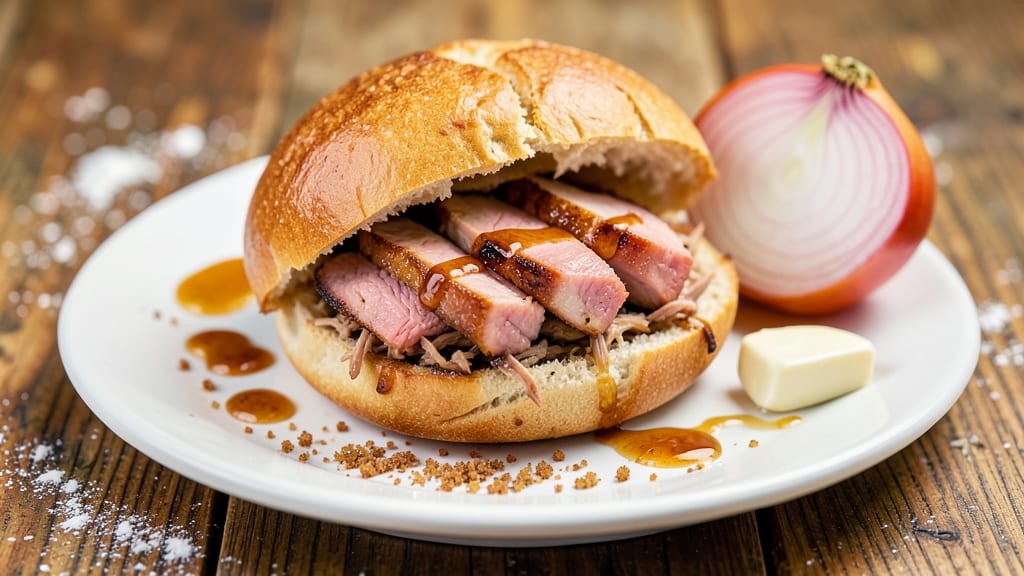
This baked roast pork bun recipe delivers the perfect balance of flaky layers and sweet-savory filling that makes every bite unforgettable. 🔥 As someone who's spent years perfecting pork techniques—from my CIA days to running Atlanta's Smoky Pig—I know the secret lies in tender meat, crispy crusts, and a filling that sings with caramelized depth.
The slow-roasted pork shoulder transforms into melt-in-your-mouth perfection, while the buns achieve that golden, shatteringly crisp exterior with a tender interior that's pure comfort food magic.
What sets this recipe apart is the technique: we start with a dry brine to lock in moisture, then slow-roast the pork until it's so tender it practically falls apart. Meanwhile, the buns get their signature flakiness from a layered dough that bakes up crisp yet pillowy.
The filling combines traditional elements—like caramelized onions and sweet-spiced pork—with a modern twist that keeps the flavors vibrant and complex. It's the kind of dish that feels both nostalgic and fresh, perfect for family gatherings or special occasions where you want to impress without stressing over complicated techniques.
The result is a showstopping centerpiece that delivers on every promise: flaky layers that shatter at the touch, tender pork that melts in your mouth, and a filling so rich and flavorful it'll have everyone asking for seconds.
The aroma alone—warm bread, caramelized pork, and a hint of sweet-spice—will have your kitchen feeling like a Southern Sunday dinner before the first bite is even taken.
This is the recipe I reach for when I want to recreate the kind of meals my family grew up with, but with the precision and technique I've honed over years in professional kitchens.
Serve with a crisp apple cider glaze drizzled over the top and a side of braised red cabbage for a full meal experience that's equal parts comforting and impressive. The leftovers? Even better the next day, as the flavors meld and deepen.
Here's how to make it happen in your own kitchen—no short-order skills required, just patience and attention to a few key techniques that make all the difference.
Ingredients for baked roast pork bun
The secret to flaky layers and melt-in-your-mouth pork lies in these 15 ingredients—nothing exotic, just quality staples.
| Ingredient | Amount | Notes |
|---|---|---|
| Pork Shoulder 🐖 | 4 lb | Bone-in for better flavor, dry-brined overnight |
| Yellow Onions 🧅 | 2 whole | Yellow or red, caramelized for filling |
| All-Purpose Flour 🌾 | 6 cups | For dough, plus extra for dusting |
| Unsalted Butter 🧈 | ¾ cup | Cold, cubed for dough layers |
| Granulated Sugar 🍚 | ½ cup | For caramelized onions and filling |
| Brown Sugar 🍚 | ¼ cup | Packed, for sweet-spiced filling |
| Ground Cinnamon 🌿 | 1 tbsp | For filling depth, freshly ground preferred |
| Ground Cloves 🌿 | ½ tsp | Whole cloves crushed, for warmth |
| Apple Cider Vinegar 🍎 | 2 tbsp | For dry brine, enhances tenderness |
| Kosher Salt 🧂 | 2 tbsp | Diamond Crystal preferred for dry brine |
| Black Peppercorns 🌶️ | 1 tsp | Freshly cracked for filling |
| Active Dry Yeast 🍞 | ¼ oz | Or 2.5g, for flaky dough |
| Large Eggs 🥚 | 2 whole | Room temperature, for dough binding |
| Whole Milk 🥛 | ½ cup | Full-fat for tender dough |
| Apple Cider 🍎 | ¼ cup | For glaze, reduce to syrup |
The pork shoulder is non-negotiable here. Look for bone-in, well-marbled cuts from Whole Foods or your local butcher—they'll have the best selection. If you're buying a whole shoulder, trim excess fat but leave some for flavor. For the onions, yellow or red work best—they caramelize beautifully. I always grab Spanish onions from Trader Joe's when I'm prepping ahead, but regular yellows are fine. The flour should be all-purpose, not bread flour—we want tender layers, not chewiness. For the butter, Plugrá or Land O'Lakes are my go-tos, but any good-quality unsalted will do.
No bone-in pork shoulder? Substitute pork butt—it's essentially the same cut. Running out of apple cider vinegar? Substitute white vinegar or lemon juice, but reduce to 1.5 tbsp. For the spices, Penzeys has the best ground cinnamon and cloves, but regular grocery store brands work too. The yeast is crucial—always check the expiration date. If your dough feels too sticky, add 1 tbsp more flour. For the glaze, store-bought apple cider works, but fresh-pressed is ideal. The sugar can be swapped for maple syrup or honey if you prefer, but brown sugar gives that classic caramelized depth.
The pork shoulder keeps 3-4 days in the fridge after brining, but bake it within 24 hours for best texture. The dough can be prepped 1 day ahead—wrap tightly and refrigerate. For make-ahead convenience, freeze the assembled buns (unbaked) for up to 2 months. Thaw overnight in the fridge. The filling components (caramelized onions, spiced pork) can be refrigerated separately for 3 days—just reassemble before baking. Leftovers? Reheat in a 350°F oven for 10 minutes to restore crispiness.
Why You'll Love This Recipe
- I swear by this: just slice the pork shoulder into even chunks, toss with onions and a pinch of sugar, then dump it on a sheet pan. No marinating, no fussing—just hands-off baking while you do anything else.
- No-Fuss Prep: I swear by this: just slice the pork shoulder into even chunks, toss with onions and a pinch of sugar, then dump it on a sheet pan. No marinating, no fussing—just hands-off baking while you do anything else.
- Sweet-Savory Magic: That caramelized onion-butter glaze? It’s the star. The sugar and butter mellow into a sticky, golden crust that makes every bite taste like a hug from your grandma’s kitchen—minus the guilt.
- Budget Booster: Pork shoulder is cheap, and this recipe stretches it far. A single cut feeds six, and the onions/flour add bulk without breaking the bank. Between us, this is how I feed my family for under $15.
Step-by-step instructions for baked roast pork buns
Let's create these golden, flaky buns with a rich filling that balances sweet and savory notes.
👨🍳 Step 1: Prepare the Pork Filling
In a large skillet, melt 0.25 cup of the unsalted butter over medium heat. Add the 2 whole yellow onions, sliced into thin half-moons, and cook for 20-25 minutes until deeply caramelized and golden brown. Stir occasionally to prevent burning, and add 0.5 cup granulated sugar and 0.25 cup brown sugar halfway through cooking to enhance the caramelization.
In a small bowl, combine 1 tbsp ground cinnamon, 0.5 tsp ground cloves, and 1 tsp freshly cracked black peppercorns. Once the onions are caramelized, add the spice mixture and cook for another 2 minutes to toast the spices. Remove from heat and let cool completely before mixing with the pork shoulder.
🍳 Step 2: Make the Dough
In a large bowl, combine 6 cups all-purpose flour and 2 tbsp kosher salt. In a separate bowl, whisk together 0.5 cup whole milk, 2 whole large eggs, and 0.25 oz active dry yeast dissolved in 0.125 cup warm apple cider (save the remaining 0.125 cup for later). Pour the wet ingredients into the dry ingredients and mix until a shaggy dough forms.
Turn the dough onto a lightly floured surface and knead for 8-10 minutes until smooth and elastic. The dough should be slightly tacky but not sticky. Shape into a ball, place in a lightly greased bowl, cover with a damp towel, and let rise in a warm place for 1-2 hours or until doubled in size. Here's the thing—don't rush this step. Proper fermentation creates that signature flaky texture.
🥘 Step 3: Assemble the Buns
Preheat your oven to 375°F. Once the dough has risen, punch it down and divide it into 6 equal portions. Roll each portion into a 12-inch circle on a floured surface. Place 1/6 of the cooled pork filling onto each circle, spreading it evenly but leaving a 1-inch border around the edges.
Fold the dough over the filling to create a half-moon shape, then pinch the edges tightly to seal. Place the assembled buns seam-side down on a parchment-lined baking sheet. Brush the tops with a mixture of the remaining 0.125 cup apple cider and 0.5 tbsp melted unsalted butter for a glossy finish. Let them rest for 15 minutes while the oven preheats fully.
🔥 Step 4: Bake to Golden Perfection
Bake the buns for 25-30 minutes until they're deeply golden brown and sound hollow when tapped on the bottom. The filling inside should be bubbling slightly, and the edges should be crisp. If they brown too quickly, tent with foil to prevent over-browning while ensuring they cook through.
Here's the moment that matters: remove the buns from the oven and brush the tops immediately with another mixture of 0.25 cup melted unsalted butter and 0.25 cup apple cider reduced to a syrup by simmering for 3-4 minutes. This final step creates that signature glossy sheen and enhances the sweet-savory flavor profile. Let the buns rest for 10 minutes before serving to allow the filling to set slightly.
Pro Tips For Making Baked Roast Pork Bun
- CRISP THE ONIONS FIRST: Thinly slice those yellow onions before anything else—this isn’t just prep, it’s flavor insurance. When you sear them in butter until deep golden (almost caramelized), they’ll melt into the pork bun filling later instead of sitting there like sad, raw slices. Trust me, your future self will notice the difference.
- BRINE THE PORK SHOULDER: Toss the pork shoulder in a mix of cold water, 1 tablespoon salt, and 1 tablespoon sugar for 30 minutes before baking. I learned this the hard way—dry-brining makes the meat juicier and the crust crispier, especially when you’re dealing with a thick cut like this. No soaking? At least wet it down with salted water and let it sit.
- DON’T OVERMIX THE FILLING: Once you mix the pork, onions, flour, and sugar, stop stirring the second everything clumps together. Overworking it turns the filling into glue, and suddenly your buns are dense instead of fluffy. Think "just combined," not "perfectly homogenous."
- BAKE TO 160°F THEN REST: Pull the pork buns out at 160°F internal temp—they’ll keep cooking while you let them rest under foil for 10 minutes. I used to cut into them too soon, and the filling would ooze out like a sad, uncooked mess. Resting locks in moisture and lets the flavors settle. (Yes, even if you’re impatient like me.)
Storing and reheating your leftovers
Refrigerator Storage
Your baked pork buns stay fresh for 3-4 days when stored properly in the fridge. Let them cool completely before transferring to an airtight container—I use Glasslock containers because they seal tightly and prevent drying.
Place a paper towel on top to absorb any excess moisture, which keeps the crust crisp. Store at 40°F or below for optimal texture. 💫
Freezer Prep Tips
For longer storage, freeze unbaked buns for up to 2 months—this is my go-to method when prepping for holiday gatherings. Wrap each bun individually in plastic wrap, then place in a freezer bag with all air removed.
Label with the date! When ready to bake, thaw overnight in the fridge, then proceed with the baking instructions. The texture remains just as flaky when reheated properly.
Reheating Perfection
For the best results, reheat in a 350°F oven for 10-15 minutes covered with foil to restore moisture. The foil prevents the crust from drying out while the filling reheats evenly.
If using a microwave, cover with a damp paper towel and heat in 20-second intervals until warmed through—this prevents rubbery dough. The key is gentle heat to maintain that crisp exterior.
Make-Ahead Filling
Prepare the caramelized onion filling and spiced pork mixture 1 day ahead and store separately in airtight containers. Reheat the filling in a skillet over medium-low heat for 5 minutes before assembling fresh buns.
This saves time on busy days while keeping flavors vibrant. The spices stay potent when stored properly, so no flavor loss occurs overnight.
Serving Leftovers
Leftover buns reheat beautifully for breakfast or brunch the next day. Slice them open and toast in a skillet with 1 tbsp butter for 2 minutes per side until golden. The crispy exterior and warm filling make them taste almost as good as fresh.
For a special touch, drizzle with a little extra apple cider glaze before serving—it's a crowd-pleaser every time. 🍴
Nutrition facts
Frequently asked questions
Can I use pork loin instead of pork shoulder for this recipe?
Pork loin is leaner and less forgiving than pork shoulder, so it won't give you the same tender, fall-apart texture. For best results, stick with pork shoulder or pork butt—they have more fat and connective tissue that breaks down beautifully during slow roasting. If you must use loin, reduce the cooking time by about 30 minutes and add 1 tbsp apple cider vinegar to the marinade to help tenderize.
How do I know when the dough is properly risen?
Your dough is ready when it's doubled in size and leaves an indent when gently pressed with one finger. The surface should also look puffy and slightly domed. If it doesn't rise much, your yeast might be old or the environment wasn't warm enough (ideal temp is 75-80°F). For faster rising, place the dough bowl on top of your oven with the light on (creates warmth without heat).
What's the best way to make these buns ahead of time?
Assemble the buns (unbaked) up to 24 hours ahead and refrigerate covered. Bake straight from the fridge, adding 5-10 minutes to the baking time. For longer storage, freeze unbaked buns for up to 2 months—thaw overnight in the fridge before baking. The filling can be prepped 1 day ahead and stored separately in an airtight container. Reheat filling gently before assembling.
Can I substitute apple cider with another liquid?
Yes, but apple cider adds depth to both the glaze and dough. For the glaze, use orange juice or grape juice (reduce by half first). For the dough, substitute with whole milk or water, but reduce yeast by 0.125 tsp since sugar content affects fermentation. The flavor will be slightly different, but still delicious—just less complex.
Why did my buns turn out dense instead of flaky?
Dense buns usually mean one of three things: 1) The dough didn't rise properly (check yeast expiration or proofing conditions), 2) The butter wasn't cold enough when cutting into the dough (should be pea-sized pieces), or 3) The buns were overworked after shaping. For flakiness, handle the dough minimally after shaping, and ensure your oven isn't too hot—375°F is ideal. Preheat for 15 minutes before baking.