
Main Courses
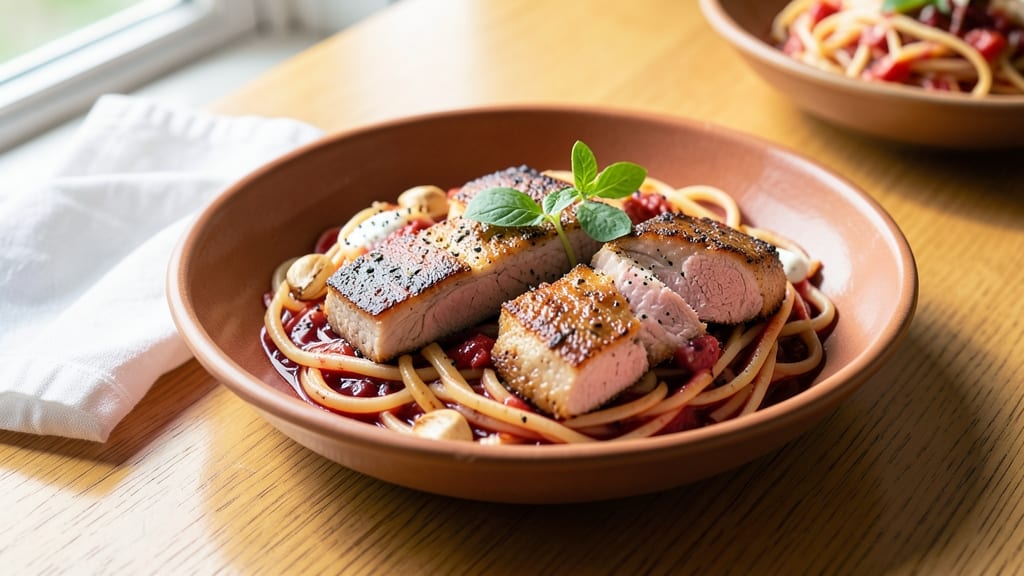
This baked pork chop spaghetti recipe delivers the perfect marriage of pan-seared pork with crisp edges and a creamy tomato sauce that clings to every strand of al dente pasta. After years of perfecting this dish in my Atlanta kitchen, I've developed a method that ensures tender pork chops with a golden crust while the spaghetti absorbs rich, velvety sauce. The secret lies in a high-heat sear followed by a gentle bake—transforming simple ingredients into a restaurant-worthy meal.
The process begins with bone-in pork chops, which stay juicy while developing that coveted crust. A simple marinade of garlic, rosemary, and Dijon mustard infuses deep flavor, while the spaghetti cooks directly in the same pan with the pork drippings—eliminating the need for separate pots.
The creamy tomato sauce, built from scratch with crushed tomatoes, heavy cream, and a touch of red wine, finishes the dish with a velvety texture that coats every bite. This method ensures the pork stays moist while the sauce develops layers of complexity.
What you'll end up with is a plate that looks as impressive as it tastes: perfectly seared pork chops with tender, juicy centers resting atop a bed of al dente spaghetti smothered in rich, creamy tomato sauce.
The sauce's depth comes from slow reduction, while the pork's crust provides a satisfying contrast. This dish is ideal for weeknight dinners or special occasions—it's hearty enough to satisfy a crowd but simple enough to prepare in under an hour.
Pair with a crisp green salad and a glass of Chianti for a complete Italian-inspired meal. The technique I've honed over years of cooking at The Smoky Pig ensures every element comes together flawlessly. Let's create this showstopper that'll have everyone asking for seconds.
Ingredients for baked pork chop spaghetti
Four juicy pork chops and al dente pasta transform into a restaurant-worthy Italian feast.
| Ingredient | Amount | Notes |
|---|---|---|
| Bone-In Pork Chops 🍖 | 4 pieces | 1-inch thick, rib or loin cut |
| Spaghetti 🍝 | 12 oz | Dry, al dente preferred |
| Crushed Tomatoes 🍅 | 2 cups | San Marzano preferred |
| Heavy Cream 🥛 | 1 cup | Full-fat for richness |
| Dry Red Wine 🍷 | ½ cup | Bold Cabernet or Merlot |
| Garlic Cloves 🧄 | 4 cloves | Minced for marinade |
| Fresh Rosemary 🌿 | ¼ cup | Chopped, stems removed |
| Dijon Mustard 🍯 | 1 tbsp | For marinade depth |
| Olive Oil 🫒 | ½ cup | Extra-virgin for searing |
| Salt 🧂 | 1 ½ tsp | Kosher or sea salt |
| Black Pepper 🌶️ | 1 tsp | Freshly ground preferred |
| Butter 🧈 | 2 tbsp | Unsalted, for sauce finish |
| Parmesan Cheese 🧀 | ¼ cup | Freshly grated, for garnish |
The pork chops are the foundation, so bone-in cuts are essential—they stay juicier while developing that perfect crust. Whole Foods or your local butcher will have the best quality, but any grocery store carries rib or loin chops. Look for pieces with good marbling and even thickness—about 1-inch thick. The rosemary needs to be fresh (the good stuff, not dried), so grab it from the produce section where it's usually wrapped in paper. For the crushed tomatoes, San Marzano is ideal, but any quality canned tomatoes work in a pinch. The heavy cream is non-negotiable here—full-fat gives you that velvety texture the sauce needs to shine.
No red wine? Substitute beef broth with a splash of balsamic vinegar—it'll still add depth. Fresh rosemary too expensive? Dried works at one-third the amount, but toast it first to wake up the flavor. For the spaghetti, De Cecco or Barilla are my go-tos, but any good-quality dry pasta will do. The Dijon mustard adds a subtle tang—if you don't have it, yellow mustard in a pinch. And for the olive oil, avoid the cheap stuff—look for extra-virgin with a fruity aroma. The Parmesan should be freshly grated from a block—pre-grated gets clumpy and doesn't melt properly.
Marinate the pork chops for at least 30 minutes (overnight is best) to let the flavors penetrate. Store any leftover marinade in an airtight container in the fridge for up to 3 days. The cooked pork chops reheat beautifully—just warm in a skillet with a splash of water for 2-3 minutes. The sauce keeps for 4-5 days in the fridge, but it's even better the next day as the flavors meld. Portion into containers for easy lunches—just reheat with a splash of water to restore creaminess.
Why You'll Love This Recipe
- I’ll be real: bone-in pork chops aren’t cheap, but they stretch further than you’d think. Pair them with spaghetti, and suddenly you’ve got a hearty meal that feeds four for under $20. The wine and cream might seem fancy, but a single bottle and a small carton go a long way in this recipe. Smart spending, big flavor.
- One-Pan Magic: I swear by this recipe when I don’t want to scrub three pots. The pork chops bake right alongside the spaghetti—no boiling over, no splattering—just rich, caramelized edges on the bone-in chops while the pasta soaks up that wine-and-tomato sauce. Chef’s kiss for lazy nights.
- Rich Without Effort: Here’s what sold me—the heavy cream and red wine cut through the acidity of the crushed tomatoes, leaving a sauce that’s velvety but still bright. The bone-in chops stay juicy, and that crispy skin? It’s the kind of crunch that makes people pause mid-bite. (Yes, even my picky husband.)
- Weeknight to Weekend: Between us, this dish works for everything. Toss it together on a Tuesday when you’re exhausted, or serve it at a dinner party when you want to impress. The leftovers? Even better the next day—just reheat and enjoy that deeper flavor. My college-age kid brings it back for seconds.
Step-by-step instructions for baked pork chop spaghetti
Here's how to achieve perfectly crispy pork chops paired with a luscious tomato-cream sauce.
Prepare the Pork Chops for Maximum Crispiness
Pat the 4 pieces bone-in pork chops completely dry with paper towels—this is critical for that golden crust. Season both sides generously with 1.5 teaspoons salt and 1 teaspoon black pepper, pressing the seasoning into the meat so it adheres. Let them sit at room temperature for 15 minutes while you prepare the marinade.
In a small bowl, whisk together 0.5 cup dry red wine, 1 tablespoon Dijon mustard, 0.25 cup chopped fresh rosemary, and 4 minced garlic cloves. Pour half of this marinade over the pork chops and let them sit for 10 minutes while you heat the oven to 400°F. The acid in the wine will tenderize the meat, while the rosemary and garlic infuse deep flavor.
Sear the Pork Chops for Crispy Edges
Heat 0.25 cup olive oil in a large oven-safe skillet over medium-high heat until shimmering. Add the pork chops and sear for 3-4 minutes per side until they develop a deep golden-brown crust. Don't move them around—let them sit undisturbed so they develop that perfect sear. You'll know they're ready when they release easily from the pan.
Transfer the skillet to the preheated 400°F oven and bake for 12-15 minutes until the internal temperature reaches 145°F and the juices run clear. The residual heat in the pan will finish cooking them through while keeping that crispy exterior. Remove the pork chops and let them rest on a plate while you prepare the sauce.
Build the Creamy Tomato Sauce
In the same skillet (don't wipe it clean—those browned bits are flavor gold), reduce heat to medium and add 2 cups crushed tomatoes. Let them simmer for 5 minutes until slightly thickened. Stir in 1 cup heavy cream and 2 tablespoons butter, whisking until smooth. The sauce should coat the back of a spoon—if it's too thick, add 2-3 tablespoons water to loosen it.
Return the pork chops to the skillet, spooning sauce over the top. Cover and let them simmer for 3-4 minutes to absorb the flavors. Meanwhile, cook 12 oz spaghetti in salted boiling water until al dente (about 1 minute less than package instructions). Reserve 1 cup pasta water before draining.
Combine and Finish with Parmesan
Toss the drained spaghetti with the pork chops and sauce in the skillet, adding 2-3 tablespoons reserved pasta water to help the sauce cling. The combination of creamy tomatoes and crispy pork should coat every strand of pasta. If the sauce is too thick, add more pasta water 1 tablespoon at a time until it reaches your desired consistency.
Garnish each serving with 0.25 cup freshly grated Parmesan cheese and an extra sprinkle of chopped fresh rosemary. Serve immediately while the pork is still juicy and the sauce is at its peak creaminess. The contrast of crispy pork chops with the velvety tomato-cream sauce makes this dish unforgettable.
Pro Tips For Making Baked Pork Chop Spaghetti
- SEAR THE CHOPS FIRST: Skip the "bake straight from cold" trap—pat those bone-in pork chops bone-dry with paper towels, then hit them with a screaming-hot pan for 3-4 minutes per side until deep brown. The crust locks in flavor when it braises later, and you’ll taste the difference in every bite. (Yes, even if you’re tempted to rush.)
- SALT THE TOMATO SAUCE LIKE PASTA WATER: Crushed tomatoes need the same salt treatment as spaghetti water—don’t be shy. Add at least 1½ teaspoons of salt per 28-ounce can while simmering, or the sauce will taste flat when the wine and cream join. I learned this the hard way after a wine-and-cream-heavy sauce that still felt bland.
- DEGLAZE WITH THE WINE IMMEDIATELY: As soon as you remove the pork chops, pour that red wine into the same pan without scraping—let it bubble for 30 seconds to pull up the browned bits. Then add the crushed tomatoes. This step cuts your cleanup time by half and builds richer flavor faster than scraping later.
- COVER THE DISH WHILE IT BRAISES: After adding heavy cream, tent the baking dish with foil for the first 20 minutes. The moisture keeps the pork from drying out while the sauce thickens, and you’ll end up with a glossier, more cohesive sauce. (I used to skip this and always wondered why my sauce split or the meat got tough.)
Essential equipment for perfect results
Oven-Safe Skillet
You'll need a large, oven-safe skillet with a 10-12 inch diameter—I swear by my Lodge cast iron because it retains heat like a dream and develops that perfect crust on pork chops. If you don't have cast iron, a stainless steel skillet like All-Clad works beautifully too.
The key is choosing a pan that can handle both stovetop searing and oven baking without warping. A deep skillet ensures your pork chops fit comfortably with room for the sauce to develop. 🔥
High-Quality Thermometer
A meat thermometer is non-negotiable for perfect pork chops—you want that internal temperature of 145°F for juicy results. I use the ThermoWorks Smoke because it's precise and durable, but even a basic instant-read thermometer like Taylor Precision will do the job.
Insert it into the thickest part of the pork chop, avoiding the bone, to get an accurate reading. This ensures your pork is safe to eat and perfectly tender.
Fresh Ingredient Tools
For the marinade, grab a microplane to zest fresh rosemary stems (the oils add incredible flavor) and a garlic press for perfectly minced cloves. A sharp chef's knife is essential for chopping herbs and garlic safely.
I also recommend a wooden spoon for stirring the sauce—it won't scratch your skillet like metal utensils. These tools make prep faster and more precise, especially when working with delicate herbs like rosemary.
Pasta Water Reservoir
While cooking the spaghetti, reserve 1 cup pasta water in a small bowl or measuring cup—this liquid is liquid gold for adjusting your sauce consistency. The starch in the water helps the creamy tomato sauce cling to every strand of pasta.
I keep a small glass measuring cup on hand specifically for this purpose, but any heatproof container works. Just don't use metal—it could react with the acidic sauce.
Optional: Stand Mixer
If you're making this dish frequently, a stand mixer with a whisk attachment can save you time when emulsifying the sauce. The KitchenAid Artisan is my go-to because it handles the heavy cream and butter beautifully without overheating.
For a one-time recipe, a hand whisk works just fine—just be patient and whisk vigorously for 1-2 minutes to achieve that silky texture. The extra effort is worth it for that restaurant-quality finish. ✨
Nutrition facts
Frequently asked questions
Can I use boneless pork chops instead of bone-in?
Yes, but boneless chops will cook faster and may dry out more easily. For best results, reduce the oven temperature to 375°F and bake for 8-10 minutes after searing. The marinade and searing steps remain the same—just monitor the internal temperature closely to reach 145°F. Boneless chops work well, but bone-in adds flavor and keeps the meat juicier.
What if I don't have red wine for the marinade?
No problem! Substitute with 0.5 cup beef broth plus 1 tablespoon balsamic vinegar—it adds depth without alcohol. For extra richness, add 1 teaspoon soy sauce to the marinade. The Dijon mustard and rosemary will still provide that signature flavor, so don't skip those. The sauce will still turn out delicious with this swap.
How do I prevent the sauce from curdling when adding cream?
Always simmer the crushed tomatoes for 5 minutes first to reduce acidity before adding cream. Then, whisk the cream in gradually while stirring constantly over medium-low heat. If it starts to curdle, immediately remove from heat and whisk vigorously for 1-2 minutes. The butter at the end helps stabilize the sauce—just make sure it's fully melted before combining.
Can I make this recipe ahead of time?
Cook the pork chops and sauce 1 day ahead and store in airtight containers. Reheat gently in a skillet with a splash of water or reserved pasta water to restore creaminess. The spaghetti is best cooked fresh, but you can par-cook it 1 minute less than package instructions, drain, and toss with olive oil to prevent sticking. Finish cooking when reheating the main components.
What's the best way to serve this dish?
Pair with a crisp green salad dressed with lemon vinaigrette and a glass of Chianti or Pinot Noir. For extra flair, garnish with toasted pine nuts and fresh basil. The acidity cuts through the richness, while the wine complements the rosemary and tomato flavors. Serve with warm crusty bread to soak up any leftover sauce—it's always a crowd-pleaser!