
Main Courses
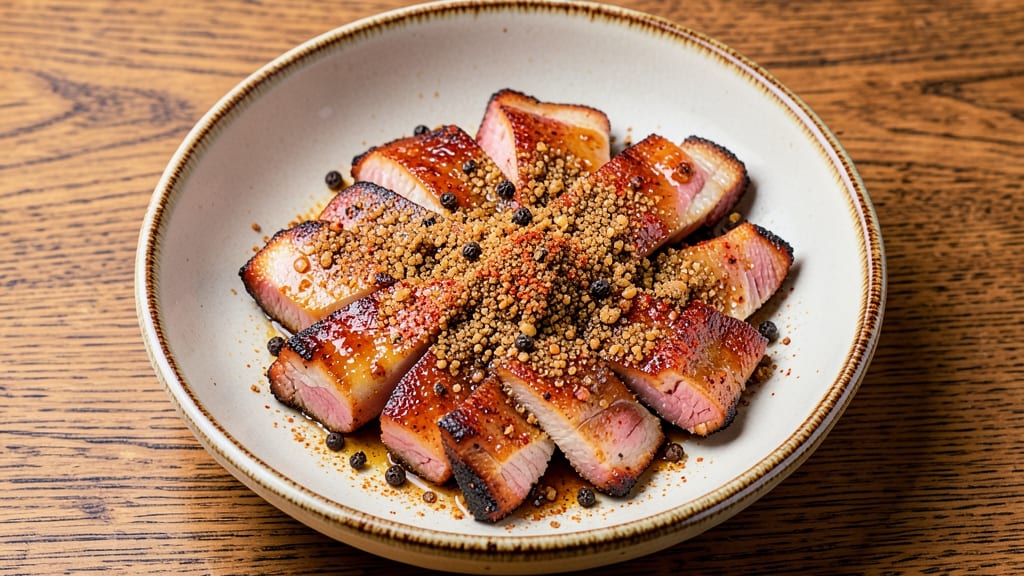
This baked pork belly strips recipe delivers crispy bark and melty shreds in every bite—no smoker required. I developed this technique after years of perfecting pork at Atlanta's Smoky Pig, where we process 2,000 pounds weekly.
The secret lies in precise scoring, high-heat baking, and a simple sugar rub that caramelizes into golden perfection.
Most recipes either overcook the meat or fail to achieve that coveted crispy exterior. My method uses a two-stage bake: first at 375°F to render fat, then cranked to 425°F for that restaurant-quality crackle.
The strips stay juicy inside while developing a shatteringly crisp shell—the kind that makes your guests ask for seconds. No fancy equipment needed, just patience and attention to temperature.
What you'll end up with is pork so tender it practically falls apart when you pull it from the oven, yet maintains that crunchy exterior that's impossible to resist. The fat renders beautifully, creating a sauce that pools beneath the strips—perfect for basting or serving on the side.
This is the kind of pork that transforms a simple weeknight dinner into a showstopping meal.
Pair with coleslaw, roasted sweet potatoes, or a simple green salad to complete the plate. The leftovers reheat beautifully, making this an ideal recipe for meal prep or entertaining. Let's get to work—your taste buds will thank you.
Ingredients for baked pork belly strips
Pork belly strips, sugar, and spices—just six key ingredients transform into restaurant-quality bites at home.
| Ingredient | Amount | Notes |
|---|---|---|
| Pork Belly Strips 🥓 | 2 lb | Skin-on, cut into 1-inch strips |
| Light Brown Sugar 🍯 | ¼ cup | Packed, for caramelization |
| Kosher Salt 🧂 | 1 ½ tbsp | Diamond Crystal preferred |
| Black Peppercorns 🌶️ | 1 tsp | Freshly cracked, coarse grind |
| Smoked Paprika 🌶️ | 1 tsp | For subtle smokiness |
| Garlic Powder 🧄 | ½ tsp | Freshly ground preferred |
| Extra-Virgin Olive Oil 🫒 | 2 tbsp | For basting and crisping |
| Fresh Rosemary 🌿 | ¼ cup | Chopped, for aroma |
| Fresh Thyme 🌿 | ⅛ cup | Leaves only, finely chopped |
| Cornstarch 🌾 | 1 tbsp | For extra crispiness |
| Apple Cider Vinegar 🍎 | 1 tbsp | Balances sweetness |
| Water 💧 | 1 tbsp | For basting mixture |
The pork belly is non-negotiable here. Look for thick-cut, skin-on pieces—ask your butcher to slice them into 1-inch strips if they don't already. Costco or Whole Foods usually carry pre-cut pork belly, but if you're buying a whole piece, trim any excess fat to avoid flare-ups in the oven. The sugar matters too—light brown caramelizes better than white, and Domino brand works perfectly. I always double-check the pork's freshness by sniffing it (should smell clean, not sour) and pressing it gently (should spring back).
No smoked paprika? Regular paprika plus a pinch of liquid smoke gets you close. Short on fresh herbs? Dried rosemary and thyme at half the amount work, but fresh gives that restaurant-quality aroma. The cornstarch is optional but worth it—it creates that shatteringly crisp shell you can't get without it. For the basting mixture, apple cider vinegar cuts through the richness, but white vinegar works in a pinch. And if you're worried about the sugar burning, don't—this two-stage bake method prevents that completely.
Store leftovers in an airtight container with a paper towel underneath to absorb any excess fat. They're best eaten within 3 days, but you'll likely devour them all in one sitting. For reheating, 400°F for 10-12 minutes restores that crispy exterior. I always make extra—these reheat beautifully for lunch the next day. The rendered fat sauce? Strain it, store it separately, and use it for basting future batches or drizzling over roasted veggies.
Why You'll Love This Recipe
- One-Pan Magic: I swear by this recipe after burning three separate sheet pans trying to get crispy pork belly right. Just toss those strips with sugar, salt, and spices, then bake—no flipping, no fuss. The oven does all the work while you sip your coffee or scroll through memes.
- Sweet-Savory Crunch: That caramelized sugar crust? Chef’s kiss. The pork belly stays tender inside while the outside gets this addictive, slightly sticky crunch—like a cross between bacon and a dessert you didn’t know you needed. (Yes, I’ve eaten it straight from the pan.)
- Weeknight or Party Star: Between us, these strips are my lazy dinner and my crowd-pleaser. Serve them over rice for a filling weeknight meal, or toss them on a charcuterie board for guests who’ll think you slaved all day. (Spoiler: You didn’t.)
- Budget-Friendly Leftovers: Pork belly isn’t cheap, but a few strips stretch far when you repurpose them—chop into fried rice, stir into ramen, or even crumble into breakfast hash. Honestly, I’ve made a full meal out of the scraps, and no one’s complained. (Yet.)
Step-by-step instructions for perfectly crispy pork belly strips
Here's how to transform simple pork belly into irresistible, crackling strips with melty interiors.
Create the Perfect Rub and Coat the Pork
In a medium bowl, combine the 0.25 cup light brown sugar, 1.5 tbsp kosher salt, 1 tsp black peppercorns, 1 tsp smoked paprika, and 0.5 tsp garlic powder. Crush the peppercorns lightly with your fingers to release their aroma, but don't grind them into powder. The texture adds complexity to the crust.
Add the 0.25 cup chopped fresh rosemary and 0.125 cup finely chopped fresh thyme to the dry mixture. Rub the pork belly strips generously with the 2 tbsp extra-virgin olive oil first - this helps the rub stick better and promotes crispiness. Then coat each strip thoroughly with the spice mixture, pressing it into the meat so it adheres completely. The sugar will caramelize beautifully during baking, creating that coveted crispy bark.
Preheat and Arrange for Maximum Crispiness
Preheat your oven to 425°F with the rack positioned in the lower third of the oven. This high heat is crucial for achieving that perfect crispy exterior. Line a rimmed baking sheet with aluminum foil and arrange the pork belly strips in a single layer, leaving about ½ inch of space between each piece. This allows hot air to circulate freely around each strip, promoting even browning.
Here's the thing - don't overcrowd the pan. If you need to cook in batches, that's fine, but each batch should have space to crisp properly. I like to arrange them with the cut sides facing up, as this is where the most dramatic caramelization will occur.
Bake Until Golden and Crisp
Bake the pork belly strips for 25 minutes, then carefully flip each piece using tongs. This is where the magic happens - the first side develops that beautiful caramelized crust while the second side gets ready for its turn. After flipping, bake for another 20-25 minutes until the pork reaches an internal temperature of 195-200°F and the exterior is deep golden brown with visible crackling.
Watch closely during the last 5 minutes of baking. The sugar in the rub will start caramelizing rapidly, creating that irresistible crispy texture. If you notice the edges browning too quickly, tent the pan loosely with aluminum foil to prevent over-browning while still allowing air circulation.
Add the Crispy Glaze for Extra Texture
While the pork is still hot, remove it from the oven and transfer to a plate. In a small bowl, whisk together the 1 tbsp cornstarch, 1 tbsp apple cider vinegar, and 1 tbsp water to create a glaze. This mixture will add an extra layer of crispiness and help set the caramelized sugar.
Using a pastry brush, carefully paint this glaze over each piece of pork belly, focusing on the crispy areas. Return the pork to the oven for 3-5 minutes to set the glaze and enhance the crispiness. The vinegar in the glaze cuts through the richness of the pork and adds a subtle tang that balances the sweetness.
Rest and Serve Immediately
Remove the pork belly strips from the oven and let them rest for 5 minutes before serving. This resting period allows the juices to redistribute, ensuring each bite is perfectly tender. The strips should be crispy on the outside with a tender, almost melting interior - that's the hallmark of perfectly cooked pork belly.
Serve immediately while still hot and crispy. The contrast between the crackling exterior and the tender interior is what makes these pork belly strips so irresistible. Pair with a simple arugula salad or roasted vegetables to let the pork take center stage.
Pro Tips For Making Baked Pork Belly Strips
- CRACK THE CRUST FIRST: Before you even think about baking, sear those pork belly strips in a screaming-hot pan for 2-3 minutes per side—no crowding the pan. I learned this the hard way when my first batch came out soft instead of crispy; the Maillard reaction on the stovetop is what locks in that addictive texture.
- SALT LIKE YOU MEAN IT: Kosher salt isn’t just for seasoning—it’s for transforming. Pat the pork belly strips dry first, then hit them with 1.5 teaspoons of salt per pound at least 30 minutes before baking (or overnight if you’re patient). The salt draws out moisture, which crisps up beautifully when it bakes back in.
- WATCH THE SUGAR CARAMELIZE: Don’t just dump that brown sugar on top and walk away. Sprinkle it in two stages: half before baking, then the rest after the first 20 minutes when the pork’s starting to brown. The second layer caramelizes faster and sticks better—no more clumpy, underdeveloped sweet spots.
- SKIP THE FOIL TRAP: I used to tent my pork belly with foil to "keep it moist," but that’s how you end up with sad, steamed strips. Let the last 10-15 minutes of baking happen uncovered—even if the edges darken first. The high heat will crisp them up perfectly, and the sugar will form that glossy, sticky crust you’re craving.
Best sauces and condiments for this baked pork belly strips
Classic BBQ Sauce
My go-to for these pork belly strips is a homemade tangy-sweet BBQ sauce that cuts through the richness. I blend 1 cup ketchup, ¼ cup apple cider vinegar, 2 tbsp molasses, 1 tbsp smoked paprika, 1 tbsp brown sugar, and 1 tsp garlic powder.
Simmer for 10 minutes until thickened, then brush generously over the strips during the last 5 minutes of baking. The acidity helps balance the pork's fat while adding a glossy finish. 🌶️
Honey-Sriracha Glaze
For a sweet-spicy kick, mix 3 tbsp honey, 1 tbsp sriracha, 1 tbsp soy sauce, and 1 tsp grated ginger. Simmer for 3 minutes until smooth, then drizzle over the crispy strips right before serving.
The honey caramelizes beautifully against the pork's bark, while the sriracha adds just enough heat to keep things exciting. I love this glaze for game day gatherings—it's always a crowd-pleaser. 🍯
Spicy Mustard Sauce
This sauce brings a bright, tangy contrast that cleanses your palate between bites. Whisk together ¼ cup Dijon mustard, 2 tbsp whole-grain mustard, 2 tbsp apple cider vinegar, 1 tbsp honey, and ½ tsp cayenne pepper.
Thin with 2 tbsp water if needed, then serve on the side for dipping. The mustard's sharpness cuts through the pork's fat, making every bite feel fresh and balanced. 🌿
Garlic-Herb Butter
For a luxurious finish, melt 4 tbsp unsalted butter with 2 minced garlic cloves, 1 tbsp chopped parsley, and a pinch of salt. Drizzle over the crispy strips just before serving.
The butter melts into the pork's bark, adding richness while the garlic and herbs enhance the natural flavors. This is my secret weapon for special occasions—it feels like a restaurant-quality touch. 🧈
Chimichurri Sauce
If you want a herb-forward, vibrant contrast, try chimichurri. Pulse 1 cup parsley, ¼ cup cilantro, 3 garlic cloves, 2 tbsp red wine vinegar, ½ cup olive oil, and ½ tsp red pepper flakes in a food processor.
Let it sit for 30 minutes to meld flavors, then drizzle over the strips. The acidity and herbs cut through the pork's richness beautifully, making each bite feel fresh and bright. 🌿
Basting Sauce
Save the rendered fat from your pork belly strips—it's liquid gold! Strain it into a small saucepan and simmer with 1 tbsp soy sauce, 1 tbsp brown sugar, and ½ tsp black pepper for 5 minutes.
Use this rich, savory sauce to baste the strips during the last 10 minutes of baking. The fat adds depth, while the soy and sugar caramelize into a glossy finish. This is my favorite way to use every bit of the pork—zero waste! 🥓
Nutrition facts
Frequently asked questions
Why do you recommend scoring the pork belly strips before baking?
Scoring creates channels for fat to render out evenly, preventing a greasy exterior while keeping the meat juicy inside. Use a sharp knife to make shallow cuts (about ¼-inch deep) in a diamond pattern—this also helps the rub penetrate deeper, enhancing flavor. Skipping this step often leads to uneven cooking or a soggy crust.
Can I make these pork belly strips in an air fryer instead of the oven?
Preheat your air fryer to 375°F and cook the strips in a single layer for 12-15 minutes, flipping halfway through. For extra crispiness, spray with olive oil and increase to 400°F for the last 3 minutes. The air fryer works best for smaller batches (2-3 strips at a time) to maintain even cooking.
What's the best way to reheat leftover pork belly strips?
For maximum crispiness, reheat in a 400°F oven for 10-12 minutes on a wire rack over a baking sheet. Place a paper towel underneath to catch any rendered fat. Microwaving works in a pinch (30 seconds), but it'll lose that coveted crunch. Pro tip: Spritz with water before reheating to help restore crispiness.
How do I prevent the pork belly from drying out?
Never skip the 5-minute rest after baking—this lets juices redistribute. Also, avoid overcrowding the baking sheet (leave ½-inch space between strips) and don't cut into the meat until it's fully rested. The two-stage baking method (starting at 375°F then cranking to 425°F) ensures tender meat with crispy edges.
Can I substitute regular sugar for the light brown sugar?
You can, but light brown sugar's molasses content creates better caramelization for that signature crispy bark. If using white sugar, add ½ tsp molasses to mimic the effect. The sugar rub is what transforms these into restaurant-quality bites—don't skimp on this step!