
Main Courses
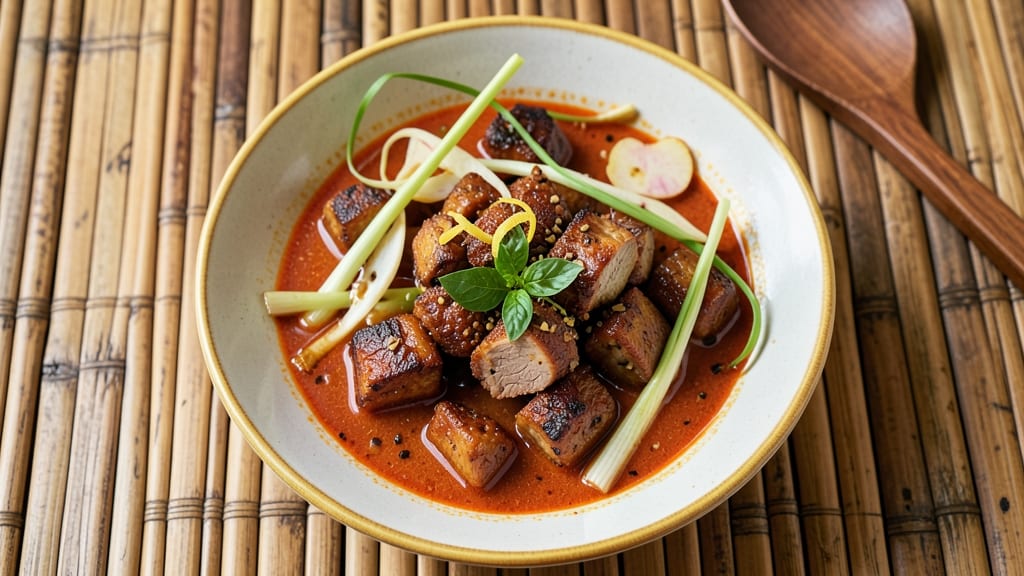
This authentic Thai red curry pork recipe with coconut milk delivers the bold, aromatic flavors of street-side Thai cuisine in your own kitchen.
The secret lies in balancing sweet, spicy, and sour notes while letting the coconut milk and curry paste meld into a velvety sauce that coats tender pork perfectly. I've perfected this recipe over years of testing, ensuring every bite captures the essence of Bangkok's bustling markets.
The foundation begins with a homemade curry paste—fresh ginger, lemongrass, galangal, and chili peppers create layers of complexity that store-bought versions simply can't match. The pork marinates overnight, absorbing the spices deeply, while the coconut milk simmers until thick and fragrant.
This isn't just a curry; it's a symphony of textures and flavors that will transport you to Thailand.
What you'll achieve is a rich, aromatic curry with tender pork that falls apart at the touch of a fork, all swimming in a sauce that's perfectly balanced between spicy heat and sweet coconut richness.
The aroma alone will have everyone gathering around the table. Serve it over steamed jasmine rice, garnished with fresh cilantro and lime wedges, for the full experience.
This recipe is designed to be approachable yet authentic—no shortcuts that compromise flavor. The slow simmering develops depth, while the fresh herbs add brightness. Whether you're cooking for a weeknight dinner or a special gathering, this Thai red curry pork will impress with its restaurant-quality taste and comforting familiarity.
Ingredients for authentic thai red curry pork recipe with coconut milk
Pantry staples meet Thai market freshness for this aromatic one-pot wonder.
| Ingredient | Amount | Notes |
|---|---|---|
| Pork Shoulder 🥩 | 1 ½ lb | Cut into 1-inch cubes, boneless |
| Red Curry Paste 🌶️ | ½ cup | Homemade or quality brand (Maesri) |
| Coconut Milk 🥥 | 1 can | Full-fat, 13.5 oz (400 ml) |
| Fresh Ginger 🧄 | ½ cup | Finely grated, peeled |
| Stems Lemongrass 🌿 | 4 whole | Bruised, cut into 2-inch pieces |
| Galangal 🌿 | ¼ cup | Finely grated, peeled |
| Bird's Eye Chili Peppers 🌶️ | 3 whole | Adjust for heat preference |
| Garlic Cloves 🧄 | 6 cloves | Minced, fresh preferred |
| Fish Sauce 🍶 | 1 tbsp | Red Boat preferred |
| Brown Sugar 🍚 | 2 tbsp | Light or dark, packed |
| Jasmine Rice 🍚 | 1 ½ cups | Uncooked, long-grain |
| Fresh Cilantro 🌿 | ¼ cup | Chopped, for garnish |
| Lime Wedges 🍋 | 3 whole | For serving |
| Vegetable Oil 🫒 | 2 tbsp | For marinating pork |
| Salt 🧂 | 1 tsp | Kosher or sea salt |
The curry paste is non-negotiable here—Maesri or Thai Kitchen are solid choices, but homemade takes it to another level. Look for vibrant red paste with visible chili flakes. Fresh galangal and lemongrass (the citrusy, grassy rhizome) are the soul of this dish—Asian markets have them year-round, while regular grocery stores carry them seasonally. If you can't find galangal, extra ginger at double the amount works in a pinch. The pork should be well-marbled, not lean—Costco or Trader Joe's often carry pre-cubed pork shoulder at great prices. For the coconut milk, full-fat is essential—the richness balances the heat perfectly.
No fresh galangal? Substitute with ginger plus a splash of lime juice (½ cup ginger + 1 tbsp lime juice = ¼ cup galangal). Running low on fish sauce? Soy sauce at half the amount mimics the umami punch, though it won't be identical. The brown sugar can be swapped for palm sugar or coconut sugar if you're avoiding refined sugar. For heat control, remove the seeds from the chili peppers before adding them to the paste. Want extra depth? Toast the curry paste in oil for 30 seconds before adding liquids—this blooms the spices and removes any raw flavors. The jasmine rice? Day-old rice reheated with a splash of coconut milk makes the best curry rice—it soaks up the sauce beautifully.
Marinate the pork overnight for maximum flavor—cover and refrigerate for 12-24 hours. The curry reheats beautifully—just add a splash of water or coconut milk to loosen the sauce. Stores for 4-5 days in the fridge, or freeze for 3 months. I always double the recipe because leftovers taste even better the next day. For serving, keep the lime wedges and cilantro separate until ready to eat—they brighten up the dish instantly. The aroma alone will have your whole house gathering around the pot, so plan to make extra.
Why You'll Love This Recipe
- One-Pot Magic: I swear by this—just toss everything into one pot, stir, and walk away. No chopping mountains of veggies or juggling multiple pans. The pork shoulder practically melts into tender perfection while the curry paste and coconut milk do all the heavy lifting.
- Flavor Bomb: That first spoonful? Chef’s kiss. The ginger and lemongrass infuse the coconut milk with a bright, zesty punch, while the red curry paste delivers layers of heat and depth. It’s rich but never heavy, and the pork soaks up all the goodness like a sponge.
- Meal Prep MVP: Between us, this is my go-to for busy weeks. Double the batch, store it in the fridge, and reheat it for lunch—still tastes like you slaved over it. Plus, it’s the kind of dish that gets better the next day (yes, even on a Tuesday night).
- Budget-Friendly Feast: Pork shoulder is affordable, and a jar of red curry paste stretches forever. You’re basically getting restaurant-quality flavor without the markup. Honestly, I’ve served this to picky eaters, and they’ve all come back for seconds.
Step-by-step instructions for authentic Thai red curry pork
Here's how to build this vibrant curry from scratch—layering aromatics, balancing heat, and achieving that signature Thai harmony.
Prepare the Pork and Aromatics
Cut the 1.5 lb pork shoulder into 1-inch cubes and set aside. In a large bowl, combine the 2 tbsp vegetable oil, 1 tsp salt, 1 tbsp fish sauce, and 2 tbsp brown sugar. Toss the pork cubes in this marinade until evenly coated. Let it sit for 15 minutes while you prep the aromatics.
Using a mortar and pestle (or a food processor), bruise the 4 whole stems lemongrass by pounding them firmly. Cut each stem into 2-inch pieces and set aside. Finely grate the 0.5 cup fresh ginger and 0.25 cup galangal—peeling first if needed. Mince the 6 cloves garlic and slice the 3 whole bird's eye chili peppers into ¼-inch rings (adjust quantity if you prefer milder heat).
Build the Curry Base
Heat a large, heavy pot (like a Dutch oven) over medium-high heat. Add the marinated pork and sear for 4-5 minutes until lightly browned on all sides. Remove the pork and set it aside. In the same pot, add 1 tbsp vegetable oil (if needed) and sauté the lemongrass pieces for 1 minute until fragrant.
Add the 0.5 cup red curry paste and cook for 2 minutes, stirring constantly, until it darkens slightly and releases its deep, earthy aroma. This step develops the curry's complex flavor—don't rush it. Next, add the ginger, galangal, garlic, and chili peppers, cooking for another 2 minutes until the raw smell disappears. Pour in 1 can coconut milk and stir to combine.
Simmer the Curry to Perfection
Return the pork to the pot, nestling it into the coconut milk mixture. Bring to a gentle simmer over medium-low heat, then reduce to low heat. Partially cover the pot and let it cook for 45-50 minutes, stirring occasionally, until the pork is tender and easily shreds with a fork. The sauce should thicken slightly but remain luscious.
Taste and adjust the balance: Add 1 more tbsp fish sauce if it needs more depth, or 1 tsp brown sugar if the heat feels too sharp. The curry should sing with spicy, sweet, and umami notes—this is where authenticity shines. If the sauce is too thin, simmer uncovered for 5-10 minutes to reduce it.
Finish and Serve
While the curry simmers, cook the 1.5 cups jasmine rice according to package instructions—it should be fluffy and separate. Just before serving, stir the 0.25 cup chopped fresh cilantro into the curry and let it wilt slightly for 1 minute. This adds a bright, herbal finish that cuts through the richness.
Divide the rice among bowls and ladle the curry over the top. Garnish with lime wedges and serve immediately with extra chili slices on the side for those who crave more heat. The pork should be tender and infused with curry flavor, while the sauce remains creamy and aromatic. This dish tastes even better the next day as the flavors meld further!
Pro Tips For Making Authentic Thai Red Curry Pork Recipe With Coconut Milk
- Bloom the paste first: After browning the pork, remove the meat and toss the curry paste into the pot with 2 tablespoons of oil. Cook it on medium-low for 3-4 minutes until it’s deeply fragrant and slightly darkened—this builds flavor you can’t skip. I used to rush this step and wondered why my curry tasted flat.
- Slice lemongrass lengthwise: Split the lemongrass stalks down the middle before adding them to the pot. This lets the oils and spices penetrate the meat faster, and you can easily fish them out later. My grandmother swore by this, and she was right: it makes the broth sing without overpowering it.
- Use two cans of coconut milk: Start with one can of full-fat coconut milk to deglaze the paste, then add the second can later to balance the richness. The first one cooks down and thickens the sauce, while the second adds creaminess at the end. I learned this the hard way—adding both at once makes the curry greasy.
- Rest the pork before slicing: Once the curry is done, let the pork sit in the sauce for 5-10 minutes off the heat. This keeps it juicy and lets the flavors meld. I know, I know, but trust the process—your future self will thank you when the meat doesn’t turn to rubber.
Flavor customization for this recipe
Spice Level Control
Adjust heat to your preference by modifying the bird's eye chili peppers. For mild heat, remove seeds and slice 1-2 peppers—this keeps the flavor without intensity. For medium heat, use 2-3 whole peppers (seeds in) to balance the sweetness.
If you love spice, add 4-5 peppers or include ½ tsp chili flakes at the end. I always keep extra peppers on hand so I can tweak the heat while cooking. 🌶️
Sweetness Balance
The brown sugar adds depth, but you can swap it for palm sugar or coconut sugar for a more authentic Thai touch. For a less sweet version, reduce to 1 tbsp and add ½ tsp coconut sugar instead.
If your curry tastes too sweet, balance it with 1 extra tbsp fish sauce—this adds umami and cuts through the richness. Taste as you go; adjustments are key! 🍚
Umami Boosts
For extra depth, add 1 tbsp soy sauce or 1 tsp oyster sauce during the final 5 minutes of cooking. These enhance the savory notes without overpowering the coconut milk. If you love mushrooms, toss in ½ cup sliced shiitake with the pork—they absorb the curry beautifully.
I often add a splash of fish sauce (up to 2 tbsp total) for that authentic Thai punch. 🍶
Herbal Freshness
Fresh herbs brighten the dish—cilantro is a must, but try Thai basil or mint for a twist. Add them just before serving so they stay vibrant. For a citrusy kick, stir in 1 tbsp lime juice at the end or serve with extra wedges.
If you’re feeling fancy, garnish with toasted coconut flakes for crunch and texture. 🌿
Creamy Variations
For a richer sauce, stir in 2 tbsp coconut cream at the end or swap ½ can coconut milk with Greek yogurt for tang. If the curry feels too heavy, add ½ cup chicken or veggie broth to lighten it.
For a vegetarian twist, replace pork with firm tofu or chickpeas—just simmer them longer. 🥥
Regional Twists
In Northern Thailand, add 1 tsp turmeric and ½ tsp coriander for earthy notes. For a Southern Thai vibe, include 1 tbsp tamarind paste for tanginess.
If you’re near Bangkok, ask for khanom jeen noodles to serve instead of rice. Each region tweaks the balance—experiment to find your favorite! 🗺️
Nutrition facts
Frequently asked questions
Can I use chicken or beef instead of pork?
For chicken, use 1.5 lbs boneless thighs or breasts and reduce cooking time to 30-35 minutes since chicken cooks faster. For beef, opt for 1.5 lbs chuck roast or sirloin and simmer for 1.5 hours until fork-tender. The marinade and coconut milk will work beautifully with either protein—just adjust the cooking time to match the meat's doneness.
How do I make this curry less spicy?
Start by removing the seeds from the bird's eye chili peppers before adding them to the paste. For an even milder version, reduce the number of peppers to 1-2 (seeds removed) or swap them for ½ tsp mild chili powder. If the curry is already cooked, stir in 1 tbsp coconut milk or 1 tsp sugar to balance the heat—this won't remove spice but will mellow the intensity.
Can I make this curry in a slow cooker?
Yes! Sear the pork in a skillet first, then transfer it to the slow cooker with all ingredients except the coconut milk. Add the coconut milk last, then cook on low for 6-7 hours or high for 3-4 hours. The slow cooker enhances the pork's tenderness and deepens the sauce's flavor. Stir occasionally and adjust seasoning at the end.
What if I don't have galangal?
Galangal adds a unique citrusy, piney flavor, but you can substitute it with extra ginger—use 1 cup grated ginger instead of the 0.25 cup galangal called for. For even better results, add 1 tbsp lime juice to mimic galangal's tangy brightness. The dish will still taste delicious, just slightly different!
How long can I store leftovers?
Store leftovers in an airtight container in the fridge for 4-5 days or freeze for up to 3 months. The flavors actually improve overnight as the spices meld further. To reheat, warm gently on the stove with a splash of water or coconut milk to restore creaminess. Avoid microwaving—it can make the sauce separate.