
Main Courses
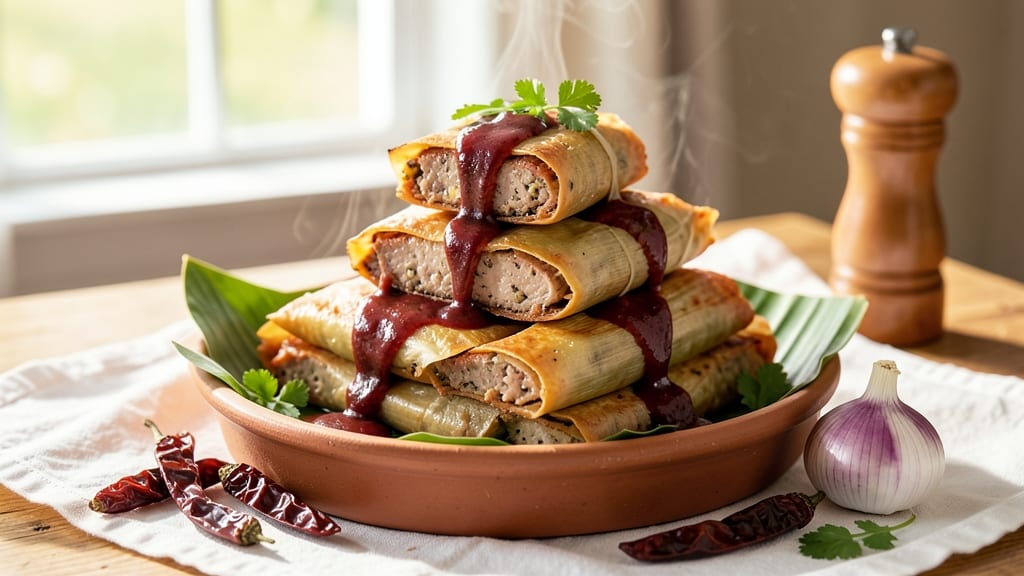
This authentic red pork tamales recipe from scratch brings the rich flavors of Mexican tradition to your kitchen, with homemade masa and spice-packed fillings that taste like a family celebration. I first learned to make tamales during a trip to Oaxaca, where my abuela showed me how to transform simple corn masa and tender pork into something extraordinary. The key lies in the slow-cooked adobo-spiced pork and the perfect balance of masa texture—neither too dry nor too sticky.
The process begins with making the masa dough from scratch, using fresh masa harina and lard for that authentic, tender bite. Meanwhile, the pork is simmered in a deep, smoky adobo sauce made with dried chiles, garlic, and spices until it's fall-apart tender.
Wrapping the tamales properly—whether in corn husks or banana leaves—is an art, but I'll guide you through every step to ensure they steam perfectly without falling apart.
What you'll end up with is a tray of golden, steamed tamales with layers of flavor in every bite: the tender, slightly chewy masa, the rich, spiced pork filling, and the aroma of slow-cooked chiles that fills your home.
These tamales are perfect for holidays, family gatherings, or whenever you crave a taste of home. The leftovers reheat beautifully, making them ideal for meal prep.
Once you master this recipe, you'll understand why tamales hold such a special place in Mexican culture—they're more than just food; they're a labor of love passed down through generations. Let's get started on creating your own tradition.
Ingredients for authentic red pork tamales recipe from scratch
Twelve ingredients transform into twelve tamales—each bite packed with smoky pork and tender masa magic.
| Ingredient | Amount | Notes |
|---|---|---|
| Fresh Pork Shoulder 🥩 | 3 lb | Bone-in, cut into 1.5-inch cubes |
| Masa Harina 🌽 | 4 cups | Maseca or Bob's Red Mill |
| Lard 🧈 | ½ cup | Rendered, not leaf fat |
| Dried Ancho Chiles 🌶️ | 4 whole | Stems/seeds removed, stems saved |
| Dried Guajillo Chiles 🌶️ | 2 whole | Stems/seeds removed |
| Garlic Cloves 🧄 | 8 cloves | Peeled, roughly chopped |
| White Onion 🧅 | 1 whole | Medium, quartered |
| Ground Cumin 🌿 | 2 tbsp | Toasted for depth |
| Mexican Oregano 🍃 | 1 tbsp | Dried, not regular oregano |
| Salt 🧂 | 1 ½ tsp | Kosher or sea salt |
| Black Pepper 🌶️ | ½ tsp | Freshly ground |
| Chicken or Vegetable Broth 💧 | 1 cup | Low-sodium preferred |
| Corn Husks 🌽 | 24 pieces | Soaked 1 hour in warm water |
| Fresh Cilantro 🌿 | ¼ cup | Chopped, for garnish |
| Lime 🍋 | 1 whole | Juiced, for serving |
The pork shoulder is non-negotiable—bone-in gives deeper flavor. Look for well-marbled cuts at local butchers or the meat department at H-E-B or La Tienda. If you can't find ancho or guajillo chiles, Penzeys sells them online, and they're worth it. The masa harina? Maseca is the gold standard, but Bob's Red Mill works too. Toast your spices—cumin and oregano—until fragrant in a dry skillet for that authentic depth. The lard? Render your own if possible, but store-bought works in a pinch.
No ancho chiles? Substitute 1 tbsp chipotle powder for heat, but you'll lose that smoky sweetness. Running short on masa harina? Mix 3 cups cornmeal with 1 cup flour—not ideal, but better than nothing. The pork can be swapped for chicken thighs if you're vegetarian-adjacent, but traditionalists will notice. For the husks, Mexican markets sell them in bulk, but the frozen section at Walmart carries them too. Soak them in warm water for at least an hour before using—they need to be pliable but not mushy.
The pork filling keeps for 3 days in the fridge, and the masa dough can be prepped a day ahead. Store both in airtight containers. Reheat filling gently in a pot—no boiling! The assembled tamales steam best fresh, but you can assemble them ahead and refrigerate (unsteamed) for up to 24 hours. Freeze extras for 3 months—steam from frozen, adding 15 minutes to cooking time. Garnish with fresh cilantro and lime juice right before serving for that restaurant-quality touch.
Why You'll Love This Recipe
- I’ll be real: the hardest part is soaking those ancho and guajillo chiles overnight—everything else? Just simmer, mix, and steam. That rich red sauce practically makes itself while you prep the masa.
- No Fuss, Big Payoff: I’ll be real: the hardest part is soaking those ancho and guajillo chiles overnight—everything else? Just simmer, mix, and steam. That rich red sauce practically makes itself while you prep the masa.
- Flavor That Sticks: The pork shoulder melts into tender perfection, wrapped in masa that’s got this magical balance—crispy edges from the lard, but creamy inside where the chiles’ smoky depth lingers. (Yes, even on a Tuesday night.)
- Party-Ready in a Flash: Double the batch, freeze half, and boom—you’ve got a showstopper for holidays or lazy Sundays. My family’s Christmas tradition? Tamales for breakfast. (Don’t judge.)
Step-by-step instructions for authentic red pork tamales
Here's how to make tamales from scratch with homemade masa and flavorful pork filling.
Prepare the Pork Filling
In a large Dutch oven, combine the 3 lb fresh pork shoulder (cut into 1.5-inch cubes) with the 4 whole dried ancho chiles, 2 whole dried guajillo chiles, 8 cloves garlic cloves, and 1 whole white onion (quartered). Add the 2 tbsp ground cumin, 1 tbsp Mexican oregano, 1.5 tsp salt, and 0.5 tsp black pepper. Stir everything together until the pork is well coated in the spices.
Add 1 cup chicken or vegetable broth to the Dutch oven. Bring to a boil over medium-high heat, then reduce to a simmer. Cover and cook for 2 to 2.5 hours, stirring occasionally, until the pork is fork-tender and the liquid has mostly evaporated. The filling should be rich and flavorful, with the pork falling apart easily. If it's too dry, add a splash of broth to keep it moist.
Make the Homemade Masa
In a large mixing bowl, combine the 4 cups masa harina with 0.5 cup lard. Using your hands or a fork, mix until the masa starts to come together into a crumbly dough. Gradually add 1 cup warm chicken or vegetable broth (about 110°F) while mixing until the dough forms a soft, pliable ball. If it feels too dry, add a little more broth, 1 tablespoon at a time. The masa should be moist but not sticky—you should be able to shape it easily without it sticking to your hands.
Cover the bowl with a damp towel and let the masa rest for 15 minutes. This resting time allows the masa to hydrate fully and makes it easier to work with when filling the tamales.
Prepare the Corn Husks
While the pork filling simmers, soak the 24 corn husks in a large bowl of warm water for at least 1 hour. This ensures they’re pliable and won’t crack when you fill them. Drain the husks and lay them flat on a clean kitchen towel to dry slightly. You want them damp but not dripping wet—this makes them easier to handle without tearing.
Test one husk by gently pressing it between your fingers. If it bends without cracking, they’re ready. If they’re still too stiff, soak them for another 10 to 15 minutes. Keep the remaining husks covered with a damp towel to prevent them from drying out.
Assemble the Tamales
Place a corn husk on a flat surface with the pointed end facing you. Spoon about ½ cup of the pork filling near the bottom third of the husk. Fold the sides of the husk inward, then fold the bottom up over the filling. Roll the tamale tightly from the bottom up, keeping the filling snug against the husk. Repeat with the remaining husks and filling, working quickly to keep the masa and filling warm.
Arrange the tamales seam-side down in a steamer basket lined with a clean kitchen towel. Cover the basket with another towel to prevent the tamales from drying out while they steam. Place the steamer over a pot of boiling water, ensuring the water doesn’t touch the tamales. Cover the pot and steam for 1 to 1.5 hours, until the husks are tender and the filling is fully cooked.
Serve with Fresh Garnishes
Once steamed, let the tamales rest for 10 minutes before serving. This allows the filling to set slightly and makes them easier to handle. To serve, carefully peel back the husks and garnish each tamale with 0.25 cup chopped fresh cilantro and a squeeze of 1 whole lime (juiced). The bright acidity of the lime cuts through the richness of the pork, while the cilantro adds a fresh, herbal note.
Serve the tamales warm, with extra lime wedges on the side. The aroma of the spices and the tender, juicy pork will make this an unforgettable meal—just like tamales from a Mexican abuela’s kitchen.
Pro Tips For Making Authentic Red Pork Tamales Recipe From Scratch
- STEAM THE CHILES FIRST: I learned this the hard way—dry-toasting whole ancho and guajillo chiles too long turns them bitter. Instead, steam them in a bowl of boiling water for 10 minutes first, then remove stems/seeds. This softens them enough to blend smoothly without burning, and the sauce stays rich, not chalky.
- USE COLD LARD FOR MASA: This isn’t the prettiest method, but it’s the tastiest. Mix your masa harina with cold lard (not melted) until it forms crumbly clumps—like wet sand. The cold fat coats each masa piece evenly, so your tamales stay tender instead of gummy. (Yes, even if you’re impatient like me.)
- REST THE PORK SHOULDER: Skip the urge to shred that pork shoulder the second it hits 200°F. Let it rest under foil for 15–20 minutes first—this locks in moisture and makes shredding effortless. I used to rush this, and my tamales always ended up dry. Now? Perfectly juicy every time.
- PRESS MASA FIRMLY: Don’t be shy with the pressure when packing the masa into corn husks. Use your hands to press it into every corner—this guarantees even cooking and prevents soggy spots. I was skeptical until I tried it: the texture is uniform, and the tamales hold together like they should. (Your future self will thank you.)
Flavor customization for these flavors
Spice Level Control
Adjust the heat by swapping chiles or toasting them differently. For mild tamales, toast your ancho and guajillo chiles for only 30 seconds—this preserves their natural sweetness. For medium heat, toast them for 45 seconds to bring out more smokiness.
If you crave fiery tamales, add 1-2 dried arbol chiles (toasted and seeded) to the pork mixture—they pack serious heat without overpowering the dish. 🌶️
Sweet & Smoky Variations
Add 1 cup diced pineapple or ½ cup raisins to the pork filling for a sweet-savory twist that balances the spices. I once made tamales with ½ cup chopped dried apricots and a pinch of cinnamon—it became a holiday favorite.
For extra depth, stir in 1 tbsp apple cider vinegar when simmering the pork to enhance the smoky-sweet profile. Trust me, your taste buds will thank you.
Herb & Citrus Infusions
Brighten the filling with 1 tbsp fresh epazote (if you can find it) or 1 tsp dried thyme for an earthy note. For citrus lovers, zest 1 lime and 1 orange into the pork mixture before simmering—this adds a zesty pop that cuts through the richness.
I also like adding 2 tbsp fresh cilantro to the masa dough for a herbaceous kick in every bite. 🍋
Cheese & Creamy Twists
For a creamy version, stir ½ cup crumbled queso fresco or ¼ cup sour cream into the pork filling before assembling. If you love queso Oaxaca, shred ½ cup into the masa dough—it melts beautifully during steaming.
Pro tip: Use low-moisture cheese to avoid soggy tamales. This variation is a crowd-pleaser, especially with kids (or picky eaters!).
Banana Leaf Wrapping
Swap corn husks for banana leaves (available at Latin markets or online) for a fragrant, authentic touch. Soak the leaves in hot water for 5 minutes to soften, then lay them flat. Spread ¼ cup masa on the leaf, add the filling, then fold into a packet.
The leaves impart a subtle tropical aroma that elevates the dish. Just be sure to use food-grade leaves—never decorative ones! 🌿
Nutrition facts
Frequently asked questions
Can I make tamales without corn husks?
Use banana leaves for an authentic, fragrant alternative. Soak them in hot water for 5 minutes to soften, then spread ¼ cup masa on each leaf, add filling, and fold into packets. They work beautifully and add a subtle tropical aroma. Just ensure they're food-grade leaves from a Latin market or online.
How do I fix dry masa dough?
Add 1 tablespoon warm broth at a time to your masa mixture until it reaches a soft, pliable consistency. Knead gently with your hands—it should hold together without sticking. If it's still crumbly, let it rest 10 minutes covered with a damp towel. Never add too much liquid or the tamales will be gummy when steamed.
What's the best way to reheat leftover tamales?
Steam them again for 15-20 minutes in a tamale steamer or covered pot with 1 inch of boiling water below. For microwave reheating, wrap tamales in a damp paper towel and heat for 1-2 minutes at 50% power. This prevents drying out while restoring the tender texture. Never reheat uncovered—they'll turn rubbery.
Can I substitute chicken for pork?
Yes, but use bone-in chicken thighs (not breasts) for juiciness. Cook them 10-15 minutes less than pork since they tenderize faster. The flavor will be lighter, but the technique remains identical. For authenticity, add 1 tsp smoked paprika to the chicken mixture to mimic pork's depth.
Why did my tamales fall apart when steaming?
This usually happens from one of three issues: over-soaked husks (they should be damp, not wet), undercooked masa (steam 1 hour minimum), or improper wrapping (fillings should be snug, not loose). Check your wrapping technique—tight seals prevent filling from leaking. If it happens, try using parchment paper as a backup wrapping layer.