
Soups & Stews
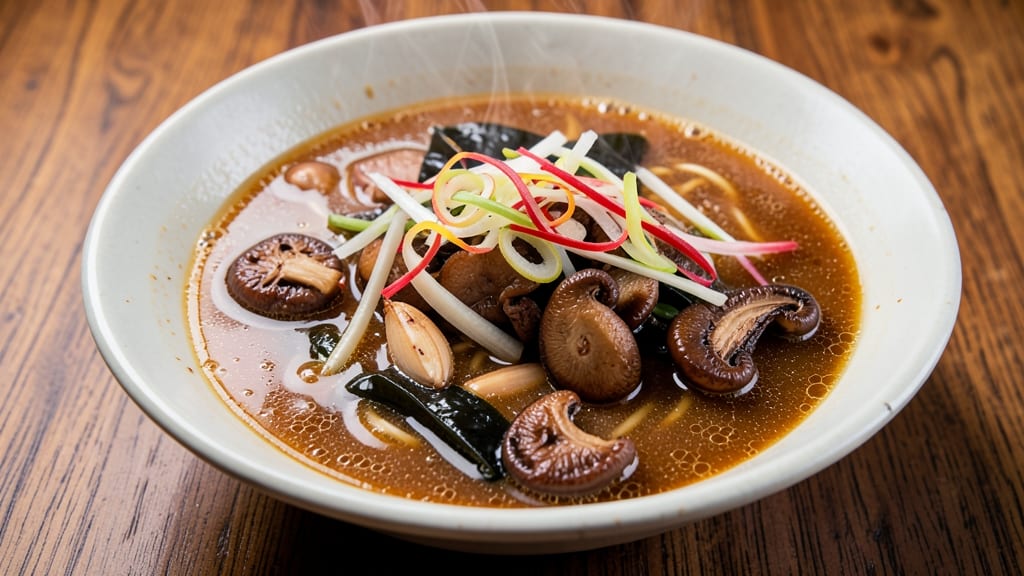
This authentic pork ramen broth recipe delivers the deep, umami-rich flavor that defines traditional Japanese ramen—no shortcuts, just the slow-simmered essence of pork bones and aromatics. 🔥 As someone who’s spent years perfecting pork-based broths at The Smoky Pig, I can tell you the secret lies in charring the aromatics first, then simmering for hours to extract maximum flavor from every ingredient.
The foundation starts with pork bones—preferably a mix of marrow and knuckle bones—for both gelatinous body and rich porky depth. We’ll build layers of flavor by charring garlic, ginger, and scallions until they’re fragrant and slightly blackened, then simmering everything with kombu (dried kelp) for that signature oceanic umami.
This isn’t just broth; it’s a restaurant-quality experience you can make at home.
What you’ll end up with is a velvety, golden-brown broth so concentrated with pork flavor that even the simplest toppings—soft ramen noodles, soft-boiled eggs, and quick-pickled vegetables—will taste extraordinary.
The key is patience: skimming the foam, adjusting seasoning, and letting it develop gradually. This is the kind of broth that transforms a simple meal into something truly special.
Once perfected, you can serve it as the base for a complete ramen bowl or use it in other dishes like dumplings or stir-fries. The beauty of this recipe is its versatility—authentic in technique but adaptable to your preferences. Let’s get started on creating your own umami masterpiece.
Ingredients for authentic pork ramen broth
Six pounds of pork bones and aromatic charring create restaurant-quality ramen depth.
| Ingredient | Amount | Notes |
|---|---|---|
| Pork Bones 🥩 | 4 lb | Marrow and knuckle bones preferred |
| Garlic Cloves 🧄 | 12 whole | Chopped, skin-on for deeper flavor |
| Fresh Ginger 🌿 | 4 oz | Unpeeled, sliced into 1-inch pieces |
| Scallions 🧅 | 1 lb | White and green parts separated |
| Kombu (Dried Kelp) 🌊 | 1 sheet | 10x10-inch sheet, rinsed |
| Dried Shiitake Mushrooms 🍄 | 8 whole | Stems removed, torn into pieces |
| Soy Sauce 🍶 | ½ cup | Dark soy sauce preferred |
| Miso Paste 🧈 | ¼ cup | Red miso for depth |
| Sesame Oil 🫒 | 1 tbsp | Toasted, for finishing |
| Water 💧 | 12 cups | Filtered preferred |
| Diamond Crystal Kosher Salt 🧂 | 1 ½ tsp | Adjust to taste |
| White Peppercorns 🌶️ | ½ tsp | Freshly cracked |
| Cornstarch 🌾 | 1 tbsp | For clarifying broth |
The pork bones are non-negotiable—marrow and knuckle bones from a butcher shop give you that signature ramen richness. Look for bones with good marbling, and if you can't find them pre-cut, ask your butcher to trim off excess fat. Costco often carries them in bulk, but check the Asian market for even better quality. Fresh ginger and garlic? Don't peel the ginger—the skin adds layers of flavor. For kombu, Maesil brand is my go-to, but any good-quality dried kelp works. The shiitake mushrooms should be dried, not fresh—those little powerhouses of umami are worth hunting down in the Asian aisle.
No dark soy sauce? Regular soy sauce plus a pinch of molasses mimics the deep color. Running short on miso? Substitute with an extra tablespoon of soy sauce and a splash of mirin. The sesame oil is just for finishing—skip it if you're avoiding oil, but trust me, that toasty aroma is what makes it sing. For the scallions, save the greens for garnish later. And if you're using pre-minced garlic, toast it in a dry pan first—it develops so much more flavor. The water should be cold, not hot, to start—this broth builds heat gradually.
This broth tastes better the next day, so make a big batch and store it properly. Keep it in the fridge for up to 5 days, or freeze in 1-cup portions for up to 3 months. The fat will solidify on top—just skim it off before reheating. For serving, bring it to a simmer and finish with a drizzle of sesame oil and a sprinkle of scallion greens. Pro tip: Save the bones after simmering—they make killer bone broth for another use.
Why You'll Love This Recipe
- Pork Bones Do the Work: The bones render all the collagen on their own—no stirring, no babysitting. Just toss them in cold water, bring to a simmer, and let them melt into gold. My first batch had me skeptical, but after 4 hours, that broth was liquid silk.
- Umami Bomb Combo: That kombu and scallions? They’re the secret weapons. The kelp adds this deep, oceanic richness while the scallions bring bright green freshness—like someone took a bite of summer and dropped it in your bowl. Honestly, I’ve tried ramen kits, but this? This is real.
- Weeknight to Weekend: Make a double batch on Sunday, and you’ve got lunch covered all week. Freeze half for when you’re too tired to cook, or serve it at your next dinner party—no one will guess it’s the same recipe. (Yes, even on a Tuesday night.)
- Budget That Punch: Pork bones are cheaper than you think, and they stretch into gallons of broth. I’ve fed six people for under $15 using this—plus, the leftovers taste even better the next day. Not the prettiest, but the taste makes up for it every time.
Step-by-step instructions for authentic pork ramen broth
Here's how to build deep, complex ramen broth using traditional Japanese techniques.
🔥 Step 1: Char the Aromatics for Maximum Flavor
Heat a dry skillet over medium-high heat until it's screaming hot. Add the 12 whole garlic cloves (skin-on) and 4 oz fresh ginger (unpeeled, sliced) in a single layer. Let them char for 3-4 minutes until deeply browned and fragrant—this develops incredible depth of flavor. Watch carefully; they'll burn quickly once they start to brown.
Transfer the charred aromatics to a cutting board and roughly chop them. Set aside—you'll add them back later. In the same skillet, add the 1 lb scallions (white and green parts separated) and char them for 1-2 minutes until just browned. Remove and chop these as well. The charred aromatics will form the flavor base of your broth.
🔥 Step 2: Build the Broth with Pork Bones and Kombu
In a large stockpot, combine the 4 lb pork bones, 1 sheet kombu (rinse first), and 12 cups water. Bring to a boil over high heat, then immediately reduce to a simmer. Skim off any foam that rises to the surface during the first 15 minutes—this ensures clarity in your final broth.
Simmer uncovered for 2 hours until the broth develops a rich, amber color and the pork bones are tender enough to pull away from the bone. The kombu will infuse the broth with subtle oceanic notes—don't remove it yet. Here's the thing—patience is key. Rushing this step will result in a thin, flavorless broth.
🍳 Step 3: Add Shiitake Mushrooms and Simmer Long
Add the 8 whole dried shiitake mushrooms (stems removed) and simmer for another 1.5 hours until the broth is deeply infused with umami. The mushrooms should soften and become plump. Remove the kombu sheet and discard it—it's done its job.
Strain the broth through a fine-mesh sieve into a clean pot, pressing gently on the solids to extract maximum flavor. The broth should be clear with a beautiful amber hue. If it's cloudy, repeat the straining process. This step ensures a silky, restaurant-quality broth that's perfect for ramen.
🥘 Step 4: Season with Soy Sauce, Miso, and Spices
Return the strained broth to the pot and stir in the 0.5 cup soy sauce, 0.25 cup miso paste, 1.5 tsp Diamond Crystal kosher salt, and 0.5 tsp cracked white peppercorns. Simmer gently for 10 minutes to allow all the flavors to meld together. Taste and adjust seasoning—you want a balance of salty, sweet, and umami.
Here's where the magic happens: the miso paste adds depth and complexity, while the soy sauce provides that essential salty backbone. The white peppercorns add a subtle heat that's characteristic of authentic ramen broth. Don't be afraid to taste as you go—this is where you fine-tune the flavor.
⏰ Step 5: Clarify and Finish with Sesame Oil
In a small bowl, whisk together the 1 tbsp cornstarch with 2 tablespoons of cold water until smooth. Slowly ladle the broth into a clean pot while stirring constantly. Once all the broth is transferred, return it to the heat and bring to a gentle simmer.
Simmer for 5-7 minutes until the broth thickens slightly and becomes crystal clear. This clarifying step removes any remaining impurities and gives you that silky texture perfect for ramen. Remove from heat and stir in the 1 tbsp toasted sesame oil. The oil will add a nutty aroma and rich finish that ties all the flavors together.
Pro Tips For Making Authentic Pork Ramen Broth
- CHAR THE BONES FIRST: I learned this the hard way—skip the slow start and sear the pork bones in a dry pot over medium-high heat until they turn deep brown. This isn’t just for color; it builds the Maillard crust that unlocks the collagen and turns your broth from murky to rich. Once they’re charred, add water and scrape up those browned bits—they’re flavor gold.
- USE KOMBU RIGHT AWAY: Toss a strip of kombu into the cold water before you even turn on the heat. It’ll soften and release its umami punch without overpowering the broth. Remove it after 10 minutes (when the water’s just simmering)—any longer and it’ll turn bitter. Trust me, this one small step makes the difference between "good" and "wow."
- DON’T SMASH THE GINGER: I used to chop the ginger into tiny pieces, thinking it’d infuse faster. Wrong. Instead, slice it into thick planks (about ½-inch) and let it simmer whole. It’ll peel away in layers, releasing flavor steadily without turning the broth muddy. Save the mincing for the finished dish—where you actually want that sharp bite.
- LOW AND SLOW AFTER THE BOIL: Once the broth reaches a full boil, drop the heat to the lowest setting that keeps it just bubbling—no rolling, no splashing. I know, I know, it’s tempting to crank it up, but this is where collagen melts into gelatin and turns your broth from thin to velvety. Walk away for 20 minutes if you have to; patience here pays off.
Dietary considerations for authentic pork ramen broth
Gluten-Free Adaptations
Traditional ramen broth contains wheat-based ingredients like soy sauce, which is naturally gluten-free but often processed in facilities that handle gluten. For a truly gluten-free version, swap the ½ cup soy sauce for ½ cup gluten-free tamari—I recommend San-J Tamari for that same deep umami punch.
The ¼ cup red miso paste is also gluten-free, but always check the label to confirm. 🌱
If you're avoiding all wheat-derived ingredients, even the cornstarch clarifier needs attention. Use arrowroot powder instead—it clarifies just as effectively. For extra insurance, strain the broth through a cheesecloth-lined sieve after simmering to catch any potential cross-contamination from miso or tamari.
Low-Sodium Options
The recipe calls for 1.5 tsp Diamond Crystal kosher salt, but if you're watching your sodium intake, reduce this by half and let the soy sauce and miso paste carry the salty depth.
For even more control, use low-sodium soy sauce and low-sodium miso—brands like Kikkoman Low Sodium work beautifully. The broth will still taste rich and satisfying without overwhelming saltiness.
Remember, the kombu and shiitake mushrooms contribute natural umami, so you can rely on them to build flavor without extra salt. Taste as you go and adjust gradually—this broth develops complexity over time, so don't rush the seasoning.
Vegetarian Substitutions
For a vegetarian version, replace the 4 lb pork bones with a mix of shiitake stems (from the dried mushrooms) and king oyster mushrooms—about 2 lbs total. Add 1 tbsp mushroom powder (like Umami Crisis) for extra depth.
The kombu and shiitake caps will still provide that signature umami, but the mushrooms add a meaty texture.
Boost the broth's richness with 1 tbsp nutritional yeast and 1 tsp seaweed flakes (like nori) for oceanic notes. Simmer the mushrooms longer—3-4 hours—to extract maximum flavor. The result won't be pork-based, but it'll still deliver that comforting, umami-packed ramen experience.
Dairy-Free and Allergen Notes
This recipe is naturally dairy-free, but always double-check your miso paste and soy sauce labels—some brands process in facilities that handle dairy. For those with nut allergies, the sesame oil is the only potential concern.
If needed, skip it entirely or substitute with a drizzle of toasted perilla oil (common in Japanese cooking) for a similar nutty aroma.
For egg allergies, this broth is safe as-is—it's the perfect base for vegan ramen bowls with toppings like tofu, seaweed salad, or pickled vegetables. The clarity and depth of flavor make it versatile enough to adapt to any dietary need while keeping that authentic ramen soul.
Nutrition facts
Frequently asked questions about authentic pork ramen broth
Why does charring the aromatics matter so much?
Charring garlic, ginger, and scallions creates Maillard reactions, which develop deep, complex flavors that simple cooking can't match. The blackened edges add a smoky sweetness that forms the flavor foundation of authentic ramen broth. Skipping this step results in a broth that tastes flat and one-dimensional compared to the rich, layered taste you get from charring.
Can I use chicken or beef bones instead of pork?
While possible, pork bones are essential for authentic flavor. Pork's natural fat content and collagen create that signature ramen richness and mouthfeel. Chicken bones make a lighter broth, and beef bones can make it too heavy. If you must substitute, use a mix of pork and chicken bones (70% pork, 30% chicken) to get closer to the authentic taste, but expect some flavor differences.
How do I know when the broth is done simmering?
The broth should simmer for a total of 3.5-4 hours (2 hours with pork bones, 1.5 hours with mushrooms). Look for these signs: the broth will be deep amber, pork bones should pull away from the bone easily, and the shiitake mushrooms should be tender. Taste it—it should be rich, slightly sweet, and full of umami, not bland or overly salty.
What's the best way to store leftover broth?
Let the broth cool completely, then transfer to airtight containers. It keeps in the fridge for 5 days or freezes for 3 months. When reheating, bring to a gentle simmer (don't boil) to preserve clarity. The fat will solidify on top—just skim it off before using. For best results, store in glass containers to maintain flavor over time.
Can I make this broth in a slow cooker or Instant Pot?
While possible, traditional stovetop simmering gives the best results. In a slow cooker, simmer on low for 8-10 hours (less flavor development). For Instant Pot, use the "Soup" setting for 2 hours (high pressure), then natural release. However, you'll miss the charring step and some of the depth from gradual simmering. For best authenticity, stick with stovetop.