
Main Courses
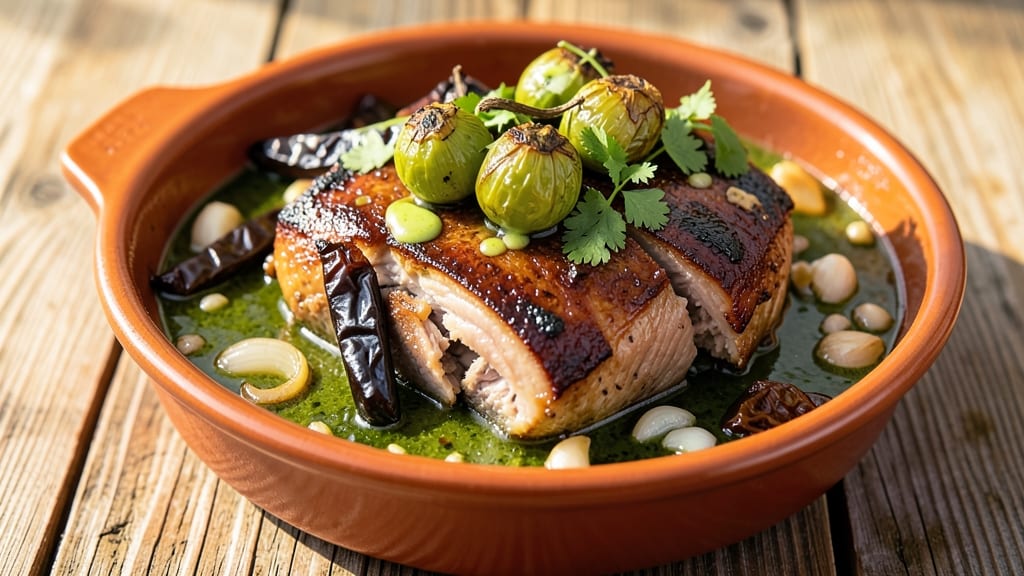
This authentic Mexican pork chile verde recipe brings the smoky, vibrant flavors of Mexico straight to your kitchen. 🌟 As someone who's spent years perfecting pork dishes, I know the secret lies in charring the chiles and simmering pork shoulder until it's fork-tender.
The sauce—rich with roasted tomatillos, poblano peppers, and garlic—creates a perfect balance of smoky heat and tangy sweetness.
The key to authenticity starts with the pork shoulder, slow-cooked until it falls apart easily, while the chile verde sauce builds depth through careful charring and simmering.
This isn't just a recipe; it's a taste of Mexico's heartland, where every bite delivers smoky, slightly sweet, and perfectly spiced flavors that linger. The traditional technique of toasting the dried chiles and simmering with hominy or potatoes ensures that flavor profile you crave.
By the time you serve this dish, you'll have tender pork swimming in a vibrant, slightly thickened sauce that's both comforting and complex. The aroma alone will have everyone gathered around the table, and the first bite delivers that perfect harmony of smoky, tangy, and savory notes.
This is the kind of meal that feels like a celebration, even on a weeknight.
Serve it with warm corn tortillas, a sprinkle of fresh cilantro, and a wedge of lime to brighten each bite. The leftovers only get better as the flavors meld, making this a perfect dish for feeding a crowd or meal prepping for the week. Let's get cooking!
Ingredients for authentic mexican pork chile verde
Smoky, tangy, and packed with authentic Mexican flavors—this pork chile verde brings the heart of Mexico to your table.
| Ingredient | Amount | Notes |
|---|---|---|
| Pork Shoulder 🍖 | 3 lb | Bone-in for flavor, cut into 2-inch chunks |
| Dried Ancho Chiles 🌶️ | 4 whole | Stemmed and seeded, toasted lightly |
| Tomatillos 🍅 | 1 ½ lb | Husk removed, rinsed, quartered |
| Poblano Peppers 🌶️ | 3 whole | Charred over flame, peeled, seeded |
| White Onions 🧅 | 2 whole | Quartered, skins on for charring |
| Garlic Cloves 🧄 | 8 cloves | Peeled, slightly charred |
| Fresh Tomato 🍅 | 1 whole | Roma or vine-ripened, quartered |
| Chicken Broth 💧 | 2 cups | Low-sodium preferred |
| Fresh Cilantro 🌿 | ¼ cup | Chopped, for garnish |
| Lime 🍋 | 1 whole | Juiced, for brightness |
| Salt 🧂 | 2 tsp | Kosher or sea salt |
| Ground Black Pepper 🌶️ | ½ tsp | Freshly ground |
| Vegetable Oil 🫒 | 2 tbsp | For charring peppers |
| Corn Tortillas 🌽 | 12 whole | For serving |
The pork shoulder is your flavor anchor. Look for bone-in cuts—they add depth and stay juicier. Costco or butcher shops often have great deals on pork shoulder, but any grocery store's meat section will work. If you can't find ancho chiles, guajillo or pasilla chiles work too, but ancho gives that signature sweetness. Toast the dried chiles lightly in a dry skillet until fragrant—this brings out their depth. The tomatillos? Husked and rinsed—they're tart little green apples, and fresh ones make all the difference.
No poblano peppers? Green bell peppers work in a pinch, but you'll lose that smoky, slightly sweet note. The charring is key—roast the peppers and onions directly over a gas flame or under a broiler until blackened. For extra smokiness, use a cast-iron skillet and let them sit for 10 minutes after charring. The sauce can be made ahead and reheated—it actually tastes better the next day as the flavors meld. If you're short on time, jarred green salsa works in a bind, but fresh is always better. Fresh cilantro adds brightness, but if you're not a fan, skip it or use parsley—just know it's traditional.
This dish reheats beautifully—just warm it gently on the stove with a splash of broth if it's too thick. Portion into containers for easy lunches, and it keeps for 4-5 days in the fridge. For longer storage, freeze portions for up to 3 months. The tortillas? Warm them on a dry skillet for 30 seconds per side—crispy and fresh is the way to go. Serve with lime wedges on the side so everyone can squeeze their own. Leftovers make amazing tacos the next day!
Why You'll Love This Recipe
- Here’s what sold me: this works everywhere. Taco Tuesday? Slap it in a tortilla. Game day? Serve it in bowls with rice and lime. Even my picky uncle (who hates spice) devours this—just tell him it’s “mild.” And the leftovers? Better the next day, because the flavors meld even more.
- One-Pot Magic: I swear by this—just toss everything into one pot: pork shoulder, charred tomatillos, and those smoky ancho chiles. No fancy techniques, no extra dishes to wash. The pork practically falls off the bone while the sauce simmers down, and honestly? That’s my kind of cooking.
- Smoky Depth: Between us, this isn’t just a chile verde—it’s layered. The dried ancho chiles soak up the pork’s juices, while the poblano peppers add a whisper of heat. Roast the tomatillos first, and suddenly you’ve got this bright, tangy base that balances the richness. It’s the kind of flavor that makes you slow down and savor every bite.
- Weeknight to Party: Here’s what sold me: this works everywhere. Taco Tuesday? Slap it in a tortilla. Game day? Serve it in bowls with rice and lime. Even my picky uncle (who hates spice) devours this—just tell him it’s “mild.” And the leftovers? Better the next day, because the flavors meld even more.
Step-by-step instructions for smoky tomato-chile verde with tender pork
Here's how we bring this classic Mexican dish to life—smoky, vibrant, and packed with authentic flavor.
🔥 Step 1: Char the Vegetables for Deep Flavor
Heat a large skillet over medium-high heat and add the 2 tablespoons vegetable oil. Working in batches, add the 3 whole poblano peppers and 2 whole white onions (quartered, skins on) to the hot oil. Let them char for 8-10 minutes, turning occasionally, until the skins are blackened in spots and the onions are soft. The charring adds that essential smoky depth—don't skip this!
Transfer the charred peppers and onions to a bowl and cover with plastic wrap. This steams them slightly, making them easier to peel. While they steam, add the 8 cloves garlic to the same skillet and cook for 30 seconds until fragrant. Remove from heat and set aside. The garlic should smell rich and toasty, not burnt.
🍳 Step 2: Toast the Dried Ancho Chiles
While the vegetables char, toast the 4 whole dried ancho chiles in a dry skillet over medium heat for 20-30 seconds per side. You're just warming them up—don't let them burn. Place the toasted chiles in a heatproof bowl and pour over 1 cup hot water from the kettle. Let them soak for 15 minutes to soften.
Here's the thing—soaking makes the chiles pliable enough to blend smoothly into the sauce. If you rush this step, you'll end up with gritty texture. While they soak, prepare the remaining 1 whole fresh tomato (quartered) and 1.5 lb tomatillos (quartered) by removing husks and rinsing.
🥘 Step 3: Build the Chile Verde Sauce
Drain the soaked ancho chiles and transfer them to a blender along with the charred peppers, onions, garlic, 1 whole fresh tomato, and 1.5 lb tomatillos. Add 1 teaspoon salt and ¼ teaspoon ground black pepper. Blend until completely smooth, scraping down the sides as needed. This is your base sauce—rich, slightly smoky, and tangy from the tomatillos.
Transfer the blended sauce to a large pot and bring to a simmer over medium heat. Add the 2 cups chicken broth and 1 teaspoon remaining salt. Let it simmer uncovered for 10 minutes to develop the flavors. The sauce should reduce slightly and deepen in color—this is where the magic happens.
🔥 Step 4: Cook the Pork Until Fork-Tender
In a separate large pot, combine the 3 lb pork shoulder (cut into 2-inch chunks) with 1 cup water. Bring to a boil over high heat, then reduce to a simmer. Cover and cook for 1 hour, stirring occasionally to prevent sticking. After an hour, drain the pork, reserving the cooking liquid.
Return the pork to the pot and add the prepared chile verde sauce. Bring to a simmer again, then reduce heat to low. Cover and cook for another 2-2.5 hours, turning the pork occasionally, until it's fork-tender and easily pulls apart. The sauce should thicken slightly as it absorbs the pork's juices—this is what makes it so irresistibly flavorful.
🍽️ Step 5: Finish and Serve with Warm Tortillas
Once the pork is tender, stir in the juice of 1 whole lime and ¼ cup chopped fresh cilantro. Taste and adjust seasoning with additional salt or pepper if needed. The lime brightens the dish, cutting through the richness of the pork and chiles.
Ladle the pork and sauce over the 12 whole corn tortillas, serving immediately. The tortillas should be warm and slightly pliable—this is traditional! For extra authenticity, serve with a side of Mexican rice or a simple green salad. Every bite delivers that perfect balance of smoky, tangy, and savory flavors that define chile verde.
Pro Tips For Making Authentic Mexican Pork Chile Verde
- CHAR THE PORK LOW: I used to blast pork shoulder with high heat to speed things up, but it ended up tough and dry. Instead, start with a cold pan and cook the pork shoulder over medium-low for the first 10 minutes—just until it releases its fat and starts to brown. This slow start keeps the meat tender and juicy, which is non-negotiable for chile verde.
- DEVEIN POBLANOS FAST: Skip the tedious de-veining process by slicing the poblanos lengthwise, then scraping out the seeds and veins with a spoon. If you’re short on time, leave the veins in—they’re mild and won’t ruin the dish, but they’ll make your salsa look cleaner (which matters when serving to guests).
- BLANCH TOMATILLOS UNTIL BRIGHT: After blanching tomatillos, don’t just rinse them—rub them dry with a kitchen towel. This removes the slimy outer layer and guarantees they’ll turn a vibrant green when blended. I learned this the hard way when my salsa looked dull and tasted flat.
- SALT THE ANCHOS FIRST: Soak your dried ancho chiles in hot (not boiling) water for 15 minutes before removing the stems and seeds. Add a pinch of salt to the water—it softens the chiles faster and makes them easier to peel. This small step saves time and ensures they blend smoothly into the sauce.
Troubleshooting perfect results
Pork Too Tough
If your pork shoulder feels rubbery or doesn't pull apart easily, it likely didn't cook long enough. I've found that 2.5-3 hours of total simmering time is ideal for a 3 lb bone-in cut—any less and it'll be chewy.
Use a meat thermometer to check: the internal temperature should reach 203°F. If it's still firm, return it to the pot with the sauce and cook another 30-45 minutes. Remember, pork needs patience—rushing leads to disappointment. 💡
Sauce Too Thin
A watery chile verde sauce usually means too much liquid was added during blending or simmering. I recommend reducing the chicken broth to 1.5 cups instead of 2, and simmering the sauce uncovered for 15-20 minutes to thicken naturally.
If it's still too thin, mash ½ cup cooked hominy into the sauce—it helps absorb excess liquid while adding authentic texture. For an immediate fix, stir in 1 tablespoon cornstarch mixed with 2 tablespoons water until thickened. 🥄
Chiles Too Bitter
Over-toasted dried chiles develop bitter flavors that ruin the sauce. Toast ancho chiles only until they're fragrant and slightly darkened—about 20-30 seconds per side in a dry skillet.
If you've already burnt them, reduce the bitterness by blending them with 1 extra tomatillo and 1 extra poblano pepper to balance the flavor. For future batches, keep a close eye on the chiles and remove them from heat immediately when they darken. 🌶️
Pork Too Greasy
Excess fat in the pork can make the chile verde greasy if not managed properly. After the initial 1-hour simmer, drain the pork and skim the fat from the cooking liquid before adding it back to the sauce.
For extra control, use paper towels to blot the pork chunks before returning them to the pot. This simple step makes a noticeable difference in texture and prevents a heavy sauce. 🍖
Sauce Too Tart
The tomatillos' natural tartness can overpower the dish if not balanced. To mellow the acidity, simmer the sauce longer (20-25 minutes) to let flavors meld. Add ½ cup cooked white beans or ½ cup diced avocado to the finished dish to counteract the tang.
A pinch of ground cumin or smoked paprika also helps round out the flavors—just ¼ teaspoon each will do the trick. 🌱
Tortillas Too Dry
Dry tortillas ruin the texture contrast of chile verde. Warm them properly by heating in a dry skillet over medium heat for 30 seconds per side or wrap them in a damp towel and microwave for 20 seconds.
For extra authenticity, serve with warm flour tortillas alongside the corn tortillas—they soak up the sauce beautifully. If tortillas are still dry, brush them lightly with neutral oil before serving. 🌽
Nutrition facts
Frequently asked questions
Can I substitute bone-in pork shoulder for boneless?
While you can use boneless pork shoulder, bone-in adds incredible flavor and keeps the meat juicier. The bone infuses the sauce with richness, and the connective tissue breaks down beautifully. If you must use boneless, look for a cut with visible fat marbling—it stays moist longer. For best results, increase cooking time by 15-20 minutes since boneless pork cooks faster.
What if I can't find tomatillos?
Tomatillos are essential for that signature tang, but you can use a mix of green apples and lime juice in a pinch. Substitute 1 cup finely diced green apple plus 2 tablespoons lime juice for the tomatillos, and add ½ teaspoon sugar to balance the acidity. For a closer match, blend the apple with 1 poblano pepper and 1 garlic clove before adding to the sauce.
How do I adjust the spice level?
The recipe uses mild ancho chiles, but you can control heat by adjusting the peppers. For more heat, add 1-2 charred serrano peppers to the blend (remove seeds first). For milder heat, reduce poblano peppers to 2 whole and skip the serranos. Remember, the sauce will mellow as it simmers—taste as you go! For extra flavor without heat, add ½ teaspoon smoked paprika to the finished dish.
Can I make this in a slow cooker?
This dish practically begs for slow cooking. Brown the pork in a skillet first, then transfer it to the slow cooker with the sauce. Cook on low for 7-8 hours or high for 4-5 hours. The slow cooker's gentle heat ensures tender pork and perfectly balanced sauce. For best results, add the lime and cilantro only in the last 30 minutes of cooking to preserve their freshness.
What's the best way to reheat leftovers?
Reheat gently to preserve texture—never microwave directly from cold. Transfer to a skillet with a splash of chicken broth and warm over low heat for 5-7 minutes, stirring occasionally. If the sauce thickens too much, add 1-2 tablespoons water to loosen it. For extra flavor, toast 1 dried ancho chile and blend it with 2 tablespoons water, then stir into the reheated sauce.