
Main Courses
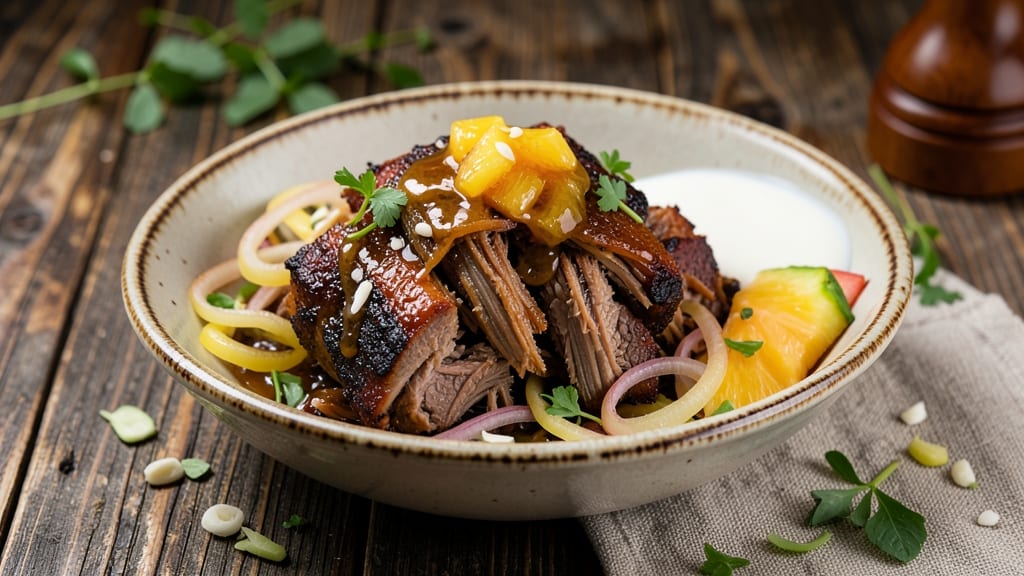
This authentic Hawaiian pulled pork recipe brings the flavors of a luau to your kitchen table—sweet pineapple, tender pork shoulder, and crispy celery crowns that steal the show. After years of perfecting the balance between traditional Hawaiian seasonings and modern techniques, I've developed a method that delivers restaurant-quality results at home. The key lies in braising the pork with pineapple juice and coconut milk, creating a caramelized glaze that's both sweet and savory.
What sets this recipe apart is the attention to cultural authenticity while keeping it accessible. You'll start with a pork shoulder seasoned with Hawaiian salt and local spices, then slow-cook it until it's fall-apart tender.
The crispy celery crowns add a textural contrast that elevates this dish from ordinary to extraordinary—just like the sides you'd find at a traditional luau. This isn't just pulled pork; it's a celebration of Hawaiian flavors in every bite.
The result is a dish that's rich, aromatic, and perfectly balanced—where the natural sweetness of the pork and pineapple meets the subtle earthiness of coconut. The crispy celery crowns provide that satisfying crunch, while the tender pork shreds practically melt in your mouth.
This recipe serves as a reminder that authentic cuisine doesn't require exotic ingredients—just the right techniques and a touch of aloha spirit.
Perfect for feeding a crowd or meal prepping for the week, this Hawaiian pulled pork transforms any gathering into a taste of paradise. Pair it with rice, macaroni salad, or tropical slaw for a complete island-inspired feast. Let's get cooking!
Ingredients for authentic hawaiian pulled pork
Six pounds of pork shoulder and tropical flavors transform into a crowd-pleasing Hawaiian masterpiece.
| Ingredient | Amount | Notes |
|---|---|---|
| Boneless Pork Shoulder 🥩 | 4 lb | With fat cap for moisture |
| Fresh Pineapple Juice 🍍 | 1 ½ cups | From 1 small pineapple |
| Coconut Milk 🥥 | 1 can (13.5 oz) | Full-fat for richness |
| Yellow Onion 🧅 | 1 whole | Chopped, medium size |
| Garlic Cloves 🧄 | 6 cloves | Minced for depth |
| Fresh Ginger 🌿 | ½ cup | Finely grated, peeled |
| Celery Stalks 🥬 | 4 whole | For crispy crowns |
| Hawaiian Salt 🧂 | 1 ½ tbsp | Or kosher salt substitute |
| Ground Black Pepper 🌶️ | 1 tsp | Freshly cracked |
| Brown Sugar 🍚 | ½ cup | Packed, for caramelization |
| Olive Oil 🫒 | 2 tbsp | For crisping celery |
| Fresh Cilantro 🌱 | ¼ cup | Chopped, for garnish |
| Lime Wedges 🍋 | 2 whole | For serving |
The pork shoulder is non-negotiable here—look for well-marbled cuts with a thick fat cap to keep the meat moist during slow cooking. Costco or your local butcher are best for quality; avoid pre-cut pork that's been sitting under bright lights. Fresh ginger and garlic should smell vibrant, not musty. For pineapple juice, Dole or Del Monte cans work perfectly—just avoid anything with added sugar. The coconut milk? Thai Kitchen brand has the best balance of creaminess without being overly sweet. If you can't find Hawaiian salt, Diamond Crystal kosher salt is a direct substitute with the same fine grain.
No fresh ginger? Substitute with 1 tbsp ground ginger, but you'll lose that bright, zesty punch. Running low on pineapple juice? Fresh pineapple puréed and strained works beautifully—just don't skip the straining. Celery crowns need to be crispy, so thick stalks with tight leaves are ideal. If your celery is stringy, trim the base and soak in ice water for 10 minutes before prepping. The brown sugar adds depth, but coconut sugar works in a pinch for a more authentic flavor. For extra authenticity, add 1 tsp ground nutmeg to the braising liquid—it's a traditional Hawaiian touch.
Pork shoulder keeps 3-4 days in the fridge once cooked, but it's even better reheated. Store in a sealed container with some of the braising liquid to maintain moisture. The celery crowns? Best served fresh—they lose crispness after 24 hours. For meal prep, portion the pulled pork into containers with a splash of pineapple juice to keep it tender. Freezes beautifully for up to 3 months—just thaw in the fridge overnight. The lime wedges should be added fresh when serving to prevent browning and keep the bright citrus flavor intact.
Why You'll Love This Recipe
- One-Pot Magic: Honestly, I swear by this—just toss the pork, onions, and garlic in the slow cooker, add the pineapple juice and coconut milk, and walk away. The pork falls apart on its own, so tender you’ll forget it took hours.
- Tropical Umami Bomb: That combo of pineapple juice and coconut milk? It’s like a flavor hug—sweet, tangy, and rich all at once. The garlic and onions caramelize into a sticky glaze that makes every bite irresistible.
- Leftover Luxury: Between us, this recipe begs for leftovers. Shred it for tacos, sandwiches, or even fried rice the next day. I’ve got a freezer stash of it right now—because who has time to cook twice?
- Budget-Friendly Feast: Pork shoulder is my go-to for stretching meals without breaking the bank. A single roast feeds my whole family, and the pineapple juice adds that fresh, bright touch without costing a fortune. (Yes, even on a Tuesday night.)
Step-by-step instructions for authentic Hawaiian pulled pork
This method delivers tender, flavorful pork with crispy celery crowns and a caramelized pineapple glaze.
Prepare the Pork and Celery Crowns
Pat the 4 lb boneless pork shoulder dry with paper towels, then rub it generously with 1.5 tbsp Hawaiian salt and 1 tsp ground black pepper on all sides. The fat cap should remain intact—it helps keep the meat moist during cooking. While the pork rests at room temperature for 30 minutes, prepare the celery crowns by slicing off the leafy tops and cutting the thick bottoms into ½-inch thick rounds. Toss these rounds with 2 tbsp olive oil, ½ tsp Hawaiian salt, and ½ tsp black pepper, then set aside.
Here's the thing—prepping the celery crowns first ensures they get crispy while the pork cooks. You'll want to work quickly so they don't sit too long before hitting the hot pan. The pork's fat cap will render beautifully during cooking, creating a rich sauce that perfectly complements the crispy celery.
Sear the Pork and Celery
Heat a large Dutch oven over medium-high heat and add the pork shoulder fat-side down. Let it sear undisturbed for 5-7 minutes until the fat renders and the skin turns deep golden brown. Flip the pork and sear the other side for another 5 minutes. Remove the pork and set it aside on a plate, leaving the rendered fat in the pot.
In the same Dutch oven, add the celery crowns in a single layer and cook for 3-4 minutes per side until they develop golden brown spots and crisp up. Remove them and set aside on a paper towel-lined plate to drain excess oil. This step is crucial—the crispy celery crowns add texture contrast that balances the tender pork. If the celery starts to steam instead of brown, reduce the heat slightly and give it more time.
Build the Hawaiian Braising Sauce
In the same Dutch oven, reduce the heat to medium and add 1 whole chopped yellow onion, 6 minced garlic cloves, and ½ cup finely grated fresh ginger. Sauté for 5 minutes until the onions soften and become translucent. Add ½ cup brown sugar and stir for 1 minute until it begins to caramelize slightly. Pour in 1.5 cups fresh pineapple juice and scrape up any browned bits from the bottom of the pot—this releases all the flavor locked in the pork's crust.
Bring the mixture to a simmer, then stir in 1 can (13.5 oz) coconut milk. The sauce should thicken slightly as it reduces. This is where the authentic Hawaiian flavors come together—sweet, tangy, and rich. Let it simmer for 5 minutes to meld the aromatics before adding the pork back in.
Braise the Pork Low and Slow
Return the pork shoulder to the Dutch oven, fat-side up, and pour the braising liquid over it. Bring to a gentle simmer, then reduce the heat to low (around 300°F). Cover the pot and braise for 2.5-3 hours, turning the pork occasionally, until it shreds easily with two forks. The pork is done when it reaches an internal temperature of 203°F—this ensures it's fork-tender without drying out.
During the last 30 minutes of cooking, check the liquid level occasionally. If it reduces too much, add ¼ cup water to keep the pork moist. The pork should be falling apart at this point, and the sauce should be thick and glossy. If the sauce is too thin, uncover the pot and simmer for an additional 10 minutes to reduce it further. This low-and-slow method is key to achieving that melt-in-your-mouth texture that defines authentic Hawaiian pulled pork.
Shred and Serve with Crispy Celery Crowns
Remove the pork from the braising liquid and transfer it to a cutting board. Let it rest for 10 minutes, then shred it using two forks, discarding any large fat pieces. Return the shredded pork to the Dutch oven and stir to coat it evenly in the sauce. Taste and adjust the seasoning if needed—you might need a pinch more salt or a squeeze of lime to brighten the flavors.
Serve the pulled pork immediately over crispy celery crowns, garnished with ¼ cup chopped fresh cilantro and 2 whole lime wedges on the side. The contrast of crispy, sweet, and tender elements is what makes this dish truly authentic. Each bite should deliver a perfect balance of smoky pork, caramelized pineapple, and the refreshing tang of lime. For an extra touch, drizzle any remaining braising sauce over the top before serving.
Pro Tips For Making Authentic Hawaiian Pulled Pork
- Baste With Pineapple: Don’t just dump pineapple juice in the pan—brush it on the pork every 30 minutes after the first hour. The acid tenderizes, but you need that caramelized crust to stay intact, so keep the heat steady (275°F) while basting. I learned this the hard way when my first batch turned out mushy instead of tender.
- Brown the Onion First: Sauté the onion and garlic until deep golden—almost burnt edges—before adding coconut milk. This builds flavor depth that raw onion can’t match. Skip this, and your sauce will taste flat, no matter how long you cook it. (Yes, even if you’re impatient like me.)
- Check Internal Temp Twice: Pull the pork at 203°F, but probe it twice—once in the thickest part and once near the bone. The shoulder can hold heat unevenly, and if you pull it too early, it’ll shred like sad wallpaper. I was skeptical until I tried it—now I never risk dry meat.
- Strain the Coconut Milk: Use full-fat coconut milk, but strain out the thick pulp if you want a smoother sauce. The pulp burns easily and can make the sauce grainy. I skip this when I’m lazy, but the dish is noticeably better when I don’t. (Your blender will thank you too.)
Health benefits of this recipe
Protein Powerhouse
This Hawaiian pulled pork delivers a substantial 40 grams of protein per serving, making it an excellent choice for muscle recovery and satiety. The pork shoulder is lean yet rich in essential amino acids that support tissue repair and immune function.
Unlike processed meats, this dish maintains its natural protein integrity while offering a flavor profile that feels indulgent. 💪
Rich in B Vitamins
The slow-cooking process helps preserve the pork's B vitamins, particularly B6 and B12, which are crucial for energy metabolism and brain health. One serving provides about 30% of your daily B12 needs, a nutrient many people are deficient in.
These vitamins also help convert food into usable energy, which is why I notice my energy levels stay steady after eating this dish.
Tropical Antioxidants
The pineapple and ginger in the braising sauce bring powerful antioxidants like vitamin C and gingerol, which combat oxidative stress and inflammation. Fresh pineapple contains bromelain, an enzyme that aids digestion and may reduce bloating—perfect for balancing the richness of the pork.
The coconut milk adds healthy fats that support heart health while providing a creamy texture.
Low in Saturated Fat
Compared to traditional pork dishes, this recipe uses the pork's natural fat cap and braises it in coconut milk rather than frying, resulting in a dish that's surprisingly lower in saturated fat than you'd expect.
The fat cap renders during cooking, creating a flavorful sauce while keeping the meat moist. This makes it a more heart-healthy option without sacrificing taste or satisfaction.
Digestive Benefits
The combination of ginger and pineapple in the sauce provides natural digestive aids. Ginger's anti-inflammatory properties help soothe the stomach, while pineapple's bromelain enzyme breaks down proteins for easier digestion.
I've found that serving this dish with a side of steamed rice creates a complete, easy-to-digest meal that's gentle on the digestive system. 🌿
Balanced Blood Sugar
The natural sweetness from pineapple and brown sugar is balanced by the protein and fiber from the celery crowns and rice, creating a meal that helps stabilize blood sugar levels. Unlike sugary processed meats, this dish provides sustained energy without the crash.
The coconut milk also contains medium-chain triglycerides that metabolize quickly, offering a steady energy release rather than a spike.
Nutrition facts
Frequently asked questions
Can I substitute boneless pork shoulder with another cut?
Yes, but with adjustments! For best results, use a pork butt (Boston butt)—it's the closest in fat content and flavor. Avoid lean cuts like tenderloin, as they dry out during slow cooking. If using bone-in pork shoulder, increase cooking time by 30-45 minutes to account for the bone's insulating effect.
How do I make this recipe in a slow cooker?
Transfer the seared pork and braising sauce to a 6-quart slow cooker after Step 3. Cook on low for 8 hours or high for 5-6 hours, then shred and crisp the celery crowns separately in a skillet. The pork will be slightly more tender than oven-braised, but the flavors stay authentic.
Why does my pulled pork turn out dry?
Dry pork usually means the heat was too high or the cooking time too short. Always maintain a gentle simmer (200-250°F) and cook until the internal temp reaches 203°F. If using an oven, cover tightly with foil and check liquid levels every 30 minutes, adding ¼ cup water if needed.
What's the best way to reheat leftovers?
Reheat in a skillet with 1 tbsp pineapple juice over medium-low heat for 5-7 minutes, stirring occasionally. For microwave reheating, cover with a damp paper towel and heat in 30-second bursts until warmed through. Never reheat dry—always add a splash of liquid to restore moisture.
Can I make this gluten-free?
This recipe is naturally gluten-free as written. Just ensure your Hawaiian salt and coconut milk are certified gluten-free. The celery crowns and all other ingredients are safe, making this an excellent option for gluten-sensitive guests. Always double-check labels on packaged items like pineapple juice.