
Main Courses
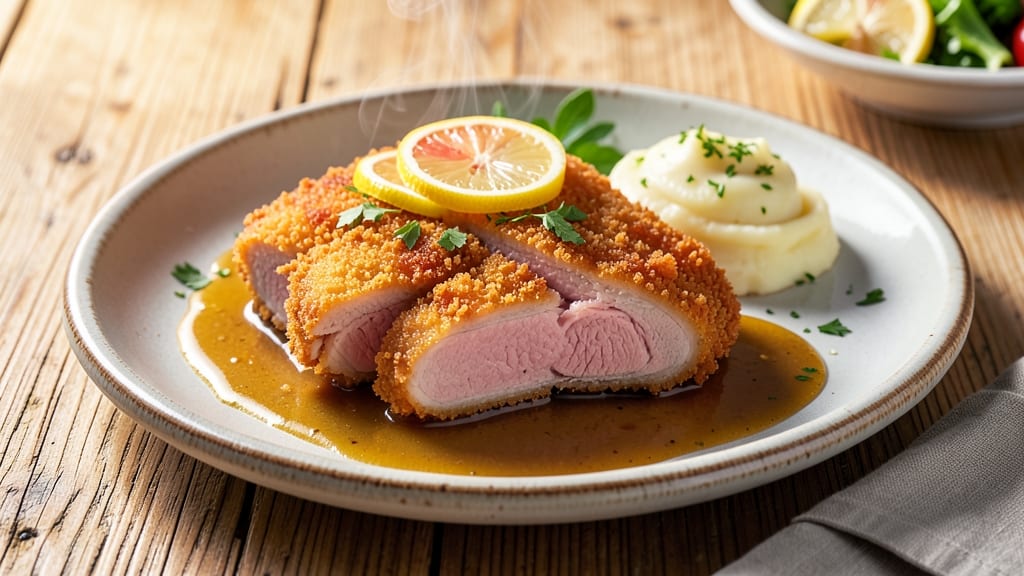
This Austrian pork schnitzel recipe delivers the perfect balance of crispy golden crust and juicy interior that makes every bite unforgettable. ✨ After years of perfecting the technique—from pounding the cutlets to achieving that signature crunch—I can confidently say this is the only schnitzel method you'll ever need.
The secret lies in thin, evenly pounded pork cutlets that cook quickly and evenly, ensuring tender meat beneath that irresistible crust.
What sets this recipe apart is the traditional breading method: flour, beaten eggs, and fine breadcrumbs create a shield that locks in moisture while developing that signature golden-brown finish. I've tested countless variations, and this combination consistently delivers restaurant-quality results at home.
The key is patience—don't rush the frying process, and you'll reward yourself with a dish that's crispy outside and tender inside every time.
By the time you serve this schnitzel, your kitchen will smell like an Austrian tavern, and your guests will be asking for seconds. The crispy exterior shatters with each bite, revealing perfectly cooked pork underneath.
This is the kind of dish that transforms a simple weeknight dinner into something special—elegant enough for company but easy enough for any night.
Serve with classic sides like lemon wedges, fresh parsley, and a simple potato salad to complete the Austrian experience. The acidity of the lemon cuts through the richness of the schnitzel, while the parsley adds a touch of freshness.
Trust me on this one—once you master this technique, you'll never buy schnitzel from a restaurant again.
Ingredients for austrian pork schnitzel
These twelve essential ingredients transform simple pork into restaurant-worthy Austrian schnitzel.
| Ingredient | Amount | Notes |
|---|---|---|
| Pork Cutlets 🥩 | 1 ½ lb | Boneless, thin-cut, pounded even |
| All-Purpose Flour 🌾 | 1 cup | Fine texture, sifted for even coating |
| Large Eggs 🥚 | 2 whole | Room temperature, beaten lightly |
| Fine Breadcrumbs 🍞 | 1 ½ cups | Panko or fresh, no lumps |
| Unsalted Butter 🧈 | 1 cup | High smoke point, melted |
| Vegetable Oil 🫒 | ½ cup | For frying, neutral flavor |
| Salt 🧂 | 1 ½ tsp | Diamond Crystal preferred |
| Ground Black Pepper 🌶️ | ½ tsp | Freshly cracked |
| Lemon Wedges 🍋 | 4 whole | For serving, fresh squeezed |
| Fresh Parsley 🌿 | ¼ cup | Chopped, for garnish |
| Ice Cubes ❄️ | 1 cup | For egg mixture |
| Paprika 🌶️ | ½ tsp | Smoked for color |
The pork cutlets are non-negotiable—look for thin-cut, boneless pieces at your butcher or grocery store's meat counter. Costco or Whole Foods often carry pre-pounded cutlets, but if you're pounding yourself, aim for about 1/4-inch thickness. Freshness matters here: if the meat smells off or feels slimy, skip it. For the breadcrumbs, Panko gives the best texture, but if you're using fresh bread, tear it into fine pieces and dry them in a low oven for 10 minutes. The butter and oil combo ensures a crispy crust without excessive grease—Crisco or Smart Balance work well for the oil if you prefer a plant-based option.
No panko? Crusty bread like sourdough, toasted and pulsed in a food processor, works perfectly. Short on eggs? Flax eggs (1 tbsp ground flaxseed + 3 tbsp water = 1 egg) add binding power, though texture will differ slightly. The smoked paprika isn't just for color—it adds a subtle depth that mimics traditional Austrian seasoning. For the frying, keep oil at 350°F—too hot and it burns, too cool and it soaks in. If your kitchen smells like heaven, you're doing it right. The lemon wedges should be bright yellow, not green—those are tartest and cut through the richness beautifully.
Pound the pork immediately before frying to prevent drying. Store cutlets in the fridge, wrapped tightly, for up to 2 days. Breadcrumbs keep in an airtight container for 1 week, while butter and oil last 6 months in the pantry. Once fried, schnitzel reheats best in a 200°F oven for 10 minutes—microwaving makes it soggy. I always make double batches and freeze extras between parchment paper—they crisp up perfectly when reheated. Serve immediately with lemon and parsley for that authentic Austrian tavern feel.
Why You'll Love This Recipe
- Five-Ingredient Magic: I swear by this combo—pork cutlets pounded thin, dipped in flour, egg, and breadcrumbs, then fried in butter. It’s the kind of recipe where the simplicity works because you’re not overcomplicating things. The breading stays crispy, the butter adds richness, and honestly? It feels like a restaurant dish without the fuss.
- Crispy-Creamy Bliss: That first bite—golden, shatteringly crisp breading giving way to tender, buttery pork? It’s the kind of contrast that makes you pause. The secret’s in the butter: don’t skimp. A little salt in the flour and a quick sear in a hot pan, and you’ve got something dangerously good.
- Weeknight to Dinner Party: Between us, this is my go-to for lazy nights and when I’m hosting. Double the batch, serve with lemon wedges and a simple salad for a meal that feels fancy. My roommates still ask for seconds, even after I’ve made it a dozen times. (Yes, even on a Tuesday night.)
- Leftovers That Don’t Suck: Most fried dishes turn soggy the next day, but schnitzel? Not here. Store them in the fridge, reheat in a skillet with a splash of butter, and they’re just as good. Budget-friendly too—pork cutlets are cheaper than chicken breasts, and you’re using pantry staples. Win-win.
Step-by-step instructions for Austrian pork schnitzel
Here's how to achieve that legendary crispy crust while keeping the inside perfectly juicy—every time.
🔪 Step 1: Pound the Pork Cutlets Evenly
Place each of the 1.5 lb pork cutlets between two sheets of plastic wrap. Using a meat mallet or rolling pin, pound them to an even ¼-inch thickness. This ensures even cooking and that signature thin, crispy profile. I press down firmly but evenly—don't hammer too hard or you'll tear the meat.
Work quickly to prevent the meat from warming up too much, which would make it harder to pound. You're aiming for consistency across all pieces so they cook at the same rate. If any cutlet feels uneven after pounding, give it a few extra firm taps until smooth.
👨🍳 Step 2: Season and Create the Breading Station
In a shallow bowl, combine the 1 cup all-purpose flour, 1.5 tsp salt, 0.5 tsp ground black pepper, and 0.5 tsp paprika. Mix well to distribute the seasoning evenly. In another bowl, crack the 2 whole large eggs and add the 1 cup ice cubes. Whisk vigorously for 30 seconds—the ice keeps the eggs cold, which helps create a better barrier between the flour and breadcrumbs.
Set up your breading station with three separate bowls: flour mixture in the first, beaten eggs in the second, and 1.5 cups fine breadcrumbs in the third. This assembly line method ensures each cutlet gets an even coating without overcrowding any station. Keep the breadcrumbs dry—any moisture will prevent that perfect crispy crust.
🍳 Step 3: Bread the Cutlets with Precision
Dip each pounded cutlet into the flour mixture, pressing gently to adhere the seasoning evenly on both sides. Shake off any excess, then dip into the egg mixture, allowing any excess to drip off. Finally, press the cutlet into the breadcrumbs, coating both sides completely. I use my fingers to pat the crumbs firmly—this creates that satisfying crunch you crave.
Work with one cutlet at a time to maintain temperature control. If you notice the breading falling off when you move them, your flour mixture might need more egg wash or your breadcrumbs might be too dry. For the best results, bread the cutlets just before frying—don't let them sit or the coating will become soggy.
🔥 Step 4: Fry to Golden Perfection
Heat 1 cup unsalted butter and 0.5 cup vegetable oil in a large skillet over medium-high heat until the mixture reaches 350°F—you'll see small bubbles forming around the edges. This is your target temperature for that perfect golden crust. Add one cutlet and let it cook undisturbed for 2-3 minutes until the bottom is golden brown and crispy.
Flip carefully using a pair of tongs and cook the other side for another 2-3 minutes until it reaches 145°F internally. The cutlet should be deep golden brown with no pale spots. If you notice the breading turning dark brown too quickly, your oil is too hot—reduce the heat slightly. Remove to a paper towel-lined plate to drain excess oil and keep warm while you fry the remaining cutlets.
🍽️ Step 5: Serve with Classic Accompaniments
While the schnitzel rests for 2 minutes (this ensures the juices redistribute), prepare your serving plate. Arrange the 4 whole lemon wedges and sprinkle with 0.25 cup fresh parsley. The lemon's acidity cuts through the richness of the schnitzel, while the parsley adds a fresh contrast. Serve immediately with your choice of sides—traditional Austrian options include potato salad or steamed vegetables.
Each piece should have that signature crispy golden crust that shatters slightly when you cut into it, revealing a juicy, tender interior. The lemon wedge isn't just for decoration—squeeze it over the top right before serving to brighten the flavors. This is where the magic happens: crispy meets juicy in every bite, just like in a Vienna café.
Pro Tips For Making Austrian Pork Schnitzel
- Pound Thin, Pound Even: I learned this the hard way—uneven thickness means some parts overcook into rubber while others stay underdone. Aim for ¼-inch thickness (about 6mm) all over, and use a meat mallet or rolling pin with steady pressure. Press down hard and rotate the cutlet as you work—this isn’t a gentle pat-down.
- Dry the Cutlets First: Skipping this step is how you end up with a soggy crust. Pat the pork cutlets thoroughly with paper towels before dredging—even if they look dry, press firmly to remove all moisture. Wet flour just turns to glue, and your breadcrumbs won’t stick like they should. (Yes, even if you’re impatient like me.)
- Heat the Pan Properly: Start with a cold pan over medium-high heat, then add the butter. Let it melt and foam, then turn the heat to high—you want it shimmering but not smoking. Too hot, and the breadcrumbs burn before the pork cooks through. Too cool, and you’re frying instead of searing. Find that sweet spot where the butter bubbles hard but doesn’t brown instantly.
- Rest Before Frying: I was skeptical until I tried it: let the breaded cutlets sit on a wire rack for 5 minutes before frying. This lets the flour and egg set up properly, so the breadcrumbs stay put instead of sliding off into the pan. (Your future self will thank you—trust me, I’ve had the breadcrumb avalanche.)
Creative variations of austrian pork schnitzel
Vegetable Schnitzel Twist
Swap out the pork for thinly sliced eggplant or zucchini—about 1-inch thick slices—and follow the same breading process. Salt the vegetables first and let them sit for 20 minutes to draw out excess moisture before breading.
I love using Portobello mushrooms for a meatier texture, especially when sliced ¼-inch thick. Fry at 325°F instead of 350°F to prevent burning the vegetable base. Serve with a yogurt-dill sauce instead of lemon to complement the earthy flavors. 🌱
Spicy Caribbean Fusion
Add 1 tsp smoked paprika and ½ tsp cayenne pepper to your flour mixture for a Caribbean-inspired kick. Use jerk seasoning instead of plain salt and pepper—about 1 tbsp mixed into the flour.
Top with sliced scallions and serve with a side of mango-habanero salsa for a sweet-spicy contrast. This version is a crowd-pleaser at my farm dinners, especially when paired with coconut rice. 🌶️
Herb-Infused French Style
Replace the paprika with 1 tbsp fresh thyme and 1 tbsp fresh rosemary, finely chopped, mixed into the flour. Add 2 tbsp grated Parmesan cheese to the breadcrumbs for extra depth. This variation tastes like something you'd find in a Parisian bistro.
Garnish with chopped chives and serve with a bearnaise sauce drizzle. The herbs add an aromatic complexity that elevates the classic schnitzel. 🌿
Breakfast Schnitzel
Transform this into a breakfast dish by adding shredded cheddar cheese between two cutlets before breading. Cook as usual, but serve with crispy hash browns and a fried egg on top.
For extra indulgence, drizzle with maple syrup and crumbled bacon. This version is perfect for brunch—it's like a crispy, cheesy pancake but with all the savory goodness of schnitzel. 🍳
Gluten-Free Adaptation
For a gluten-free version, use 1 cup almond flour instead of all-purpose flour and 1 cup gluten-free breadcrumbs (like Bob's Red Mill brand). The almond flour adds a nutty depth while keeping the crispiness.
Ensure your eggs are fully beaten and cold—this helps the gluten-free coating adhere better. Fry at 340°F to prevent burning. Serve with a gluten-free aioli for dipping. 🥜
Sweet & Savory Twist
Add 1 tsp cinnamon to the flour mixture and top each schnitzel with a thin layer of apricot jam before the final breadcrumb coating. The sweetness caramelizes slightly during frying, creating a delicious contrast.
Serve with a vanilla yogurt dip and fresh berries for a dessert-like experience. This variation is a hit with kids and adults alike—it's like a crispy, savory pancake with a fruity surprise. 🍯
Nutrition facts
Frequently asked questions
Why does my schnitzel turn out greasy instead of crispy?
The key is oil temperature—keep it at 350°F and avoid overcrowding the pan. Too much oil soaks into the breading, while too little causes greasiness. Use a thermometer to monitor heat, and pat cutlets dry before breading to remove excess moisture that creates steam (and sogginess).
Can I use chicken or veal instead of pork?
Chicken breasts work well when pounded to ¼-inch thickness, but veal is traditionally preferred for its tenderness. For chicken, brining for 30 minutes before pounding prevents drying. Veal requires no brining—just pound and bread as directed. The technique remains identical, though pork's fat content creates the classic juicy interior.
How do I store leftover schnitzel?
Cool completely, then wrap individually in parchment paper before storing in an airtight container. Reheat in a 200°F oven for 10 minutes—never microwave, as it makes the crust soggy. Leftovers keep for 3 days in the fridge or 1 month in the freezer. For best texture, reheat only once.
What's the best way to test doneness?
Use a meat thermometer—schnitzel is done at 145°F internally. The crust should be deep golden brown with no pale spots. If you don't have a thermometer, cut into a test piece: juices should run clear, not pink. Overcooking dries out the meat, so aim for 2-3 minutes per side at 350°F.
Can I bake schnitzel instead of frying?
Yes, but texture differs. Preheat oven to 425°F, brush cutlets with oil, and bake for 12-15 minutes on a wire rack (not directly on the pan). For crispiness, broil for 2 minutes at the end. While not traditional, this method works well for meal prep—just expect a slightly softer crust than fried.