
Main Courses
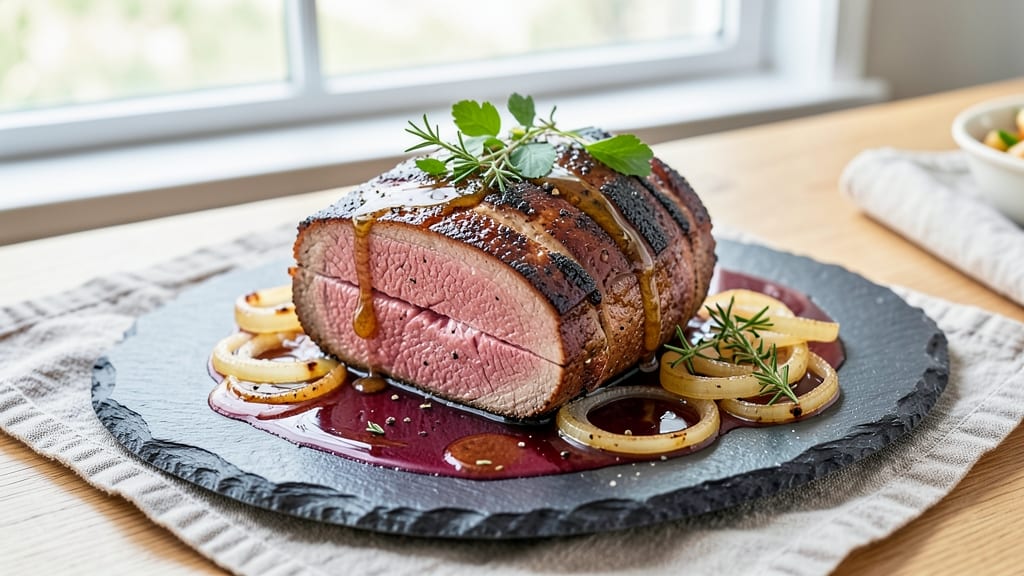
This au jus recipe for pork tenderloin delivers restaurant-quality results with a perfectly seared crust and rich, velvety onion gravy—no fancy techniques required. I developed this method after years of testing, and it consistently produces tender, juicy pork with a sauce that's impossible to resist. The secret lies in high-heat searing followed by a slow roast, ensuring the meat stays moist while the pan drippings transform into a luxurious gravy.
What sets this recipe apart is the balance between simplicity and depth. You'll start with a simple seasoning of salt and pepper, then create the au jus by deglazing the pan with red wine and beef broth, reducing it to a glossy, aromatic sauce.
The onions caramelize beautifully, adding natural sweetness that rounds out the savory pork. This method works equally well for weeknight dinners or special occasions—just adjust your timing.
The result is a dish that's elegant yet approachable: golden-brown pork tenderloin with crisp edges, served alongside a rich onion gravy that clings to every bite. The sauce is velvety, slightly tangy, and packed with umami flavor from the caramelized onions and reduced wine.
Serve with roasted potatoes or green beans for a complete meal that feels like a restaurant experience at home.
Here's where it gets interesting—the au jus doesn't just disappear after the main course. Use any leftovers to drizzle over mashed potatoes, toss with roasted vegetables, or even use as a marinade for next week's meal.
This recipe proves that homemade au jus isn't just a side dish; it's the star of the show.
Ingredients for au jus recipe for pork tenderloin
Restaurant-quality pork tenderloin with velvety onion gravy starts with these 12 essential ingredients.
| Ingredient | Amount | Notes |
|---|---|---|
| Pork Tenderloin 🥩 | 1 ½ lb | Center-cut for even cooking |
| Yellow Onions 🧅 | 2 whole | Sliced into 1/4-inch strips |
| Red Wine 🍷 | ½ cup | Dry variety like Cabernet |
| Beef Broth 💧 | 1 cup | Low-sodium preferred |
| All-Purpose Flour 🌾 | 1 tbsp | For gravy thickening |
| Olive Oil 🫒 | 2 tbsp | High smoke point preferred |
| Unsalted Butter 🧈 | 2 tbsp | Cold for searing |
| Kosher Salt 🧂 | 1 ½ tsp | Divided for seasoning |
| Freshly Ground Black Pepper 🌶️ | ½ tsp | Coarsely ground |
| Fresh Thyme Leaves 🌿 | 1 tsp | Or 0.25 tsp dried |
| Garlic Cloves 🧄 | 3 cloves | Minced for aromatics |
| Fresh Parsley 🌿 | ¼ cup | Chopped for garnish |
The pork tenderloin is your star—center-cut ensures even cooking without tough edges. Look for pieces with good marbling at Whole Foods or your butcher's counter. If buying pre-portioned, 1.5 lb serves four generously. The onions should be firm and yellow—not papery or sprouting. Caramelizing them slow and low is key for that sweet depth in the gravy. For the red wine, Cabernet Sauvignon or Merlot works best—whatever's open in your fridge. Avoid sweet varieties like Pinot Grigio, which will throw off the balance.
No red wine? Beef broth plus 1 tbsp balsamic vinegar mimics the acidity and depth. Fresh thyme is ideal, but dried at one-quarter the amount works in a pinch. The flour is just for thickening—don't skip it, but don't overdo it either. For the butter, European-style (like Plugrá) has higher fat content, giving richer flavor. If you're watching calories, use half butter and half olive oil for searing. The garlic can be pre-minced from a jar (it's fine here), but fresh is always better if you've got it. For the parsley, flat-leaf has more flavor than curly, but either works for garnish.
Pork tenderloin keeps best in the fridge for 3-4 days if wrapped tightly in foil. The au jus sauce reheats beautifully—simmer gently for 2-3 minutes to restore its gloss. Portion leftovers into glass jars for easy reheating; they'll keep for 5 days in the fridge or 3 months frozen. The sauce freezes exceptionally well, making this a perfect make-ahead recipe. For extra flavor, add a splash of the reserved pan drippings when reheating.
Why You'll Love This Recipe
- Here’s what sold me: that au jus is ridiculously flavorful but doesn’t require hours of simmering. The red wine cuts through the richness of the pork, the beef broth deepens it, and the onions caramelize just enough to add natural sweetness. It’s the kind of sauce that makes you pause mid-bite—like a fancy restaurant trick, but with ingredients you already own.
- No Fuss, Big Payoff: I swear by this recipe because it’s the kind of meal where you can walk away while it cooks. Sear the pork in a hot pan, toss in the onions and flour, deglaze with red wine—boom, you’ve got 10 minutes of active work. The rest? Just let the beef broth do its magic while you sip your wine (or coffee, no judgment).
- Rich Without the Effort: Here’s what sold me: that au jus is ridiculously flavorful but doesn’t require hours of simmering. The red wine cuts through the richness of the pork, the beef broth deepens it, and the onions caramelize just enough to add natural sweetness. It’s the kind of sauce that makes you pause mid-bite—like a fancy restaurant trick, but with ingredients you already own.
- Leftovers That Don’t Suck: Between us, pork tenderloin leftovers often end up as sad, dry scraps. Not this time. The au jus keeps the meat juicy for days, and the sauce? Even better reheated. I’ll pack this for lunches all week—just slice the pork, drizzle the sauce, and call it a win. (Yes, even on a Tuesday night.)
Step-by-step instructions for pan-seared pork tenderloin with au jus
Master this technique and you'll achieve restaurant-quality pork with a perfect crust and rich onion gravy.
Prepare the Pork and Sear to Golden Perfection
Pat the 1.5 lb pork tenderloin dry with paper towels—this is critical for achieving that crispy crust. Season generously with 1 tsp kosher salt and 0.25 tsp freshly ground black pepper, rubbing it all over the surface. Let it sit at room temperature for 15 minutes while you prep the rest.
Heat 1 tbsp olive oil in a large skillet over medium-high heat until shimmering. Add the pork and sear for 4-5 minutes per side until it develops a deep golden-brown crust. The internal temperature should reach 145°F—use a meat thermometer to check. This high-heat sear locks in juices while creating that coveted crust. Don't move the pork around too much or you'll lose heat and steam it instead of crisping it.
Build the Onion Base and Deglaze
Remove the pork from the skillet and set it aside on a plate. Reduce heat to medium and add 1 tbsp olive oil to the same pan. Add 1 whole yellow onion, sliced into ¼-inch strips, and cook for 8-10 minutes until softened and golden. Stir occasionally to prevent burning.
Add the 3 minced garlic cloves and 1 tsp fresh thyme leaves, cooking for 30 seconds until fragrant. Pour in the 0.5 cup red wine and scrape up all the browned bits from the bottom of the pan—this is where all the flavor lives. Let it simmer for 3-4 minutes until reduced by half. The wine should smell rich and concentrated, not sharp or alcoholic.
Create the Au Jus Gravy
Sprinkle the 1 tbsp all-purpose flour evenly over the onion mixture and stir vigorously for 1 minute to remove any lumps. Slowly whisk in the 1 cup beef broth and bring to a gentle simmer. Cook for 5-6 minutes until the sauce thickens enough to coat the back of a spoon. If it's too thick, add 1-2 tablespoons water to reach your desired consistency.
Return the pork to the skillet, spooning the au jus over it. Cover and let it rest for 5 minutes off the heat. This resting period allows the juices to redistribute throughout the meat, ensuring every bite stays moist and flavorful. The pork should reach 145°F internally—if not, return it to the skillet for 1-2 minutes to finish cooking.
Finish and Serve
Transfer the pork to a cutting board and tent loosely with foil. Let it rest for an additional 5 minutes before slicing into ½-inch thick medallions. The pork should be fork-tender and juicy, with a crispy exterior that gives way to tender meat. Discard any excess fat from the skillet and keep the au jus warm.
To serve, spoon the rich onion gravy over the sliced pork. Garnish with the 0.25 cup chopped fresh parsley just before serving. The au jus should be velvety and packed with onion flavor, perfectly complementing the tender pork. Serve immediately with roasted vegetables or crusty bread to soak up every last drop of that flavorful sauce.
Pro Tips For Making Au Jus Recipe For Pork Tenderloin
- SEAR THE ONIONS LOW: I used to blast the onions on high heat like I was in a hurry, and they’d turn bitter before they even softened. For this au jus, keep the heat at medium-low—you’re not searing the pork, just melting the onions into a sweet base. If they start browning too fast, pull the pan back a notch. Patience here means richer flavor later.
- USE COLD BROTH: Dumping hot beef broth into your wine reduction can kill the delicate flavors and make the sauce cloudy. Let the broth cool slightly (even just 5 minutes in the fridge) before adding it. It’ll blend smoother and keep the sauce glossy—no one wants a gloopy au jus.
- DON’T SKIP THE DEGLAZE: That browned crust on the pork and pan is pure flavor gold. After searing the tenderloin, let it cool for 30 seconds, then scrape the pan with a wooden spoon while you deglaze—every scrap counts. Ignore this, and you’re basically throwing away half the taste.
- REST THE PORK PROPERLY: Cutting into pork tenderloin right after cooking might seem efficient, but it’ll dry out and ruin your au jus. Tent it with foil and let it rest for 10 minutes—this lets the juices redistribute. Then slice against the grain, and serve with the juices pooled underneath. (Yes, even if you’re starving.)
Dietary considerations for au jus recipe for pork tenderloin
Gluten-Free Adaptation
Skip the 1 tbsp all-purpose flour in the au jus and use 1 tbsp cornstarch or arrowroot powder instead to thicken the sauce. Mix it with 1 tbsp cold water first to create a slurry, then whisk it into the simmering onions and wine.
This keeps the gravy luscious without gluten—just stir constantly for 2-3 minutes until it reaches your desired consistency. 🌾
Low-Carb Options
For a lower-carb version, reduce the onions to just 1 small yellow onion and increase the beef broth to 1.5 cups to balance the sauce. The pork stays the same, but you'll get a lighter, more brothy au jus that still delivers deep flavor.
Garnish with extra parsley to brighten the dish without added carbs.
Dairy-Free Swap
The recipe already works dairy-free, but if you want extra richness, replace the 2 tbsp unsalted butter with 2 tbsp olive oil when searing the pork.
For the au jus, use 1 tbsp nutritional yeast mixed with 1 tbsp water instead of flour—it adds a cheesy umami note while keeping the sauce thick and savory.
Allergen-Friendly Tips
Check your beef broth for hidden gluten or dairy—opt for certified gluten-free brands like Pacific Foods or Imagine. For nut allergies, avoid any cross-contamination by using a clean pan and utensils.
The pork tenderloin is naturally nut-free, so focus on keeping the sauce ingredients pure and safe. Always double-check labels on wine and broth for allergen warnings.
Protein Swaps
Want to use chicken? Swap the pork for 1.5 lb bone-in, skin-on chicken thighs and adjust cooking time to 6-7 minutes per side until golden and 165°F internally. The au jus method stays identical—just reduce the wine to 0.25 cup since chicken has less fat for flavor.
For beef lovers, try 1.5 lb sirloin steak cooked to medium-rare (130°F) before finishing with the au jus.
Nutrition facts
Frequently asked questions
Can I make this au jus recipe without red wine?
Replace the ½ cup red wine with ½ cup beef broth plus 1 tbsp balsamic vinegar for similar depth and acidity. The vinegar mimics the wine's tang while the broth adds richness. For extra flavor, add ½ tsp Worcestershire sauce to the pan drippings before deglazing.
How do I know when my pork tenderloin is fully cooked?
Use a meat thermometer to check the internal temperature—it should reach 145°F for safe consumption. The pork will pull away slightly from the bone and have a light pink center. If it's undercooked, return it to the skillet for 1-2 minutes to finish. Never rely on color alone, as pork can appear cooked before reaching a safe temperature.
What's the best way to reheat leftovers?
Reheat sliced pork tenderloin in the microwave for 30-45 seconds with a splash of water or broth to keep it moist. For the au jus, warm it gently in a saucepan over low heat for 2-3 minutes, stirring constantly. Avoid boiling or the sauce may separate. Store leftovers in airtight containers for up to 3 days in the fridge.
Can I use a different cut of pork for this recipe?
Pork tenderloin is ideal due to its tenderness, but you can use pork loin chops or pork sirloin with adjustments. For chops, cook to 145°F and reduce the au jus wine to ¼ cup since they have less fat. Bone-in cuts will need 1-2 extra minutes per side. Avoid fatty cuts like pork belly, as they'll release too much grease and alter the sauce balance.
Why did my au jus turn out too thin?
This usually happens if the sauce didn't simmer long enough or the flour wasn't cooked properly. For next time, whisk the flour into the onions for 2 full minutes before adding broth, and simmer uncovered for 5-6 minutes until thick. If it's still too thin, mix 1 tsp cornstarch with 1 tbsp cold water, stir into the sauce, and cook for 1 more minute.