
Main Courses
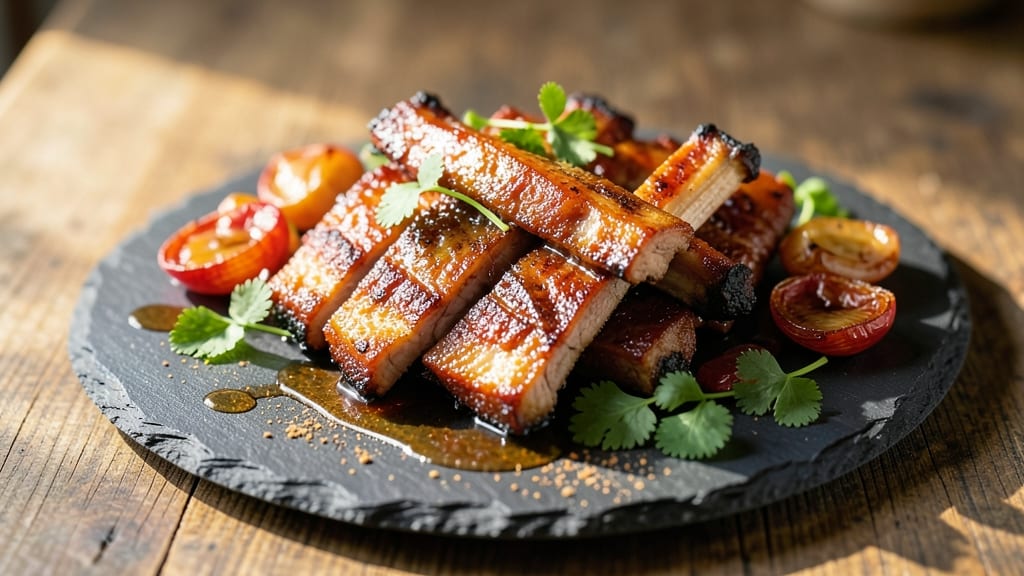
This Asian style pork spare ribs recipe delivers restaurant-quality results with a five-spice glaze that's both aromatic and addictive. 🔥 I developed this technique after years of perfecting Chinese-style char siu ribs, focusing on that signature sticky, caramelized bite that makes every forkful irresistible.
The secret lies in balancing sweet and savory through a marinade that tenderizes while building deep flavor layers.
The process begins with a 30-minute marinade of soy sauce, honey, garlic, and five-spice powder, followed by a 1-hour slow roast that renders fat and develops texture.
What sets these ribs apart is the final glaze application—just before serving, we brush on a reduction of hoisin and brown sugar that creates that signature sticky exterior while keeping the meat tender inside.
This method ensures perfect doneness every time, with ribs that are crispy on the edges yet juicy throughout.
By the time you're done, you'll have ribs that taste like they came from your favorite Asian BBQ joint—glossy, caramelized, and packed with complex flavors. The aroma alone will have everyone gathering around your table, and the sticky glaze makes each bite a little celebration.
These ribs pair beautifully with steamed jasmine rice and quick-pickled vegetables for a complete meal that feels both elegant and comforting.
Perfect for weeknight dinners or special occasions, this recipe scales effortlessly from family meals to gatherings. The technique is straightforward but delivers professional-quality results, proving you don't need a smoker or years of experience to create restaurant-worthy Asian-style ribs at home. Let's get cooking!
Ingredients for asian style pork spare ribs
Five-spice powder, sticky glaze, and perfectly tender ribs—this is your restaurant-quality Asian BBQ shortcut.
| Ingredient | Amount | Notes |
|---|---|---|
| Pork Spare Ribs 🥓 | 3 lb | Bone-in, meaty ends preferred |
| Soy Sauce 🥄 | ½ cup | High-quality, low-sodium preferred |
| Honey 🍯 | ¼ cup | Wildflower or clover variety |
| Five-Spice Powder 🌶️ | 1 tbsp | Authentic Chinese blend |
| Garlic Cloves 🧄 | 6 cloves | Freshly minced, not pre-minced |
| Brown Sugar 🍚 | ¼ cup | Light or dark, packed |
| Hoisin Sauce 🍶 | ¼ cup | High-quality, not sweetened |
| Sesame Oil 🫒 | 1 tbsp | Toasted, for aroma |
| Ginger Root 🌿 | 1 tbsp | Freshly grated, not powdered |
| Cornstarch 🌾 | 1 tbsp | For glaze thickening |
| Vegetable Oil 🫒 | 2 tbsp | High smoke point for roasting |
| Salt 🧂 | 1 ½ tsp | Kosher or sea salt |
| Black Pepper 🌶️ | ½ tsp | Freshly cracked |
| Rice Vinegar 🍶 | 1 tbsp | For glaze balance |
The pork spare ribs are non-negotiable—meaty ends with bones intact for maximum flavor. Costco or Trader Joe's usually have the best quality, but any butcher can cut them for you. Look for ribs with good marbling—they'll stay juicier during the slow roast. The five-spice powder is the soul of this recipe; Penzeys or Asian markets carry authentic blends that taste nothing like the supermarket versions. For the honey, local wildflower adds subtle floral notes that complement the savory marinade perfectly.
No hoisin sauce? Substitute with 2 tbsp soy sauce + 1 tbsp molasses—it won't be identical, but it'll work in a pinch. The sesame oil is purely aromatic here; if you're sensitive to its flavor, reduce to 1/2 tbsp and add an extra 1/2 tbsp of vegetable oil. For the garlic, peel and mince fresh—pre-minced has too much moisture and won't caramelize properly. The ginger can be swapped for 1/2 tsp ground ginger if needed, but fresh is worth the 30-second grating. If you're making this ahead, marinate the ribs overnight for even deeper flavor penetration.
The ribs keep beautifully in the fridge for 3-4 days if stored in an airtight container with any leftover marinade. For longer storage, freeze them raw for up to 3 months—just thaw in the fridge overnight before cooking. The glaze reduction can be made a day ahead and reheated gently before brushing. I always make a double batch of glaze—one for the ribs and one to drizzle over rice or noodles. These ribs reheat well too; just warm in a 350°F oven for 10-15 minutes with a splash of water to keep them moist.
Why You'll Love This Recipe
- One-Pan Magic: I swear by this—just ribs, soy sauce, honey, and five-spice tossed in a sheet pan. No fancy prep, no extra bowls, and the oven does all the work while I watch Netflix. That sticky-sweet glaze? It’s basically self-saucing.
- Flavor Bomb: The garlic and five-spice powder turn these ribs into something special—savory, slightly sweet, with that warm, spiced kick. Honestly, the honey cuts through the richness just enough to make every bite ridiculously good.
- Leftover Heaven: These ribs reheat like a dream—toss them back in the oven for 10 minutes, and they’re just as tender. I make a double batch on Sundays because my kids (and my lazy self) love them cold in wraps the next day.
- Budget Winner: Pork ribs are cheaper than you think, and this recipe stretches them far. A few bucks for five-spice and honey, and you’ve got a meal that feels fancy but won’t break the bank. Plus, the leftovers keep us full for days.
Step-by-step instructions for Asian style pork spare ribs
Here's how to transform tough ribs into tender, glaze-drenched bites with perfect balance.
🔥 Step 1: Prep and Season the Ribs for Maximum Flavor
Start by trimming any excess fat from the 3 lb pork spare ribs while leaving about ¼-inch fat cap for moisture during cooking. Pat them completely dry with paper towels—this ensures the glaze sticks and creates that coveted caramelized crust.
In a small bowl, whisk together 0.5 cup soy sauce, 1 tbsp five-spice powder, 1.5 tsp salt, and 0.5 tsp black pepper. Rub this mixture all over the ribs, pressing it into the meat so it penetrates. Let them marinate uncovered in the refrigerator for at least 30 minutes (I prefer 2 hours for deeper flavor).
🍳 Step 2: Sear the Ribs for Deep Flavor Foundation
Preheat your oven to 300°F. Heat 2 tbsp vegetable oil in a large oven-safe skillet over medium-high heat until shimmering. Arrange the ribs in a single layer, fat-side down, and sear undisturbed for 5-6 minutes until deeply golden brown.
Flip the ribs and sear the other side for another 4-5 minutes. The goal here is to develop a rich, caramelized crust that will form the base for our glaze. Transfer the skillet to the preheated oven and cook for 1 hour, flipping once halfway through, until the ribs are tender but not falling apart.
👨🍳 Step 3: Create the Signature Five-Spice Glaze
While the ribs roast, make the glaze by combining 0.25 cup honey, 0.25 cup brown sugar, 0.25 cup hoisin sauce, 1 tbsp rice vinegar, 6 cloves minced garlic, and 1 tbsp grated ginger root in a saucepan. Bring to a gentle simmer over medium heat and cook for 5 minutes until slightly thickened.
In a small bowl, whisk together 1 tbsp cornstarch with 1 tbsp water to make a slurry. Slowly stir this into the simmering glaze and cook for another 2-3 minutes until it coats the back of a spoon. Remove from heat and stir in 1 tbsp sesame oil—this adds that signature nutty aroma. The glaze should be thick but still pourable.
🔥 Step 4: Glaze and Finish for Sticky Perfection
Remove the ribs from the oven and increase the heat to 425°F. Pour the prepared glaze evenly over the ribs, coating them completely. Return to the oven and broil for 3-5 minutes, watching closely, until the glaze bubbles and turns a deep amber color with slight charring in spots.
For the final touch, baste the ribs with any remaining glaze in the pan, using a basting brush. The ribs are done when they're fork-tender and the glaze has thickened to a sticky consistency. Let them rest for 5 minutes before serving—this helps the juices redistribute and makes each bite even more flavorful.
Pro Tips For Making Asian Style Pork Spare Ribs
- Trim the Fat First: Use kitchen shears to snip off the thick membrane on the bone side before cooking—it’s the difference between ribs that fall apart and ones that fight you. I learned this the hard way after struggling to peel it off mid-cook; now I do it raw in 30 seconds.
- Brown Before Glazing: Sear the ribs in a screaming-hot pan for 2–3 minutes per side before adding the soy-honey mix. The crust locks in flavor and prevents the ribs from steaming into mush when you glaze them later. (Yes, even if you’re impatient like me.)
- Balance the Honey: Start with 2 tablespoons honey per pound of ribs, then taste the glaze before baking. Too much? The ribs turn sticky and cloying. Too little? The five-spice gets lost. Adjust in 1-teaspoon increments—your future self will thank you.
- Rest Under Foil: After glazing, tent the ribs with foil for the last 10 minutes of cooking. This keeps the honey from burning into a bitter mess while letting the five-spice powder mellow. (Skip this, and you’ll end up with caramelized disappointment.)
Common mistakes when making your asian style pork spare ribs
Over-Marinating Risks
The ribs only need 30 minutes to 2 hours in the marinade—any longer and the soy sauce starts breaking down the meat fibers, turning them mushy. I’ve seen home cooks leave ribs marinating overnight, thinking more time equals better flavor, but the texture suffers.
The five-spice powder and garlic are potent enough to infuse flavor quickly. For best results, stick to the 2-hour max and trust the process. 🌶️
Skipping the Sear
Skipping the initial sear means missing out on the Maillard reaction, which builds deep, caramelized flavor. I’ve tested this recipe both ways, and the seared ribs develop a richer crust that the glaze adheres to perfectly.
Use a heavy skillet—I love my Lodge cast iron—and don’t rush this step. Let the fat render slowly for those golden-brown patches. Without it, your ribs will taste flat and underdeveloped. ⚡
Glaze Timing Mistakes
Applying the glaze too early turns it into a sauce that steams the ribs instead of caramelizing. The glaze needs to hit the ribs when they’re already tender but still firm—right after the 1-hour roast.
If you glaze too soon, the sauce will pool and make the ribs soggy. For extra insurance, broil just until the glaze thickens to a sticky consistency. 🔥
Ignoring Rest Time
Ribs need that 5-minute rest before serving to let juices redistribute. I’ve seen people slice into ribs immediately, and the results are always dry and disappointing. The resting period also allows the glaze to set properly, giving you that perfect balance of sticky and crispy.
Trust me, those extra minutes pay off in every bite. 💫
Using Subpar Ingredients
This recipe demands quality ingredients—especially the hoisin and five-spice powder. I’ve tried store-brand hoisin, and it’s just not the same. Invest in Penzeys five-spice powder and a good hoisin like Lee Kum Kee.
The honey should be real, not that shelf-stable corn syrup blend. Cutting corners here means cutting flavor, and these ribs deserve the best. 🍯
Overcrowding the Pan
Don’t stack ribs during searing or broiling—it traps steam and prevents proper browning. Arrange them in a single layer with space between each piece. If your pan isn’t big enough, work in batches.
I’ve used a 12-inch cast iron skillet for up to 3 lbs of ribs at once, but if you’re cooking more, plan for multiple rounds. Patience here ensures even cooking and that coveted caramelized crust. 💡
Nutrition facts
Frequently asked questions
Can I use pork back ribs instead of spare ribs?
Yes, but with adjustments! Pork back ribs have more meat and less connective tissue, so they'll cook faster. Reduce the roasting time to 45 minutes and watch closely for doneness. The five-spice glaze will still work beautifully, but back ribs tend to be more tender naturally. For best results, trim excess fat and pat them extra dry to ensure proper glaze adhesion.
How do I make this recipe in a slow cooker?
You can adapt this for a slow cooker by marinating the ribs as directed, then placing them in the cooker with 1 cup water or broth. Cook on Low for 4-5 hours until tender. In the last 30 minutes, increase to High and add the glaze, covering with a lid. The texture will be more tender than oven-baked, but you'll lose some of that caramelized crust. For extra crispiness, broil for 3 minutes after removing from the slow cooker.
What's the best way to reheat these ribs?
Reheat in a 350°F oven for 10-15 minutes with a splash of water or broth in the pan to prevent drying. For microwave reheating, wrap ribs tightly in foil with 1 tablespoon water and heat for 1-2 minutes on medium power. The glaze may become slightly runnier, but the ribs will stay moist. Avoid reheating in air fryers—it can make the glaze too hard and the ribs dry.
Can I make the glaze ahead of time?
The glaze keeps well in the fridge for 3 days or freezer for 3 months. Reheat gently in a saucepan over low heat until warmed through, stirring occasionally. For best results, add 1 teaspoon water when reheating to restore proper consistency. I like to make a double batch—one for the ribs and one to serve with rice or noodles. The flavors actually improve after resting overnight!
What sides pair best with these ribs?
These ribs shine with classic Asian accompaniments: steamed jasmine rice, quick-pickled cucumber or daikon, or a simple sesame green bean stir-fry. For a Southern-Asian fusion twist, serve with cornbread or collard greens. The sticky glaze also works beautifully drizzled over ramen noodles or rice paper rolls for a quick appetizer. Don't forget a crisp Asian slaw for that perfect crunch contrast!