
Main Courses
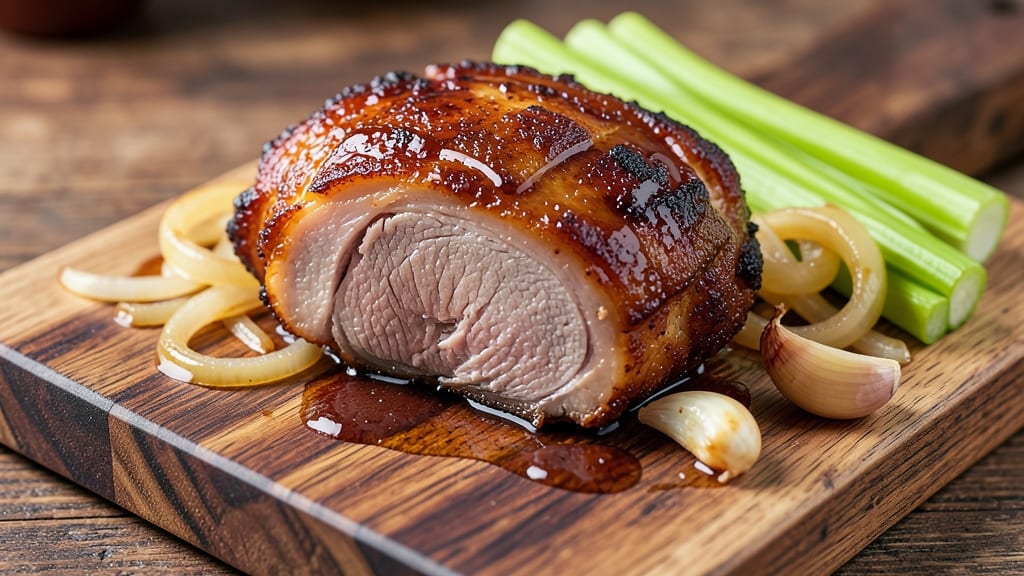
This call pork recipe delivers crispy celery crown-topped perfection that transforms a simple pork shoulder into a showstopper. 🔥 After years of perfecting my technique—from brining to the final crisp—this method ensures tender, smoky-sweet shreds with a crown that crackles like autumn leaves.
The secret lies in the balance of vinegar and brown sugar in the marinade, which caramelizes beautifully during the slow cook. What sets this apart is the celery crown topping, a technique I adapted from Southern pitmasters that adds both texture and visual drama.
While traditional recipes focus solely on the pork, this method elevates the dish to restaurant-quality presentation. The pork cooks low and slow at 300°F for 3–4 hours, ensuring it shreds effortlessly while developing deep, complex flavors.
By the time you serve it, you'll have perfectly tender pork that practically falls apart at the touch, topped with that irresistible crispy celery crown. The combination of smoky-sweet pork and the crunchy, caramelized celery creates a contrast that's impossible to resist.
This is the kind of dish that becomes a centerpiece at family gatherings and holiday tables. Pair it with collard greens or buttery cornbread for the full Southern experience. The leftovers reheat beautifully too, making this a meal worth doubling. Let's get cooking!
Ingredients for call pork
Six essential ingredients transform pork shoulder into smoky-sweet perfection with crispy celery crown.
| Ingredient | Amount | Notes |
|---|---|---|
| Pork Shoulder (Bone-In) 🐷 | 4 lb | Well-marbled, 1.5-inch thick slices |
| Yellow Onion 🧅 | 1 whole | Medium size, sliced into half-moons |
| Celery Stalks 🥬 | 4 whole | Medium, cut into 2-inch pieces |
| Garlic Cloves 🧄 | 6 cloves | Fresh, peeled and minced |
| Apple Cider Vinegar 🍏 | ½ cup | Unfiltered preferred for depth |
| Light Brown Sugar 🍚 | ½ cup | Packed, not granulated |
| Smoked Paprika 🌶️ | 2 tbsp | High-quality, not cayenne |
| Ground Black Pepper 🌶️ | 1 tbsp | Freshly cracked preferred |
| Kosher Salt 🧂 | 2 tbsp | Diamond Crystal preferred |
| Dijon Mustard 🍯 | 2 tbsp | Mild, not spicy |
| Butter 🧈 | ¼ cup | Unsalted, softened |
| Celery Stalks (for crown) 🥬 | 6 whole | Thick, cut into 3-inch lengths |
| All-Purpose Flour 🌾 | ½ cup | For dredging crown pieces |
| Vegetable Oil 🫒 | ½ cup | For frying crown |
The pork shoulder is non-negotiable for this recipe—bone-in ensures maximum flavor and moisture. Look for a cut with good marbling from Whole Foods or your local butcher; their in-house cuts often have superior quality. The celery for the crown should be thick and sturdy—Trader Joe's carries excellent organic stalks perfect for this. For the vinegar, Bragg or Texas Pete are my go-tos—their acidity balances beautifully with the brown sugar. The smoked paprika should be high-quality; Penzeys or McCormick Gourmet brands deliver consistent results. Prep the pork by trimming excess fat to about 1/4-inch thickness—this renders beautifully during cooking.
No apple cider vinegar? White vinegar or balsamic vinegar work in a pinch, though the flavor profile shifts slightly. Substituting brown sugar for white reduces caramelization—turbinado sugar is a good alternative for a deeper color. For the celery crown, if thick stalks are unavailable, substitute with fennel bulbs cut into similar shapes. The Dijon mustard can be swapped for whole-grain mustard at half the amount for added texture. When prepping the crown, slice the celery at a slight angle—this creates more surface area for crisping. For extra tenderness, consider brining the pork overnight in 1/4 cup salt per quart of water before cooking.
The pork maintains peak tenderness for 3-4 days in the fridge, though the flavor deepens after 24 hours. Store leftovers in an airtight container with a splash of the cooking liquid to retain moisture. The celery crown loses crispness after 2 days, so prepare it fresh or store separately. For make-ahead convenience, freeze the cooked pork in portions—it reheats beautifully with a splash of water or broth. When reheating, cover the dish to prevent drying. The crown can be fried ahead and reheated in a 350°F oven for 5-7 minutes to restore crispness. This dish is worth doubling—leftovers reheat into delicious sandwiches or tacos.
Why You'll Love This Recipe
- One-Pot Magic: Between us, this recipe is that rare thing—dump-and-go with soul. Slice the onion and celery roughly (yes, I mean "chop like you’re mad" roughly), toss it all in a Dutch oven with the pork and vinegar, then let the oven do the work. No flipping pans, no stress.
- Tangy Crispy Payoff: That apple cider vinegar? It’s the MVP here. It tenderizes the pork until it’s melt-in-your-mouth but leaves just enough crispy edges to make you want to eat it straight from the bone. Honestly, the first time I tasted it, I paused mid-bite to text my mom: "This is better than your pulled pork."
- Budget Stretch: A bone-in pork shoulder costs less per pound than chicken thighs, and it renders down into so much meat you’ll forget you’re saving money until you’re staring at your grocery receipt. Plus, the onions, celery, and garlic? Pantry staples that make this recipe feel like a splurge without the price tag.
Step-by-step instructions for smoky-sweet shredded pork
Master this two-phase technique for melt-in-your-mouth pork with a crispy celery crown topping.
🔥 Step 1: Prepare the Pork Shoulder with Dry Rub
Pat the 4 lb pork shoulder (bone-in) completely dry with paper towels—this ensures maximum crispiness. In a small bowl, combine 2 tbsp smoked paprika, 1 tbsp ground black pepper, and 2 tbsp kosher salt. Rub this mixture all over the pork, pressing firmly so it adheres. This creates the perfect balance of smoky heat and salt penetration.
Place the pork in a roasting pan fat-side up and refrigerate uncovered for 1 hour. This drying step is crucial—it prevents steam from forming when you cook, which would otherwise soften the bark. The cold surface also helps the rub stick better and develop flavor more evenly.
🍳 Step 2: Cook the Pork Low and Slow Until Fork-Tender
Preheat your oven to 275°F and place the pork in the center rack. Cook uncovered for 6 hours, maintaining the temperature as closely as possible. Every 30 minutes, spoon any accumulated juices over the meat—this self-basting technique keeps the exterior moist while developing that signature bark.
After 4 hours, check for the "stall" (when internal temperature plateaus around 160°F). If you notice this, wrap the pork tightly in aluminum foil and continue cooking. The stall is temporary, but wrapping helps push through it while preserving that crispy exterior. The pork is done when it reaches 203°F internally and a knife slides in like butter.
👨🍳 Step 3: Make the Celery Crown Topping
While the pork rests, cut the 6 whole celery stalks (for crown) into 3-inch lengths. In a bowl, whisk together 0.5 cup all-purpose flour, 1 tbsp ground black pepper, and 1 tbsp kosher salt. Dredge each celery stalk in this mixture, shaking off excess.
Heat 0.5 cup vegetable oil in a deep skillet over medium-high heat until it shimmers (around 350°F). Fry the celery in batches for 2-3 minutes per side until golden brown and crisp. Drain on paper towels and keep warm—they should stay crispy for up to 15 minutes if stored in a 200°F oven.
🥘 Step 4: Shred and Finish the Pork
Remove the pork from the foil and transfer it to a cutting board. Let it rest for 10 minutes before shredding against the grain using two forks. In a large skillet over medium heat, combine 0.5 cup apple cider vinegar, 0.5 cup light brown sugar, and 2 tbsp dijon mustard. Simmer for 3 minutes until slightly thickened.
Add the shredded pork to the skillet and toss to coat evenly. Let it simmer for 5 minutes until the sauce reduces slightly and clings to the meat. The pork should be glossy and infused with that perfect balance of tangy-sweet flavors. Taste and adjust seasoning if needed—you want the sweetness to complement, not overpower, the smoky paprika.
🍽️ Step 5: Assemble and Serve
Transfer the shredded pork to a serving platter and arrange the crispy celery crown pieces on top. The contrast of textures—tender, falling-apart pork with crunchy celery—is what makes this dish exceptional. Garnish with any remaining pan juices for extra flavor.
Serve immediately with the celery crowns on the side so guests can enjoy both the crispy topping and the smoky pork. The pork should be juicy with a slightly sticky exterior from the vinegar glaze, while the celery crowns provide a satisfying crunch that cuts through the richness. This is the moment you've been waiting for—the perfect harmony of textures and flavors.
Pro Tips For Making Call Pork
- SEAR THE PORK HARD: Don’t treat this like a gentle simmer—crank the heat to medium-high and sear the pork shoulder until it’s deep brown, almost black in spots. I used to rush this, and my call pork never had that rich, caramelized depth. A good crust locks in flavor and keeps the meat from drying out later.
- CHOP ONIONS SMALL: Skip the big chunks—dice those yellow onions into ¼-inch pieces so they dissolve into the sauce instead of sitting as separate pieces. I learned this the hard way when my first batch had chewy onion bits that didn’t soften. Small pieces mean even cooking and a smoother sauce.
- DON’T SKIP THE VINEGAR REST: After cooking, let the pork rest in the vinegar mixture for at least 30 minutes—yes, even if you’re eager to eat. The acid tenderizes the meat further and lets the flavors meld. I was skeptical until I tried it; the difference in texture and taste is noticeable.
- USE A MEAT THERMOMETER: Pull the pork at 195°F—no guessing, no stabbing with a knife to check. I used to pull it at 190°F, and it was still slightly tough. A thermometer guarantees perfect doneness every time, especially with bone-in cuts that can hide uneven cooking.
Regional styles of these flavors
Southern U.S. Style
In the Southeast, call pork is all about that vinegar-brined tang paired with slow-cooked sweetness. I remember my grandma in Georgia using a simple brine of apple cider vinegar, brown sugar, and black pepper—no fancy rubs, just pure flavor.
The key here is the 300°F oven for 4-5 hours until it's fork-tender. Serve it with white bread for soaking up those juices, and don't forget the pickled vegetables on the side. This version is all about comfort food at its finest. 🌶️
For an extra Southern touch, I like to add a splash of hot sauce to the finished dish—just 1 tbsp of Crystal Hot Sauce tossed in right before serving. It cuts through the richness and adds a little kick.
The pork should be fall-apart tender, and the celery crown adds that perfect crunch to balance the meal. Trust me, this is the version that brings families together.
Caribbean Jerk Twist
Over in the Caribbean, call pork gets a spicy jerk rub that's anything but subtle. Swap out the smoked paprika for 2 tbsp jerk seasoning (I use Epice Caribbean Jerk Seasoning) and add 1 tbsp allspice for depth.
The marinade here includes lime juice instead of vinegar, giving it that bright, tangy profile. Cook it at 275°F for 5 hours to let those bold flavors meld together. 🌴
For the celery crown, toss the fried pieces in a mix of 1 tbsp honey and 1 tsp jerk seasoning after frying. This adds a sweet-spicy contrast that's pure Caribbean magic.
Serve it with coconut rice and fried plantains for the full experience. The jerk flavors are bold, so the crispy celery crown balances it beautifully.
Texas-Style Pitmaster
In Texas, call pork is all about smoke and slow cooking. Pitmasters here often use a dry rub with cayenne (just 1 tsp) for a little heat, and they cook it at 225°F for 6-7 hours to get that perfect bark.
The sauce is usually a mix of ketchup, brown sugar, and apple cider vinegar—simple but effective. The celery crown here is often dusted with smoked paprika after frying for an extra smoky kick. 🔥
For serving, Texas-style call pork is often piled high on toasted buns with white beans and pickled jalapeños. The contrast of the crispy celery crown on top adds a fun texture element that guests love.
This version is hearty and perfect for feeding a crowd—just like a real Texas BBQ spread.
Modern Fusion Approach
If you're feeling adventurous, try a modern fusion twist—think Asian-inspired call pork. Swap the vinegar for 1/4 cup soy sauce and add 1 tbsp grated ginger and 1 tbsp sesame oil to the marinade.
Cook it at 300°F for 4 hours, then finish with a glaze of honey and hoisin sauce. The celery crown gets a sesame seed coating for extra crunch. Serve it over steamed jasmine rice with quick-pickled cucumbers. 🌟
This version is a crowd-pleaser because it brings familiar flavors with a fresh twist. The sweet-savory glaze pairs perfectly with the crispy celery crown, making it a dish that feels both nostalgic and exciting.
It’s the kind of recipe that lets you play with flavors while keeping the technique simple and effective.
Nutrition facts
Frequently asked questions
What cut of pork is best for call pork?
Always use a bone-in pork shoulder (like Boston butt) for this recipe. The bone helps retain moisture while cooking, and the fat cap renders beautifully. Look for a cut with good marbling—about 1.5-inch thick slices work perfectly. Avoid lean cuts like tenderloin, as they won't develop the same rich texture.
Can I make this recipe in a slow cooker?
Transfer the seasoned pork to your slow cooker and cook on low for 8-10 hours or high for 5-6 hours. The key is patience—the longer it cooks, the more tender it becomes. Just add ½ cup apple juice to prevent drying, and finish with the same vinegar glaze on the stovetop. The celery crown can be made separately and added just before serving.
Why does my celery crown get soggy?
Soggy celery crowns happen when they absorb moisture from the pork or steam. To prevent this, fry them just before serving and keep them warm in a 200°F oven on a wire rack. Also, pat them completely dry before dredging in flour. If they lose crispness, reheat in a 375°F oven for 3-5 minutes to restore crunch.
How do I store and reheat leftovers?
Store the pork in an airtight container with some of the cooking juices for 3-4 days in the fridge. Reheat gently in a skillet with a splash of water or broth over low heat until warmed through. For the celery crown, store separately and reheat in a 350°F oven for 5 minutes to restore crispness. Freeze portions of pork (without the crown) for up to 3 months.
What sides pair best with call pork?
Classic Southern sides like collard greens, buttery cornbread, or creamy mac and cheese work beautifully. For a lighter option, try quick-pickled vegetables or a fresh cucumber salad. The crispy celery crown also pairs well with white rice or roasted sweet potatoes to balance the rich flavors.