
Main Courses
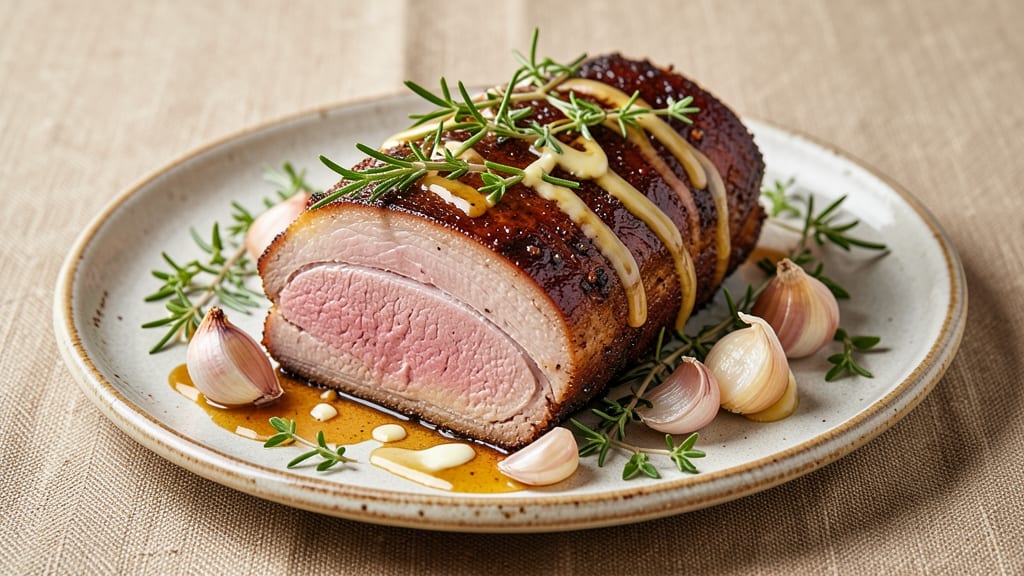
This Café Delites pork loin roast recipe delivers restaurant-quality results with a smoky garlic butter pan sear that locks in every juicy bite. 🔥 As someone who's cooked thousands of pounds of pork weekly, I know the secret lies in dry-brining and precise temperature control—techniques that transform a simple roast into a showstopper.
The aroma alone will have your kitchen smelling like a Charleston high-end bistro.
The process begins with a dry brine that enhances tenderness and flavor, followed by a high-heat pan sear that creates a caramelized crust while keeping the interior perfectly pink. Roasting at 325°F ensures even cooking, and the garlic butter basting adds that signature smoky depth.
This method delivers a foolproof result every time, with minimal effort but maximum impact.
What you'll end up with is a golden-brown, juicy pork loin that slices effortlessly and tastes like it came from a high-end restaurant. The crispy edges contrast beautifully with the tender, flavorful center, and that smoky garlic butter flavor is impossible to resist.
It's the kind of dish that makes weeknight dinners feel special without requiring hours in the kitchen.
Pair it with roasted potatoes, glazed carrots, or a rich gravy for the full Café Delites experience. The leftovers reheat beautifully, making this the perfect meal for feeding a crowd or prepping ahead. Let's get started on this restaurant-quality roast that's sure to impress.
Ingredients for cafe delites pork loin roast
Six ingredients transform this pork loin into a bistro-worthy centerpiece—juicy, crispy, and smoky.
| Ingredient | Amount | Notes |
|---|---|---|
| Pork Loin Roast 🥩 | 3 lb | Bone-in, center-cut preferred |
| Kosher Salt 🧂 | 2 tbsp | Diamond Crystal preferred |
| Fresh Garlic Cloves 🧄 | 8 cloves | Minced for butter compound |
| Unsalted Butter 🧈 | ½ cup | Cold, cubed for searing |
| Fresh Rosemary 🌿 | ¼ cup | Finely chopped, fresh preferred |
| Fresh Thyme 🌿 | ⅛ cup | Leaves only, stems removed |
| Black Peppercorns 🌶️ | 1 tbsp | Freshly cracked, coarse grind |
| Olive Oil 🫒 | ¼ cup | High smoke point for searing |
| Low-Sodium Chicken Broth 💧 | ½ cup | For basting during roast |
| Fresh Parsley 🌿 | ⅛ cup | Chopped, for garnish |
| Smoked Paprika 🌶️ | 1 tsp | For smoky depth |
| Granulated Garlic 🧄 | 1 tsp | For dry brine |
The pork loin is non-negotiable here—bone-in, center-cut from the butcher section at Harris Teeter or Whole Foods delivers the best results. Look for good marbling and vibrant color. I always ask for it to be trimmed of excess fat, which makes searing cleaner. The 3-pound roast feeds a crowd nicely, but you can scale down to 2 pounds for a smaller group. Fresh herbs are worth the splurge—Trader Joe's has great bundles for this kind of recipe.
No smoked paprika? Regular paprika plus a pinch of liquid smoke works in a pinch. Short on fresh rosemary? Dried at one-third the amount gets you close. The butter needs to be cold—take it out of the fridge 10 minutes before cooking. For the dry brine, mix the salt, garlic, and pepper together and rub it all over the pork. Let it sit uncovered in the fridge for at least 4 hours, up to 24—this is what makes it tender and flavorful. The broth can be swapped for water if needed, but the herbs add depth that water lacks.
This roast reheats beautifully—4-5 days in the fridge, 3 months frozen. I always make a double batch because the leftovers are perfect for sandwiches or salads. Store it wrapped tightly in foil to keep that crispy crust. For serving, let it rest 15 minutes before slicing—this keeps it juicy. Garnish with fresh parsley right before serving so it stays vibrant. The garlic butter compound can be prepped ahead and stored in the fridge for up to 1 week
Why You'll Love This Recipe
- Five-Ingredient Magic: I swear by this combo—just salt, garlic, butter, rosemary, and pork. That’s it. No fancy marinades or last-minute shopping runs. The garlic and rosemary infuse into the meat while it roasts, and honestly? The butter basting takes all of 3 minutes.
- Crispy-Creamy Payoff: Between us, that’s the holy grail of roasted pork. The outside gets golden and crackly (thanks to the butter and salt), while the inside stays juicy and tender. I’ll be real: my kids ask for seconds before I even finish slicing.
- Weeknight to Dinner Party: Same recipe, different vibes. Toss it on the table for a lazy Tuesday with crusty bread, or serve it sliced thin for a crowd—it’s the star every time. My in-laws still comment on how "restaurant-worthy" it looks, even though it’s basically foolproof.
- Leftovers That Don’t Suck: I make this for Sunday dinner and still have perfect sandwiches by Wednesday. The flavor only gets better as it rests, and it reheats like a dream. (Yes, even on a Tuesday night.) Plus, it’s way cheaper than takeout—win-win.
Step-by-step instructions for café delites pork loin roast
Here's how to create a showstopping roast with perfect crust and juicy interior.
👨🍳 Step 1: Dry Brine the Pork Loin Overnight
Pat the 3 lb pork loin roast completely dry with paper towels—this is non-negotiable for crispy skin. In a small bowl, mix the 2 tbsp kosher salt and 1 tsp granulated garlic. Rub this dry brine all over the pork, pressing it into the meat so it adheres. Wrap the roast tightly in plastic wrap and refrigerate for at least 12 hours (overnight works best).
This dry brine seasoning penetrates deeply, ensuring flavor throughout while helping the crust form beautifully. Don't skip this step—it's what makes the difference between good and exceptional roast. After brining, let the roast sit at room temperature for 30 minutes before cooking to ensure even cooking.
🍳 Step 2: Prepare the Smoky Garlic Butter Compound
In a small bowl, combine the 0.5 cup cold cubed unsalted butter, 8 cloves minced fresh garlic cloves, 0.25 cup finely chopped fresh rosemary, 0.125 cup fresh thyme leaves, 1 tsp smoked paprika, and 1 tbsp coarsely cracked black peppercorns. Mix well and refrigerate until ready to use. This compound will create the signature smoky, herby crust and keep the meat juicy.
The cold butter is crucial—it should remain firm when you spread it. If it softens too much, chill it for another 10 minutes before using. This butter compound is what locks in moisture and creates that gorgeous, caramelized crust on the outside.
🔥 Step 3: Sear the Roast for Maximum Flavor
Preheat your oven to 425°F. Heat a large oven-safe skillet over medium-high heat and add 0.25 cup olive oil. Once the oil is shimmering (but not smoking), place the pork loin roast in the skillet, fat-side down. Let it sear undisturbed for 5 minutes until deeply golden brown. Flip and sear the other side for another 5 minutes.
During the last minute of searing, spread half of the garlic butter compound evenly over the top of the roast. This creates a flavorful barrier that locks in juices while building that irresistible crust. Don't rush this step—patience here ensures a perfect sear that carries through the entire roast.
⏰ Step 4: Roast to Perfect Doneness
Transfer the skillet to the preheated oven and roast for 20-25 minutes, basting with the remaining garlic butter compound every 5 minutes. Pour 0.5 cup low-sodium chicken broth into the skillet during the last 10 minutes of roasting to create a flavorful pan sauce and keep the meat moist.
The roast is done when an instant-read thermometer inserted into the thickest part (without touching bone) reads 145°F for medium-rare or 155°F for medium. The internal temperature will rise to 150-155°F as it rests, so pull it out just before it hits your target temperature. This resting period is crucial for redistributing juices.
🍽️ Step 5: Rest and Serve with Pan Sauce
Transfer the roast to a cutting board and tent loosely with aluminum foil. Let it rest for 15-20 minutes while you make the pan sauce. Place the skillet over medium heat and scrape up all the browned bits from the bottom with a wooden spoon. Add a splash of the chicken broth if needed to loosen the sauce, then simmer for 2-3 minutes until slightly thickened.
Slice the roast into ½-inch thick medallions against the grain. Spoon the pan sauce over the top and garnish with 0.125 cup chopped fresh parsley. Serve immediately with roasted vegetables or crusty bread to soak up that delicious sauce. Each bite should be perfectly juicy with a smoky, herby crust that's impossible to resist!
Pro Tips For Making Cafe Delites Pork Loin Roast
- USE A MEAT THERMOMETER: I learned this the hard way—pork loin can go from perfect to dry in seconds once it hits the table. Aim for 145°F internal temp (150°F if you prefer it extra well-done), and pull it out early. The residual heat keeps it juicy while you let it rest.
- SMASH THE GARLIC: Fresh rosemary and garlic are the stars here, but minced garlic burns fast. Instead of chopping, crush 10-12 cloves with the flat side of your knife—it releases more flavor without turning bitter. Toss it in raw with the butter for a deeper, sweeter taste.
- DON’T SKIP THE DRYING: Pat that pork loin completely dry with paper towels before searing. I know, it’s tedious, but wet meat steams instead of browning. A dry surface = crispy crust, and that’s what makes this dish taste like a café’s, not a home cook’s shortcut.
- REST IT LIKE YOUR LIFE DEPENDS ON IT: Give that roast a solid 10-15 minutes under foil before slicing. I used to rush this, and the juices would pool on my plate instead of staying in the meat. Trust me, even 5 minutes makes a real difference—your knife will thank you.
Troubleshooting this recipe
Uneven Cooking Fix
If your pork loin emerges with cold spots or overcooked edges, the issue is almost always uneven heat distribution. Place the roast fat-side up in the skillet during searing—this helps conduct heat more evenly.
I also recommend using a combination oven thermometer like the Thermoworks Smoke to verify your oven's accuracy. If your oven runs hot, reduce the temperature by 25°F and add 5 minutes to the roasting time. 🌡️
Dry or Tough Meat
Dry pork loin usually means overcooking or skipping the rest. Always pull the roast out when the internal temperature hits 145°F for medium-rare—it will rise to 150-155°F while resting. For extra moisture, baste with chicken broth every 5 minutes during roasting.
I swear by the reverse sear method for large roasts: Roast at 275°F until 120°F internal, then sear in a 450°F oven for 10 minutes. This guarantees juicy results every time.
Blistered but Raw Center
This happens when the outside burns before the inside cooks. Use a meat thermometer to monitor the thickest part (avoid bone).
If the crust is too dark but the center is still below 145°F, tent the roast with aluminum foil and return it to the oven for 10-15 minutes. For a foolproof crust, pat the pork completely dry before brining—moisture prevents proper browning.
I also recommend butter-basting during the last 5 minutes of roasting to add moisture and flavor.
Butter Melting Too Fast
If your garlic butter compound melts prematurely, chill it for 10 extra minutes before using. For high-heat searing, I mix 1 tbsp cold butter into the compound right before applying it to the roast. This creates a protective barrier that locks in moisture.
If the butter still melts too quickly, reduce the oven temperature by 25°F and extend the roasting time by 5 minutes. The goal is a golden-brown crust, not a burnt one.
Weak Flavor Profile
Weak flavor often stems from under-seasoning or using stale herbs. Double-check your dry brine—2 tbsp kosher salt per 3 lb roast is ideal. For herbs, I always use fresh rosemary and thyme (dried works in a pinch but lacks depth).
If the flavor feels muted, add 1 tsp smoked paprika to the garlic butter compound or deglaze the pan with 2 tbsp red wine after roasting. A splash of lemon juice at the end brightens the dish too. 💡
Nutrition facts
Frequently asked questions
Why does this recipe use a dry brine instead of a wet marinade?
The dry brine creates a more concentrated crust while keeping the meat incredibly tender throughout. Unlike wet marinades that can dilute flavors, this method lets the salt and garlic penetrate deeply without making the pork soggy. The key is letting it sit uncovered in the fridge for at least 12 hours—this transforms the texture and flavor profile completely.
Can I substitute bone-in pork loin for boneless? Bone-in pork loin is ideal because the bone helps distribute heat more evenly, but boneless works too. If using boneless, reduce the roasting time by about 5-7 minutes since it cooks slightly faster. The bone also adds natural juiciness, so if you skip it,
How do I adjust this recipe for a smaller or larger group?
This recipe scales beautifully! For a 2 lb roast (about 4 servings), reduce all ingredients by 2/3. For a 4 lb roast (6-8 servings), increase everything by 1.5x. The key is maintaining the same thickness (1.5-inch) for even cooking. Always check internal temperature with a meat thermometer—145°F for medium-rare, 155°F for medium.
What's the best way to reheat leftover pork loin?
Slice the roast and reheat in a skillet over medium-low heat with a splash of chicken broth for 3-4 minutes per side until warmed through. For oven reheating, wrap slices in foil and bake at 300°F for 10-12 minutes. Never microwave—it makes the meat dry. The leftovers are perfect for sandwiches or salads too!
Can I make this roast ahead of time for a dinner party?
Cook the roast completely, then let it cool to room temperature. Wrap tightly in foil and refrigerate for up to 4 days or freeze for 3 months. To serve, reheat slices in a skillet with fresh garlic butter. The flavors actually deepen overnight, making it perfect for meal prep. Just slice against the grain before serving for maximum tenderness.