
Main Courses
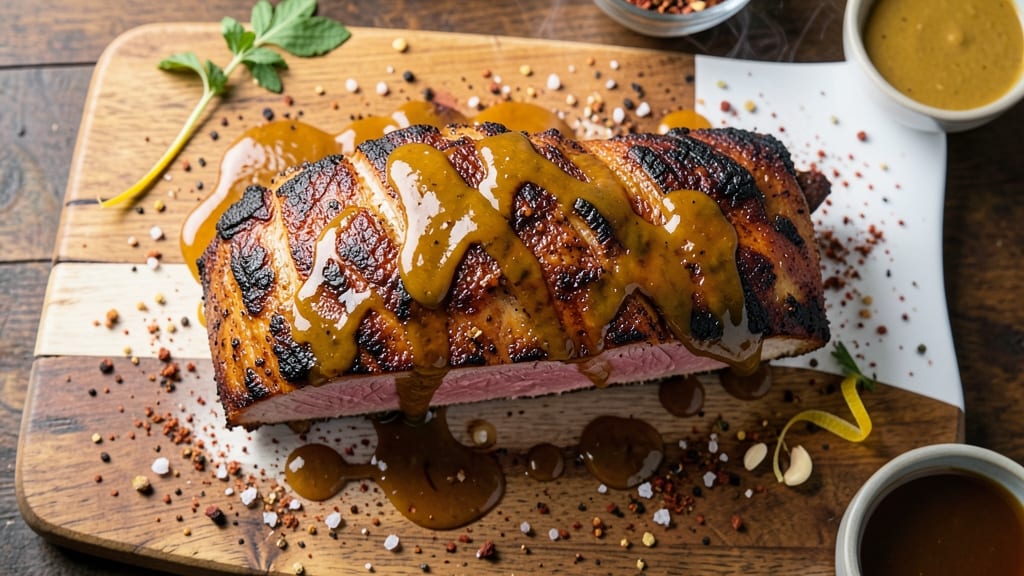
This smoked whole pork loin recipe delivers melt-in-your-mouth perfection with a crusty bark that rivals any competition-winning pitmaster. After years of perfecting my technique—from my CIA training to running Atlanta's Smoky Pig—I've cracked the code for juicy, tender meat that falls apart at the touch of a fork.
The secret lies in low-and-slow smoking with precise temperature control and a simple but effective seasoning blend that enhances rather than masks the natural flavor of heritage pork.
What sets this recipe apart is the balance between tradition and modern convenience. While I prefer using my pellet smoker for consistent temperatures, you can achieve the same results on a charcoal grill with careful monitoring.
The key is maintaining a steady 225°F internal temperature throughout the smoking process, which transforms tough connective tissue into silky, flavorful meat. This method preserves moisture while developing that coveted bark—crispy on the outside, tender on the inside—without drying out the center.
By the time you're carving into this masterpiece, you'll have a whole pork loin that's juicier than any store-bought roast and packed with smoky depth. The meat practically melts when sliced, releasing all those rendered juices that create a self-basting effect.
This is the kind of pork that makes your taste buds sing and leaves your guests asking for seconds—guaranteed to become your new signature dish.
Serve it sliced thick alongside classic sides like apple sauce, coleslaw, or roasted sweet potatoes for a complete meal that feels both impressive and comforting. The leftovers reheat beautifully too, making this an excellent recipe for feeding a crowd or prepping ahead. Let's get smoking!
Ingredients for best smoked whole pork loin
Six pounds of pork perfection plus a smoky rub that transforms ordinary into extraordinary.
| Ingredient | Amount | Notes |
|---|---|---|
| Heritage Pork Loin 🐖 | 6 lb | Bone-in, center-cut preferred |
| Yellow Mustard 🍯 | ½ cup | For sticky bark application |
| Coarse Kosher Salt 🧂 | ½ cup | Diamond Crystal preferred |
| Smoked Paprika 🌶️ | 2 tbsp | High-quality for authentic bark |
| Freshly Ground Black Pepper 🌶️ | 1 tbsp | Cracked peppercorns preferred |
| Granulated Garlic 🧄 | 2 tbsp | For even distribution |
| Wood Chips (Hickory or Apple) 🌳 | 2 cups | Soaked for 1 hour minimum |
| Apple Cider Vinegar 🍎 | 2 tbsp | For tenderizing rub |
| Brown Sugar 🍚 | 1 tbsp | Light variety preferred |
| Unsalted Butter 🧈 | ½ cup | Cold, cubed for basting |
| Fresh Thyme Sprigs 🌿 | 4 whole | Tied with kitchen twine |
| Fresh Rosemary Sprigs 🌿 | 4 whole | Tied with kitchen twine |
| Aluminum Foil 📄 | 1 sheet | Heavy-duty for wrapping |
The pork loin is non-negotiable here—heritage cuts like Duroc or Berkshire deliver the best marbling and flavor. Costco or specialty butchers carry these, but if you're stuck with conventional pork loin, look for thick cuts with visible fat cap. The wood chips? Hickory for bold smoke, apple for subtle sweetness—mix them if you want both. I always double-check my wood chips are 100% natural (no additives) and soak them for at least an hour before using. Fresh herbs tied with twine elevate this from good to showstopping—Trader Joe's sells pre-tied bundles that save time.
No smoked paprika? Regular paprika plus a pinch of liquid smoke gets you close, though nothing beats the real thing. Running short on fresh thyme? Dried at one-third the amount works, but the aroma is totally different. The mustard is key for that crispy bark—Dijon works too—just don't use sweet yellow mustard. For the brown sugar, light variety prevents burning, but if you're out, a teaspoon of maple syrup in the rub does the trick. And if you're using a charcoal grill instead of smoker, soak wood chips in water to control smoke output.
This pork is a leftovers legend—3-4 days in the fridge, 3 months frozen when wrapped tightly in foil. I always slice it against the grain for maximum tenderness, then reheat portions in a 350°F oven with a splash of apple juice to keep it moist. The bark? Save those crispy pieces for sandwiches or salads—they're pure flavor. For serving, I like to tent the pork with foil right after smoking to keep it warm while I prep sides, then carve right at the table for maximum drama.
Why You'll Love This Recipe
- I’ll be real: this is my go-to for game days or when friends drop by. Minimal effort, maximum wow factor, and everyone asks for seconds. (Yes, even on a Tuesday night.)
- Five-Ingredient Magic: Honestly, the ingredient list is that short—heritage pork loin, yellow mustard, salt, smoked paprika, and pepper. That’s it. No fussing with marinades or fancy rubs; just a quick coat and straight to the smoker.
- Smoky-Sweet Perfection: Here’s what sold me—the smoky kick from the paprika and mustard crust, paired with that juicy, tender pork. It’s not just flavor; it’s comfort in every bite, like a hug from your grill.
- Weeknight Crowd-Pleaser: I’ll be real: this is my go-to for game days or when friends drop by. Minimal effort, maximum wow factor, and everyone asks for seconds. (Yes, even on a Tuesday night.)
Step-by-step instructions for smoked whole pork loin
Here's the method that delivers melt-in-your-mouth pork with perfect bark every time.
Prepare the Dry Rub and Season the Pork
In a small bowl, combine the 0.5 cup coarse kosher salt, 2 tbsp smoked paprika, 1 tbsp freshly ground black pepper, 2 tbsp granulated garlic, 1 tbsp brown sugar, and 2 tbsp apple cider vinegar. Mix thoroughly until the vinegar is fully incorporated and the mixture forms a coarse, even blend—this is your tenderizing dry rub.
Pat the 6 lb heritage pork loin completely dry with paper towels, then generously coat all sides with the dry rub mixture. Press it in firmly so it adheres well, especially in the crevices and along the bone. This ensures even flavor penetration and that signature bark. Let the pork sit at room temperature for 1 hour before smoking to allow the rub to penetrate and the meat to cook more evenly.
Set Up the Smoker and Preheat
Soak the 2 cups wood chips (hickory or apple) in water for at least 1 hour before use. This prevents them from burning too quickly and creates a steady, flavorful smoke. Fill your smoker's wood chip tray and preheat to 225°F—this low-and-slow temperature is critical for tenderizing the pork without drying it out.
Once the smoker reaches temperature and you see clean, blue smoke (not thick white steam), place the pork loin directly on the smoker grates, fat-side up. The fat will render slowly and baste the meat, contributing to that irresistible bark. Avoid the temptation to open the smoker frequently—each time you do, you lose heat and extend cook time.
Smoke Until Probe-Tender
Smoke the pork loin undisturbed for 4-5 hours, maintaining the 225°F temperature. The internal temperature should reach 165-170°F at this point, which is when you'll hit "the stall"—a period where the temperature plateaus as moisture evaporates. This is normal and expected.
When the internal temperature hits 165°F, it's time to wrap the pork. Tear off a 1 sheet aluminum foil and place the pork loin on it. Fold the foil tightly around the pork, sealing it completely. This "Texas crutch" technique helps push through the stall while preserving that beautiful bark. Return the wrapped pork to the smoker and continue cooking until the internal temperature reaches 203°F—this ensures a probe slides in like butter with no resistance.
Rest and Prepare for Serving
Once the pork reaches 203°F, remove it from the smoker and transfer it to a cutting board. Tent loosely with foil and let it rest for at least 30 minutes (I prefer 1 hour if possible). This resting period allows the juices to redistribute throughout the meat, ensuring every slice is moist and flavorful.
While the pork rests, prepare your serving platter. Remove the foil and slice the pork loin into 1-inch thick medallions, cutting against the grain for maximum tenderness. Arrange the slices on the platter, drizzle with melted 0.5 cup unsalted butter, and garnish with the 4 whole fresh thyme sprigs and 4 whole fresh rosemary sprigs for an elegant touch. Serve immediately with your favorite sides for a showstopping centerpiece.
Pro Tips For Making Best Smoked Whole Pork Loin
- Trim the Fat Cap: Cut a thin layer of fat off the top of the pork loin before smoking—it’s the only part that’ll render into grease and ruin your smoker’s heat. I learned this the hard way when my first batch turned into a greasy mess that took forever to recover.
- Mustard First, Salt Last: Slather the yellow mustard on before you hit the smoker—it acts as a sticky barrier that locks in moisture. Wait until the last 15 minutes to add the kosher salt and smoked paprika, so it doesn’t burn into bitter dust.
- Skip the Crowding: If your smoker’s temperature swings when you load the pork loin, give it space. Cramming it in with other meats or wood will make it cook unevenly. Leave a few inches of clearance—your pork will thank you with consistent doneness.
- Probe Like a Pro: Don’t guess—stick a meat thermometer into the thickest part of the loin. Pull it at 145°F internal temp, then let it rest under foil for 20 minutes. I used to cut into it early, and the juices would run out like a sad, overcooked dream.
Common mistakes when making perfect results
Skipping the Rest
This is the cardinal sin of smoked pork—skipping the rest completely. I've seen it too many times at competitions: pitmasters pull pork from the smoker at 203°F and immediately start slicing. The result?
Juices pool on the cutting board instead of redistributing throughout the meat, leaving you with dry, stringy slices. Always rest for at least 30 minutes—I prefer 1 hour—to let those juices settle back into the muscle fibers. 💫
Ignoring the Stall
When your pork hits 165°F, you'll notice the internal temperature stall—it might plateau for 1-2 hours while moisture evaporates. Many home cooks panic and crank up the heat, but that's exactly wrong.
The stall is normal and expected. Instead, wrap your pork in foil (the Texas crutch) to push through it while preserving moisture. I've seen 3-hour stalls become 1-hour stalls with proper wrapping.
Overlooking Wood Soaking
Using dry wood chips straight from the bag is a rookie mistake. Unsoaked chips burn too quickly, creating thick white smoke that's more steam than flavor. Always soak your 2 cups wood chips for at least 1 hour before using.
This creates a steady, flavorful blue smoke that coats your pork perfectly. Pro tip: I double-wrap my wood chips in foil before soaking to keep them contained in my smoker.
Uneven Rub Application
Many people slap the dry rub on and call it good, but that leads to flavor hot spots and uneven bark development. Press that rub into every crevice—especially around the bone and fat cap—so it penetrates the meat.
I use my fingers to work it into the surface, then let it sit for 1 hour before smoking. This ensures even flavor and that coveted crusty bark. Skipping this step means missing out on maximum flavor impact.
Opening the Smoker Too Often
Every time you open your smoker, you lose heat and extend cook time. I've seen beginners check their pork every 30 minutes, turning a 6-hour cook into an 8-hour marathon. Use a reliable thermometer like the ThermoWorks Smoke to monitor internal temperature without opening the lid.
Once you've wrapped your pork, only open the smoker when absolutely necessary—maybe just once to check the wood chips.
Wrong Wood Choice
Not all wood chips are created equal. Using pine or cedar will give your pork a harsh, medicinal flavor that overpowers the meat. Stick with hickory for bold smoke or apple for subtle sweetness. I often mix both for a balanced flavor profile.
Avoid fruit woods like cherry or peach—they're better suited for poultry. For pork, you want woods that complement rather than compete with the meat's natural flavor. 🌳
Nutrition facts
Frequently asked questions about smoked whole pork loin
Can I smoke a pork loin without a dedicated smoker?
Use a charcoal grill with a water pan and soaked wood chips for smoke. For gas grills, add wood chips to a smoker box or wrap them in foil with holes poked through. Maintain 225°F by adjusting vents—this low-and-slow method works just as well as a dedicated smoker. Just expect slightly less consistent smoke flavor.
How do I know when the pork is fully cooked?
Use a meat thermometer to check the internal temperature—203°F is your target. The probe should slide in like butter with no resistance. For extra confirmation, gently press the meat: if it's tender and juices run clear, it's done. Never rely on color or time alone, as these can be misleading.
What's the best way to slice smoked pork loin?
Always cut against the grain for maximum tenderness. Look for the muscle fibers running lengthwise, then slice perpendicular to them. Use a sharp carving knife and slice into 1-inch thick medallions. For even slices, tie the pork with kitchen twine before cooking, then remove the twine before slicing.
Can I make this recipe with a different cut of pork?
While pork loin is ideal, you can adapt this for pork shoulder or pork butt by extending the cook time to 6-8 hours (until 195°F internal temp). For bone-in vs. boneless, bone-in stays juicier longer due to the bone's natural moisture retention. If using boneless, consider adding a 1-inch thick fat cap to prevent drying.
How should I store leftovers?
Slice and store in an airtight container for 3-4 days in the fridge, or freeze for 3 months. To reheat, warm slices in a 350°F oven with a splash of apple juice or broth for 10-15 minutes. For sandwiches, save the crispy bark pieces—they're packed with flavor! Leftovers also make great tacos or fried rice.